 Brickell Tailor Alteration Shop Finder: First Work Suit Fit
Neighborhood Guides

Wynwood Historic Architecture Walking Route: Free Warehouses
Free to walk, this Wynwood historic architecture walking route reads 1920s warehouses, a 1926 Art Deco bakery and garment-era loading docks under the murals.
Wynwood has no grand domes or registered historic district, yet its warehouses tell one of the clearest industrial stories in Miami, and walking them costs nothing. A two-hour historic architecture walking route from NW 2nd Avenue to the 1926 Bakehouse building on NW 32nd Street shows how a 1910s railroad-side subdivision became a garment district, then a warehouse graveyard, then the city's open-air gallery. Read the buildings first and the murals second, and the neighborhood suddenly makes sense.
What You Are Actually Looking At on These Blocks
Most Wynwood buildings are one or two stories of concrete block and stucco built between the 1920s and the 1960s for storage, light manufacturing and wholesale trade. Look for raised loading platforms at truck height, roll-up steel doors, clerestory windows high on side walls and sawtooth roofs whose angled glass once brought north light onto cutting tables. Those details survive because, unlike Brickell or Miami Beach, nobody bothered to replace them during the decades when the district was simply unfashionable.
Context helps. After the Second World War a large Puerto Rican community settled here, and the area was long known as Little San Juan, with families living in the bungalows north and west of the warehouses. Garment factories along NW 5th Avenue made Wynwood a fashion wholesale district through the 1970s before manufacturing moved offshore. Roberto Clemente Park on NW 34th Street, named for the Pittsburgh Pirates outfielder from Puerto Rico, remains a quiet reminder of that residential chapter.
Start on NW 2nd Avenue Where the Revival Began
Begin at NW 2nd Avenue and NW 25th Street, the spine most visitors already know. In 2009 developer Tony Goldman, who had helped rescue SoHo in New York and the Art Deco district on Miami Beach, opened Wynwood Walls at 2516 NW 2nd Avenue by turning a cluster of windowless warehouses into an outdoor mural park. Stand across the avenue and notice how the painted walls follow the original building outlines, parapets and stepped rooflines rather than hiding them.
Here is the honest call: skip the ticketed Wynwood Walls line on Saturday afternoons. The queue often wraps the block in full sun, and the architecture you came for is better read on the side streets anyway, where entire facades are visible from the sidewalk without paying or jostling for a photo. Come back on a weekday morning if you want the interior courtyards, when the light is lower and the crowds are mostly art students with sketchbooks.
The Loading Dock Streets Between 23rd and 29th
Walk west on NW 24th Street and zigzag north through NW 1st Place and NW 26th Street. These are the best blocks for industrial detail: raised concrete docks now turned into café patios, steel canopies that once kept cartons dry during summer storms and faded painted lettering where old wholesalers advertised. Count the roll-up doors on a single block and you will see how dense the old distribution trade was, with each bay serving a separate tenant.
Pay attention to how adaptive reuse changed the ground floors. Breweries, galleries and studios cut new glass storefronts into blank block walls, but the best conversions kept the dock height and the steel doors, so a bar sits a few feet above the sidewalk with its roll-up panel lifted. In 2015 the city adopted neighborhood zoning rules for Wynwood that encourage this kind of reuse and limit how tall new buildings can rise along the warehouse blocks.
The 1926 Art Deco Bakery on NW 32nd Street
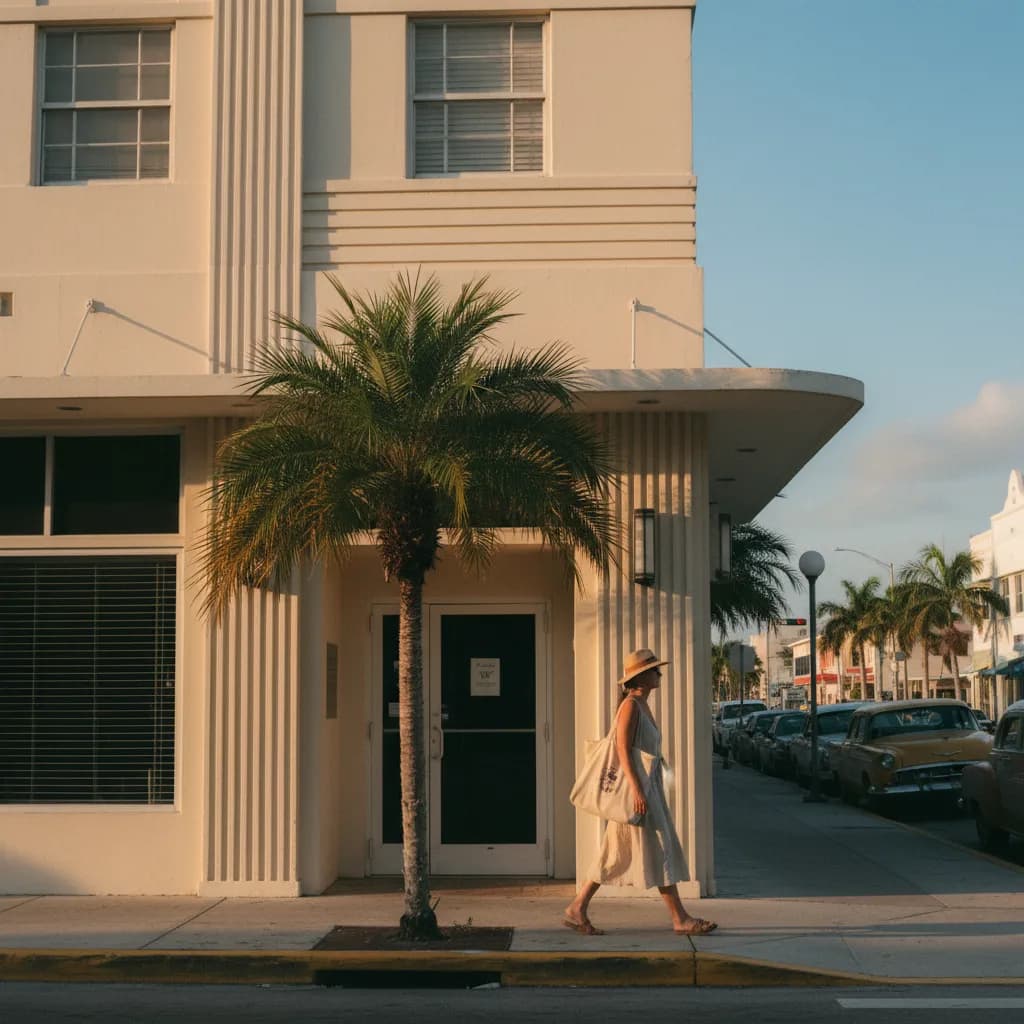
Continue north along NW 2nd Avenue and turn west on NW 32nd Street to the Bakehouse Art Complex at 561 NW 32nd Street. Built in 1926 as an industrial bakery, the long cream-colored building wears a restrained Art Deco front with vertical fluting and a stepped central bay, the closest thing Wynwood has to a formal landmark. Since 1985 it has housed affordable artist studios, which makes it the original creative tenant in a district now famous for them.
Weekday afternoons you may see painters carrying canvases in through the side doors and ceramicists loading kilns, while open studio days bring families and collectors into the hallways. Respect closed doors because these are working spaces. The grassy lot beside the building is a good place to compare its symmetrical Deco composition with the plain block warehouses around it and to understand how a single bakery once anchored this northern edge of the district.
Collectors, Galleries and Warehouses Built Bigger
Heading back south, detour to NW 27th Street, where the Margulies Collection at the Warehouse occupies a vast converted storage building at 591 NW 27th Street. Its long blank walls and high bays explain why collectors arrived first: few places in Miami offered tens of thousands of square feet under one roof. The Rubell family's private museum spent years nearby on NW 29th Street before moving to Allapattah in 2019, a move that shows how quickly rents changed.
On the walk south you will pass newer midrise buildings with brick-look panels, glass corners and murals planned from the start. Compare them with the older stock and you can date most blocks at a glance: original warehouses sit right at the sidewalk with no setback, while post-2015 projects step back their upper floors. That contrast is the real architectural story of Wynwood, a neighborhood still negotiating how much of its industrial skeleton survives.
Heat, Art Basel Crowds and a Design District Plan B
Wynwood is flat and shadeless, so walk before eleven in the morning or after four between May and October, and carry water because sidewalks reflect heat off every white wall. Early December, when Art Basel Miami Beach brings satellite fairs and pop-ups to the neighborhood, is the worst time for an architecture walk, since lines and closed lanes block the facades. The free city trolley's Wynwood route helps if your feet give out halfway.
If the crowds win, walk ten minutes north to the Miami Design District. The Moore Building at 4040 NE 2nd Avenue dates to 1921 and was built by Theodore Moore as a furniture showroom, and the Buckminster Fuller Fly's Eye Dome sits in Palm Court nearby. Save both neighborhoods as one route in the Karpo APP and ask Karpo to suggest which half to walk first based on the time of day you start.
Ask Karpo for more information.
Keep reading
- Brickell Tailor Alteration Shop Finder: First Work Suit Fit
 Coconut Grove Tailor Alteration Shop Finder: Heat-Proof Fits
 Little Havana Tailor Alteration Shop Finder: Guayabera Fits