 Brickell Tailor Alteration Shop Finder: First Work Suit Fit
Neighborhood Guides

Miami Historic Architecture Stroll: Free Art Deco Route
Walk South Beach on this free self-guided historic architecture stroll admiring pastel facades, Streamline Moderne curves, and Ocean Drive neon signs.
Strolling along Ocean Drive and Collins Avenue in Miami Beach places you inside the world's most concentrated open-air museum of resort architecture. The Miami Beach Architectural Historic District, affectionately known as the Art Deco Historic District, encompasses over eight hundred designated historic buildings erected between 1923 and 1943. Spurred by recovery efforts following the catastrophic 1926 hurricane and flourishing throughout the Great Depression, visionary local architects created a distinct regional design vernacular dubbed Tropical Deco. Combining European Art Deco geometric rigor with maritime Streamline Moderne curves and breezy subtropical motifs, these boutique resort hotels turned South Beach into America's playground. This self-guided historic architecture stroll guides you along oceanfront promenades, highlighting the structural ingenuity, nautical styling, and pioneering preservation victories that rescued this coastal paradise from demolition.
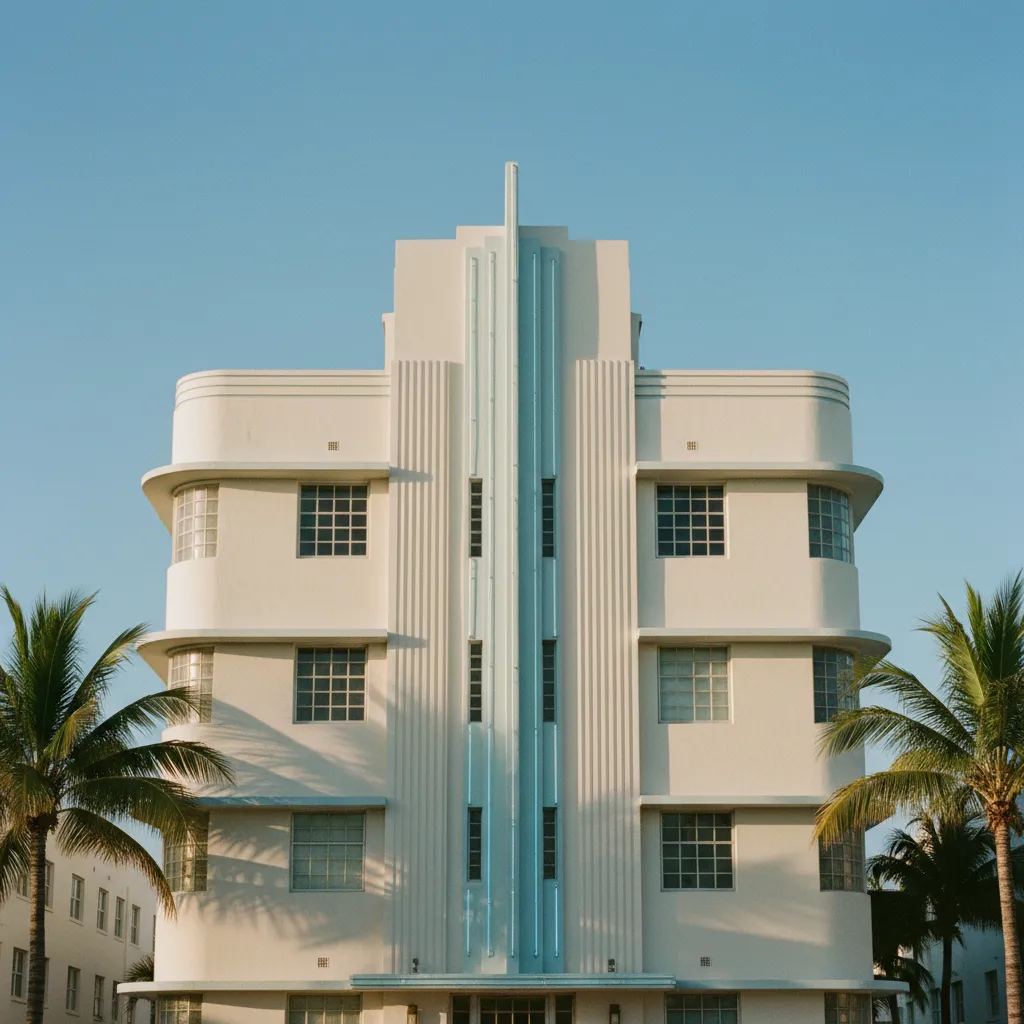
Streamline Aerodynamics at The Breakwater Hotel
Begin your architectural journey at 940 Ocean Dr before the iconic facade of The Breakwater Hotel, completed in 1939. Designed by Yugoslavian-born architect Anton Skislewicz, this three-story hotel represents the quintessential masterpiece of the Streamline Moderne movement in South Florida. The exterior facade is defined by dramatic horizontal speed lines that wrap around curved corners, counterbalanced by a soaring, central vertical neon spire that rises boldly above the roofline. Skislewicz drew inspiration from the streamlined design of contemporary ocean liners, transcontinental locomotives, and aircraft, translating speed and industrial optimism into a sun-bleached beachside holiday retreat.
Observe the brilliant turquoise, soft coral, and crisp white color blocking that accentuates the building's stepped symmetry. Look closely at the ground-level terrace, where polished terrazzo floors feature inlaid compass roses and geometric wave patterns that guide visitors seamlessly from the oceanfront sidewalk into the breezy open-air lobby. The Breakwater was among the flagship properties restored during the 1980s renaissance catalyzed by Barbara Capitman and the Miami Design Preservation League, demonstrating how vibrant neon accents and historic facade restoration could ignite global tourism revival.
Classic Stepped Symmetry at The Carlyle Hotel
Stroll northward along Ocean Drive to 1250 Ocean Dr to stand before the celebrated facade of The Carlyle Hotel, designed in 1939 by the prominent architectural partnership of Richard Kiehnel and John Elliott. Kiehnel & Elliott, who previously introduced Mediterranean Revival architecture to South Florida, adapted masterfully to the late Art Deco era by creating one of Ocean Drive's most architecturally refined compositions. The Carlyle features a classic tripartite horizontal facade divided by four projecting vertical piers that terminate in stepped decorative parapet fins, creating an eye-catching interplay of vertical lift and horizontal oceanfront stability.
Inspect the deep horizontal cantilevered 'eyebrows' extending over the second and third-floor casement windows. In the subtropical climate of pre-air-conditioned Miami Beach, these functional concrete sunshades shielded hotel guest rooms from intense midday sunbeams while allowing cool Atlantic sea breezes to circulate freely through open windows. The Carlyle retains its authentic front veranda terrace elevated just above street level, offering a prime vantage point to appreciate how 1930s resort hotels encouraged unhurried social interaction between private guests and the strolling oceanfront public.
Neon Mastery and Eyebrows at The Colony Hotel
Turn southward along Ocean Drive to 736 Ocean Dr to examine the landmark Colony Hotel, dedicated in 1935. Designed by prolific South Beach architect Henry Hohauser, who was responsible for dozens of the district's most memorable hotels, The Colony is widely celebrated as one of the earliest and most influential Art Deco buildings erected along the beachfront. Hohauser introduced the signature blue neon blade sign that runs vertically down the building's central projecting pylon, establishing an illuminated beacon that has defined the Miami Beach nightscape across postcards and film screens for nearly a century.
Look closely at the rhythmic masonry details, including incised geometric banding, curved corner spandrels, and stepped parapet crenellations that evoke pre-Columbian temple silhouettes. Hohauser utilized native Florida keystone—a porous oolitic limestone embedded with fossilized coral and seashell impressions—to frame the entrance vestibule and exterior planters. This natural limestone material provided textural organic contrast against the smooth, machine-finished stucco walls, reflecting the Tropical Deco desire to root international modernism in the authentic natural ecology of coastal South Florida.
Nautical Streamlining at The Webster
Walk one block west to Collins Avenue and head to 1220 Collins Ave to admire The Webster, another brilliant 1939 creation by architect Henry Hohauser. Originally constructed as an eighty-room luxury boutique hotel and now meticulously preserved as a luxury fashion destination, The Webster showcases the late Streamline Moderne style at its most sophisticated. The facade is characterized by sweeping curved stucco walls, horizontal speed grooves etched into the plaster, and authentic circular nautical porthole openings that make the building resemble a luxurious passenger ocean liner moored along the city street.
Step inside the historic entrance foyer to view the breathtaking, intact original terrazzo flooring, which features intricate geometric sunbursts and interlocking wave motifs executed in rich green, cream, and blush-pink marble chips. Hohauser deliberately integrated high ceilings and large glass picture windows to flood interior public salons with soft coastal daylight. The building's preservation stands as an inspiring international model of adaptive reuse, proving that historic South Beach architecture can house contemporary world-class retail while maintaining pristine historic integrity.
Grand Resort Ambition at the Park Central Hotel
Conclude your beachfront walk by returning to Ocean Drive at 640 Ocean Dr before the grand facade of the Park Central Hotel, completed in 1937 under the direction of Henry Hohauser. Standing seven stories tall, this grand resort hotel was considerably larger than the typical three-story boutique lodges on Ocean Drive, incorporating an octagonal central tower that commands panoramic ocean vistas across Lummus Park. The building features an elegant octagonal rooftop solarium, fluted classical pilasters that dissolve into Art Deco chevrons, and deep cantilevered window shades.
The Park Central holds a legendary place in urban preservation history as the primary headquarters where preservation pioneer Barbara Capitman launched the Miami Design Preservation League in 1976. When corporate developers sought to demolish the aging 1930s hotels in favor of high-rise condominium towers, Capitman rallied international architects, photographers, and artists inside the Park Central lobby, successfully securing National Register designation in 1979 and forever protecting the cultural heritage of South Beach from the wrecking ball.
Transit Logistics and Practical Architecture Stroll Notes
This self-guided historic architecture stroll covers approximately one point two miles along the pedestrian-friendly paved sidewalks of Ocean Drive and Collins Avenue between 6th and 14th Streets. The flat route takes about sixty to seventy-five minutes to explore thoroughly at an observant walking pace. For optimal architectural photography, schedule your walk in the late afternoon between four and six o'clock, when warm western sunlight illuminates the pastel east-facing facades, followed by twilight when vintage neon signs flicker to life against the darkening violet evening sky.
Transit connections to the district are frequent and convenient: the free Miami Beach Trolley (South Beach Loop) runs continuously along Washington Avenue and Collins Avenue with stops every two blocks, connecting seamlessly with Metrobus Route 100 from Downtown Miami. Plentiful public parking garages are located nearby on 7th Street and 13th Street near Collins Avenue. Karpo APP provides detailed street-level architectural mapping with interactive historical building profiles, allowing you to identify original architects, construction dates, and decorative motifs effortlessly while exploring South Beach on foot.
Ask Karpo for more information.
Keep reading
- Brickell Tailor Alteration Shop Finder: First Work Suit Fit
 Coconut Grove Tailor Alteration Shop Finder: Heat-Proof Fits
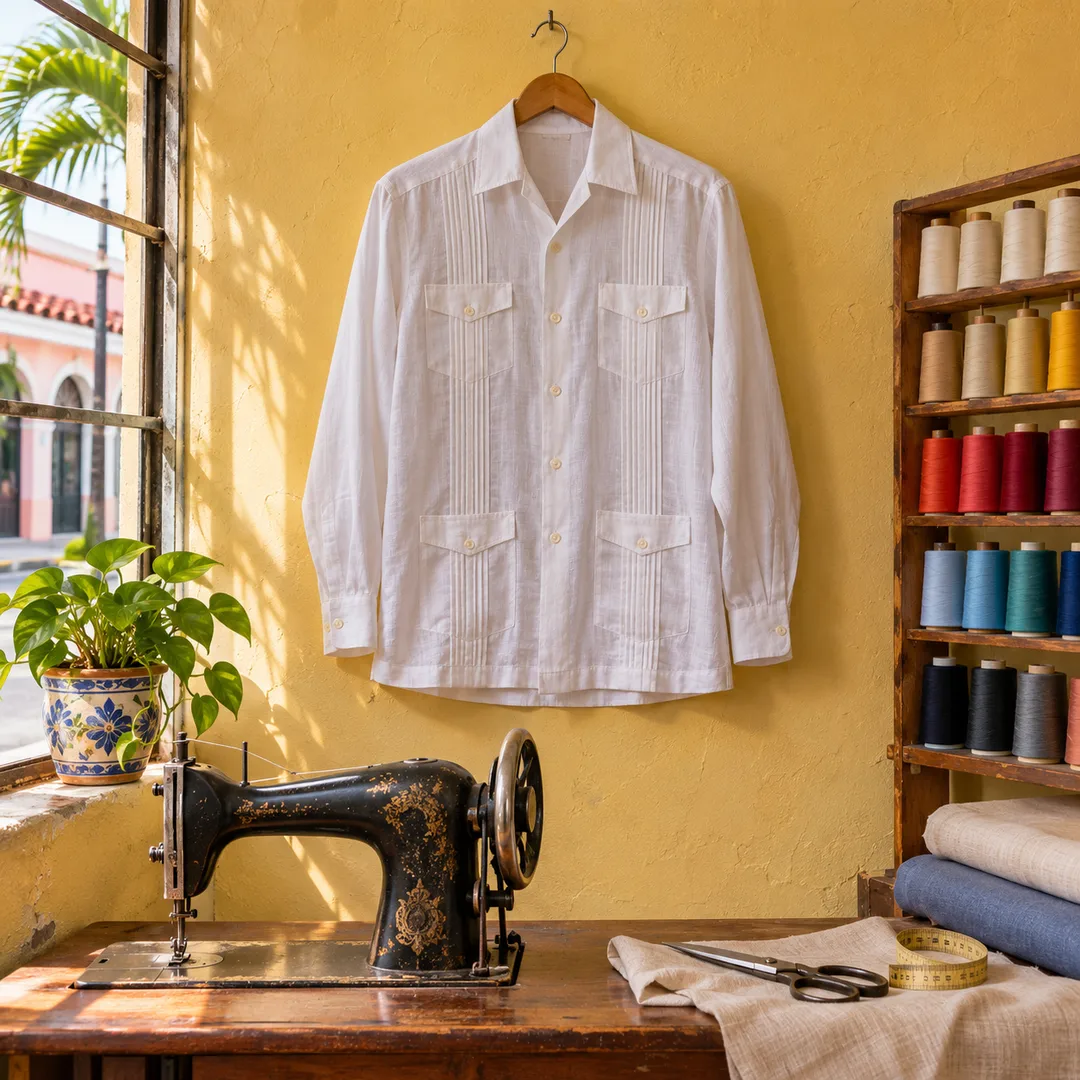 Little Havana Tailor Alteration Shop Finder: Guayabera Fits