 Brickell Tailor Alteration Shop Finder: First Work Suit Fit
Neighborhood Guides

Miami Historic Architecture Stroll: Free Coral Gables
Discover Coral Gables on this free self-guided historic architecture stroll past the Biltmore Hotel, Venetian Pool, and Mediterranean Revival plazas.
In the early 1920s, visionary developer George E. Merrick embarked on an audacious urban dream: to create 'The City Beautiful' out of thousands of acres of grapefruit groves and pine flatwoods southwest of Miami. Merrick envisioned a master-planned garden city built entirely in the Mediterranean Revival architectural style, inspired by the romantic plazas, fountains, and palaces of southern Spain, Italy, and the Mediterranean coast. Working in close collaboration with his artist uncle Denman Fink and master architect Phineas Paist, Merrick established strict municipal architectural codes that mandated barrel tile roofs, hand-carved native coral rock masonry, and broad shaded boulevards lined with royal palms and banyan trees. This self-guided historic architecture stroll guides you past monumental civic palaces, natural coral-rock grottos, and grand hotels that define Coral Gables as an architectural masterpiece of the Florida land boom.

Civic Grandeur at Coral Gables City Hall
Begin your architectural journey at 405 Biltmore Way before the dignified facade of Coral Gables City Hall, dedicated in 1928. Designed by supervising city architect Phineas Paist in collaboration with Harold Steward, this three-story civic palace was constructed from native Florida oolitic limestone quarried locally within the municipality. The building features an impressive semicircular central portico supported by colossal Corinthian columns, crowned by an exquisite three-tiered neoclassical bell tower and clock that rises majestically above the tree-lined convergence of Biltmore Way and Coral Way.
Step inside the public rotunda to admire the magnificent ceiling fresco murals painted by artist Denman Fink, depicting allegorical figures representing the four classical elements: Earth, Wind, Fire, and Water. The exterior masonry showcases the remarkable versatility of native coral limestone, where fossilized coral heads and seashell impressions are visible in the honed column shafts and carved balustrades. City Hall served as the municipal heartbeat of Merrick's planned empire, anchoring the western civic vista with timeless Mediterranean authority.
Commercial Splendor at the Colonnade Building
Stroll eastward along Coral Way onto Miracle Mile to 169 Miracle Mile to inspect the landmark Colonnade Building, completed in 1926. Also designed by Phineas Paist alongside Walter De Garmo, this grand neoclassical commercial edifice originally housed the central sales and development offices of the Coral Gables Corporation. The exterior is dominated by a dramatic two-story monumental colonnade of classical columns supporting an ornate stone entablature, accented by sculpted classical urns, Spanish coats of arms, and hand-wrought iron entrance lanterns.
During the height of the 1925 Florida land boom, hundreds of eager prospective buyers from across the United States gathered in the Colonnade's soaring central rotunda, where silver-tongued orators like William Jennings Bryan delivered impassioned speeches praising Coral Gables as an earthly paradise. Look upward to admire the intricate coffered ceiling and decorative rosettes that adorn the exterior arcade, illustrating how Merrick infused commercial real estate transactions with the dignified ceremonial architecture of European civic plazas.
Subterranean Artistry at the Historic Venetian Pool
Head southwest along de Soto Boulevard to 2701 de Soto Blvd to behold the world-famous Venetian Pool, dedicated in 1924. Conceived by artist Denman Fink and executed by architect Phineas Paist, this four-acre public aquatic paradise was ingeniously carved directly out of an abandoned coral rock quarry that had supplied the building stone for the city's early homes. Instead of filling the unsightly excavation pit, Merrick and Paist transformed it into an enchanting Venetian lagoon fed daily by fresh natural subterranean spring water from the Biscayne Aquifer.
Observe the picturesque architectural ensemble surrounding the eight-hundred-and-twenty-thousand-gallon pool, including two-story Spanish loggias, porticos with barrel-tiled roofs, a signature Venetian bridge, and decorative mooring poles evoking the canals of Venice. Swimmers and architecture admirers can explore natural coral-rock caves, grottos, and a cascading stone waterfall that seamlessly blend native geological formations with European romantic fantasy. The Venetian Pool stands on the National Register of Historic Places as the only municipal swimming pool of its kind in the United States.
Monumental Luxury at The Biltmore Hotel
Follow the sweeping curves of de Soto Boulevard southwest to 1200 Anastasia Ave to reach the crowning architectural jewel of Coral Gables: The Biltmore Hotel, opened with grand celebratory balls in January 1926. Designed by the celebrated New York architectural firm Schultze & Weaver in partnership with John Bowman, this palatial resort hotel rises dramatically over one hundred and fifty acres of championship golf courses and subtropical gardens. The hotel's centerpiece is a soaring three-hundred-foot tower modeled directly after the Giralda bell tower of the Cathedral of Seville in southern Spain.
Walk through the monumental entrance colonnade into the majestic main lobby, where soaring hand-painted barrel-vaulted ceilings rise forty-five feet overhead. The interior features colossal fluted travertine columns, exquisite Spanish tile wainscoting, and hand-carved stone fireplaces that evoke the splendor of a sixteenth-century Castilian royal palace. The Biltmore famously hosted royalty, Hollywood luminaries like Judy Garland and Ginger Rogers, and international dignitaries during the golden age of Florida resort travel, standing today as a fully restored National Historic Landmark.
The Historic Douglas Entrance Gateway
Complete your architectural tour by visiting the historic Douglas Entrance at 800 Douglas Rd, constructed between 1925 and 1927. Conceived by Phineas Paist, Denman Fink, and Martin L. Hampton, this monumental stone gateway was planned as the grand ceremonial threshold welcoming visitors arriving in Coral Gables from downtown Miami. The complex features a massive Romanesque triumphal stone archway straddling the roadway, flanked by two-story Mediterranean artisan studios, red-clay barrel-tiled arcades, and a romantic central fountain plaza.
Notice how the rough-faced coral rock walls, carved stone medallions, and rustic wrought-iron window grilles create the illusion of an ancient fortified walled village in rural Spain or Provence. Merrick intended the gateway to establish an immediate psychological transition, signaling to motorists that they were leaving the modern industrial world behind to enter a tranquil, ordered sanctuary dedicated to beauty, art, and architectural harmony.
Transit Logistics and Practical Architecture Stroll Notes
This self-guided historic architecture stroll spans approximately one point eight miles through quiet, shaded residential avenues and scenic public boulevards in Coral Gables, taking about seventy-five to ninety minutes at an enjoyable walking pace. The route is exceptionally pleasant throughout the year thanks to the dense subtropical tree canopy of century-old banyans, royal poincianas, and live oaks that shield pedestrians from the Florida sun. The best lighting for photographing the Biltmore tower and City Hall portico is during the morning hours between nine and eleven o'clock.
Public transportation access is seamless thanks to the free Coral Gables Trolley, which operates frequent daily service along Ponce de Leon Boulevard, connecting the Douglas Entrance and Miracle Mile directly to the Metrorail Douglas Road Station. Dedicated bicycle and walking paths run parallel to Coral Way and Biltmore Way. Karpo APP provides interactive GPS-guided walking maps, architectural detail diagrams, and archival building photographs, ensuring an effortless and culturally rich exploration of Miami's preeminent planned city.
Ask Karpo for more information.
Keep reading
- Brickell Tailor Alteration Shop Finder: First Work Suit Fit
 Coconut Grove Tailor Alteration Shop Finder: Heat-Proof Fits
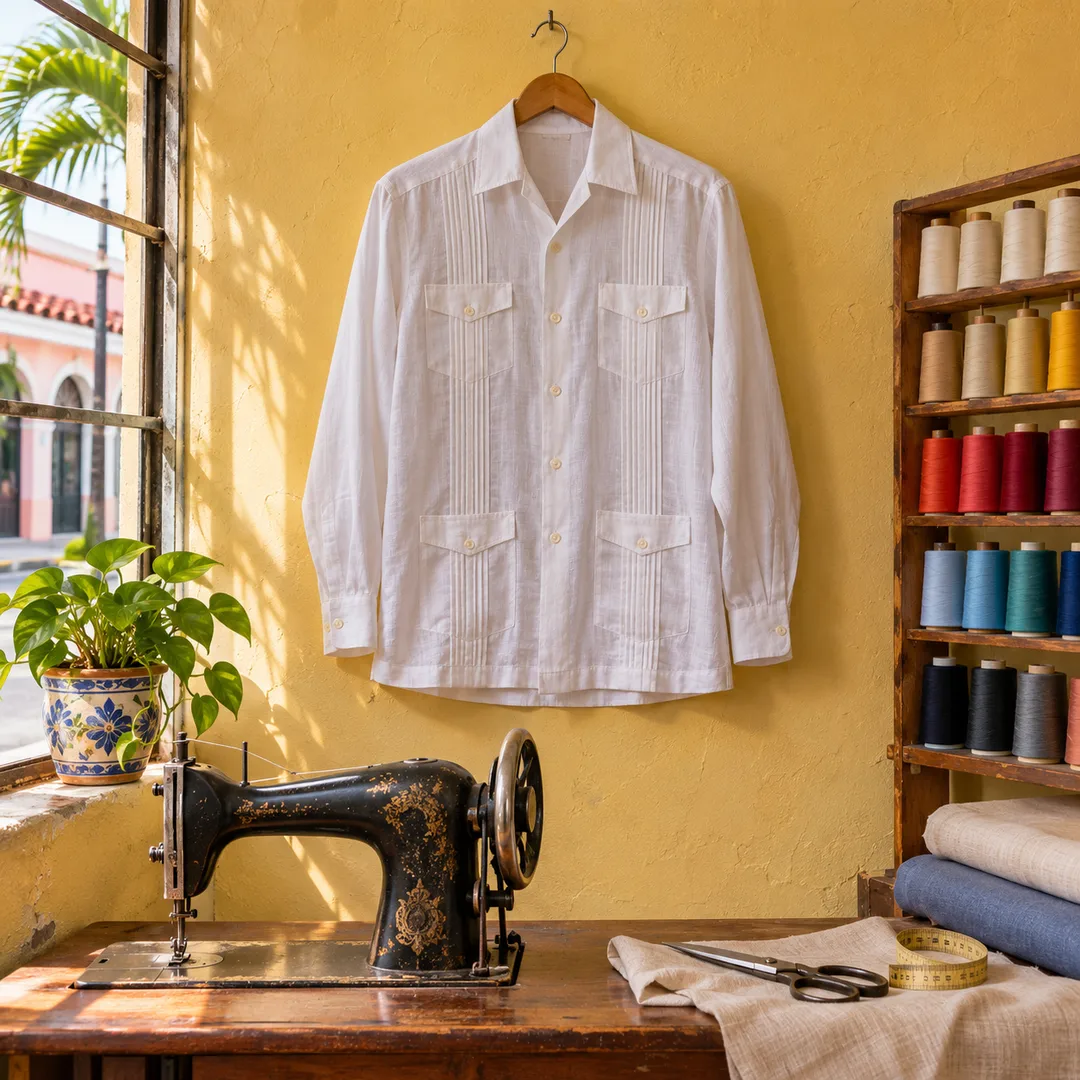 Little Havana Tailor Alteration Shop Finder: Guayabera Fits