 Brickell Tailor Alteration Shop Finder: First Work Suit Fit
Neighborhood Guides
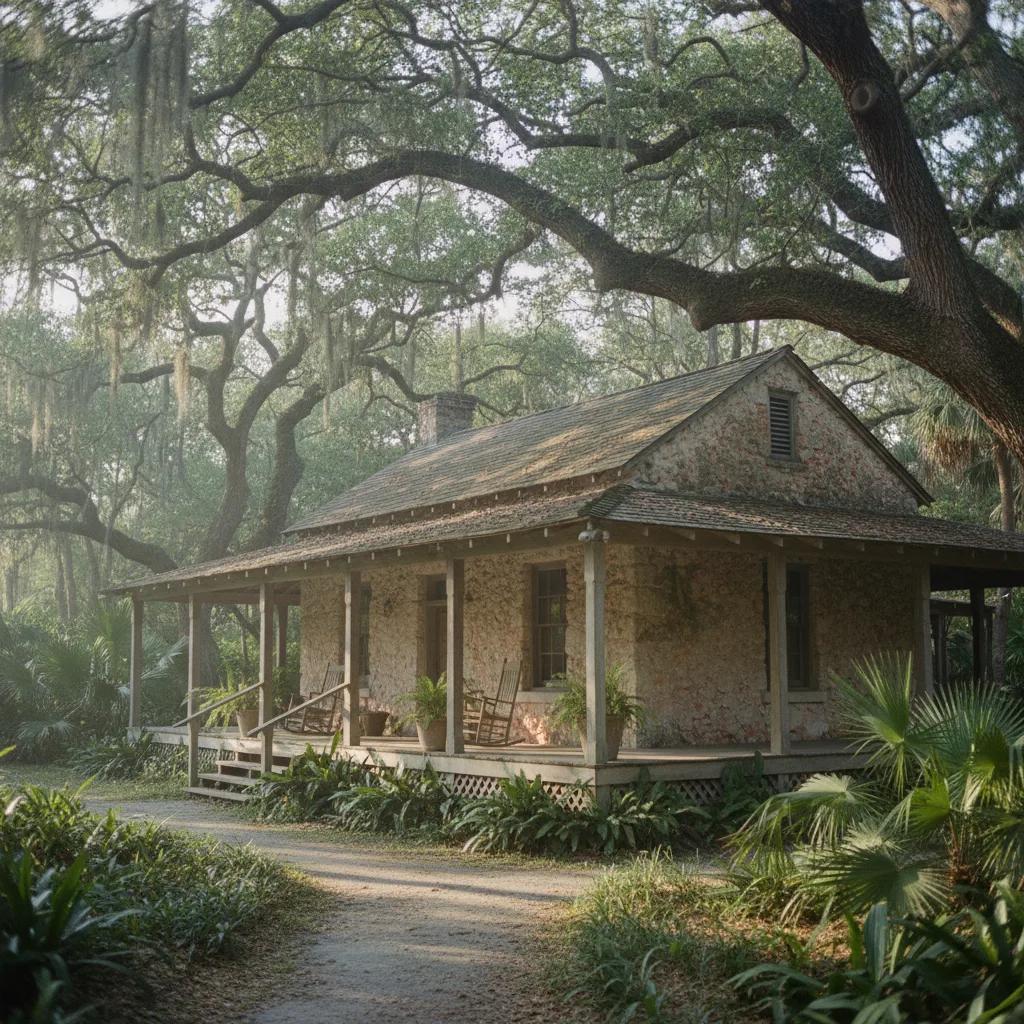
Miami Historic Architecture Stroll: Free Coconut Grove
Explore historic Coconut Grove on this free architecture stroll past pioneer coral rock cottages, The Barnacle, and lush subtropical hammock lanes.
Nestled along the sheltered shoreline of Biscayne Bay beneath a dense canopy of ancient live oaks and tropical banyans, Coconut Grove stands as Miami's oldest continuously inhabited modern neighborhood. Founded in the late nineteenth century decades before the city of Miami was incorporated in 1896, the Grove began as an unconventional haven for maritime pioneers, naturalists, intellectual eccentrics, and skilled Bahamian craftsmen. Here, settlers adapted to the subtropical wilderness by inventing an organic architectural vernacular that celebrated native materials: salvage ship timbers, dense Dade County slash pine, hand-carved native coral rock, and broad wrap-around verandas designed to catch cooling bay breezes. This self-guided historic architecture stroll guides you along winding hammock lanes, revealing the historic homes, churches, and Bahamian shotgun cottages that preserve the pioneering soul of South Florida.
Pioneer Maritime Ingenuity at The Barnacle
Begin your architectural journey at 3485 Main Hwy within the tranquil tropical hammock of The Barnacle Historic State Park, dedicated to preserving the home of pioneer Commodore Ralph Middleton Munroe, completed in 1891. Recognized as the oldest home in Miami-Dade County still standing in its original location, this charming two-story wooden residence represents a brilliant masterpiece of vernacular tropical climate design. Munroe, an accomplished yacht designer and naval architect, applied shipwright framing techniques to build a residence capable of withstanding fierce tropical hurricanes.
Observe the building's distinctive hipped roof with a central octagonal cupola that acted as a natural thermal chimney, drawing rising hot air upward and out while pulling cool sea breezes across the wrap-around second-floor porches. The entire house was constructed from salvaged shipwreck timbers and rot-resistant virgin Dade County pine, elevated on native limestone piers above the damp forest floor to deter moisture and insects. Munroe's home stands as an enduring lesson in sustainable, site-responsive subtropical architecture that required no artificial cooling to remain comfortable year-round.
Civic Warmth at the Historic Coconut Grove Library
Stroll northeast along Main Highway toward the heart of the village to 2875 McFarlane Rd to view the historic Coconut Grove Library, established in 1895. Founded by the pioneering women of the Pine Needles Club as the very first public reading room in the Miami wilderness, the library is housed in an exquisite coral-rock and timber structure that harmonizes beautifully with its lush subtropical surroundings. Shaded by towering live oaks draped in Spanish moss, the building features a high-pitched timber roofline, wide eaves, and hand-cut native oolitic limestone masonry.
Look closely at the rough-textured coral rock walls, where fossilized coral formations and oceanic sediment are clearly visible across the exterior facade. The library was deliberately designed to feel like a warm, welcoming residential cottage rather than an imposing municipal institution, reflecting Coconut Grove's enduring village atmosphere and deep literary heritage. The entrance garden features native Florida ferns and coontie plants, preserving the historic botanical character that attracted early naturalists to the bayfront.
Spanish Mission Masonry at Plymouth Congregational Church
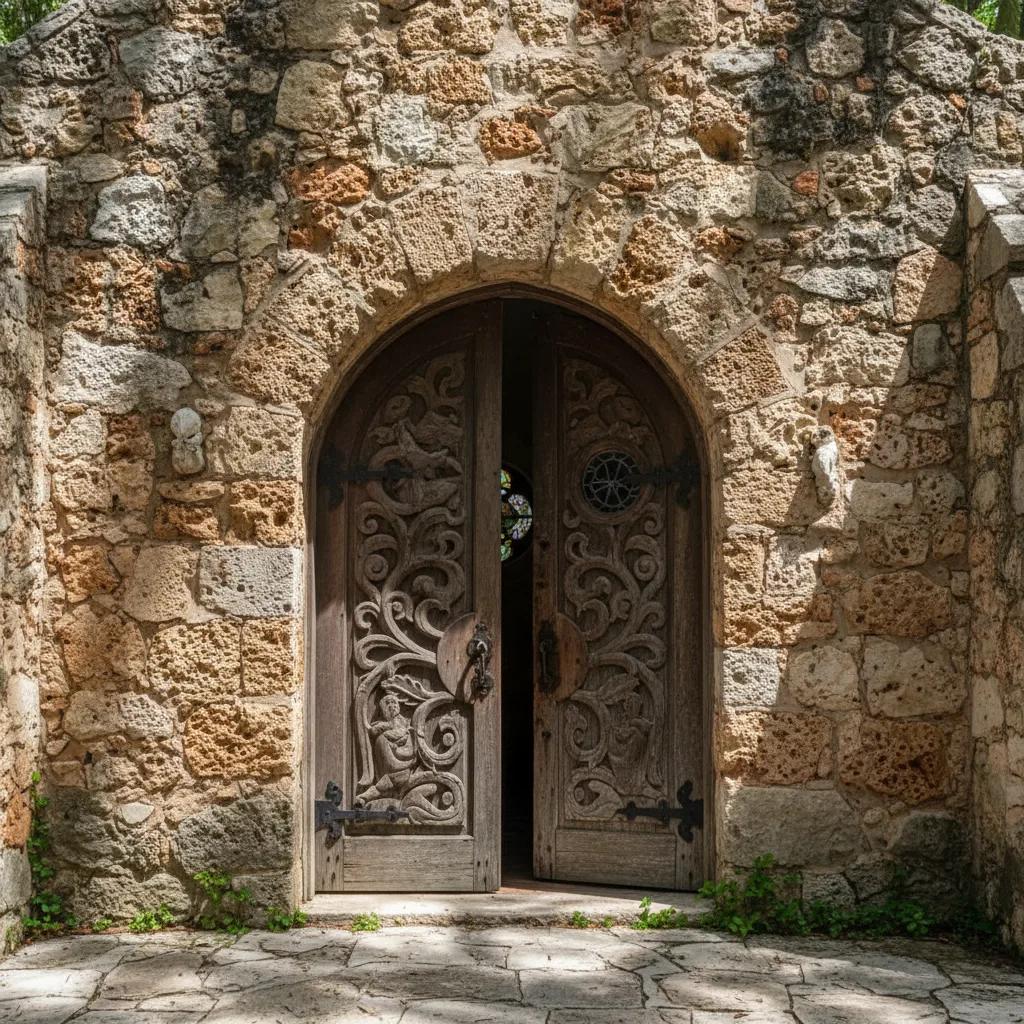
Head southwest along Devon Road to 3400 Devon Rd to behold the awe-inspiring sanctuary of Plymouth Congregational Church, completed in 1917. Conceived by architect Clinton McKenzie and built almost entirely by a single gifted Spanish stonemason named Felix Reboredo, this National Historic Landmark is widely regarded as one of the most romantic and acoustically sublime religious structures in Florida. Modeled after centuries-old Spanish mission churches of the American Southwest and Mexico, the sanctuary is constructed entirely of massive blocks of native coral limestone chiseled and mortared by hand.
Approach the main entrance portal to marvel at the massive, hand-carved walnut doors, which were originally crafted in the Pyrenees mountains of northern Spain during the early seventeenth century and transported to the church by congregation founder C.J. Rose. Surrounding the church is an ancient four-acre tropical hardwood hammock, where natural vines and climbing orchids drape the rough stone walls, giving the sanctuary the enchanting appearance of an ancient European monastery hidden deep within a Florida jungle.
Bahamian Craftsmanship Along Historic Charles Avenue
Stroll northward into the historic West Grove neighborhood along Charles Avenue, recognized as the first black settlement on the South Florida mainland. At 3242 Charles Ave stands the historic E.W.F. Stirrup House, built in 1897 by Bahamian immigrant developer Ebenezer Woodbury Franklin Stirrup. Stirrup arrived in Key West in 1888 before moving to Coconut Grove, where he worked clearing pine lands and became one of the largest landowners in South Florida. His two-story family residence represents the finest surviving example of Bahamian conch-style residential architecture in Miami.
Notice the home's distinctive rectangular massing, high-pitched hipped roof, and expansive front veranda framed by delicate wooden balusters. Constructed entirely from dense, termite-proof Dade County slash pine harvested locally, the house was built with vertical timber framing and louvered shutters that allowed cross-ventilation while providing storm protection. Stirrup went on to construct more than one hundred homes throughout the West Grove for fellow Bahamian immigrants, fostering a vibrant, self-sustaining community whose descendants still anchor the neighborhood today.
Vernacular Heritage at the Mariah Brown House
Continue along Charles Avenue to 3298 Charles Ave to inspect the landmark Mariah Brown House, erected in 1890. Mariah Brown was among the very first Bahamian settlers to purchase land and establish a permanent home in Coconut Grove, working as a domestic worker at the historic Peacock Inn. Her modest one-and-a-half-story wooden cottage represents the quintessential pioneer conch house, featuring a steep gable roof, horizontal weatherboard siding, and a welcoming front porch set back beneath leafy shade trees.
This historic structure holds profound cultural significance as a testament to the pioneering resilience of Bahamian families who laid the physical foundations of modern Miami. Their master craftsmanship, intimate knowledge of tropical building materials, and communal spirit helped shape Coconut Grove into a unique multicultural enclave that resisted urban homogenization for over a century.
Transit Logistics and Practical Architecture Stroll Notes
This self-guided historic architecture stroll spans approximately one point three miles along the tranquil, tree-shaded sidewalks of Main Highway, Devon Road, and Charles Avenue, requiring about sixty to seventy-five minutes to explore thoroughly at an unhurried pace. Because Coconut Grove is blessed with an expansive tropical canopy of live oaks and banyans, the walk remains pleasantly shaded and comfortable throughout the morning and early afternoon. The best lighting for capturing architectural details on coral rock facades is between nine and eleven in the morning.
Public transit connections are convenient: take the Metrorail Green Line or Orange Line to Coconut Grove Station, where you can transfer to the free Coconut Grove Trolley, which loops through the village center with stops along McFarlane Road and Grand Avenue. Shaded public parking is available at municipal lots near St. Stephen's Episcopal Church and Commodore Plaza. Karpo APP provides turnkey walking routes, GPS navigation, and in-depth historic pioneer bios, making your architectural exploration of Coconut Grove rich, rewarding, and historically authentic.
Ask Karpo for more information.
Keep reading
- Brickell Tailor Alteration Shop Finder: First Work Suit Fit
 Coconut Grove Tailor Alteration Shop Finder: Heat-Proof Fits
 Little Havana Tailor Alteration Shop Finder: Guayabera Fits