Interest in matt mcquillan canadian golfer can be a useful reason to slow down and learn the quieter rules of public golf in Miami. Crandon Golf at Key Biscayne is the right classroom because it is public, scenic, exposed to Biscayne Bay weather, and challenging enough to punish rushed decisions. The etiquette plan below is built for a sunny morning solo player who wants to arrive prepared, protect the course, avoid slowing groups behind them, and know when to pivot. Treat all operating details as live: tee times, weather alerts, cart directions, and range access can change faster than a swing thought.
Want a calm Key Biscayne golf plan before you book? Text Karpo for live Crandon checks, bus timing, weather cautions, and a course-care checklist you can use at the tee.

Crandon Golf at Key Biscayne Tee-Time Screen
Start with the official Crandon booking page, not a saved screenshot or an old rate post. The course lists 6700 Crandon Blvd., Key Biscayne, FL 33149, phone 305-361-9129, and daily public hours, but availability still depends on the reservation engine, events, maintenance, and weather. A respectful morning begins by choosing a tee time you can actually reach with at least thirty minutes to park, check in, warm up, and ask the shop about local course-care rules.
The failure mode is booking the earliest slot because it looks cooler, then arriving rushed and becoming the group everyone waits on. If the first practical time is gone, switch from a full round to the lighted driving range or a later nine-hole-style practice block elsewhere in Miami-Dade. Solo players should expect possible pairing. That is not a penalty; it is the public-course rhythm, and etiquette starts with accepting it clearly.
Key Biscayne Heat, Lightning, and Shade Decisions
Miami’s summer morning can feel playable at sunrise and punishing by late morning. The City of Miami’s heat guidance emphasizes air conditioning, light clothing, fluids, and avoiding strenuous activity during extreme heat, while South Florida storms can turn open fairways unsafe quickly. For Crandon, pack water, sunscreen, a hat, and a towel, then check the National Weather Service or local alerts before leaving Brickell, Coconut Grove, Miami Beach, or Downtown.
The practical tradeoff is simple: a sunny morning is better for pace, visibility, and mood, but it is not a guarantee of safe conditions through eighteen holes. If thunder is heard, course staff instructions override your plan. If heat index warnings or personal symptoms make the round feel questionable, stop at the pro shop, shorten the session, or move the learning goal to putting, chipping, and etiquette observation rather than endurance.
Route 26 Bus or Rickenbacker Causeway Drive
Miami-Dade’s Better Bus information lists Route 26 as weekday and weekend service from Brickell Station to Key Biscayne via the Rickenbacker Causeway, serving Virginia Key and Crandon Park. That makes transit plausible for a solo learner carrying a light bag, but it is still a golf trip, not a casual coffee run. Check live bus arrivals, walking distance, bag rules, and the return window before choosing transit over driving.
Driving gives more control over clubs, shoes, water, and a post-round change of clothes, but Rickenbacker and Crandon parking can still add friction. Crandon Park’s official page lists park parking fees and park rules separately from golf operations, so do not assume one payment or one entrance covers every scenario. The etiquette angle here is punctuality: whichever mode you choose, build a buffer so traffic does not become your playing partners’ problem.
Pro Shop Question at 6700 Crandon Boulevard
The most useful sentence at check-in is direct: “What course-care rules should I follow today?” USGA guidance says divot policies can vary by course, grass, season, and weather; some places prefer replacing intact divots, others prefer filling with mix. Crandon’s bayfront setting, saltwater lakes, mangroves, and maintenance needs make local instruction more important than generic advice learned online. Ask before the first tee, then do exactly that.
That question also helps accessibility planning. Miami-Dade says its golf courses are accessible for persons with disabilities and that a single-rider golf cart is available for people with mobility impairment with at least 24 hours’ notice by contacting the course manager. If mobility, stamina, or sensory load affects your round, arrange support in advance. Showing up and improvising may work sometimes, but verified access planning is the respectful version.
Divot Mix Bottle on the Fairway
USGA course-care guidance is clear that unrepaired divots affect both turf recovery and the next player’s lie. If the divot is intact and has soil attached, replace it in the correct direction and press it down firmly with your foot. If it has shattered or the shop directs you to use mix, fill the scar to the right level and smooth it. Overfilling is its own mistake because it can create playability and mowing problems.
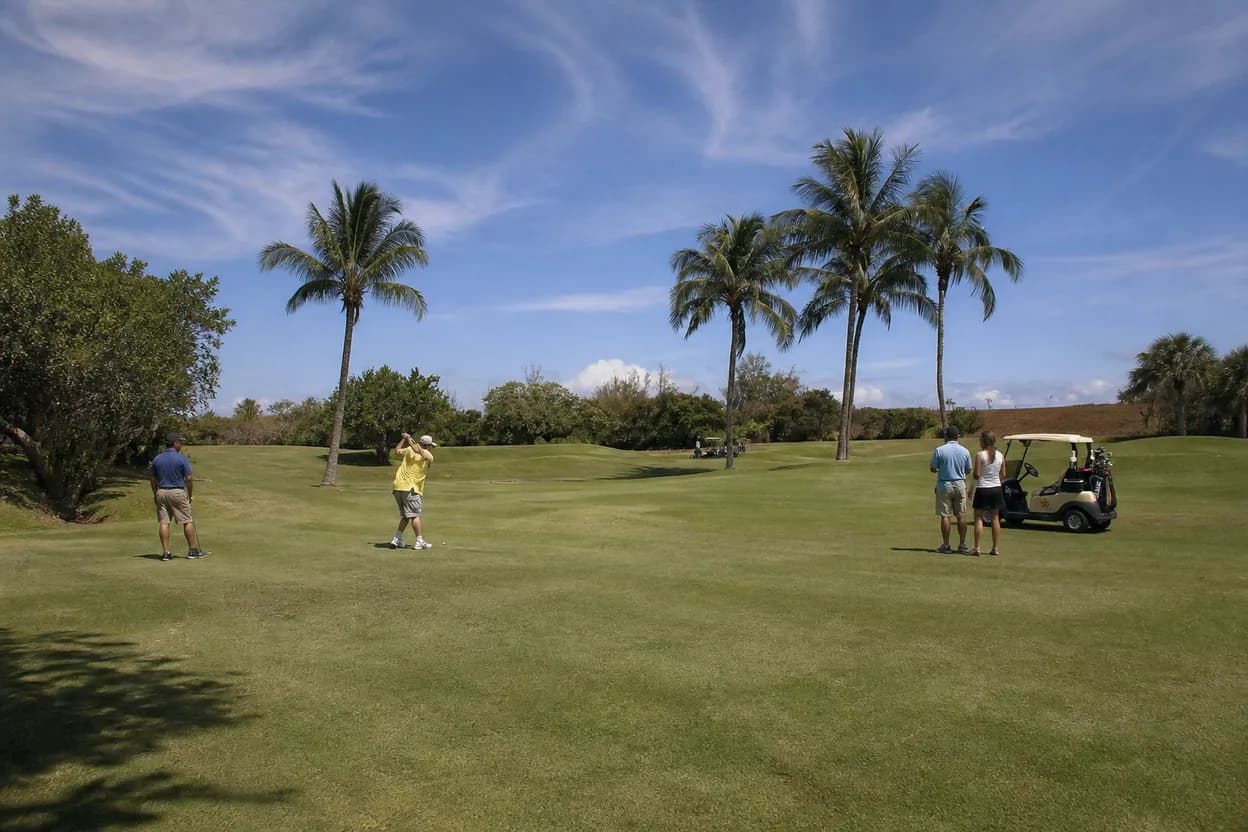
At Crandon, the course’s difficulty and water-lined holes already give players enough to manage, so course care should be automatic rather than dramatic. Keep the cart’s sand bottle or divot mix in view, repair your own mark, and when pace allows, fix one extra. The limit matters too: do not wander back across a fairway hunting every scar while a group waits behind you. Responsible etiquette balances repair with pace.
Ball-Mark Tool on Crandon’s Putting Greens
On the green, carry a coin or marker and a simple repair tool. USGA Rules content says a player may mark, lift, and clean a ball on the putting green, and may repair most damage there, except natural wear and certain course conditions. For ball marks, the recommended method is to push turf gently toward the center from the edges, then tamp smooth with a putter, avoiding lifting or twisting that damages roots.
This is where a reflective solo round can become useful public learning. Watch how experienced local players move: mark before cleaning, avoid stepping on another line, repair quietly, and be ready when it is your turn. The failure mode is treating etiquette as ceremony instead of efficiency. If you are uncertain whose turn it is, ask briefly. Clear communication is faster and less awkward than freezing over a three-foot putt.
Crandon Park Backup Stop Before Leaving
Crandon Park is more than the golf course, but the backup should still respect official boundaries. The county page lists a beach, nature center, preserves, tennis facilities, and park rules, including no glass containers and no pets except service animals. If a round is delayed, canceled, or too hot, use the park as a low-pressure reset only where access is open and appropriate. Do not drift into maintenance areas, mangroves, or closed course edges.
Your final action is verification, not optimism. Before leaving home, open the Crandon tee-time page, call the golf shop if anything is ambiguous, check Miami-Dade transit or parking needs, and review current weather alerts. At arrival, confirm divot method, cart rules, range status, and any course restrictions posted that morning. If one key piece cannot be confirmed, choose the backup plan. Good etiquette in Miami starts before the first swing.
Tags: #MiamiGolf #CrandonGolf #KeyBiscayne #PublicGolf #GolfEtiquette #CourseCare #MiamiDadeParks #RickenbackerCauseway #SoloGolf #MorningGolf #AccessibleGolf #HeatSafety #AskKarpo #BeforeYouGo
Sources consulted: Source 1: golfcrandon.com · Source 2: golfcrandon.com · Source 3: miamidade.gov · Source 4: miamidade.gov · Source 5: usga.org · Source 6: wwwx.miamidade.gov
All trademarks are the property of their respective owners.
Ask Karpo first
Tell Karpo your date, group size, budget, and starting point. We’ll check current access, timing, transit, and the cleanest Miami plan for Crandon Golf at Key Biscayne before you head out.