
A Miami flash flood warning is not a vibe check, a traffic rumor, or a reason to crowdsource safety from a group chat. It is a specific public-safety signal that should change what you do next. The National Weather Service says a Flash Flood Warning means a flash flood is imminent or occurring, and people in flood-prone areas should move immediately to high ground. Miami-Dade Emergency Management also reminds residents to prepare for flooding, especially in low-lying areas, near water, or downstream from a dam. Use this guide as a city-level planning framework for Tuesday, August 11, 2026, but verify current alerts, road conditions, shelter information, transit status, and event changes on official sources before acting.
Want a faster way to sanity-check a storm-season plan before you cross Miami? Text Karpo with your neighborhood, destination, and timing, and we’ll help you build a verify-first checklist.

Translate The Search Into A Neighborhood Question
When people search for a Miami flash flood warning, they are usually asking something more local: Can I still drive from Brickell to Little Havana? Should I leave Miami Beach now or wait? Is it safer to stay near Downtown, Coconut Grove, Wynwood, Doral, or the airport? The first move is to stop treating the alert as a citywide abstraction and turn it into a route, building, family, pet, work, or pickup question.
Use the National Weather Service flood safety page to understand the alert language before making that call. A Flood Watch means conditions are favorable for flooding, but flooding is not guaranteed. A Flood Warning means flooding is imminent or already happening. A Flood Advisory can still create significant inconvenience and, without caution, may lead to situations that threaten life or property. Before you leave, verify the current alert details directly with the official weather source, not screenshots or reposts.
Choose The Area By The Actual Task
Miami planning gets messy because the same storm can affect different errands differently. A grocery run, a commute, a hotel check-in, a school pickup, a beach plan, and a medical appointment do not deserve the same risk calculation. Miami-Dade Emergency Management says its department coordinates disaster preparedness, response, recovery, and mitigation needs countywide, and its site links to emergency preparation, evacuation, storm surge planning zones, emergency alerts, flood preparation, and family emergency planning.
Start with the task you actually need to complete. If it is essential, check Miami-Dade Emergency Management for emergency information, evacuation planning, storm surge planning zones, and Miami-Dade Alerts. If it is optional, such as dining, sightseeing, an event, or a beach stop, check the official organizer, venue, tourism, or government page for current status before going. Do not infer that something is open, safe, reachable, or unchanged just because it appeared on a calendar earlier.
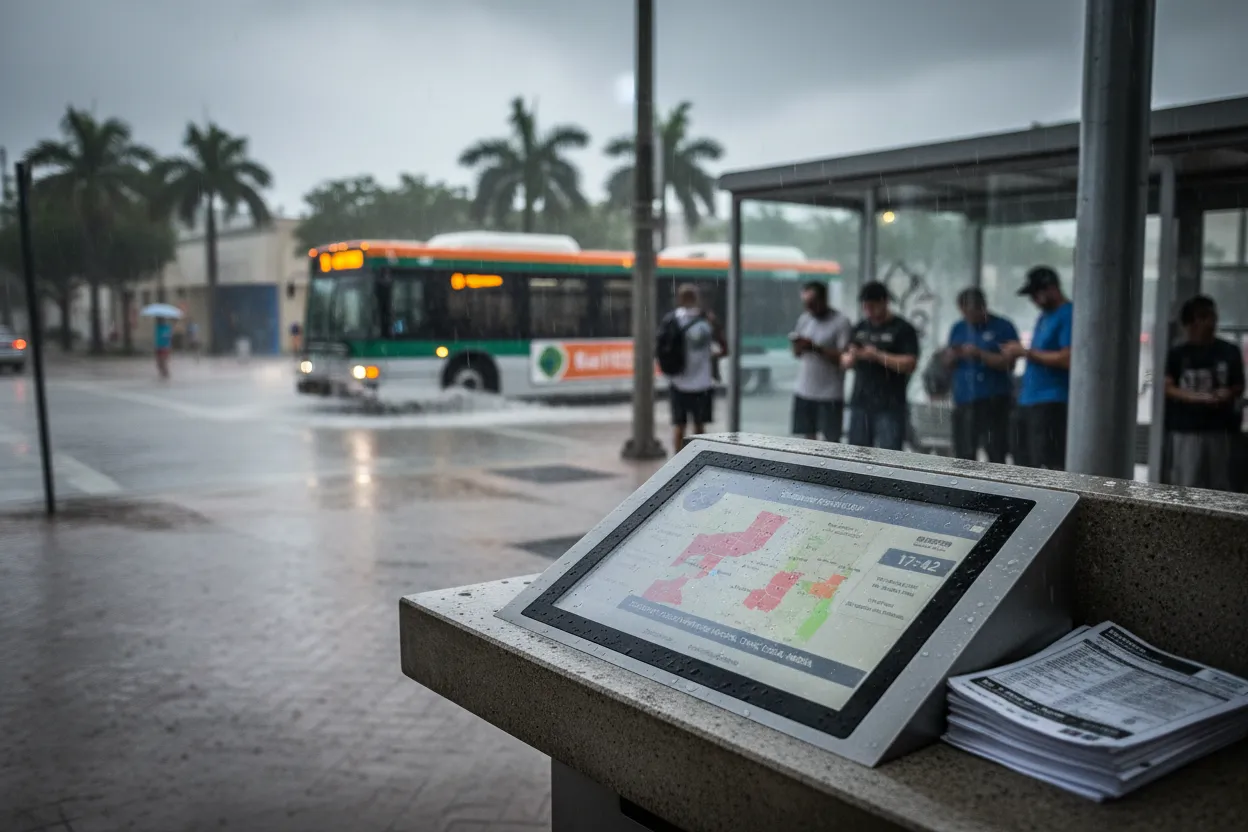
Use Transit Exits As Planning Anchors
Even if you drive, think like a rider during storm season: where could you stop, turn around, wait indoors, or avoid a low-lying crossing? The National Weather Service describes a flash flood as a sudden violent flood that can take minutes to hours to develop, and it notes that flash flooding can occur even in areas not immediately receiving rain. That means your starting point may feel manageable while your destination or middle segment is not.
Pick a route with decision points, not just a fastest-path map. Identify indoor public places, garages, stations, lobbies, or other lawful waiting options only after verifying they are open and accessible through the official operator or property source. If you are using public transit, rideshare, airport access, or event shuttles, verify live service status and pickup rules on official transit, airport, venue, or provider channels before you move. This guide does not claim any live transit condition.
Add One Indoor And One Outdoor Backup
A useful Miami storm-season plan has two backups: one indoor pause point and one outdoor high-ground or safer-route alternative. The indoor backup is for waiting out heavy rain, reconnecting with your group, charging a phone, or avoiding a flooded street. The outdoor backup is not a hangout; it is the safer direction you already chose in case water blocks your first plan. If a Flash Flood Warning applies to your area, the National Weather Service says to take action and move immediately to high ground if you are in a flood-prone area.
For visitors and residents building flexible plans, the official Greater Miami & Miami Beach site can help identify neighborhoods, beaches, attractions, arts and culture options, and visitor information. Treat it as a discovery tool, not a live safety clearance. Before heading to any beach, attraction, restaurant, hotel, event, or outdoor activity, verify current conditions, operating status, cancellations, closures, and safety instructions on the linked official page or the site run by the venue or public agency.
Avoid Treating Online Attention As A Promise
Miami is built for photos, recommendations, and last-minute plans, which is exactly why flood-warning decisions need extra skepticism. A reel from Ocean Drive, a repost from Wynwood, a restaurant story, or a friend’s “it looks fine here” message may be true for one block and useless for yours. The National Weather Service alert categories are more important than online momentum: watch means be prepared, warning means take action, advisory means be aware and use caution.
The official Greater Miami & Miami Beach site promotes the region’s beaches, culinary scene, arts and culture, neighborhoods, events, hotels, and things to do, but event listings, webcams, deals, and visitor pages can change. Before buying, booking, ordering, driving, or meeting someone, verify today’s status on the official page for that specific place or agency. Online attention is not a promise of safe roads, available parking, operating hours, tickets, tables, hotel inventory, or weather-safe access.
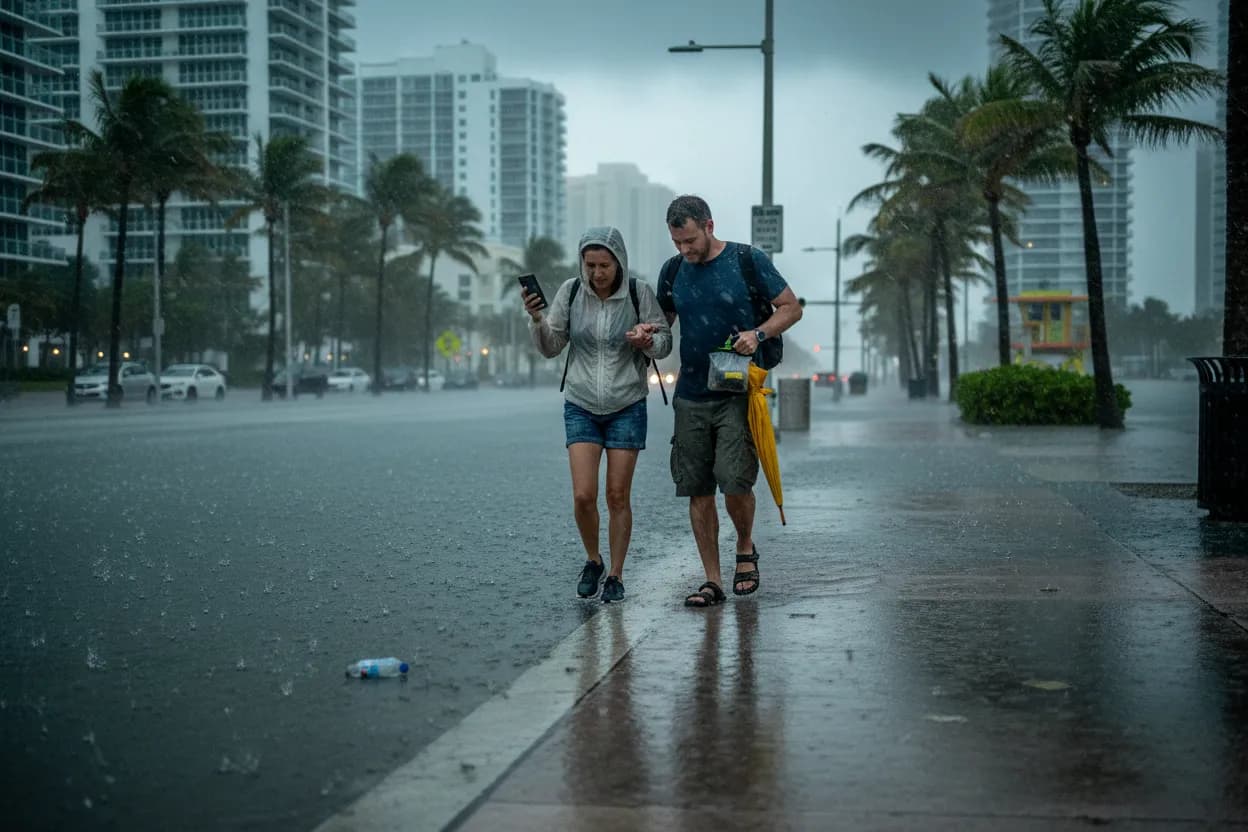
Verify Conditions Before Crossing The City
Before crossing Miami during storm season, run a short official-source checklist. Check the National Weather Service for the current flood watch, advisory, warning, or flash flood warning language. Check Miami-Dade Emergency Management for countywide emergency information, Miami-Dade Alerts, evacuation preparation, storm surge planning zones, flood preparation, and family emergency planning. If you or someone in your household needs specialized transportation or has medical needs that prevent independent evacuation, review the Emergency & Evacuation Assistance Program information directly with the County.
Then verify the destination. For beaches, events, attractions, hotels, restaurants, public buildings, airport travel, transit, and bookings, use the official source responsible for that place or service before acting. Hurricane season runs from June 1 to November 30, according to Miami-Dade Emergency Management, but storm-season planning is not limited to a date on a calendar. A safer plan is specific, current, and boring in the best way: know the alert, know the route, know the backup, and know when not to go.
Tags: #Miami #MiamiWeather #FlashFloodWarning #FloodSafety #StormSeason #MiamiDade #EmergencyPreparedness #NeighborhoodGuides #BeforeYouGo #AskKarpo #WeatherAlerts #FloodWatch #TravelSmart #SafetyFirst
Sources consulted: Miami-Dade Emergency Management · National Weather Service Flood Safety · Visit Miami
All trademarks are the property of their respective owners.
Ask Karpo first
Ask Karpo first when a Miami plan depends on weather, flooding, transit, events, or a cross-town drive. Send the neighborhood, destination, timing, and must-do errand, and we’ll help you separate official checks from wishful thinking before you go.