 Brickell Tailor Alteration Shop Finder: First Work Suit Fit
Neighborhood Guides
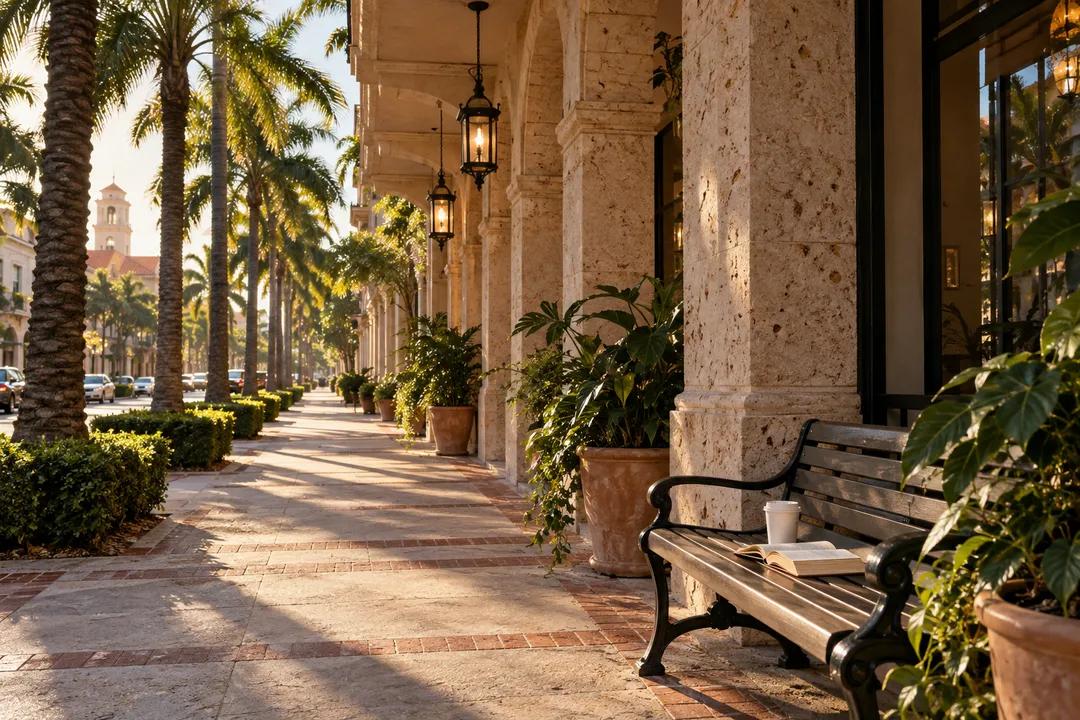
Cozy Coffee Reading Route in Coral Gables: Quiet Loop
Build a Coral Gables coffee reading route around a short walk, steady shade, and a backup seat. Use a quiet loop so the book stays central when plans change.
A Coral Gables coffee reading route works best when shade and pacing matter as much as the drink. Use the route as a flexible sequence: set a walking limit, ask for a calm reading setting, pick one main coffee stop, and reserve a nearby fallback that does not require crossing the whole district. The result is a gentle outing, not a checklist of cafés to conquer.
Protect the shade budget
Give the route a clear door-to-door limit, then reserve time for choosing a seat. In Coral Gables, shade can change how pleasant a short walk feels, so make it a filter rather than a vague hope. If your window is 50 minutes, keep the reading block central and let the approach stay short. A route that looks elegant on a map can still be tiring in heat.
Turn preferences into filters
Use concrete terms: shaded approach, calmer table, paperback reading, one coffee stop, and no need for a long loop. Add a walking ceiling and your latest return time. This tells Karpo APP what to prioritize without requiring a particular shop name. You are building a decision set, not asking for a guaranteed reservation or a live seat count.
Read the arcade as a sequence
Coral Gables has arcaded, garden-like passages that invite browsing. Choose one visual anchor for the outward leg and a different anchor for the return only if the time allows. Keep the first stop close enough that you can reverse course. The route should still work if you skip every decorative detour and go straight back after the last page.
The first-minute seat check
Scan for a chair that lets your elbows rest naturally, a table that does not block circulation and light that does not glare across the page. If the room is busy, accept a less picturesque seat with better concentration. Staff should not have to rearrange tables for a reading session. A tidy, compact setup communicates that you understand the café is shared space.

Choose a low-maintenance drink
Select the coffee or tea that fits your pace and leaves one hand free for the book. Add a small bite only if it suits your pace and keeps the reading window intact. The point is to match the stop to your available time. Finish ordering before opening the book, then let the table become quiet.
A stroll with a purpose
Use the first few minutes outside to notice arcades, palms, tile, and the way shade cuts across the sidewalk. You are not collecting landmarks; you are resetting attention. A short walk before reading can help, while a long walk afterward may steal the time you protected. Decide in advance whether the return is direct or exploratory.
Keep conversation optional
If you are meeting someone, agree that the reading block is quiet and the walk can hold the conversation. Solo readers can choose a seat with a little visual separation without treating the café as a private library. The route succeeds when everyone understands the rhythm. A shared quiet hour is different from asking a busy café to become silent.
Heat and rain fallback
If the approach feels punishing, remove the outdoor loop and select the nearest indoor candidate that still matches your seat preference. If rain arrives after you settle, finish a natural stopping point and return directly. Keep your fallback saved before leaving. The point is to preserve the reading appointment with yourself, not to prove that the original route was perfect.
A useful APP prompt
Write: “Starting in Coral Gables, I have 75 minutes for coffee and a paperback. Prioritize shade, a calm seat, a short approach and a direct return; give me one fallback if rain starts.” That language gives Karpo APP a task it can organize. Read the results as candidates, compare the tradeoffs, and make the final room decision at arrival.
Practical Notes
Bring sunglasses for the walk, a bookmark that will not blow away, and a simple return deadline. Keep one main stop, one nearby alternative and one shortened version of the route. Do not add a second coffee because the first walk was easy. End with a note about what made the seat work; that detail will improve your next request and keep future routes personal.
Give the chapter a landing
Mark a natural stopping point before you sit, then let the final minutes be for closing the book, packing neatly and leaving. This prevents the route from ending in a rushed scramble. The strongest reading breaks create a small after-image: one paragraph remembered, one shaded walk, and enough margin to meet the next obligation.
Keep the shortlist human-sized
Two candidates are usually enough for this route. A third can be a weather fallback, but a list of ten cafés turns a quiet outing into research. Read the options for tradeoffs, choose the one that best fits your time, and stop searching. A decision is part of the experience, not a failure to find the perfect place.
Share space without apologizing
You do not need to apologize for reading, and you should not treat a café as a silent study hall. Order something, keep belongings compact, and make room for other guests. That balance lets you enjoy a page without asking the room to change its character. Courtesy makes the calm feel earned rather than claimed.
Write down the return cue
Before leaving, note the corner, arcade or tree that marks your route back. A physical cue keeps you from opening the map repeatedly and makes the walk feel continuous. If the cue disappears in rain or darkness, use the saved fallback and return directly. The route should remain legible in your own memory.
Coral Gables works best as a measured loop because the visual rhythm changes every few blocks. Start by choosing whether you want an arcade edge, a garden-facing pause, or a table tucked away from the main pedestrian flow. That preference matters more than collecting several coffee names. Keep the first walk short enough that you can reverse it without checking a map again, then protect a reading window before adding any scenic extension. If you are meeting someone, agree on the point where conversation ends and the book begins; otherwise a beautiful setting can become an unplanned lunch. Karpo APP is useful here when you describe the atmosphere in practical terms: natural light, low conversation, an easy walk, and a fallback that stays close. Ask for two route lengths so you can choose in the moment. The goal is not to optimize every block; it is to make the next page feel easy to reach.
Ask Karpo for more information.
Keep reading
- Brickell Tailor Alteration Shop Finder: First Work Suit Fit
 Coconut Grove Tailor Alteration Shop Finder: Heat-Proof Fits
 Little Havana Tailor Alteration Shop Finder: Guayabera Fits