 South Miami Pet Boutique Since 1986: Dog From Ipanema
Hidden Gems & Odd Finds
Burger King Was Born in Miami: A Hometown History Tour
The Whopper started here in 1954, and the original site, franchise history, and flame-broiled legacy still mark the city.
The first Burger King opened in 1954 at 3090 Northwest 36th Street, a stretch of road that was then the edge of the city's western sprawl and is now a working-class corridor lined with tire shops, botanicas, and auto-glass repair. The founders, James McLamore and David Edgerton, met at Cornell's hotel school and chose Miami because the city was booming with new highway construction and a growing appetite for car-friendly food. They licensed the Burger King name from an earlier operation in Jacksonville, then rebuilt the concept around a custom flame-broiler called the Insta-Broiler, which let them cook burgers faster than the competition without sacrificing the char that made people line up.
Text Karpo for a route that strings together the history stops, checks which museums or archives are open today, and reroutes you if afternoon storms roll in off Biscayne Bay.
The Original Site and What Stands There Now
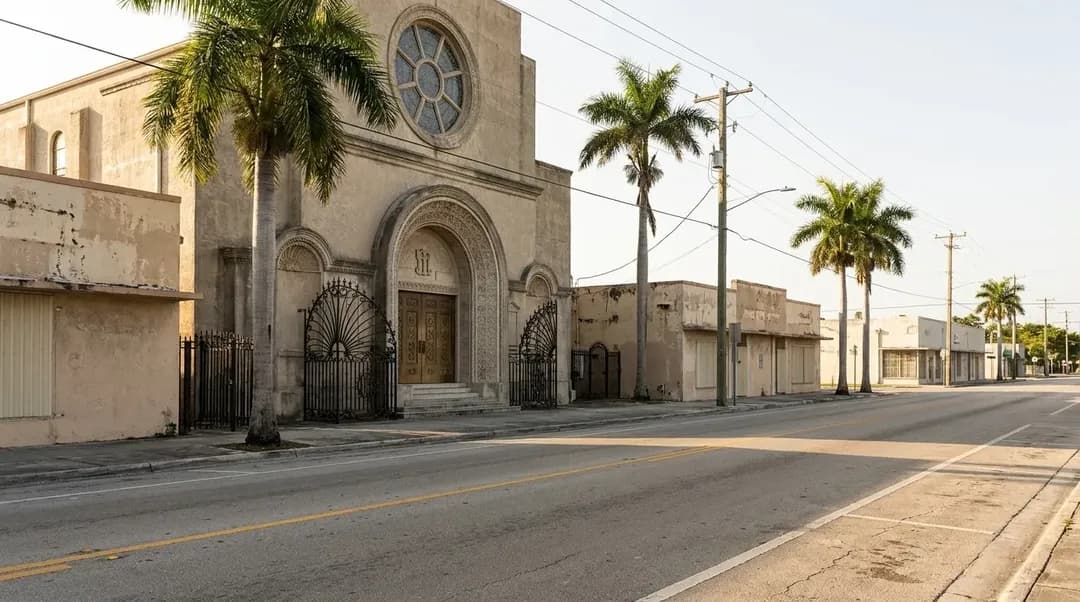
The original building is gone. The site has been redeveloped more than once, and today the block is occupied by a mix of small retail and service businesses. There's no plaque, no marker, nothing that signals the address was ground zero for a chain that now operates in more than a hundred countries. If you drive the block slowly, you'll notice the width of the street—it was built for the kind of mid-century car traffic that made drive-ins viable—and the way the storefronts still sit back from the road with wide apron parking, a layout that made sense when carhops were part of the model.
To understand what Burger King looked like in its first iteration, you need to visit HistoryMiami Museum downtown, where the permanent collection includes mid-century Miami commercial ephemera. The museum occasionally rotates in photographs and advertising from the 1950s restaurant boom, though the collection is not always on display. Call ahead or check their online calendar to confirm what's currently in the galleries. The research library, open by appointment, holds city directories, business permits, and newspaper archives that document the early franchise expansion along the Tamiami Trail and up Biscayne Boulevard.
The Neighborhood That Shaped the Business Model
Burger King's Miami success wasn't just about the burger. It was about location strategy. McLamore and Edgerton opened their second and third stores along corridors where new subdivisions were pushing into former farmland and Everglades fringe. They picked sites near schools, near the new expressway on-ramps, and near the causeways that funneled beach traffic back into the city at dinnertime. The chain's early growth mirrored Miami's car-dependent sprawl, and by the early 1960s, there were more than a dozen Burger King locations ringing the city, each one positioned to catch drivers who didn't want to sit down in a restaurant.
One of the longest-operating Burger King locations in Miami-Dade sits on Biscayne Boulevard just south of the Little Haiti intersection, a stretch where the road widens and the older motels and used-car lots give way to fast-food clusters. The building has been remodeled several times, but the setback and the drive-thru lane still follow the original 1960s footprint. Park on the side street if you want to walk around the block and see how the loading dock, the dumpster enclosure, and the utility lines are all tucked behind a landscaped berm—a design refinement that came out of Miami's early franchise experiments and became standard across the system.
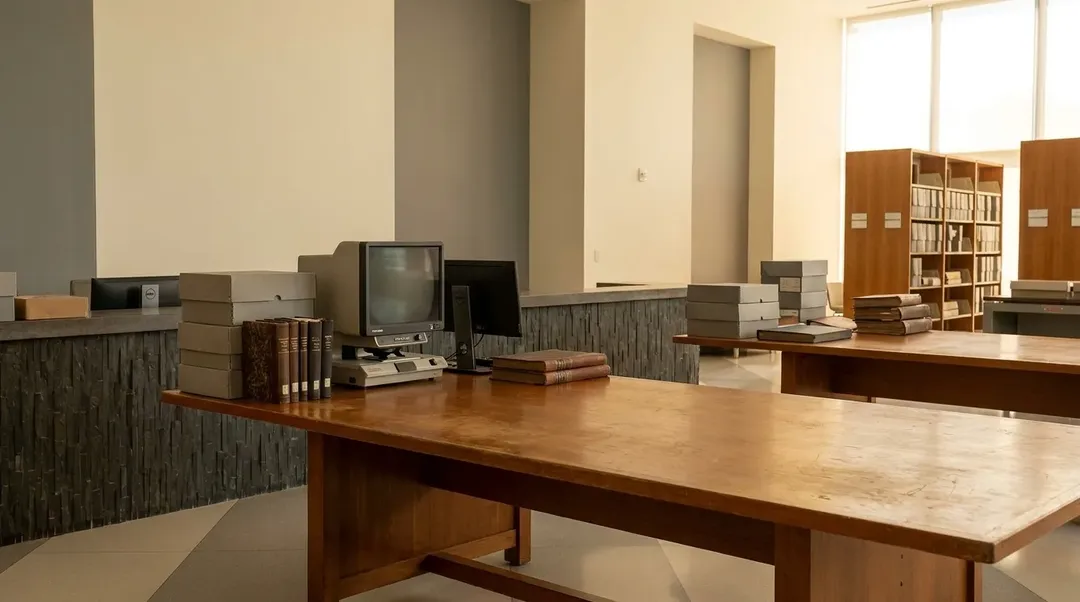
Little Haiti itself is worth a longer stop. The neighborhood's commercial strip along Northeast 2nd Avenue is dense with Creole bakeries, record shops selling kompa and rasin, and botanicas stocked with candles and oils. The Caribbean Marketplace, a public plaza with pastel-painted vendor stalls, hosts a weekend food market where you can buy griot, pikliz, and fresh sugarcane juice. If you're tracing Burger King's Miami story, this is the neighborhood context: a city built by waves of migration, where fast food and street food have always shared the same blocks.
When to Visit Without Fighting Traffic
Timing this route matters. Northwest 36th Street is a commuter artery, and between 7:30 and 9:30 in the morning and again from 4:00 to 6:30 in the evening, traffic slows to a crawl. The Biscayne Boulevard corridor is better in mid-morning or early afternoon, but if you're heading to HistoryMiami Museum downtown, factor in causeway traffic if you're coming from the beach, and give yourself an extra twenty minutes for parking. The museum's neighborhood has metered street parking and a few paid garages; the garage under the Frost Science Museum next door is the most reliable if the street is full.
Afternoon storms are a fact of Miami summer life, and they roll in almost like clockwork between 2:00 and 5:00 PM from June through September. If you're planning to walk any of the historic blocks or spend time in Little Haiti, start early or wait until late afternoon when the rain has passed and the light turns soft and golden. The storms are brief but heavy, and sidewalks flood fast in older parts of the city where the drainage was built for a smaller population.
The best day to do this tour is a weekday morning after 9:30, when traffic has eased and the museum is open but not crowded. Saturdays work if you're willing to share the Little Haiti market with weekend shoppers, but Sundays can be quiet to the point where some of the smaller shops are closed. Confirm HistoryMiami's hours on their website before you go; the museum occasionally closes for private events or rotates exhibits without much advance notice.
A Quieter Route Through Franchise History
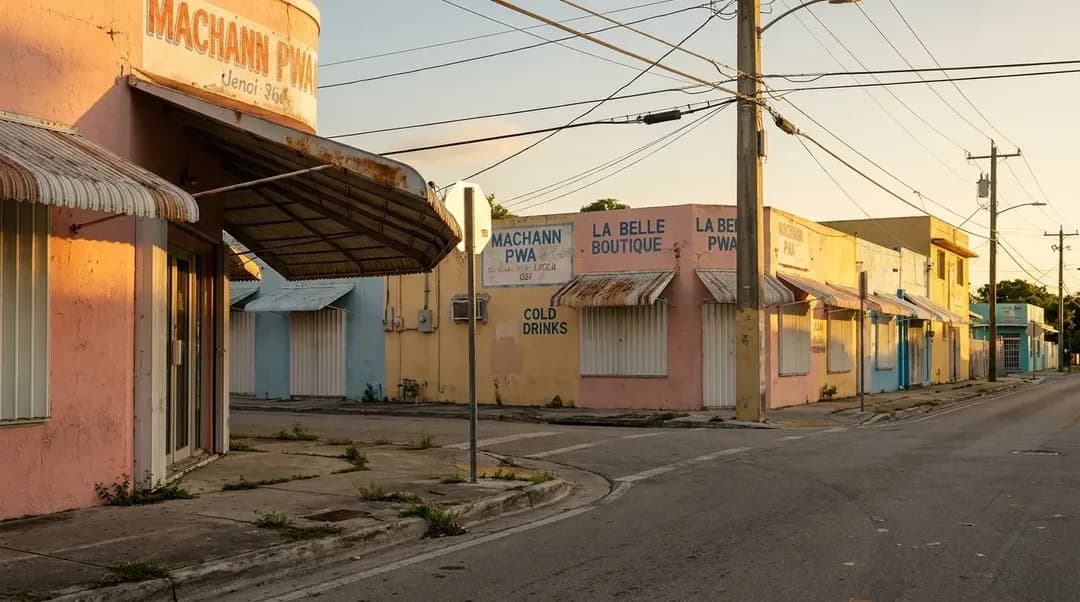
If the original Northwest 36th Street site feels too anonymous, consider starting at the Main Library downtown, where the Florida Collection holds Miami Herald microfilm dating back to the 1950s. The library is open to the public, and the reading room staff can help you pull reels that cover the early Burger King openings, the franchise wars with McDonald's, and the way local columnists wrote about the shift from sit-down diners to drive-thrus. It's a slower, more archival way into the story, but you'll come away with a sense of how Miami itself was changing at the same time the chain was expanding.
From the library, it's a short walk to the Freedom Tower, which now houses a museum dedicated to Miami's role as a gateway city. While the exhibits focus on immigration and exile, the building's ground-floor corridors often display historic photographs of Biscayne Boulevard in its mid-century heyday, when new restaurants and motels competed for attention with neon signs and modernist facades. You'll see the visual language that Burger King borrowed: clean lines, bright colors, and architectural features designed to be read from a moving car.
Another option is to drive south along U.S. 1 through Coconut Grove and into Coral Gables, where several early Burger King locations were built in the 1960s. The chain's presence in Coral Gables was contentious—city planners worried that drive-thrus would clash with the Mediterranean Revival aesthetic—and the compromises are still visible in the way the buildings are set back and screened by hedges. It's a quieter, leafier route than the original Northwest corridor, and the contrast shows how Burger King adapted its model to fit different parts of the city.
What to Double-Check Before You Go
HistoryMiami Museum's hours and current exhibits change, so confirm on their website or call ahead. The research library requires an appointment, and it's closed on Mondays. If you're planning to spend time in the stacks, bring a library card or government-issued ID. The museum's parking garage is shared with other institutions, so arrive early if you're visiting on a weekend or during school vacation weeks when the science museum next door draws family crowds.
The original Burger King site on Northwest 36th Street is not marked and not set up for visitors. It's a regular commercial block, and the businesses there have no connection to the chain's history. If you stop, be respectful: park legally, don't block driveways, and treat it as a quick photo stop rather than a destination. The same goes for the older franchise locations along Biscayne Boulevard—they're working restaurants, and the staff won't have historical details to share.
Little Haiti's commercial blocks are safe during the day, but parking can be tight. Look for metered spots on Northeast 2nd Avenue or use the small public lot near the Caribbean Marketplace. The neighborhood gets quieter after dark, and some of the smaller shops close by 6:00 or 7:00 PM. If you're visiting the weekend market, bring cash; not all vendors take cards, and the ATM nearest the plaza sometimes runs out.
If you're interested in the broader history of Miami's fast-food boom, consider pairing this route with a stop at the Coral Gables Museum, which occasionally features exhibits on mid-century commercial architecture and urban planning. Check their schedule online. The museum is small, and visits rarely take more than an hour, but the context it provides—how zoning, car culture, and migration shaped the city—makes the Burger King story feel less like a quirky footnote and more like a chapter in a much larger transformation.
Practical notes
- HistoryMiami Museum downtown requires paid parking; the closest garage is under Frost Science Museum.
- The original Burger King site on NW 36th Street has no marker and is now mixed retail; it's a quick photo stop, not a destination.
- Little Haiti's Caribbean Marketplace is busiest on weekends; bring cash for food vendors and street parking meters.
- Afternoon storms June through September typically hit between 2:00 and 5:00 PM; plan indoor stops or start early.
- Biscayne Boulevard traffic is heaviest during weekday rush hours; mid-morning or early afternoon is smoother.
- Confirm HistoryMiami's current exhibits and research library hours online before your visit; closed Mondays.
Tags: #karpo #miami #burgerking #miamihometown #miamitour #miamifood #littlehaiti #historymiami #midcenturymiami #miamistory #fastfoodhistory #theoddedit #miamioddities #visitmiami #miamicroutes
Sources consulted: HistoryMiami Museum · Miami-Dade Public Library Florida Collection · Coral Gables Museum
All trademarks are the property of their respective owners.
Ask Karpo first
Text Karpo for a live route that connects the original Burger King site, HistoryMiami Museum, and Little Haiti, with real-time checks on museum hours and parking availability. Karpo can also suggest a rain backup if storms are forecast and reroute you to the Main Library's Florida Collection or the Coral Gables Museum for archival deep dives.
Ask Karpo for more information.
Keep reading
- South Miami Pet Boutique Since 1986: Dog From Ipanema
 Pet Boutique Since 1999 in Coconut Grove: Lovely Pets
 Coral Gables Pet Boutique Open Sundays: Woof Gang Bakery