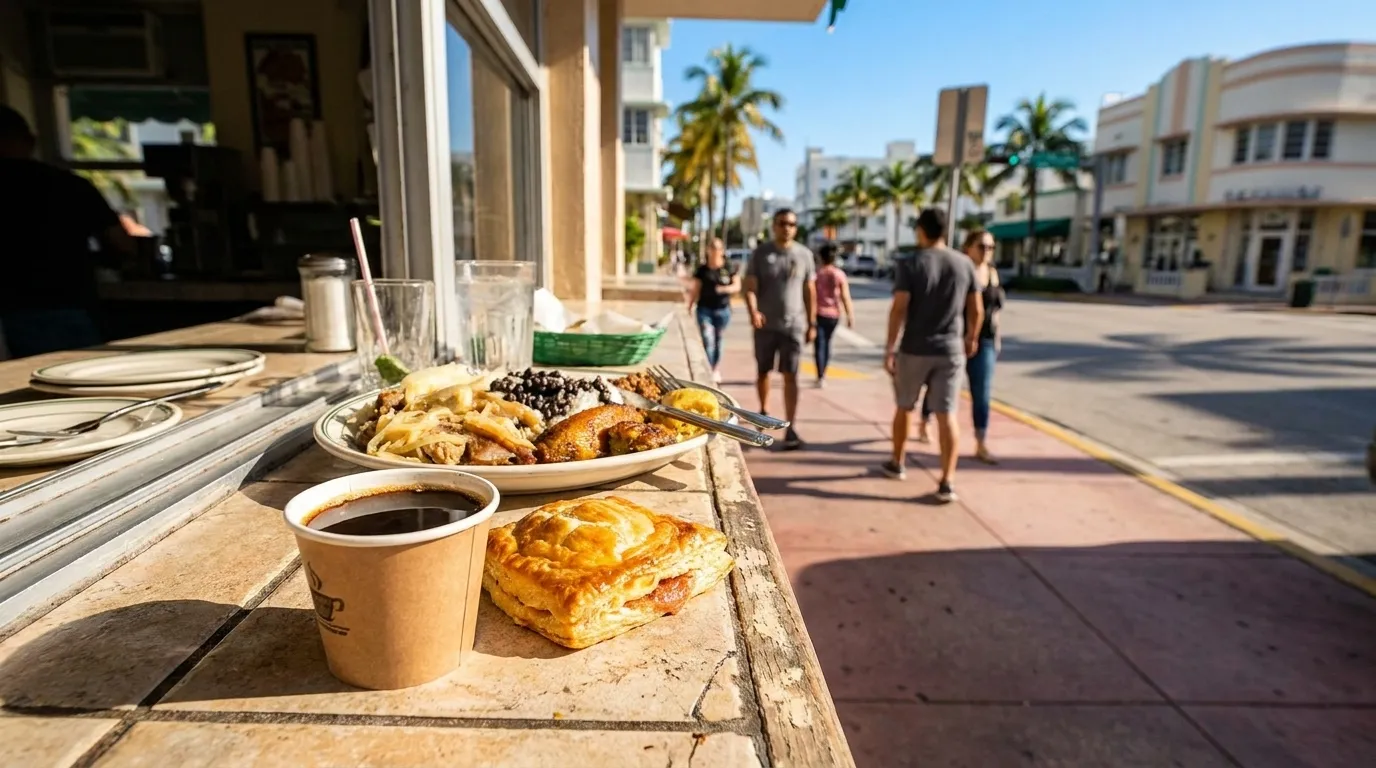
Miami mornings don't begin with table service or a twenty-minute wait for eggs Benedict. They start at a ventanita—a walk-up window—where you order a cortadito, grab a guava pastelito wrapped in wax paper, and keep moving. The city's breakfast culture is a mashup of Latin American commuter rituals and a newer wave of bakeries that treat fermentation like a religion. You can do both in one morning if you time it right.
Karpo keeps track of what's open early, what sold out by 9 a.m., and which window has the shortest line right now.

Versailles ventanita: the commuter standard
The ventanita at Versailles on Calle Ocho is the gold standard for Miami breakfast on the go. Forget the sit-down dining room—locals head straight to the outdoor window on the 35th Avenue side. You'll see construction workers, nurses coming off shift, and retirees in guayaberas all ordering the same thing: a cortadito (espresso cut with steamed whole milk, prepped sweet unless you specify otherwise) and a pastelito de guayaba or croqueta preparada. The coffee is strong enough to rewire your morning and costs around two dollars. The pastries come out of the oven in waves starting at 8 a.m., so if you arrive mid-morning, ask what just came out—flaky, warm pastelitos beat room-temperature ones every time.
The ventanita rhythm is fast. You order, pay, step aside, and your coffee appears in thirty seconds. No names, no table numbers. It's designed for people who have somewhere to be. Regulars know to drink the cortadito right there—it's served in a small paper cup, and the first sip is the best one. If you want something more substantial, the croqueta preparada is a pressed Cuban sandwich with a ham croquette inside, which sounds redundant until you try it. Park on a side street; the main lot fills early.
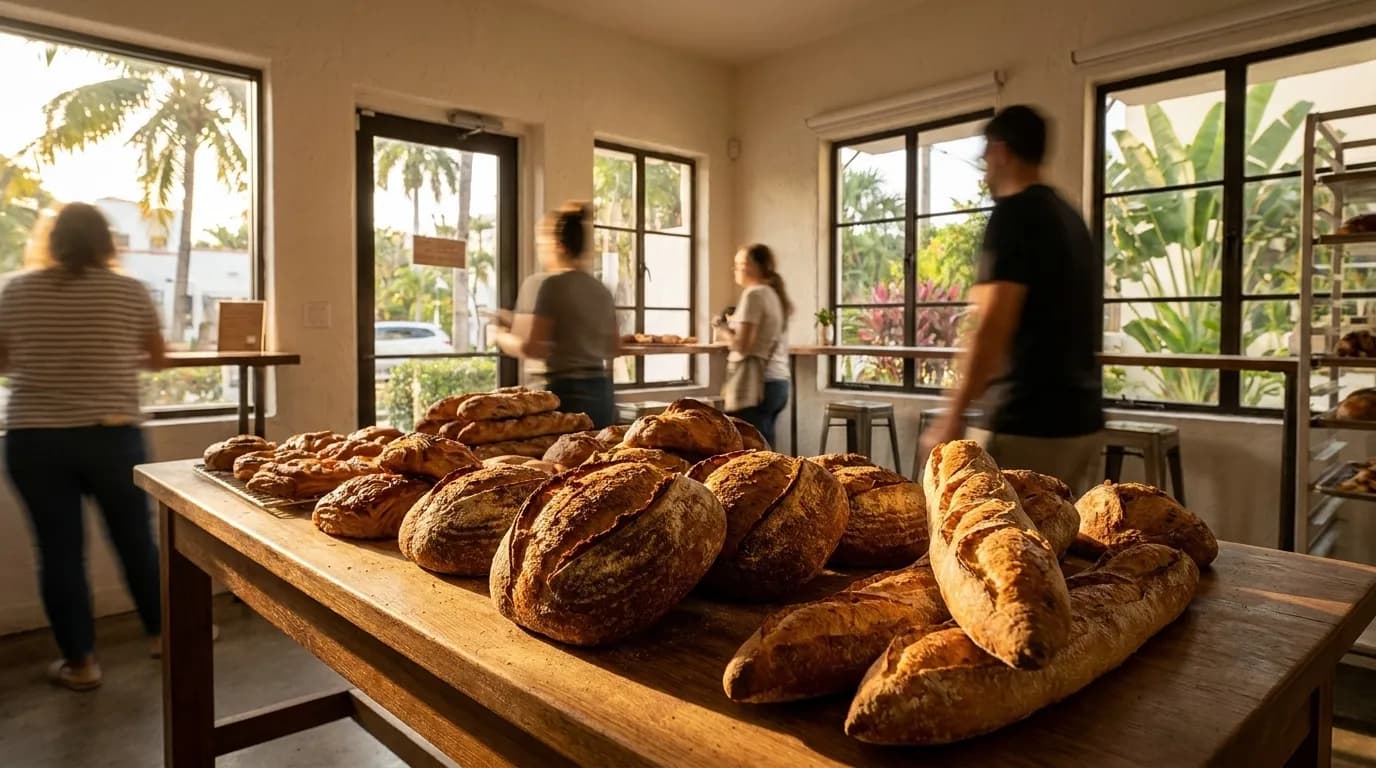
Zak the Baker: Wynwood's sourdough line
Zak the Baker in Wynwood operates on a different clock. The bakery opens at 7 a.m., and by 8:30 on weekends the line stretches down the block. Everything here is naturally leavened—no commercial yeast—so the sourdough loaves have that deep, tangy pull and an almost caramelized crust. The challah, baked Friday mornings for Shabbat, sells out before noon. If you're there for breakfast, order the smoked fish plate: house-cured salmon, labne, pickled vegetables, and a hunk of sesame sourdough. It's around sixteen dollars and designed to be shared, though most people don't.
The space is small—a handful of benches inside, a few tables on the sidewalk under a green awning. Locals grab loaves to go, but if you're eating there, sit outside. The vibe is quiet, focused, almost devotional. The pastries rotate daily: look for the pistachio morning bun or the chocolate babka, both of which justify the wait. Coffee is good but secondary; this is a bread-first operation. Zak Stern, the baker behind it all, sources flour from small mills and keeps the menu tight. You won't find twelve types of croissants here. You'll find six things done exactly right.
Rosetta Bakery: Italian-Latin hybrid
Rosetta Bakery—now with locations in Aventura, Coral Gables, and the Design District—blends Italian technique with Latin American flavors in a way that shouldn't work but does. The guava and cheese cornetto is the move here: a flaky, buttery Italian croissant filled with guava paste and cream cheese, toasted so the edges get crisp. It's a Miami hybrid that makes sense once you remember the city's Italian-Cuban lineage. Pair it with a cortado made on a proper espresso machine, and you've got a breakfast that bridges both sides of the Atlantic.
The bakery also does a strong line of Argentine facturas—medias lunas (half-moons) with dulce de leche, crispy palmeritas, and vigilantes filled with quince and cheese. The display case is intimidating if you're indecisive; everything looks like it was styled for Instagram, but it also tastes right. Order at the counter, take a number, and sit at one of the marble tables. Service is efficient, and the space feels more European café than Miami hustle. If you're there early—before 9 a.m.—the facturas are still warm from the oven. After 10, it gets crowded with brunch traffic.
The breakfast timeline
Miami breakfast culture splits into two camps: the early commuter wave and the weekend bakery pilgrimage. If you're chasing the ventanita experience, go before 9 a.m. when the coffee is hottest and the pastries are fresh. Versailles hits its stride between 7:30 and 8:30—early enough to avoid the mid-morning rush but late enough that everything's fully stocked. Zak the Baker is the opposite: weekend mornings are a scene, and if you want the full selection of pastries, arrive right at opening. Weekdays are calmer but the variety shrinks.
Rosetta Bakery is more forgiving. The locations are big enough to absorb crowds, and they restock throughout the morning. Still, the best window is 8 to 9 a.m., before the design-district brunch crowd descends. If you're doing a multi-stop morning—ventanita coffee, then a sit-down bakery breakfast—start in Little Havana and work your way north. Traffic in Miami is real, and you don't want to be stuck on I-95 between cafecito stops.
What locals actually do
Most Miamians don't do the full bakery crawl on a weekday. They hit a ventanita, order a colada (a larger pour of Cuban coffee meant to be shared in small cups with coworkers), and take pastries to go. The sit-down breakfast is a weekend luxury. At Zak the Baker, regulars know to call ahead and reserve a loaf if they're coming for challah on Friday. At Rosetta, the locals skip the guava croissants—tourists order those—and go straight for the lesser-known Argentine pastries, especially the pasta frola, a lattice-topped tart filled with quince or sweet potato.
Another insider move: if you're at Versailles, order a croqueta de jamón on the side of your pastelito. It's not listed as a breakfast item, but the ventanita serves them all day, and they're better than any breakfast sandwich you'll find at a chain. At Zak, the day-old bread rack near the register is no joke—sourdough loaves at half price, still better than most fresh bread in the city. And if you're at Rosetta in the Design District, walk next door afterward; the neighborhood is one of the few places in Miami where you can actually stroll without getting back in the car.
Practical notes
Versailles is cash-friendly but takes cards; parking is easier on side streets than the main lot. Zak the Baker is cash-only at the register, though they have an ATM inside. Weekends get busy—arrive early or be prepared to wait twenty minutes. Rosetta takes cards and has its own parking at the Aventura and Coral Gables locations; Design District parking is trickier, use a nearby garage. None of these places take reservations. If you're planning a bakery run on a weekend, go before 10 a.m. for the best selection. Skip Sundays at Zak—they're closed. Ventanitas are an outdoor experience, so dress for heat and humidity even at 8 a.m.
Tags: #miamibreakfast #ventanita #cubanbreakfast #zakthebaker #rosettabakery #wynwoodbreakfast #littlehavana #cortadito #sourdoughmiami #miamibakery #breakfastnearme #miamimornings #pastelito #miamicoffee #breakfastcrawl
All trademarks are the property of their respective owners.
Ask Karpo first
Karpo knows which ventanita is closest to your next meeting, whether Zak still has challah left, and if the line at Rosetta is out the door right now. It learns what you actually order—cortadito, no sugar; sesame sourdough, sliced thick—and tracks the spots you've been meaning to try. Next time you're up early in Miami and need breakfast that doesn't waste your morning, just ask.