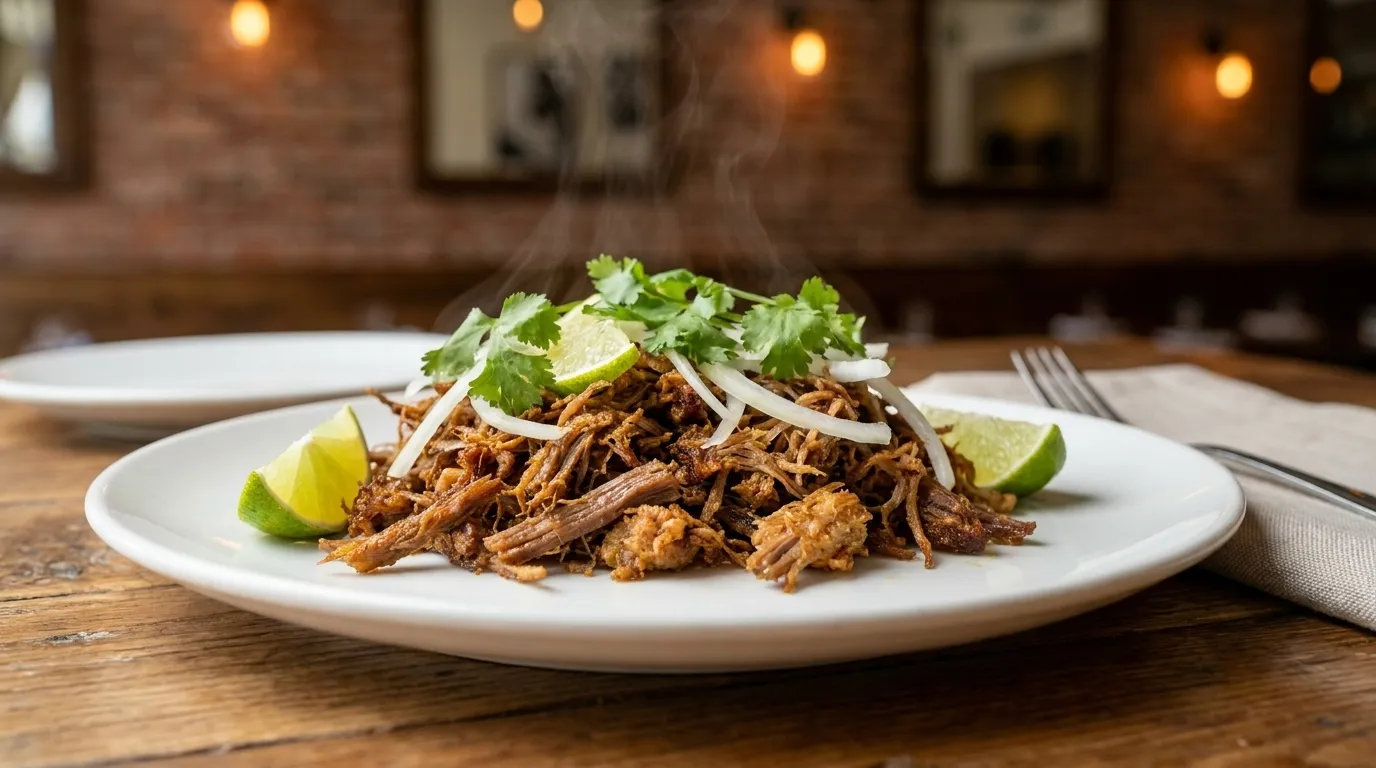
Vaca frita translates to "fried cow," which undersells what happens when flank steak gets boiled until tender, shredded by hand, then crisped in a screaming-hot pan with lime juice, garlic, and onions. The result is a pile of beef that's simultaneously crunchy and juicy, salty and bright, with charred edges that taste like the best parts of a steak and a burger combined. Miami does vaca frita better than anywhere else in the country, and if you're hunting for the real deal, you need to know where the locals go when the craving hits.
Looking for more Cuban classics beyond vaca frita? Karpo maps out the city's best lechón, ropa vieja, and medianoche sandwiches based on what you're craving right now.

What makes vaca frita work
The magic of vaca frita is all about contrast. You start with flank steak—a tough cut that needs time—simmered low and slow until it falls apart. Once it's cool enough to handle, you shred it by hand into irregular pieces, not uniform strips. Those uneven edges are crucial; they're what gets crispy when the meat hits the plancha. The second cooking happens fast and hot, with fresh lime juice hitting the pan to create steam and char at the same time. Garlic and onions go in at the end, wilting just enough to stay sweet but still have bite.
A proper vaca frita plate should look almost messy—charred bits, some pieces more golden than others, everything glistening with garlic oil. It's traditionally served with white rice, black beans, and sweet plantains, though some places add avocado or extra lime on the side. The rice isn't optional; you need it to soak up the garlicky pan drippings that pool at the bottom of the plate.
Versailles
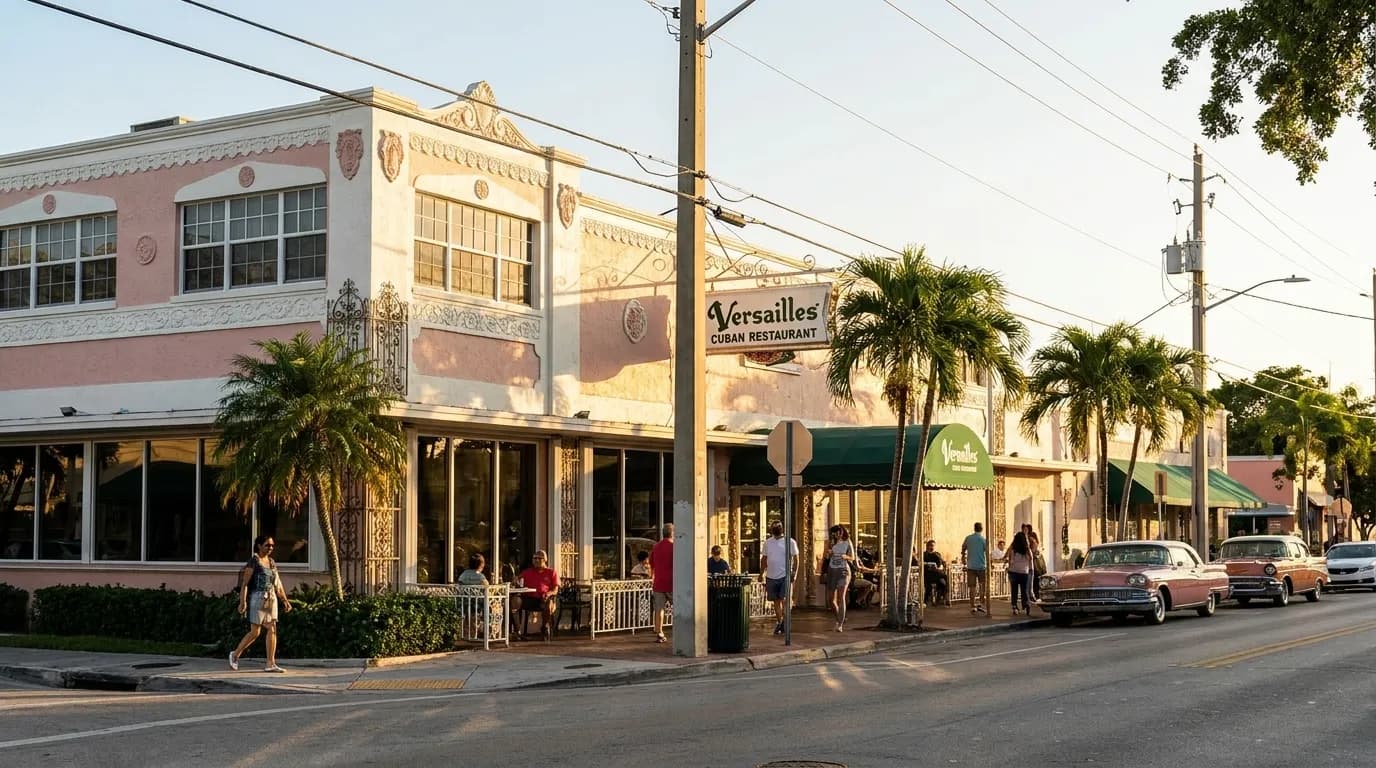
Versailles on Calle Ocho is the most famous Cuban restaurant in Miami, maybe in the entire United States. The dining room is a sea of mirrors and chandeliers that somehow feels both fancy and completely unpretentious, packed with families celebrating birthdays, politicians making appearances, and tourists who've done their homework. The vaca frita here is the standard by which all others are measured: deeply seasoned, aggressively crispy, with enough garlic to clear your sinuses. It arrives on an oval platter with a mountain of rice, glossy black beans, and plantains fried to that perfect sweet-savory edge.
Go on a weekday午 around 2 p.m. if you want to skip the wait; weekends and dinner service can mean 45 minutes or more. The attached bakery counter is open earlier and later than the main restaurant, and you can grab a cafecito and pastelito while you wait. Parking is easier in the lot behind the building than on the street. The vaca frita costs around $18 and is genuinely enough for two people if you're ordering other dishes. Locals know to ask for extra lime wedges and to mix everything—rice, beans, plantains, beef—into one glorious bite.
Puerto Sagua
Puerto Sagua sits on Collins Avenue in South Beach, a diner-style Cuban spot that's been open since 1962 and looks like it hasn't changed much since. The counter seats are chrome and red vinyl, the waitstaff moves fast, and the menu is massive—laminated pages of everything from midnight sandwiches to whole fried snapper. The vaca frita here skews a little less crispy than Versailles but makes up for it with deep, beefy flavor and a lighter hand on the salt, which lets the lime really shine through.
This is the spot when you're on the beach side of the city and don't want to drive to Little Havana. It's also one of the few Cuban restaurants in South Beach that locals actually eat at regularly. The portions are slightly smaller and the price is about the same, hovering around $17. The rice here is fluffier than most, almost sticky, and the black beans have a hint of cumin that some places skip. If you're solo, grab a counter seat and watch the kitchen work; if you're in a group, the booths along the window give you a street view of Collins Avenue foot traffic. Open late—sometimes until 2 a.m.—so it's a solid post-bar option when you need something more substantial than a croqueta.
El Exquisito
El Exquisito is the no-frills answer to the vaca frita question, a small counter-service spot on West Flagler that does exactly one thing: fast, cheap, excellent Cuban food. The vaca frita here is more rustic, with bigger shreds of beef and a heavier char that borders on blackened in the best way. It's served in a styrofoam container if you're taking it to go, which most people do, or on a plastic plate if you're eating at one of the handful of tables inside.
The price is unbeatable—around $12 for a full plate with sides—and the turnaround is fast, usually under ten minutes even during the lunch rush. The space is small, loud, and almost always packed with construction workers, nurses on break, and families ordering enough food for the whole week. The beans here are thinner, more like a soup, which makes them perfect for pouring over everything. The plantains are hit or miss depending on the day; sometimes they're perfectly caramelized, other times a little pale. The vaca frita, though, is consistently excellent—deeply savory, with a good ratio of crispy to tender.
Cash is king here, though they take cards now. Parking is street-only and tight, especially during weekday lunch. If you're ordering for a group, call ahead; they can pack up family-size portions that hold up surprisingly well for the drive home. This is the spot locals hit when they want great vaca frita without the Versailles production or the South Beach parking headache.
How to eat vaca frita like you know what you're doing
First, squeeze lime over everything—the beef, the rice, even the beans. Some places give you one wedge; ask for more. Second, don't be precious about mixing. Vaca frita is not a knife-and-fork situation. Use your fork to scoop a little rice, some beans, a piece of plantain, and a tangle of beef all in one bite. The sweetness of the plantain cuts the salt and garlic in a way that makes the whole thing work. Third, if there's raw onion on top, eat it. It's there for a reason—sharpness and crunch against all that richness.
If you're at a sit-down spot, order a batido—a Cuban milkshake, usually mamey or mango—to drink alongside. The cold, fruity sweetness is the perfect counterpoint to all that garlic and char. If you're at a counter spot like El Exquisito, a malta or an Ironbeer works just as well. Don't overthink it. Vaca frita is working-class food that happens to be incredibly delicious. Eat it with your hands if you want. No one will judge you.
Practical notes
Versailles is open daily from 8 a.m. to midnight, with peak waits during weekend brunch and Friday dinner. Street parking is tough; use the back lot. Puerto Sagua opens early—around 7 a.m.—and stays open late, sometimes until 2 a.m. on weekends. Metered street parking on Collins or the public garage a block west. El Exquisito is weekday lunch-focused, roughly 11 a.m. to 8 p.m., closed Sundays. Bring cash or be ready for a card minimum. All three spots are family-friendly, loud, and casual. If you're trying vaca frita for the first time, start with Versailles for the full experience, then compare. Leftovers reheat well in a hot skillet—don't microwave or you'll lose the crisp.
Tags: #vacafrita #cubanfood #miami #littlehavana #southbeach #versailles #puertosagua #elexquisito #miamifood #calleocho #beeffrita #miamieats #cubanrestaurants #localfood #miamidining
All trademarks are the property of their respective owners.
Ask Karpo first
Next time you're craving vaca frita or trying to decide between lechón asado and ropa vieja, ask Karpo. It knows which spot has the crispiest frita right now, where to go when Versailles has an hour wait, and which side streets have easier parking. Karpo lives in your messages and always has a better answer than scrolling through outdated reviews. Just ask.