Miami does Spanish food better than almost any city outside the Iberian peninsula, and arroz negro—squid-ink rice blackened by the sea—is the dish that separates tourists from locals. You won't find it at the beach chains. The real versions simmer in kitchens where the cooks learned the recipe in Valencia or Madrid, where the sofrito gets an hour and the seafood arrives twice a day. Three restaurants anchor Miami's Spanish dining scene, each with its own take on this inky, oceanic staple.
Karpo knows which Spanish table has the freshest squid-ink rice tonight, and which one takes walk-ins before seven. Ask before you cross town.

Casa Juancho: the Little Havana original
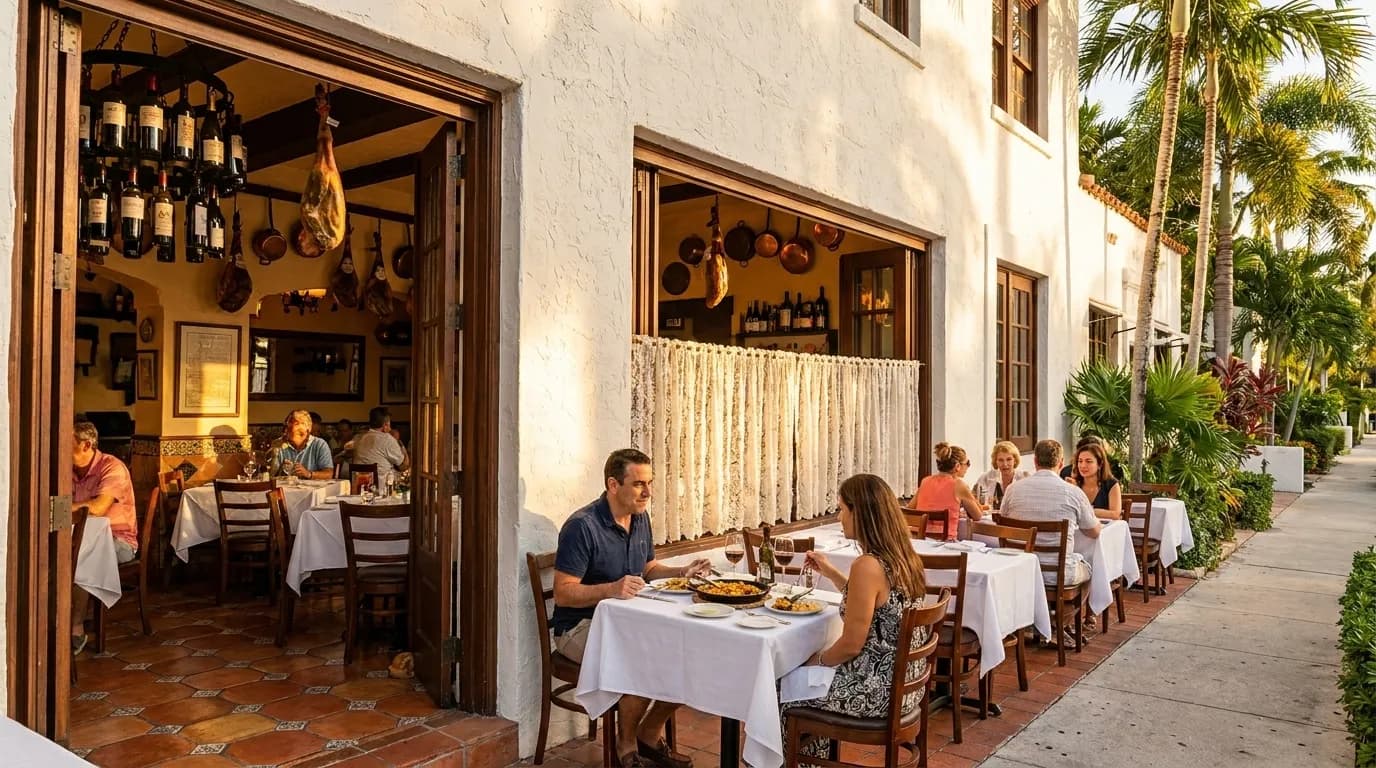
Casa Juancho has occupied the same corner on Calle Ocho since 1974, back when Little Havana was still finding its voice. The dining room feels lifted from Castilla—heavy wood beams, iron chandeliers, flamenco guitars mounted on white stucco walls. Waiters in vests move between tables with the unhurried confidence of people who've done this for decades. The arroz negro here is traditional: squid, prawns, and garlic cooked down with bomba rice until every grain turns glossy and black. They don't skimp on the alioli, served on the side in a small ceramic bowl.
Go on a weekday night if you want a table without a wait—weekends draw families celebrating everything from quinceañeras to retirement dinners. The kitchen opens at five, and the early crowd skews older and local. Locals order a pitcher of sangria to share and pace themselves through the tapas before the rice arrives. Parking is easier on the residential streets one block south. Expect to spend around forty to fifty dollars per person before drinks.
Bulla Gastrobar: modern Spanish with multiple outposts
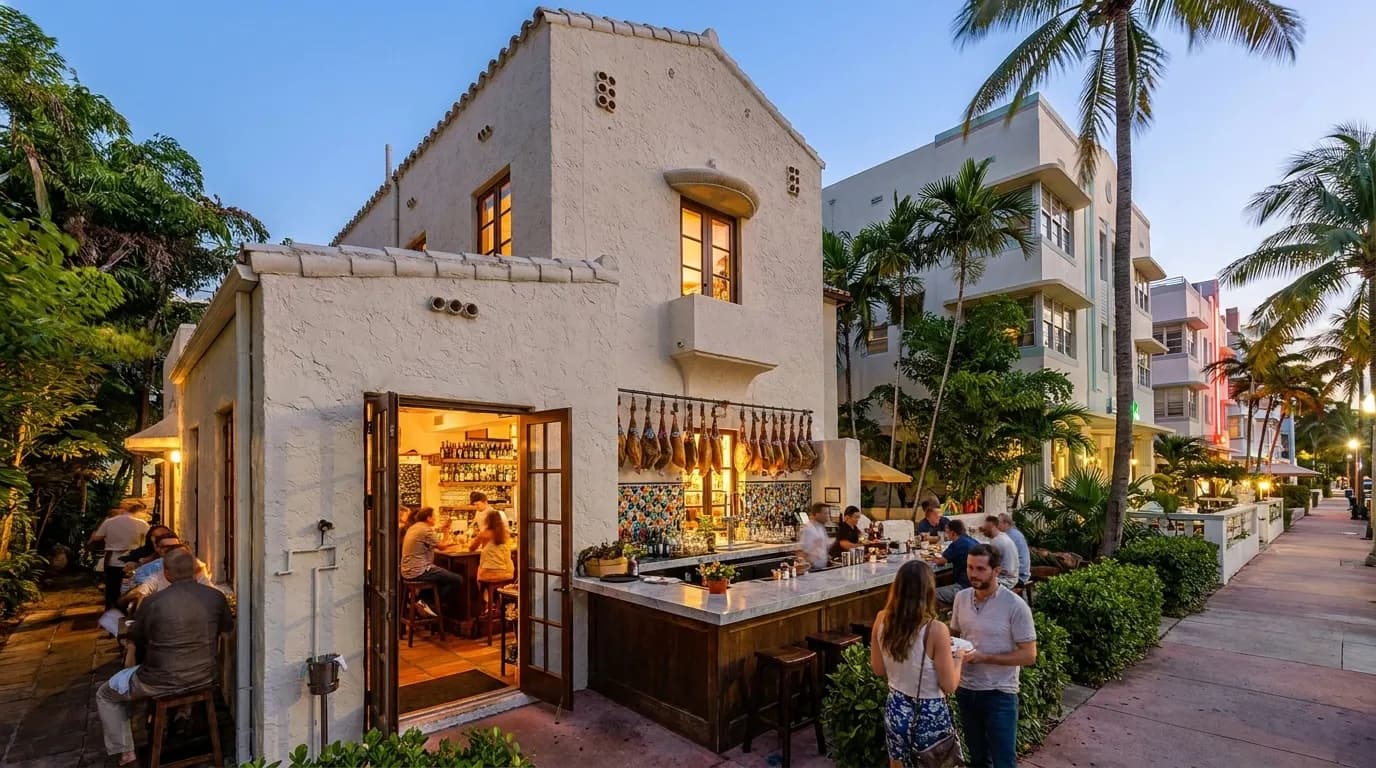
Bulla took the Spanish gastrobar concept—think Barcelona's tapas culture, higher volume, cocktails instead of just wine—and made it work for Miami's younger dining crowd. The Coral Gables location on Giralda Avenue is the flagship, but there are now spots in Doral and downtown. The arroz negro is less traditional here: it comes as a shareable portion in a shallow paella pan, loaded with mussels, clams, and chunks of octopus. The rice is looser than Casa Juancho's, almost creamy, with a pronounced garlic punch. They finish it tableside with a drizzle of lemon-infused olive oil.
Bulla makes sense for groups who want variety—order the patatas bravas and jamón croquetas while you wait for the rice, which takes about twenty-five minutes. The bar stays open late and the noise level runs high after eight, so if you're looking for conversation, aim for a six-thirty reservation. The Coral Gables location has valet, but there's metered street parking on side streets if you're early. Weekend brunch brings a different menu, but the arroz negro is lunch and dinner only.
Xixon: Brickell's Spanish anchor
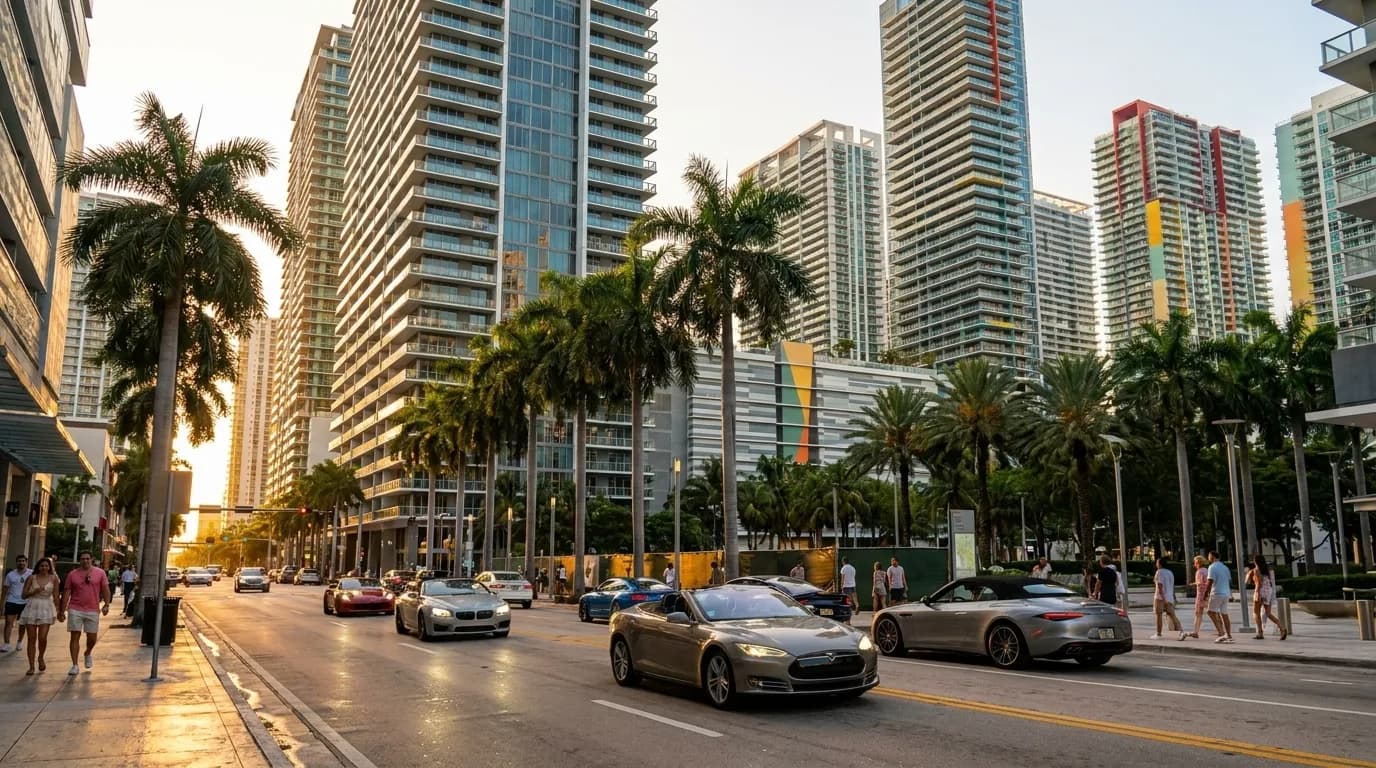
Xixon has been serving Asturian and Galician food in Brickell since 1977, long before the neighborhood became a forest of condo towers. The current location sits near Mary Brickell Village, and the interior leans more formal than Bulla—white tablecloths, framed bullfighting posters, a long marble bar where regulars drink Estrella Galicia straight from the bottle. The arroz negro is the Galician style: heavier on the squid, finished with a splash of white wine, served with grilled bread rubbed with tomato.
The kitchen here is consistent but not flashy. This is where Miami's Spanish expat community comes for Sunday lunch, often after a morning at Bayfront Park. Portions are large—one order of arroz negro can realistically feed two if you start with gambas al ajillo or pulpo a la gallega. Service is warm but not quick; plan on two hours if you're doing multiple courses. Street parking is tough, so budget time for the nearby garages. Lunch is quieter than dinner, and the midday menu sometimes includes a paella special that rotates weekly.
What makes Miami's arroz negro different
Miami's advantage is access—stone crab season, snapper from the Keys, and Caribbean squid that's only a few hours off the boat. That freshness changes the dish. In Spain, arroz negro often relies on dried or frozen seafood outside coastal towns. Here, even mid-tier kitchens can source live shellfish daily. The other difference is heat. Miami cooks aren't afraid of spice, and you'll find versions with a pinch of habanero or a swirl of Calabrian chili oil, nods to the city's broader Latin influences.
The best versions balance that inky bitterness from the squid ink with enough acid—lemon, wine, or tomato—to keep it bright. Overcooked rice turns gummy; undercooked rice stays chalky. The sweet spot is a slight bite in the center of each grain and a thin crust, the socarrat, on the bottom of the pan. Not every kitchen nails it every night, but all three of these restaurants hit it more often than not.
Practical notes
Casa Juancho doesn't take reservations for parties under six, so arrive before six-thirty on weekends or expect a bar wait. Bulla's Coral Gables location books up Friday and Saturday; the Doral spot is easier. Xixon takes reservations through their website but holds a few tables for walk-ins until seven. All three restaurants validate parking or have nearby lots. If you're driving between neighborhoods, Little Havana to Coral Gables is fifteen minutes off-peak; Brickell to either takes twenty in traffic. Arroz negro doesn't reheat well, so order only what you'll finish. Tipping standard is twenty percent; all three accept cards but Casa Juancho's older waiters appreciate cash.
Tags: #arrozonegro #spanishfood #miamieats #casajuancho #bullagastrobar #xixon #littlehavana #coralgables #brickell #seafoodmiami #paella #tapas #spanishrestaurants #miamidinning #squidinkrice
All trademarks are the property of their respective owners.
Ask Karpo first
Karpo keeps tabs on which Spanish kitchens in Miami are firing on all burners tonight—and which ones are phoning it in. Whether you're in Brickell at six or Little Havana at nine, Karpo knows where the arroz negro is worth the wait and where to grab a table without a reservation. Just ask.