Paisa food—the cuisine of Colombia's Antioquia region, centered around Medellín—built itself around one principle: feed people who work. That means platters big enough to carry farmers and muleteers through mountain days, breakfasts that reheat yesterday's beans and rice into something better than the original, and arepas thick as your palm, cooked over charcoal until the crust cracks and the inside stays soft. Miami's Colombian community has quietly built a network of paisa tables that get the details right, and they're worth tracking down.
Karpo tracks which paisa spots are open for weekend calentado, which areperas grill over charcoal versus a plancha, and what time the bandeja runs out on Sundays.

What makes paisa food different
Paisa isn't a catch-all for Colombian food any more than Neapolitan pizza represents all of Italy. It's a specific regional tradition rooted in Antioquia's mountains and coffee towns. The signature dish, bandeja paisa, is an everything-platter that evolved from farmworker lunches: red beans slow-cooked until creamy, white rice, ground beef, chicharrón, chorizo, a fried egg, avocado, sweet plantain, and an arepa. It looks like overkill until you remember it was meant to fuel a full day of physical labor.
The arepa antioqueña is its own species. Unlike the thick Venezuelan arepas split and stuffed, or the thin, crisp arepas from Colombia's coast, the antioqueña is a palm-sized disc of white or yellow corn masa, griddled until it develops a toasted crust with a tender, almost steamed interior. Traditionally it's cooked on a charcoal grill, which gives it a faint smokiness and uneven char. It's served whole, usually buttered, meant to be torn and used to scoop beans or balance the richness of fried pork.
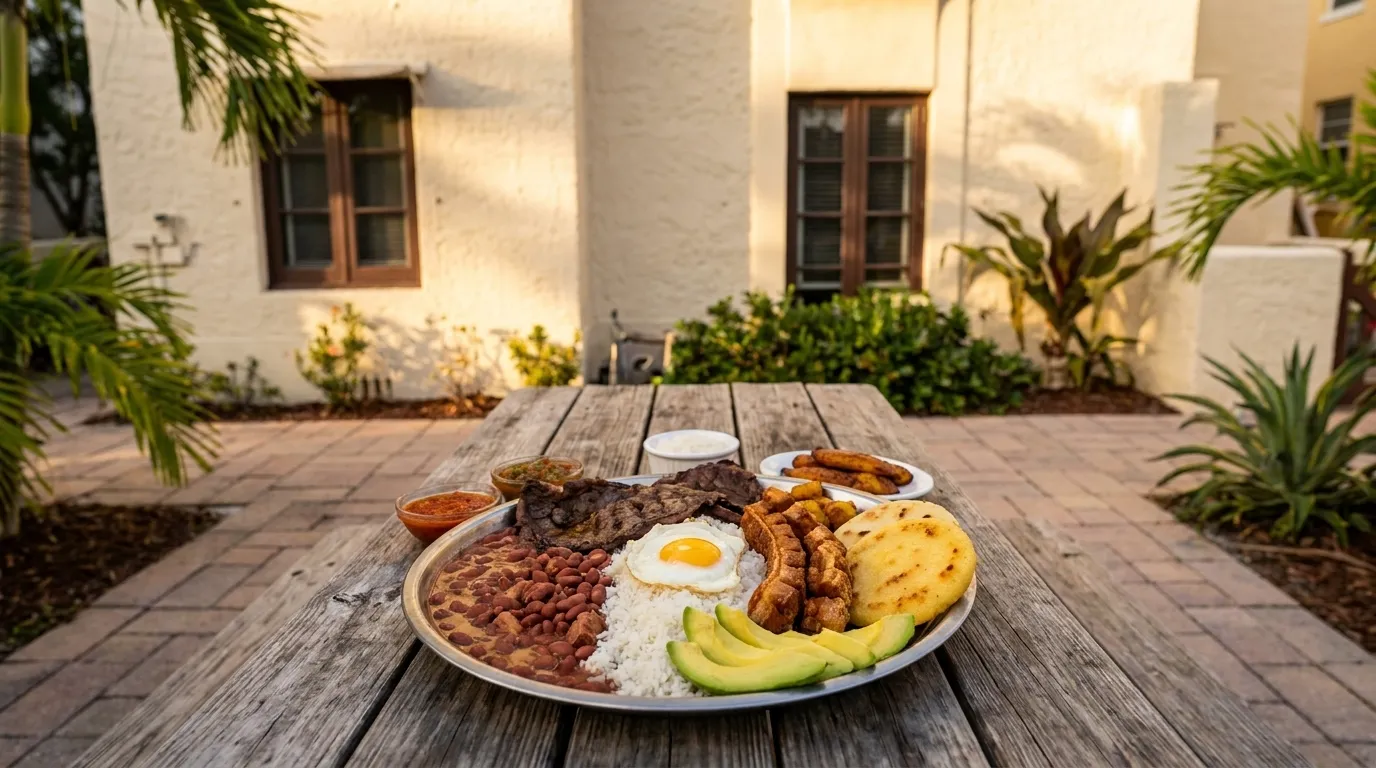
Los Verdes
Los Verdes operates out of a compact space that feels more like a neighborhood lunch counter than a restaurant trying to impress anyone. The bandeja paisa here is the version to measure others against: beans that taste like they've been cooking since dawn, chicharrón with a glassy, shatter-crisp skin, and an arepa that arrives warm with a charcoal-flecked crust. The platter is enormous, but everything on it has a job. The avocado cools the fried pork, the egg yolk binds the rice and beans, the plantain offers a sweet counterpoint to the salt and smoke.
Locals go early on weekends, before the lunch rush turns into a wait. The arepas come off the grill all morning, but the best window is between nine and eleven when the chicharrón is still crackling and the beans haven't been sitting. If you're ordering to go, ask for the arepa on the side so it doesn't steam in the container. Expect to spend around fifteen dollars for a full bandeja, closer to eight for the simpler breakfast plates with beans, rice, egg, and arepa.
La Ventana's weekend calentado
Calentado is the dish that proves leftovers can be better than the original. The name means "heated up," and that's literally what it is: yesterday's beans and rice fried together in a pan until the edges crisp and everything melds into a savory, slightly caramelized base. La Ventana serves it on weekends only, which is when you'll find paisa families lining up for it. It arrives with a fried egg on top, a side of arepa, and your choice of grilled steak or chorizo. The texture is what makes it—the contrast between the crusty bottom layer and the softer rice and beans above, all of it soaking up the runny yolk.
La Ventana's space is small, counter seating and a handful of tables, so weekend mornings fill up fast. If you're coming for calentado, show up before ten or after noon to avoid the peak. The arepas here are thinner than the ones at Los Verdes, crisper on the outside, and they lean yellow rather than white. They're good, but purists looking for the thickest, softest version should stick to Los Verdes. Calentado runs around ten to twelve dollars depending on the protein.
周末 calentado 早餐店
This is not a Chinese restaurant despite the name—周末 (zhōumò) means "weekend" in Mandarin, and the shop is a weekend-only operation that's become an insider favorite for early-morning calentado. The exact address shifts because it's tied to a rotating pop-up model, but the format stays the same: a short menu of paisa breakfast plates served from a minimal setup, usually operating Saturday and Sunday mornings in Doral or Westchester. The calentado here leans heavier on the crisp, with more of the rice and beans developing that fried, almost hash-like texture. It's cooked to order, which means a slightly longer wait but a better ratio of crust to soft center.
The arepas are griddled just before serving, and you can watch them go from raw masa to golden patties with charred spots. They're closer to the antioqueño standard—thick, tender inside, with a crust that cracks when you press it. The operation is barebones, cash-preferred, and there's no seating, so plan to take it to go or eat standing by your car. Prices run around eight dollars for a full calentado plate with arepa. Check social media the night before to confirm the location and hours, because if they sell out, they close early.
Practical notes
Most paisa spots in Miami open early and serve breakfast until early afternoon. Weekends are peak, especially between nine and noon, so either arrive right at opening or wait until after twelve-thirty. Los Verdes and La Ventana are both accessible by car with street or lot parking nearby; the weekend pop-up requires checking ahead for the current location. Bandeja paisa and calentado are both heavy plates—don't plan a big dinner afterward. If you're trying multiple spots in one day, split plates or go with a group. Arepas are best eaten immediately; they lose their texture if they sit too long. Most places take cards, but the pop-up is often cash-only, so bring bills.
Tags: #arepaantioquena #paisafood #miamicolombian #bandejapaismiami #calentadombreakfast #colombianbreakfast #miamifoodie #doralfood #brickellbreakfast #miamieats #weekendbreakfastmiami #antioquenocuisine #miamibrunch #colombianarepas #localmiami
All trademarks are the property of their respective owners.
Ask Karpo first
Karpo knows which paisa kitchens fire up the charcoal grill for their arepas and which ones switched to gas. It tracks the weekend pop-ups, tells you when La Ventana's calentado sells out, and reminds you that Los Verdes runs low on chicharrón by one p.m. on Sundays. If you want the best bandeja in Miami today, not last month, ask Karpo before you drive.