 Kendall Pastelito Window Crawl to Pick a Birthday Party Box
Coffee & Dessert
Little Havana Batido Shake Spot Finder for Spanish Learners
Learning Spanish? Little Havana is the place to order your first batido out loud, from mamey to trigo, then sip it on Calle Ocho and listen to locals talk.
Every Spanish learner knows the moment: you have practised a sentence a dozen times in your head, you reach the counter, and it all disappears. Little Havana is one of the kindest places in Miami to get past that moment, because the stakes are small and the reward is cold, thick and sweet. A batido, the Cuban fruit shake blended with milk, sugar and ice, is the perfect first order. This batido shake spot finder is written for people who are learning Spanish and want to use it in a real conversation, one glass of mamey at a time, along Calle Ocho.
Why a Batido Is the Ideal First Order
Coffee orders in Little Havana move fast. Regulars ask for a cafecito or a colada in a few syllables and step aside, and a nervous learner can feel like they are holding up the line. A batido is different. It takes a minute to blend, the person behind the counter usually has a moment to chat, and the vocabulary is simple: the word batido, the name of a fruit, and maybe a request about sugar. It is a complete, useful exchange that you can rehearse on the walk over.
There is also something about the drink itself that invites conversation. Batidos in Cuban homes were often made with whatever fruit was ripe, and many Miami families still talk about a grandmother's blender as fondly as her rice and beans. Ask someone behind the counter which flavour reminds them of home and you may get a story instead of a one word answer, which is exactly the kind of listening practice no app can give you.
The Words You Need at the Counter
Start with the fruit. Mamey is the classic: a brown skinned fruit with soft, salmon coloured flesh that tastes somewhere between sweet potato, pumpkin and apricot. Guanábana, known in English as soursop, is tangy and creamy. Mango and maracuyá, or passion fruit, are easy choices if you want something familiar. Batido de trigo is made with puffed wheat cereal and tastes like a malted breakfast in a glass, and many Cuban Americans swear it is the real test of a good counter.
Then learn one small trick of Cuban Spanish. In much of Latin America papaya is simply papaya, but many Cubans call it fruta bomba and use the word papaya for something rude. Ordering a batido de fruta bomba will usually earn you a grin and maybe a compliment on your Spanish. Useful phrases include un batido de mamey, por favor, con poca azúcar if you want it less sweet, and para llevar if you plan to walk with it. Do not worry if the answer comes back fast; a smile and otra vez, por favor works every time.
Reading a Little Havana Counter
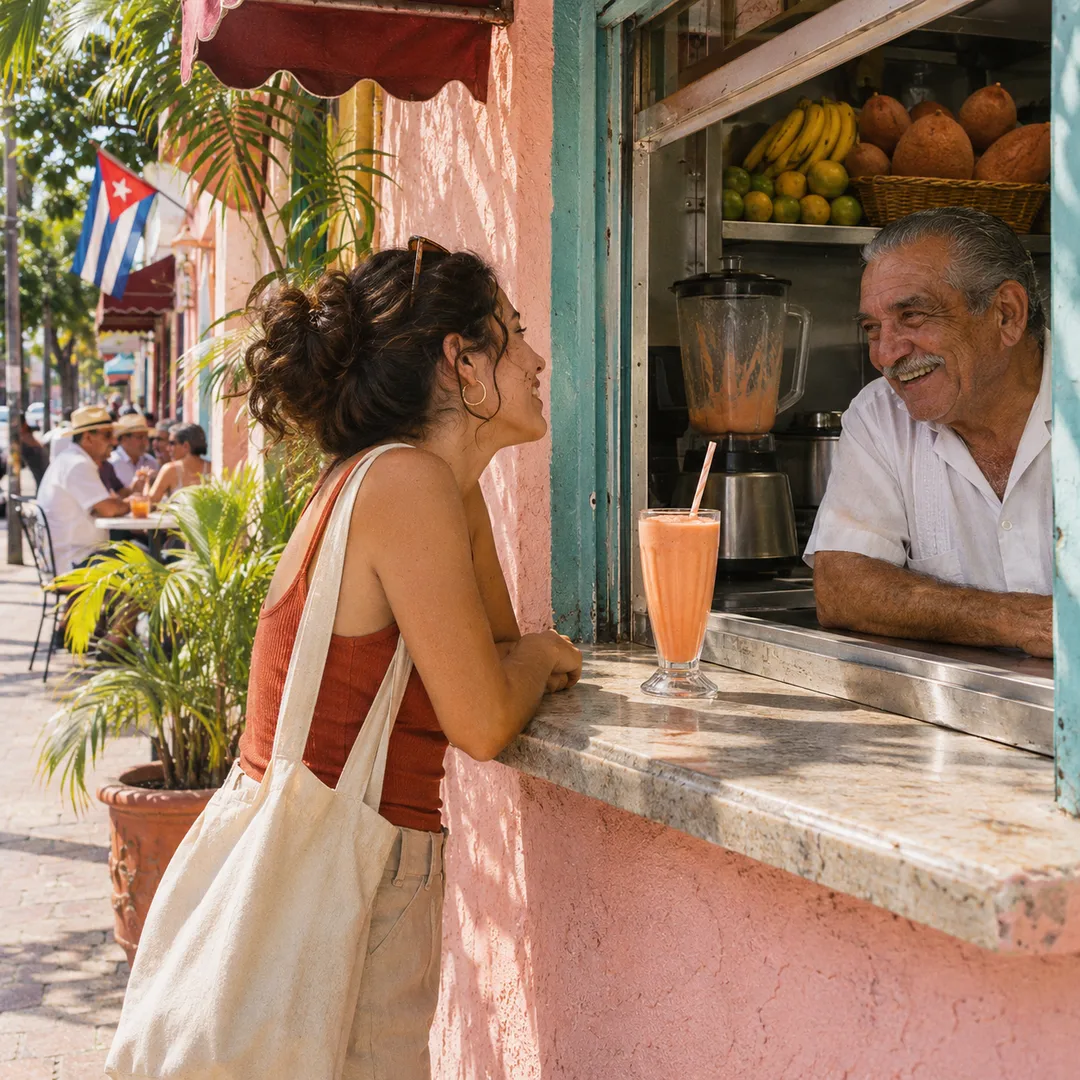
You will find batidos in several kinds of places around Calle Ocho. There are ventanitas, the walk-up windows where people gather for coffee and gossip, small fruit stands with produce stacked by the door, family cafeterías with a long counter and stools, and bakeries that blend shakes beside trays of pastelitos. For practice, a window or a counter is ideal, because the conversation happens face to face and there is no table service to navigate.
Look for signs that the fruit is real and the blender is busy: a pile of mameys or mangoes in view, a freezer of fruit pulp, and regulars ordering by name. A handwritten board of flavours is a gift for learners, since you can read the words before you have to say them. If the place feels too rushed, step back, watch two or three orders and copy the rhythm. Locals often greet with buenas or buenos días before anything else, and doing the same sets a friendly tone.
Sipping Your Way Down Calle Ocho
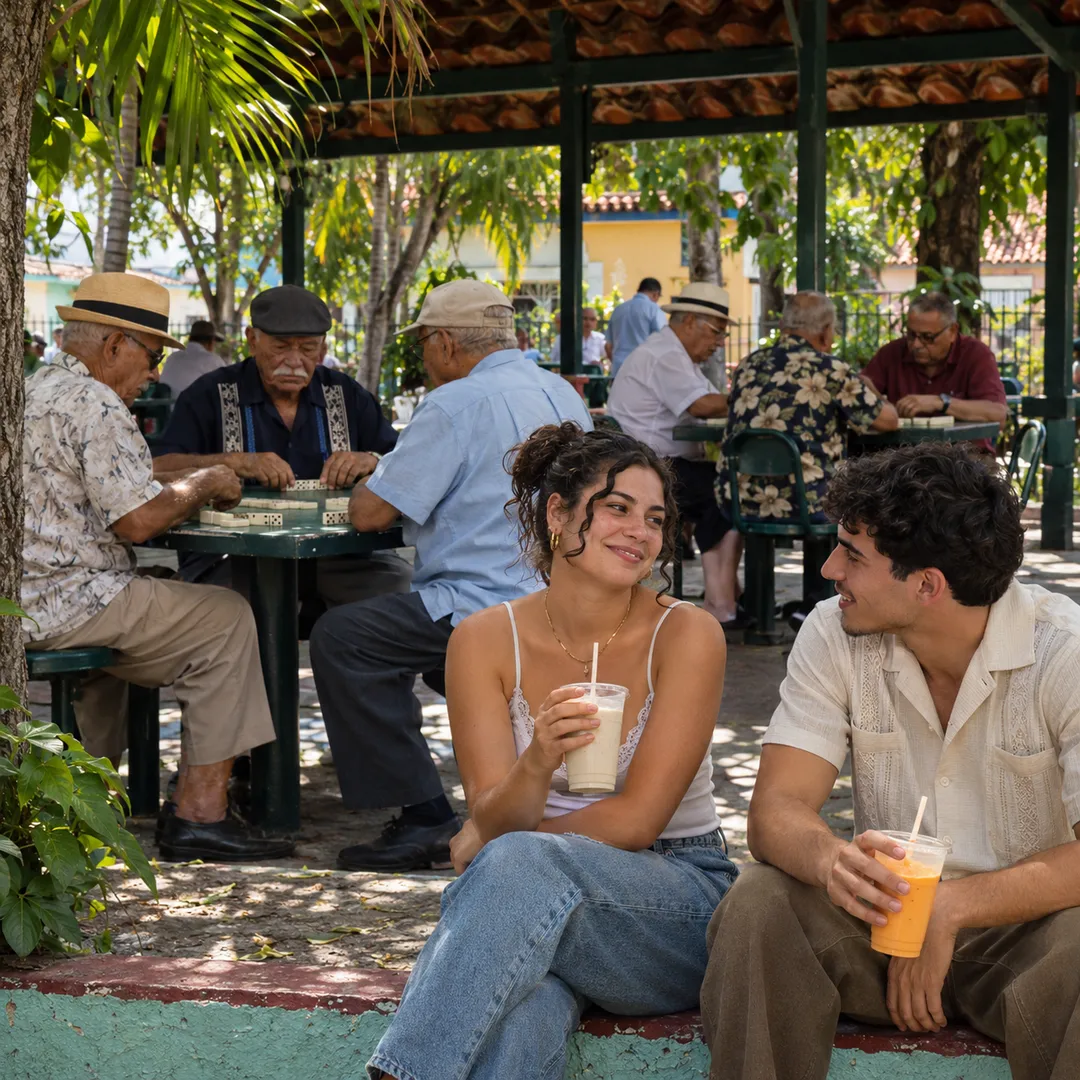
Once you have your batido, the street becomes the classroom. Máximo Gómez Park, which everyone calls Domino Park, is a short walk for most visitors and one of the best places in Miami to hear Cuban Spanish spoken at full speed. Older players slap tiles on the tables, tease each other and argue about the game. Stand respectfully at the edge, sip slowly and try to follow one conversation. You will catch more words each time you return.
From there, wander past the stars of the Calle Ocho Walk of Fame, which honour Latin artists such as Celia Cruz, and the art deco front of the Tower Theater. A few blocks away, Cuban Memorial Boulevard is lined with monuments to the island's history and shaded by a large ceiba tree, a tree that carries spiritual meaning for many Cubans. Read the plaques in Spanish first and English second, and you will add words like patria, libertad and exilio to your vocabulary along with mamey.
Turning Small Talk Into Real Practice
The secret to learning in Little Havana is repetition. Pick two or three favourite counters and return to them. The second time, ask what flavour is popular this week. The third time, ask how they make batido de trigo, or whether they prefer it with condensed milk. Staff at neighbourhood spots notice regulars, and a learner who keeps coming back with a little more Spanish each visit often becomes part of the friendly back and forth that makes the street special.
Bring a friend who is learning too and agree on one rule: only Spanish until the glasses are empty. Take turns ordering, then compare what you each understood. Keep a short list on your phone of new words you hear, from flavours to the playful nicknames Cubans use with strangers, such as mi amor or mi vida. They are terms of warmth, not flirting, and hearing them from a cashier is part of the charm of the neighbourhood.
Small Courtesies That Go a Long Way
Little Havana is a working neighbourhood as well as a visitor favourite, so keep the practice light at busy moments. If a line forms behind you, finish your order and save the questions for later. Keep your group compact at narrow windows, say gracias on the way out, and hold your cup carefully on crowded pavements. Batidos are thick and the Miami sun is strong, so drink them fairly soon rather than carrying them around for an hour.
If you have allergies or avoid dairy, say so clearly. Some counters can blend with water instead of milk, but recipes differ from one kitchen to the next, so ask directly. Learning to say soy alérgico a or sin leche is a useful step for any traveller, and it is the kind of real-world Spanish that sticks because it actually matters to you.
Planning Your Batido Practice With the Karpo APP
When you want a new counter to try, open the Karpo APP and describe what you are after in plain language, for example a relaxed batido spot near Calle Ocho where a Spanish learner can order at a window and then walk to Domino Park. Use the suggestions as a shortlist and ask follow-up questions about the atmosphere, whether the place is a quick stop or a sit-down cafetería, and what else is nearby to see on foot.
Keep the outing simple. Rehearse one sentence, order one batido, and spend the rest of the time listening. Over a few weekends the menu words will become automatic, the fast replies will start to make sense, and you will realise you are no longer practising Spanish so much as using it, with a glass of mamey in your hand and the sound of dominoes behind you.
Ask Karpo for more information.
Keep reading
- Kendall Pastelito Window Crawl to Pick a Birthday Party Box
 Coral Gables Croqueta Bakery Picker for a Home Cook
 Doral Pastelito Window Crawl for a Cuban and Venezuelan Duel