 Brickell Tailor Alteration Shop Finder: First Work Suit Fit
Neighborhood Guides
MiMo District: Free Architectural Landmark Walk in Miami
Explore a free architectural landmark walk along Biscayne Boulevard to see 1950s MiMo motel neon signs, cheese-hole louvers, and atomic delta-wing pylons.
Stretching along Biscayne Boulevard between Northeast 50th Street and Northeast 77th Street in Miami's historic Upper Eastside lies the nation's premier corridor of post-World War II roadside resort architecture. Officially designated in 2006 as the MiMo Biscayne Boulevard Historic District, this energetic strip celebrates Miami Modernist architecture, universally known by the acronym MiMo. Taking a self-guided architectural landmark walk down this wide palm-lined boulevard reveals a dazzling era of postwar economic exuberance, atomic space-age optimism, and automobile worship expressed through cantilevered concrete canopies, perforated breezeblocks, cheese-hole screens, and animated neon pylons.
The Rise of Postwar Automobile Motels
Following the conclusion of World War II, a burgeoning American middle class took to newly expanded federal highways in chrome-laden automobiles, seeking tropical sunshine in Florida. Biscayne Boulevard, designated as US Route 1, served as the grand gateway funneling northern travelers directly into the heart of Miami. To cater to these motorists, visionary architects designed two-story motor hotels that offered stylish, informal lodging where vacationers could park their cars directly in front of their rooms or alongside glittering swimming pools.
Unlike the monumental stone masonry of 1920s downtown skyscrapers or the compact beachfront density of South Beach Art Deco, MiMo motels were designed specifically to be experienced at thirty-five miles per hour through a car windshield. Architects abandoned rigid classical symmetry in favor of dynamic acute angles, sweeping roof planes, and flamboyant vertical pylon signs that captured vacationing drivers' attention from several blocks away. This architecture celebrated the optimism of the American Jet Age, mid-century lounge culture, and outer space exploration through reinforced concrete, steel tension cables, and vivid tropical pastel hues.
The Vagabond Hotel and Robert Swartburg
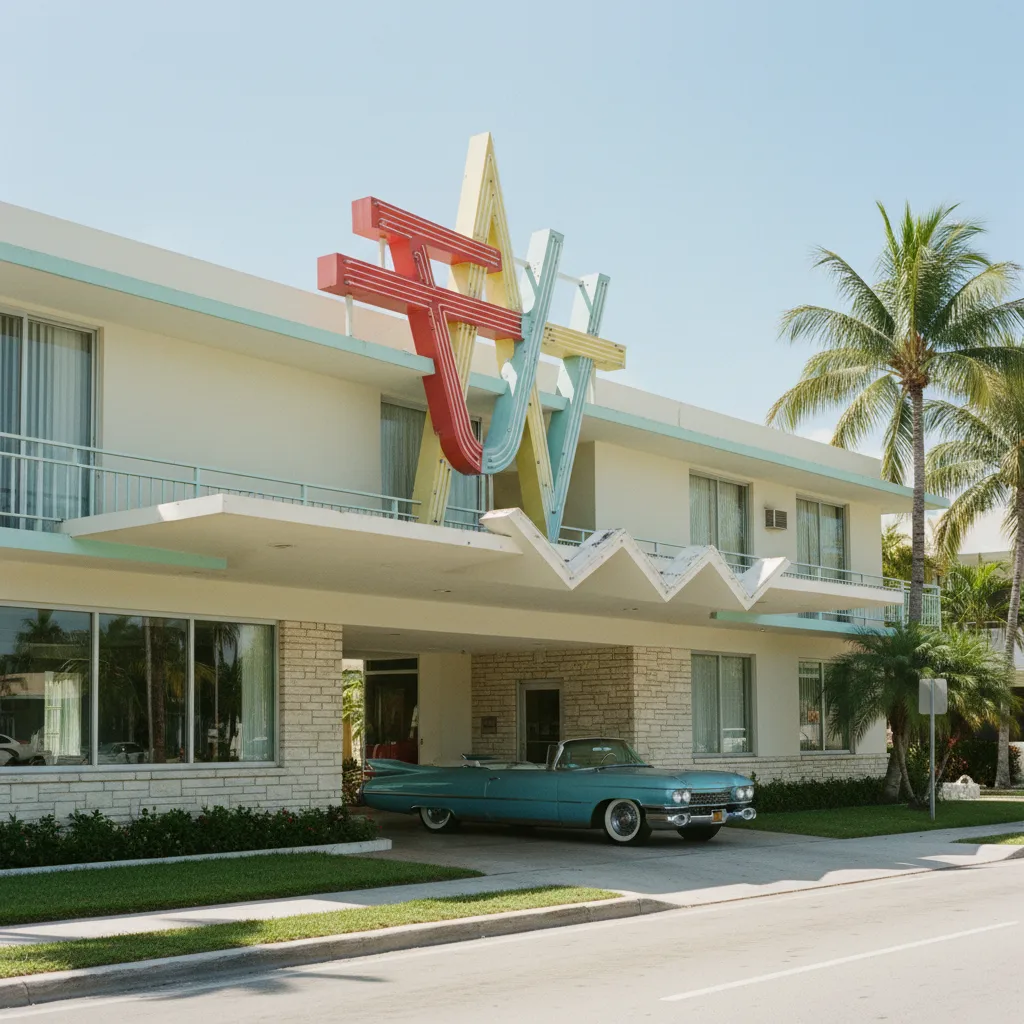
The jewel of the historic district is The Vagabond Hotel at 7301 Biscayne Boulevard, designed in 1953 by renowned architect Robert Swartburg, who also designed the landmark Miami Beach Convention Center. The Vagabond showcases the quintessential MiMo aesthetic: an acute-angle zigzag porte-cochère supported by slender steel pylons that thrust forward over the driveway to shelter arriving automobiles. Step into the central courtyard to admire the open-air pool surrounded by terrazzo sundecks and playful mosaic tile walls.
Swartburg incorporated atomic-style wall sconces, asymmetrical cantilevers, and a soaring roadside pylon topped with an atomic starburst neon sign that has been meticulously restored to its original 1950s brilliance. The central courtyard served as a communal outdoor living room where guests mingled under Florida palm trees. The Vagabond served as a legendary hangout for the Rat Pack during their Miami performances, and its sensitive restoration in 2014 served as the primary catalyst that revived interest in the entire Upper Eastside historic preservation movement.
The Architectural Grammar of MiMo
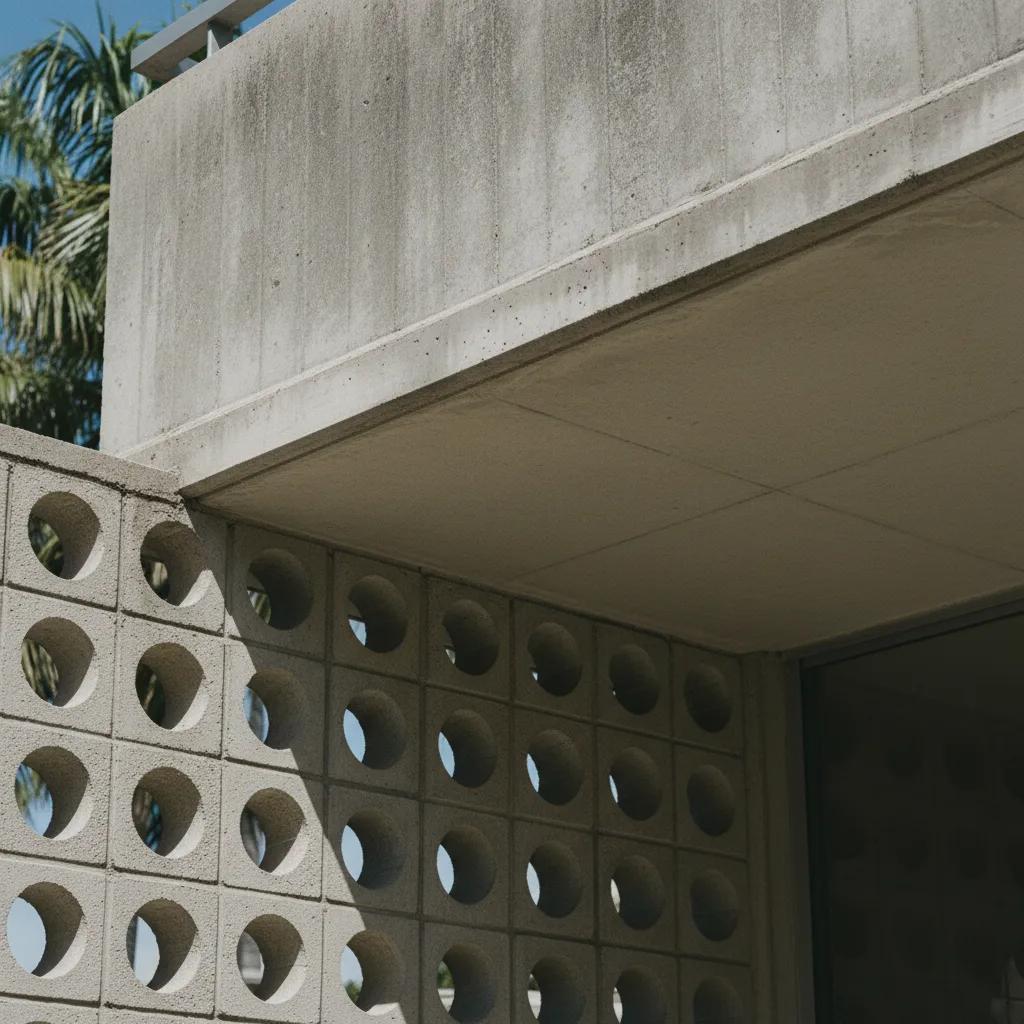
Walking along Biscayne Boulevard reveals a distinctive architectural vocabulary unique to South Florida. Core features include delta-wing canopies, cantilevered concrete walkways, and exterior catwalk corridors that provided guests with sweeping courtyard views while shielding lower-level doors from torrential summer rain. Architects utilized cast concrete breezeblocks, affectionately termed cheese-hole screens, which featured circular or geometric cutouts that allowed breezes to flow while diffusing tropical heat and sun glare.
Another signature element of MiMo construction is the deliberate contrast of organic rustic textures against smooth industrial surfaces. Architects frequently embedded rough-hewn Florida fieldstone, coquina limestone, or Delaware valley river pebbles into exterior feature walls alongside slick plate glass windows and polished terrazzo floors. Notice the playful asymmetrical window placements, sweeping cantilevered eyebrows, and open exterior staircases suspended by slender steel rods, creating an illusion of structural weightlessness that mirrored America's fascination with aviation and modern rocketry.
Norman Giller and the New Yorker Boutique
At 6500 Biscayne Boulevard, the New Yorker Boutique Hotel was designed in 1953 by architect Norman Giller, widely regarded as the grandfather of MiMo architecture. Giller was instrumental in creating the concept of the two-story motel with exterior catwalks and integrated swimming pool courtyards. The New Yorker features clean horizontal balconies, decorative perforated metal railings, and a dramatic cursive neon sign that glows across the boulevard at twilight.
Further south at 6200 Biscayne Boulevard, the 1950 Shalimar Motel by architect Edwin Reeder demonstrates dramatic angled wall planes, louvered masonry screens, and geometric sun visors. The Shalimar's dynamic low-slung roofline was designed to guide motorists toward its central courtyard office. Nearby at 6150 Biscayne Boulevard, the Sinbad Motel exemplifies the exotic thematic styling popular in the 1950s, blending Persian fantasy motifs with space-age roof angles and vibrant roadside neon signs that transport pedestrians back to the golden age of American road trips.
Strolling Strategy and Neon Illumination
The ideal strategy for exploring the MiMo Historic District is to split your walk into two distinct lighting phases. Begin in late afternoon around 4:30 PM to examine architectural concrete details, breezeblocks, and cantilevered roofs under warm western sunlight. As dusk falls between 6:00 and 7:00 PM, the corridor undergoes a dramatic transformation as dozens of historic neon motel signs flicker to life, illuminating the boulevard in electric turquoise, ruby, and golden hues.
Stick to the wide pedestrian sidewalks on either the east or west side of Biscayne Boulevard, making use of signalized crosswalks at major intersections including 62nd, 71st, and 79th Streets. Avoid attempting to cross mid-block across the multi-lane boulevard, where vehicular traffic moves briskly. While interior motel courtyards are private amenities reserved for hotel guests, their spectacular exterior facades, drive-in porte-cochères, mosaic wall murals, and glowing neon pylons are completely visible and best appreciated directly from the public right-of-way.
Practical Notes for Exploring the Boulevard
The walking distance through the core of the MiMo Historic District covers approximately 1.4 miles between 50th Street and 77th Street on continuous, flat public sidewalks. Public transit is straightforward via Miami-Dade Transit Bus Route 3 or Route 93 (Biscayne MAX), which operate frequent north-south service directly along Biscayne Boulevard with stops adjacent to all major historic motels. Street parking is accessible along numbered side avenues.
After completing the motel strip, take a short stroll east along 72nd Street toward Legion Park to enjoy panoramic views across Biscayne Bay and watch coastal birds nesting along the shoreline. Use Karpo APP to coordinate local bus schedules, track walking routes through adjacent historic residential pockets, and locate nearby dining spots tucked inside beautifully restored MiMo architectural gems along Biscayne Boulevard.
Ask Karpo for more information.
Keep reading
- Brickell Tailor Alteration Shop Finder: First Work Suit Fit
 Coconut Grove Tailor Alteration Shop Finder: Heat-Proof Fits
 Little Havana Tailor Alteration Shop Finder: Guayabera Fits