 Brickell Tailor Alteration Shop Finder: First Work Suit Fit
Neighborhood Guides
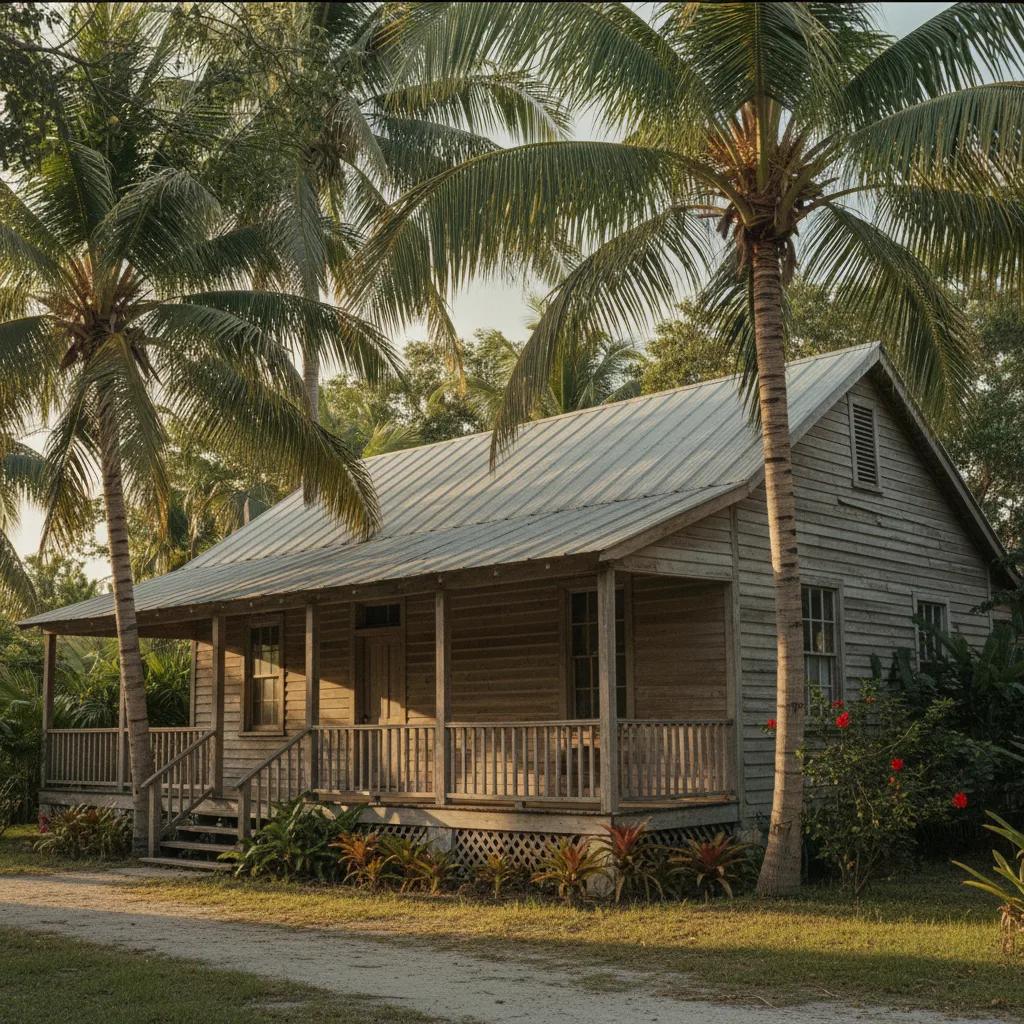
Coconut Grove: Free Architectural Landmark Walk in Miami
Take a free architectural landmark walk through Coconut Grove to discover 1890s Bahamian conch cottages, native Dade County pine, and lush coral stone walls.
Nestled along the shores of Biscayne Bay beneath a dense subtropical hammock canopy, Coconut Grove stands as the oldest continuously inhabited modern settlement in Miami-Dade County. Founded in the late nineteenth century well before the City of Miami was incorporated in 1896, this village emerged through a unique fusion of Bahamian maritime culture, New England intellectualism, and rugged pioneer craftsmanship. Embarking on a self-guided architectural landmark walk through the tranquil lanes of Coconut Grove reveals a masterclass in vernacular subtropical building, where hand-hewn Dade County pine cottages, coral rock mission chapels, and breeze-catching verandas showcase sustainable design long before modern technology.
Bahamian Conch Houses and Charles Avenue
The cultural and architectural backbone of Coconut Grove was established by Bahamian immigrants who arrived in the 1880s to work at the historic Peacock Inn and clear the surrounding wilderness. Centered along Charles Avenue, formerly known as Evangelist Street, the Charles Avenue Historic District preserves the premier collection of historic Bahamian conch houses in Southern Florida. Bahamian master carpenters brought centuries of maritime woodworking knowledge to the coastal hammock, constructing homes adapted specifically to hurricanes, termites, and equatorial humidity.
At 3242 Charles Avenue stands the landmark E.W.F. Stirrup House, built in 1897 by Bahamian pioneer Ebenezer Woodbury Franklin Stirrup. Stirrup arrived in Key West in 1888 before migrating to Coconut Grove, where he became one of the largest landowners in South Florida. His two-story wooden home features classic Bahamian conch construction: a steep gabled metal roof designed to shed tropical rainwater rapidly, raised timber foundations that permit cooling air to circulate beneath floorboards, and wide covered verandas that shield the interior from direct sun.
Dade County Pine and Subtropical Engineering
A fundamental secret to the longevity of Coconut Grove's historic wooden cottages is their reliance on native slash pine, historically known as Dade County pine (Pinus elliottii var. densa). This virgin-growth timber grew slowly through centuries of limestone soil, producing wood so dense and heavily saturated with natural turpentine resin that termites could not penetrate it, and nails frequently bent when driven into the grain. The resin solidified into a stone-like density over time, allowing these lightweight wooden structures to survive major category four hurricanes that flattened modern concrete block homes.
Vernacular conch architecture was fundamentally an exercise in passive climate control. Large double-hung sash windows were positioned directly opposite each other across narrow rooms to induce cross-ventilation, while exterior louvered jalousie shutters could be angled to block rain while still funneling ocean breezes into bedrooms. High ceilings allowed warm air to rise toward roof cupolas and attic louvers, creating a natural thermal siphon that kept interior rooms surprisingly comfortable throughout sweltering August afternoons.
The Barnacle and Maritime Vernacular
Strolling southward toward Main Highway leads to The Barnacle Historic State Park at 3485 Main Highway, home to the oldest house in Miami-Dade County remaining on its original foundation. Designed and built in 1891 by pioneer yacht designer and naturalist Ralph Middleton Munroe, The Barnacle reflects Munroe's deep maritime knowledge. Built primarily with salvage timber reclaimed from Biscayne Bay shipwrecks and framed with native pine, the house is elevated high on timber pilotis to safeguard against hurricane storm surge and ground moisture.
Munroe incorporated an octagonal central room with a ceiling vent that pulled air upward through a rooftop cupola, mimicking the efficient ventilation systems of sailing vessels. Deep wraparound porches on two levels provided outdoor living spaces protected from sudden thunderstorms. Rather than clearing the land, Munroe preserved the surrounding tropical hardwood hammock, maintaining an organic windbreak of gumbo-limbo, live oak, and wild tamarind trees that shielded the residence from destructive coastal gales.
Plymouth Congregational Church and Felix Reboredo
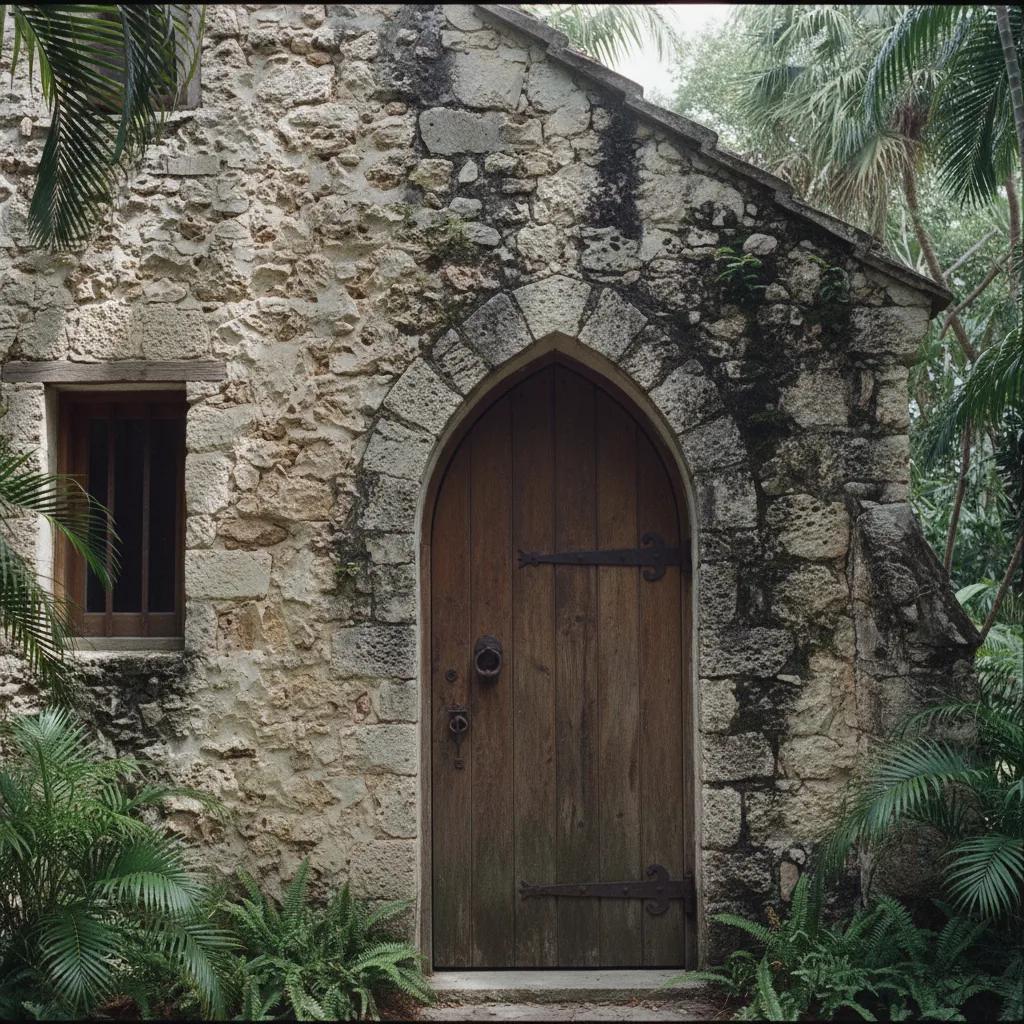
Wandering west to 3400 Devon Road brings you before Plymouth Congregational Church, one of the most romantic ecclesiastical monuments in Florida. Designed in 1917 by architect Clinton McKenzie, the church was modeled after the seventeenth-century Franciscan mission chapels of southwestern Mexico. Remarkably, the colossal stone sanctuary was erected almost single-handedly by a master Spanish stonemason named Felix Reboredo, who hand-chiseled rough native coral rock blocks from the surrounding ground and assembled them without scaffolding using a simple wooden hoist.
Reboredo gave the exterior walls a rugged, weathered texture that appears centuries older than its 1917 founding date. The entrance features massive double doors hand-carved from solid walnut, dating back to seventeenth-century northern Spain and purchased by church benefactors. Take time to stroll through the cloistered stone courtyard and garden loggias, where native orchids and climbing bougainvillea embrace rough-faced coral arches and hand-forged iron lanterns.
Pioneer Libraries and Walking Etiquette
At 2870 McFarlane Road, the Coconut Grove Library illustrates the community's dedication to indigenous stonework. Originating in 1895 as the Pine Needles Club founded by pioneer women, the library expanded in 1963 under architect T. Trip Russell, who seamlessly incorporated the original coral rock reading room into a modern mid-century library pavilion centered around an open-air tropical courtyard. Notice the Woman's Club of Coconut Grove at 2985 South Bayshore Drive, another coral rock masterpiece completed in 1921 by architect Walter De Garmo.
When exploring Coconut Grove on foot, morning between 8:00 and 10:30 AM is magical as sunlight filters through ancient banyan boughs, casting intricate lace patterns across coral stone walls and quiet residential lanes. Charles Avenue and the adjacent residential streets remain active, close-knit residential neighborhoods; walk respectfully on public sidewalks, keep camera shutters courteous, and do not trespass onto private front porches or gardens.
Practical Notes for Coconut Grove Visitors
The walking route connecting Charles Avenue, The Barnacle, Plymouth Church, and McFarlane Road covers approximately 1.8 miles on sidewalked streets shaded by dense tropical foliage. Public transit is easily accessible via the Coconut Grove Metrorail Station, where you can board the free Coconut Grove Trolley or take a fifteen-minute stroll south down SW 27th Avenue directly into the village center. Public parking garages are located near Cocowalk for those arriving by car.
Wear comfortable walking shoes suitable for cracked historic limestone walkways, and carry mosquito repellent if you plan to explore unpaved nature trails leading down to the bayfront. Use Karpo APP to check local trolley connections, chart self-guided walking loops through historic residential lanes, and locate nearby shaded garden pauses across Coconut Grove.
Ask Karpo for more information.
Keep reading
- Brickell Tailor Alteration Shop Finder: First Work Suit Fit
 Coconut Grove Tailor Alteration Shop Finder: Heat-Proof Fits
 Little Havana Tailor Alteration Shop Finder: Guayabera Fits