Genealogy researchers conducting weekday afternoon searches for common surnames like mary rivera face a practical decision: whether to visit Miami-Dade's downtown government facilities, regional library branches, or rely on online portals for vital records verification. Each pathway offers distinct tradeoffs in accessibility, staff assistance depth, and database coverage. The county's public records infrastructure spans physical locations with trained personnel and digital systems accessible from any device, yet no single option delivers universal advantages for intermediate-level researchers working solo. Understanding which facilities maintain genealogy-specific databases, how their operating schedules align with weekday availability, and what types of in-person guidance each location provides helps researchers allocate time efficiently when verifying records that share frequently occurring names across Miami-Dade's diverse population history.
Text Karpo your starting point, timing, group size, and priorities for a Miami plan tailored to this exact situation, with one realistic backup before you leave.

Downtown Government Center Access Points and Record Types
Miami-Dade County's official website lists a Courts & Records category under Services & Information, indicating centralized vital records access through downtown administrative facilities. The Hickman Building at 275 NW 2nd Street serves as the Parks, Recreation and Open Spaces headquarters with a general county contact number (305-755-7800), though this location focuses on recreation services rather than genealogy materials. Researchers seeking birth, death, marriage, or property records typically navigate to county clerk offices within the downtown government complex, where staff process public records requests during standard business hours—yet the official extracts provided do not specify exact operating schedules for records divisions, preventing confirmation of weekday afternoon availability without direct inquiry.
The county's Public Records Search appears under the Government section's Public Records & Open Data menu, suggesting an online portal exists parallel to in-person services. This dual-access model creates a verification tradeoff: downtown facilities may offer immediate clarification from clerks familiar with indexing quirks in historical records, particularly valuable when distinguishing between multiple individuals sharing common names across decades of filings. However, researchers must weigh travel time via Metromover—which operates 5:30 a.m. to 10 p.m. seven days weekly with free service covering the Financial District—against the convenience of initiating searches from home through digital databases that lack real-time staff guidance for ambiguous results.

Library Branch Genealogy Resources and Research Support
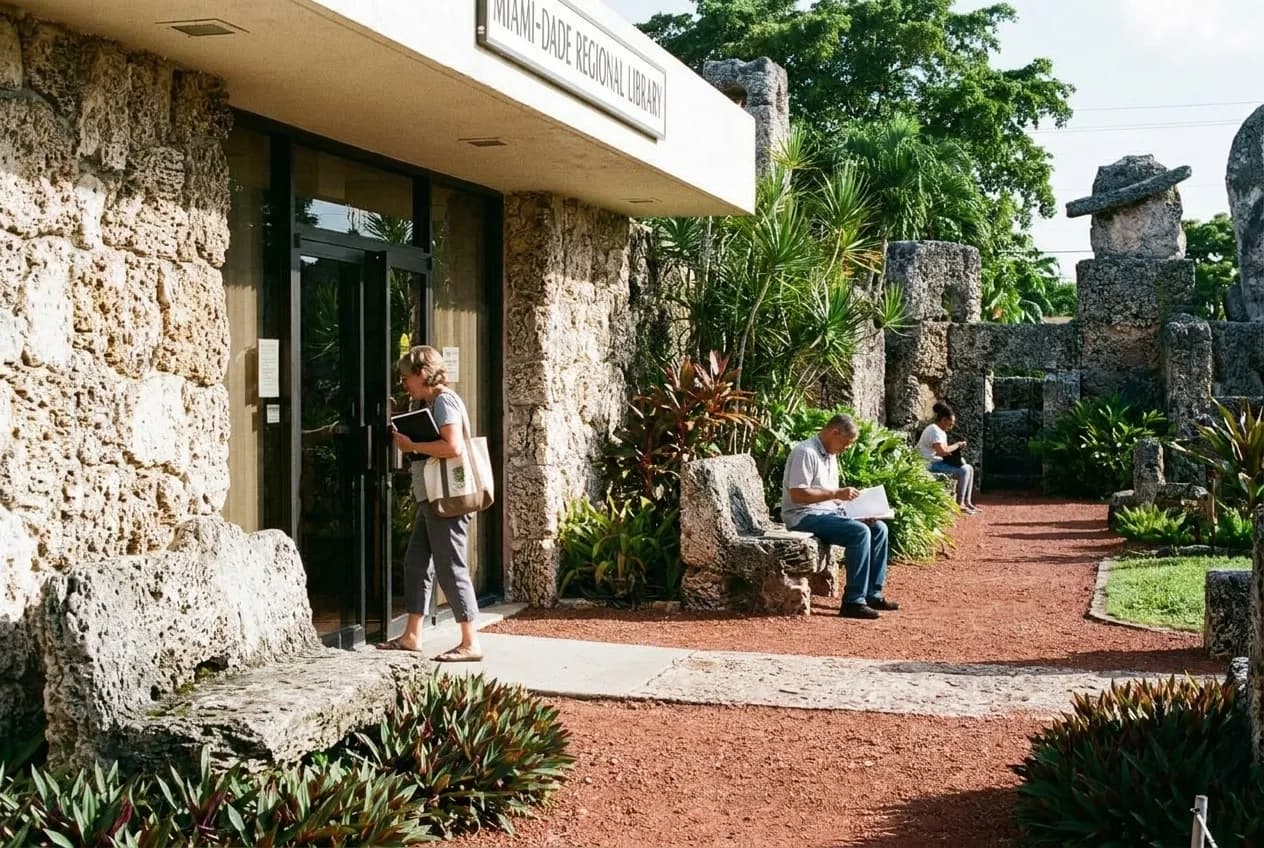
The Miami-Dade Public Library System maintains an events calendar at mdpls.org/events, though the provided extract does not detail genealogy-specific programming or database subscriptions available at branch locations. Public libraries frequently provide access to subscription genealogy platforms like Ancestry Library Edition or HeritageQuest, which researchers cannot access from home without institutional credentials. Branch staff trained in reference services may assist with navigating these specialized databases, interpreting census records, or locating local history collections that contextualize vital records—advantages particularly relevant when verifying identities in families with repeated naming patterns across generations.
The absence of confirmed branch hours or genealogy service details in official extracts means researchers must verify current offerings before committing to a branch visit. Regional libraries often schedule genealogy workshops or maintain local history rooms with microfilm archives, newspaper clippings, and city directories that supplement county vital records. For solo researchers working methodically through verification steps, the library environment offers quieter workspace than busy government offices, plus the ability to cross-reference multiple source types during a single visit. Yet if a specific branch lacks genealogy databases or trained staff during weekday afternoons, the trip yields less value than accessing confirmed online portals from a personal workspace.
Online Portal Capabilities Versus In-Person Clarification
Miami-Dade County's website architecture includes a "Request Public Records" link and references to online services, indicating digital access to at least some government records. Online portals typically allow surname searches across indexed databases, returning lists of matching records that researchers can filter by date range or record type. For common names, this generates extensive result sets requiring careful comparison of associated details—birth dates, parent names, addresses—to isolate the correct individual. Intermediate researchers comfortable with Boolean search logic and record interpretation may efficiently narrow results without staff assistance, particularly when working from compiled family trees that provide filtering criteria.
However, digital systems cannot replicate the contextual knowledge of experienced clerks who recognize historical filing inconsistencies, spelling variations introduced during record transcription, or cross-references between related document types. A researcher encountering ambiguous results for a common surname might spend hours evaluating possibilities online, whereas a ten-minute consultation with knowledgeable staff could identify the correct record through familiarity with local indexing practices. The portal's 24/7 availability suits researchers with flexible schedules, but weekday afternoon access offers no advantage over evening sessions when in-person facilities close. This timing neutrality favors online research for initial broad searches, reserving facility visits for cases where results require expert interpretation.
Historical Society Archives and Specialized Collections
The official extracts reference the Deering Estate, which offers daily tours and educational programs through the Parks, Recreation and Open Spaces Department, suggesting potential archival resources beyond standard government records. Historical societies and estate archives sometimes maintain private collections—family papers, photographs, organizational records—that provide biographical context absent from vital records alone. These materials help researchers verify identities by corroborating details across multiple source types, particularly valuable when official records contain minimal information or when distinguishing between contemporaneous individuals with identical names.
Yet specialized archives typically require appointments, maintain limited hours compared to government offices, and focus on specific geographic areas or communities within Miami-Dade. A researcher investigating a common surname without prior knowledge of family connections to particular neighborhoods or organizations may find archive visits less productive than systematic searches through comprehensive county databases. The methodical approach suited to intermediate researchers involves first exhausting indexed vital records and census data to establish basic facts, then targeting archival visits only when initial research identifies specific institutions or locations relevant to the family history. This staged strategy prevents inefficient exploration of collections unlikely to contain pertinent materials.
Deciding Between Access Methods for Common Name Verification
Researchers verifying records for frequently occurring surnames benefit from assessing their current information completeness before selecting an access method. Those possessing approximate dates, parent names, or Miami-Dade addresses should begin with online portals, using specific details to filter results efficiently. If initial searches return manageable result sets with clear matches, in-person visits become unnecessary. Conversely, researchers starting with minimal identifying information face overwhelming online results that consume hours of unproductive comparison—circumstances where downtown government center staff can suggest alternative search strategies or identify supplementary record types that narrow possibilities.
The solo researcher working weekday afternoons gains no inherent advantage from that timing unless coordinating with staff availability at specific facilities. Verifying current service hours, genealogy resource availability, and staff expertise levels at target locations prevents wasted trips. Library branches suit researchers needing extended workspace and subscription database access, government centers serve those requiring official certified copies or clerk consultation, and online portals accommodate anyone prioritizing convenience over immediate expert guidance. Intermediate-level researchers typically employ a hybrid approach: conducting preliminary online searches to define specific questions, then scheduling targeted facility visits to resolve ambiguities that digital tools cannot clarify independently. This pragmatic method respects both the efficiency of self-directed digital research and the irreplaceable value of experienced human assistance for complex verification challenges.
Tags: #Miamigenealogyresearch #MiamiDadepublicrecords #vitalrecordsaccess #governmentcenterservices #librarygenealogyresources #onlinerecordsportal #historicalarchivesMiami #weekdayresearchplanning #commonsurnameverification #soloresearchstrategies
Sources consulted: Source 1: miamidade.gov · Source 2: miamidade.gov · Source 3: mdpls.org · Source 4: miamibeachfl.gov
All trademarks are the property of their respective owners.
Ask Karpo first
Ask Karpo to turn this Miami idea into a current plan for your date, budget, companion, transit preference, and energy level. Karpo can narrow the route and flag what to verify before you go.