The search for lunch near me in Little Havana is not complete when the plate arrives. The ropa vieja or the Cuban sandwich is the first act. The real decision comes after: which bakery case to walk to, whether the guava pastelitos are still warm, and if the cortadito that follows lunch will be taken standing at a ventanita or sitting at a counter with the flan already ordered. The afternoon economy of Little Havana runs on this sequence—plate, pastry, coffee—and the bakeries that understand the timing refill the cases after 2pm when other neighbourhoods are clearing tables.
Karpo maps the bakery-case refill schedules across Little Havana and shows you which ventanitas still have croquetas warm at 3pm when the lunch crowd thins. Ask it to route you from the plate to the pastelito without backtracking.
The lunch-then-bakery pattern that structures the afternoon
Cuban lunch in Little Havana does not end with the savoury plate. The meal is designed with a sweet tail, and the restaurants and bakeries closest to each other have worked out the handoff. You eat arroz con pollo or vaca frita at a counter or table, then walk next door or across the block to the bakery for a pastelito and a cortadito. The rhythm is so reliable that the bakeries time their second bake to the lunch-rush exit, usually between 1:30pm and 2:30pm. If you arrive at noon, the morning's guava-and-cheese triangles are gone. If you arrive at 2:15pm, the case refills.
This is not an upsell or a marketing tactic. It is how lunch is eaten here: the plate steadies you, the pastelito satisfies, and the coffee after—not before—is what carries you into the rest of the day. The sequence is mechanical enough that regulars calculate parking once and walk twice.
Which bakery cases refill and which stay empty after two
Not every bakery on Calle Ocho runs a second bake. The smaller family operations along SW 8th Street between SW 12th and SW 17th Avenues often sell out by 1pm and stay sold out. The larger operations—those with ventanitas that never close and cases that span ten feet—refill in the early afternoon. Versailles, at 3555 SW 8th Street, restocks its pastelito case continuously from mid-morning through mid-afternoon because the lunch crowd overlaps with the standing-coffee crowd and the tour buses. The guava-and-cheese triangles come out warm at 2pm. El Brazo Fuerte Bakery at 1697 SW 8th Street runs a similar schedule: the case is full again by 2:30pm most weekdays, and the carne pastelitos—round, filled with seasoned ground beef—are often still warm enough that the sugar glaze has not fully set.
The smaller operations, like the bakery counter inside Doce Provisions at 541 SW 12th Avenue, do not always refill. What is baked in the morning is what you get. If the guava pastelitos are gone by 1pm, they are gone. This is useful information if you are planning the afternoon backward from dessert.
Guava, cheese, and carne: the pricing and the shapes
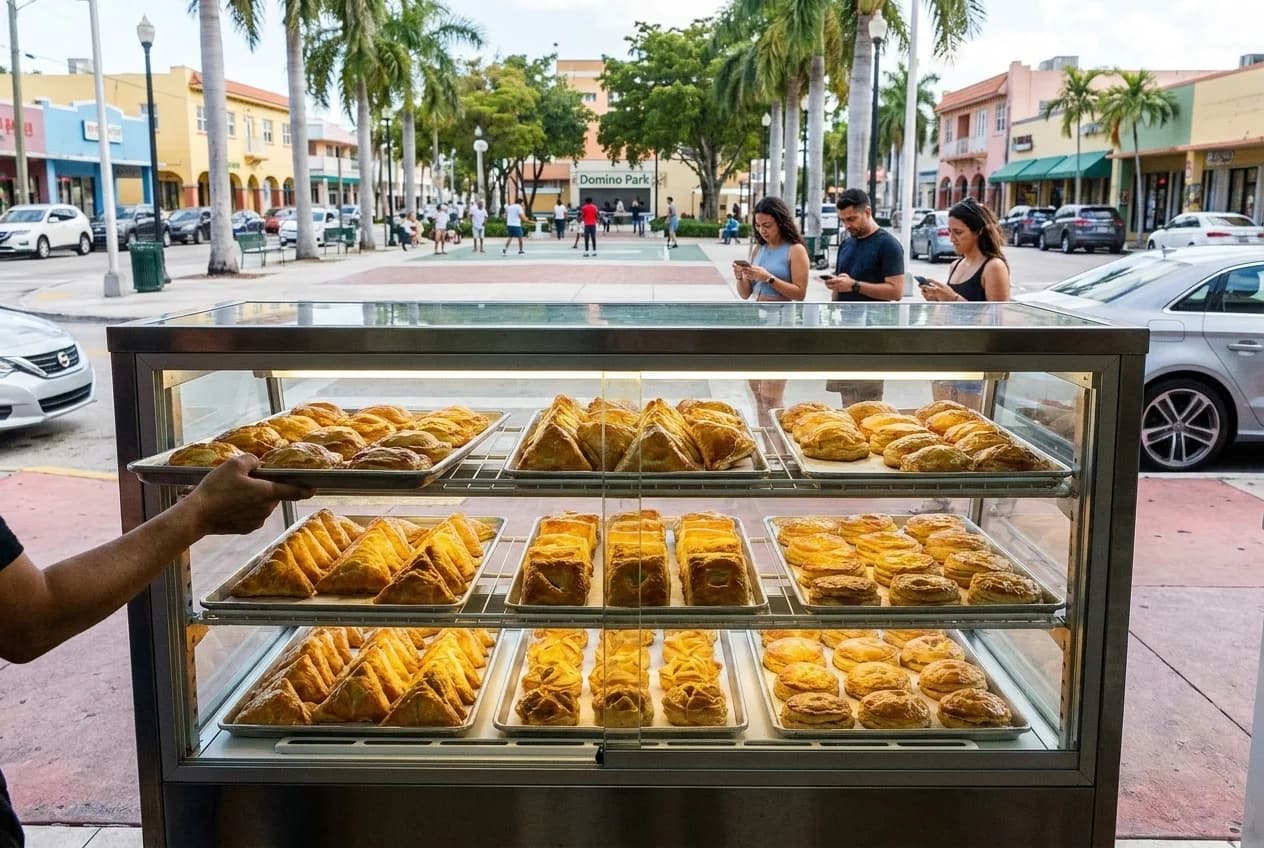
Pastelitos are sold by filling, and the filling determines both the shape and the price. Triangle pastelitos hold guava paste and cream cheese; square ones hold either guava or cheese alone; round ones are filled with carne—Cuban picadillo made with ground beef, tomato, olives, raisins, and spices. The guava-and-cheese triangles are the most popular and usually the most expensive, running between two and three dollars depending on size and bakery. Plain guava or plain cheese squares cost slightly less, often a dollar fifty to two dollars. Carne pastelitos, because they require more labour and ingredients, can reach three fifty or four dollars at some Calle Ocho bakeries.
The shape system is not universal but it is widespread enough that if you point at a triangle in the case, the person behind the counter will assume you want guava and cheese. If you want only guava, specify. At Versailles and El Brazo Fuerte, the distinction is marked on small tags in the case. At smaller bakeries, you ask.
Flan and tres leches by the slice, not by the whole
The bakery cases also hold flan and tres leches cake, both sold by the slice and both positioned as post-lunch desserts rather than morning pastries. Flan at most Little Havana bakeries is traditional Cuban flan: dense, caramel-heavy, served cold in a shallow dish. A slice costs between three and five dollars. Tres leches—sponge cake soaked in three milks and topped with meringue or whipped cream—is lighter but just as sweet, and a slice runs four to six dollars depending on the bakery. Both are eaten with a fork at the counter or taken in a small plastic container to eat elsewhere.
These are not grab-and-go items. Flan and tres leches require sitting, or at least leaning against something stable. The lunch-then-dessert sequence usually means you order the flan at the bakery counter after finishing the plate next door, not before. Some regulars order both the pastelito and the flan at once, eating the pastelito standing and the flan sitting.
The post-lunch cortadito and café con leche, not the morning cafecito
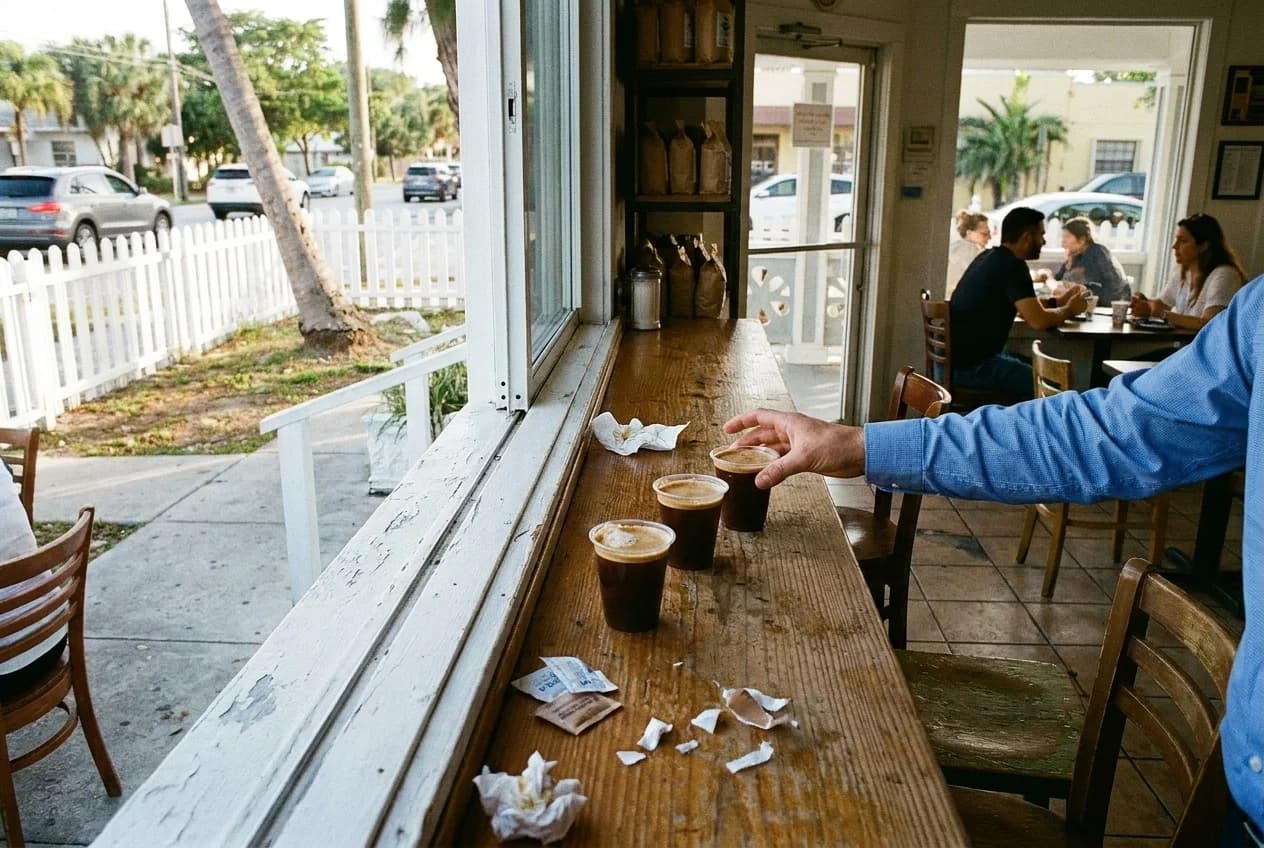
The coffee that follows lunch is not the same as the coffee that starts the morning. A cafecito—the tiny, sweet shot of Cuban espresso—is a morning or mid-morning drink, taken standing at a ventanita with no food. After lunch, the default is a cortadito: espresso cut with a small amount of steamed milk, served in a slightly larger cup, still sweet but less concentrated. Some people order café con leche, which is coffee with a larger proportion of hot milk, usually drunk sitting down with the pastelito or flan.
The timing matters. The ventanitas are busiest between 7am and 11am, then again between 2pm and 4pm. The afternoon wave is the post-lunch coffee crowd, and the rhythm is slower. You are not expected to drink and leave in ninety seconds. At El Cristo Restaurant, 1543 SW 8th Street, the ventanita stays open through the afternoon, and the cortadito-plus-pastelito order is common enough that the person working the window will often ask if you want both before you finish ordering the first. The price for a cortadito is usually between one fifty and two fifty; café con leche is two to three dollars.
Where the lunch-to-bakery walk is shortest and the refill most reliable
The tightest lunch-and-bakery cluster is along Calle Ocho between SW 12th and SW 17th Avenues. Versailles, at 3555 SW 8th Street, is both restaurant and bakery, so the walk is internal. The dining room serves full Cuban plates—ropa vieja, lechón asado, arroz con pollo—from 11am through late afternoon, and the bakery case at the front refills continuously. The guava-and-cheese pastelitos are warm by 2pm most days. A full lunch plate costs twelve to eighteen dollars; a pastelito and cortadito together cost under five.
El Brazo Fuerte Bakery, at 1697 SW 8th Street, does not have a full restaurant attached, but it sits close to other lunch counters along the same stretch of Calle Ocho. The pastelito case at El Brazo Fuerte refills by 2:30pm on weekdays, and the carne pastelitos are often still warm. A walk of one or two blocks in either direction will take you to a Cuban sandwich or empanada counter where lunch costs nine to twelve dollars.
Doce Provisions, at 541 SW 12th Avenue, is a smaller operation: a café and bakery with a short lunch menu that includes Cuban sandwiches and empanadas. The bakery counter is inside, so the lunch-to-pastry walk is eliminated. The catch is that Doce Provisions does not always run a second bake. If the pastelitos are gone by 1pm, they are gone. Closed Mondays.
El Exquisito Restaurant, at 1510 SW 8th Street, is another lunch-and-bakery combination under one roof. The restaurant side serves Cuban staples—palomilla steak, masitas de puerco, arroz con pollo—while the bakery counter at the front keeps pastelitos, croquetas, and Cuban bread stocked through the afternoon. The ventanita here runs all day, and the cortadito is poured strong. Lunch plates run ten to fifteen dollars, and the pastelito case is typically restocked by early afternoon on weekdays.
Practical notes
Versailles, 3555 SW 8th Street, open daily, full lunch menu 11am-4pm, bakery case refills 2pm most days, pastelitos two to four dollars, cortadito two dollars. El Brazo Fuerte Bakery, 1697 SW 8th Street, open daily, second bake 2:30pm weekdays, carne pastelitos three fifty. Doce Provisions, 541 SW 12th Avenue, open Tuesday to Sunday, lunch 11am-3pm, no guaranteed afternoon refill, closed Mondays. El Cristo Restaurant, 1543 SW 8th Street, ventanita open 7am-6pm daily, cortadito one fifty to two fifty. El Exquisito Restaurant, 1510 SW 8th Street, open daily, lunch and bakery counter, pastelitos and cortadito available all afternoon. Flan three to five dollars most bakeries, tres leches four to six. Peak bakery-case freshness: 2pm to 3pm weekdays.
Tags: #LittleHavana #CalleOcho #CubanLunch #Pastelitos #GuavaPastry #Cortadito #VentanitaCoffee #CubanBakery #MiamiLunch #Flan #TresLeches #CubanoSandwich #Versailles #AfternoonCoffee #LunchNearMe
All trademarks are the property of their respective owners.
Ask Karpo first
Ask Karpo which Little Havana bakeries still have warm pastelitos at 2:30pm on a Tuesday, or which ventanitas pour the best cortadito within one block of Versailles. Karpo tracks the refill schedules and the lunch-to-bakery walking distances so you can plan the afternoon sequence without guessing or backtracking across Calle Ocho.