 Costume Rental Near Me in Williamsburg: Hit and Run Productions Archive
Hidden Gems & Odd Finds
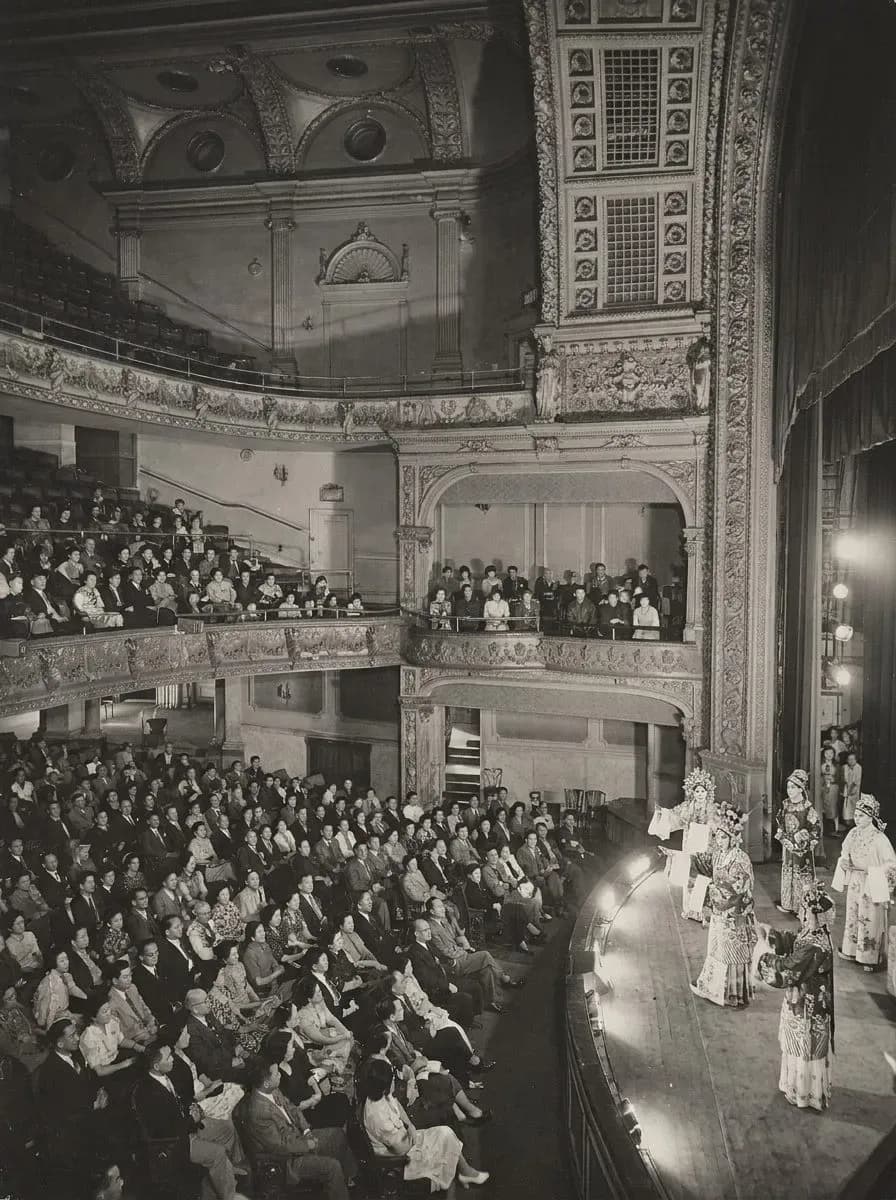
bensonhurst's cantonese opera theater when weekend matinees draw multigenerational audiences
A community theater on a residential Bensonhurst block has preserved traditional Cantonese opera for decades, hosting elaborate three-hour performances conducted entirely in Cantonese for Brooklyn's Chinese neighborhoods.
On a quiet residential block in Bensonhurst, past the bakeries and seafood markets that anchor the neighborhood's Chinese commercial spine, a nondescript building becomes a portal every weekend afternoon. No marquee announces it. No sandwich board beckons passersby. Yet by mid-afternoon, clusters of families arrive—grandmothers in quilted jackets, middle-aged couples, occasionally a teenager trailing behind—filing through the entrance to a music hall that has operated in relative invisibility for decades, preserving an art form most New Yorkers will never witness. This is where Cantonese opera lives in Brooklyn, unapologetically untranslated and uncompromising in its devotion to tradition.
The afternoon ritual
Weekend performances typically begin between 2 and 3 p.m., a scheduling sweet spot that accommodates the rhythms of multigenerational attendance. Grandparents have finished lunch. Parents have completed Saturday errands. The shows run approximately three hours with intermission, long enough to unfold the intricate narratives that define classical Cantonese opera but timed to release audiences before dinner obligations. There's a practicality to this cadence that speaks to the theater's function as community anchor rather than tourist destination.
The lobby fills slowly, voices mingling in Cantonese and Taishanese dialects. You'll notice the ease of regulars—the way certain families claim preferred seating areas without discussion, how audience members greet performers warmering in street clothes before the show. This isn't a venue where strangers politely avoid eye contact. It's a gathering space where the separation between stage and house feels permeable, where the preservation of art and the maintenance of social fabric are inseparable projects.
Spectacle without translation
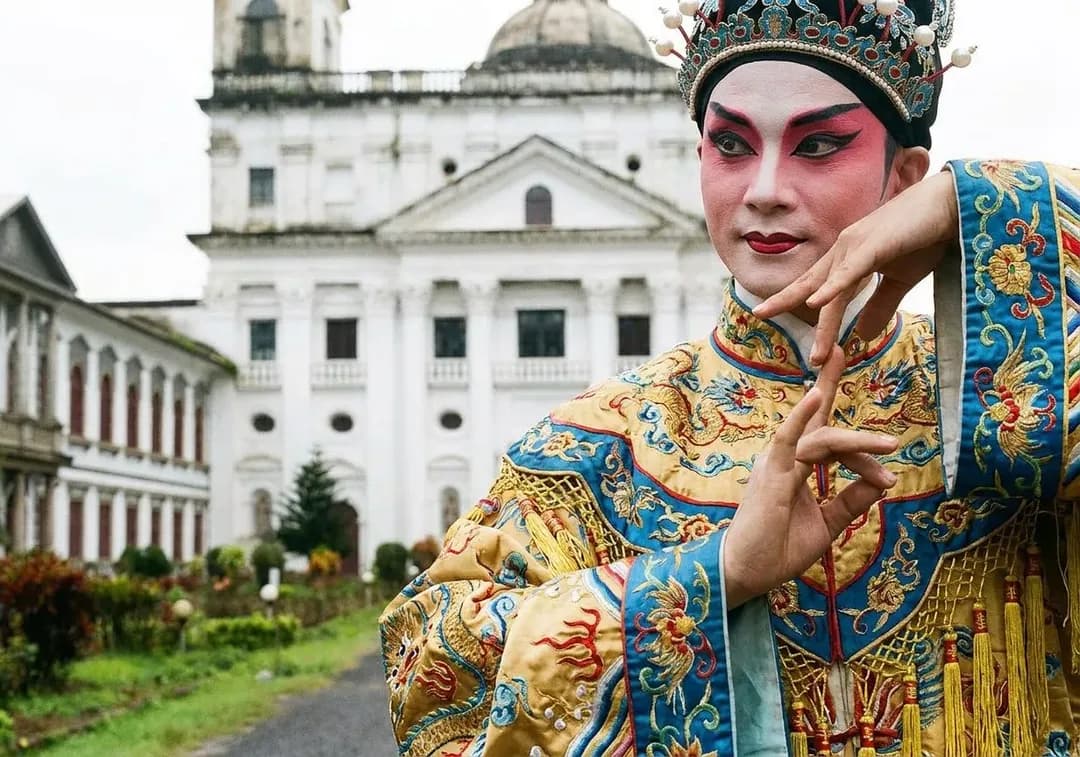
The performances unfold entirely in Cantonese, without subtitles or printed summaries. For those fluent in the language and familiar with the classical narratives—tales drawn from dynastic history, folklore, moral parables—the experience offers continuity with an art form that stretches back centuries. For outsiders, including non-Cantonese-speaking Chinese audience members, there's a different kind of education available: the grammar of gesture, the semiotics of costume color and embroidery, the percussive punctuation of cymbals and drums that telegraph emotional beats even when dialogue remains opaque.
The costumes are legitimately spectacular—silk robes heavy with metalwork, elaborate headdresses that catch the stage lights, the painted faces that denote character archetypes legible across linguistic barriers. Watching a performer execute the stylized walk of a general or the flutter-sleeve technique signifying distress, you begin to understand opera as a somatic language. The incomprehension, if you're willing to sit with it rather than resist it, becomes part of the experience. Not every cultural moment needs to explain itself to be worth your afternoon.
Seasonal programming and community support
The theater operates on a seasonal schedule, with performances concentrated during fall and winter months when audiences are less scattered by beach weekends and summer travel. By late 2026, this pattern has become more pronounced, with summer programming notably reduced to accommodate both performer availability and audience attendance patterns. The cooler months bring a density of productions—different operas rotating through the repertoire, visiting troupes supplementing the resident company, special holiday performances that draw particularly large crowds.
Tickets are typically available at the door, operating on a suggested donation basis to support the community theater's operations. This model—part accessibility measure, part fundraising strategy—reflects the venue's dual identity as cultural institution and neighborhood amenity. You'll see families contribute varying amounts, some sliding bills into the donation box discreetly, others paying what appears to be well above the suggested amount. It's a system built on collective investment, a tacit acknowledgment that preservation costs money but shouldn't price out the community being preserved.
Why it stays invisible
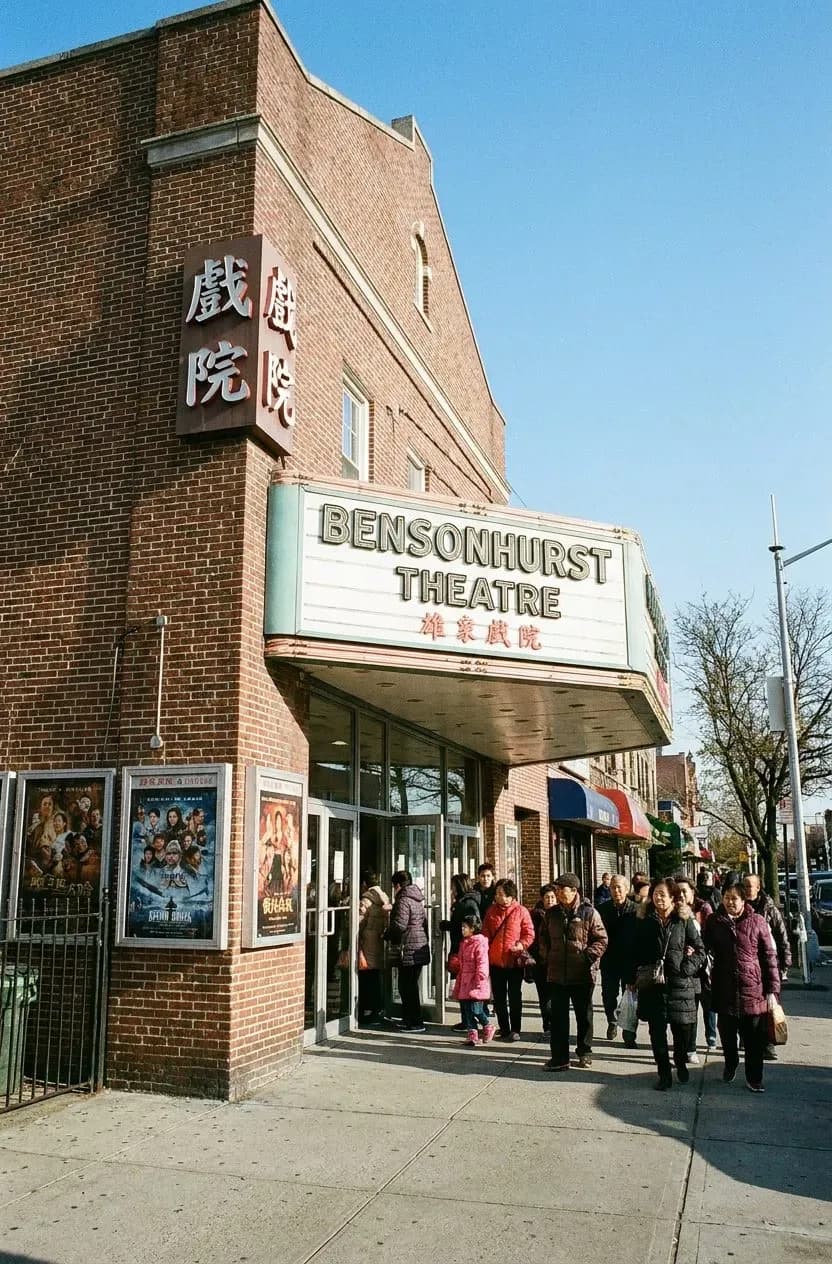
The theater's location keeps it functionally invisible to most non-Chinese Brooklynites, even those who consider themselves adventurous in their weekend plans. Bensonhurst doesn't register on the mental maps that guide many city dwellers' explorations. There's no adjacent gallery district to provide pretext for a visit, no newly opened wine bar to serve as gateway. The neighborhood's Chinese community is geographically diffuse enough that you can traverse blocks without encountering the density of signage that might signal cultural infrastructure to outsiders.
This invisibility is partly circumstantial, partly protective. The theater doesn't court outside attention because it doesn't need it—the audience it serves knows where to find it. But there's also an unspoken awareness that certain kinds of visibility bring complications: rising rents, pressures to modify programming for broader appeal, the self-consciousness that enters a space once it becomes someone's idea of an authentic ethnic experience. Better to remain legible primarily to those who need it most.
What sitting through three hours teaches you
The length of these performances—a full three hours even with intermission—initially feels daunting if you're accustomed to ninety-minute shows designed for Broadway attention spans. But the duration is part of the form's architecture. Classical Cantonese opera doesn't compress or accelerate for modern impatience. It unfolds at the pace required for its narratives, allowing room for musical interludes, for the repetition of key arias, for the kind of elaboration that contemporary Western theater has largely abandoned.
About an hour in, if you let yourself adjust rather than resist, you notice the shift. The stylized movements begin to read as naturalistic within the opera's internal logic. The musical accompaniment—strings, woodwinds, that insistent percussion—starts to feel less foreign, more like an emotional language you're beginning to parse. You watch a grandmother translate plot points in whispered Cantonese to a grandchild beside her, and you realize you're witnessing transmission, the literal passing of literacy from one generation to the next. The theater isn't just preserving opera. It's preserving the capacity to receive opera, to sit still for it, to value what it offers.
Practical notes
The venue name, exact address, and schedule should be verified against a current local source before publication through community networks as the theater maintains minimal online presence. Nearest subway access and parking should be verified for the specific venue location Seasonal programming should be verified with the venue before stating current operating patterns Arrive fifteen minutes early for door ticket sales on a suggested donation basis. The venue is a walk-up with limited accessibility; bring cash for donations. No food sold inside, but the surrounding blocks offer numerous bakeries and restaurants for pre- or post-show meals.
Tags: #the_odd_edit #bensonhurst #cantonese_opera #brooklyn_culture #traditional_performance #chinese_community #nyc_theater #weekend_plans #multigenerational #cultural_preservation #nyc_hidden_gems #winter_2026 #immersive_experience #community_theater #outer_borough
Please drink responsibly. Must be of legal drinking age.
All trademarks are the property of their respective owners.
Ask Karpo for more information.
Keep reading
- Costume Rental Near Me in Williamsburg: Hit and Run Productions Archive
 Costume Rental Near Me in Flatiron: Abracadabra NYC Showroom Floor
 Costume Rental Near Me in NoHo: Albright Fashion Library Archive