 Bloomsbury Mews Walk Planner: Literary Brick Passages
Neighborhood Guides
London Urban Nature Oasis Walk In Shoreditch Spitalfields
Explore tranquil churchyards, leafy bandstands, and community pocket gardens on this refreshing urban nature oasis walk through Shoreditch and Spitalfields.
Shoreditch and Spitalfields are widely recognized for kinetic street art, busy vintage markets, and crowded tech corridors, but both historic East End quarters harbor remarkable pockets of peaceful natural sanctuary. Stepping away from the roar of heavy lorry traffic along commercial arterial roads brings you into sheltered churchyard gardens beneath century-old plane canopies, community woodland reserves, and serene terraced bandstands. This self-guided London urban nature oasis walk connects four distinctive green sanctuaries across an easy two-mile pedestrian circuit, showing how leafy enclaves provide essential quietude right in the capital's creative core.

Canopy Quiet at St Leonard's Shoreditch Churchyard
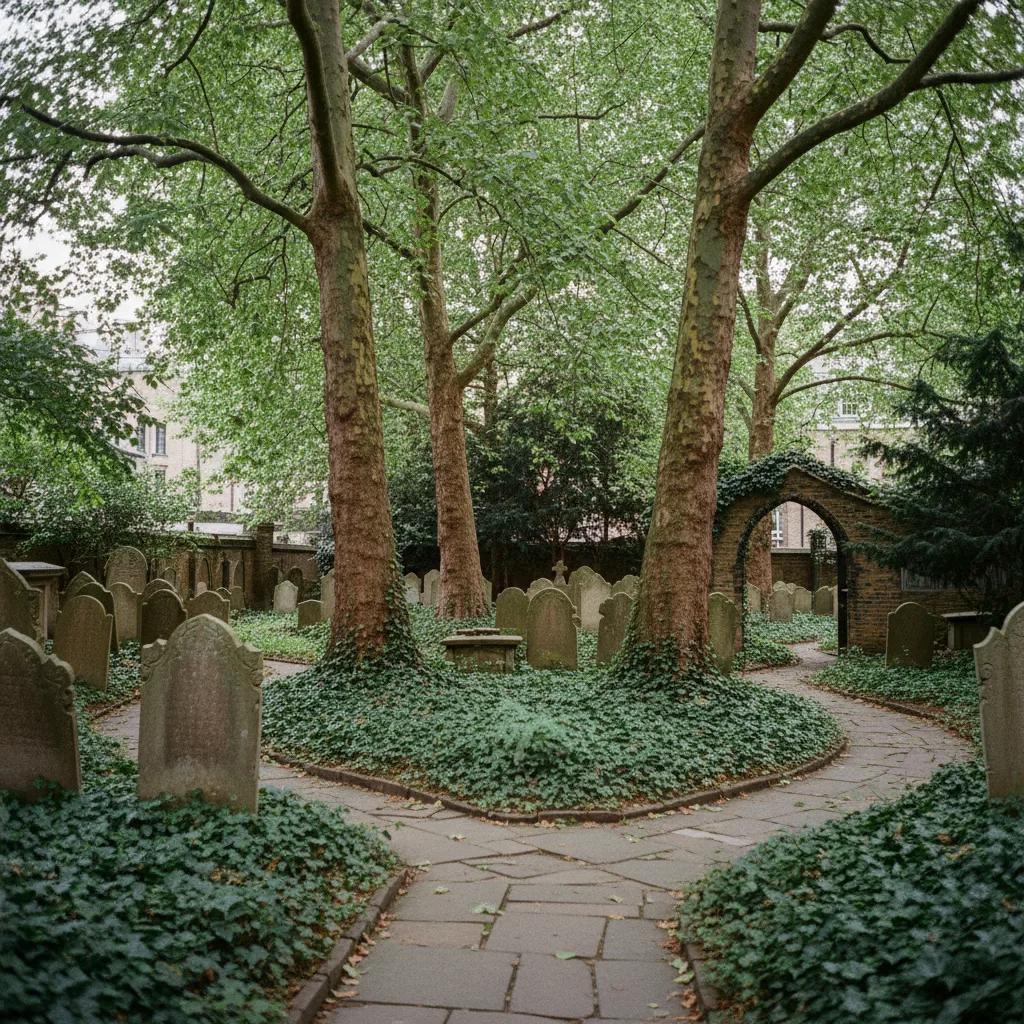
Begin your morning nature exploration at St Leonard's Church, at 119 Shoreditch High Street, London E1 6JN, where the ancient parish grounds provide an immediate barrier against bustling traffic. Rebuilt in 1740 by architect George Dance the Elder, this Palladian stone landmark sits within a tranquil walled churchyard filled with towering plane trees and weathered limestone table tombs. Morning light filters softly through the high canopy, casting delicate shadow patterns over historic paved walkways where local residents regularly sit to read before shops open.
The perimeter of the churchyard is framed by mature lime trees, ivy-covered brick boundary walls, and unmanicured native wildflower borders that support urban songbirds and bumblebees throughout temperate months. Walking beneath these broad leafy branches offers an instant psychological reset, effectively dampening the rumble of buses along nearby Great Eastern Street. Several sturdy wooden benches line the gravel perimeter, giving visitors comfortable vantage points to observe nesting wood pigeons and robins sheltering in the dense greenery.
History runs deep across these secluded grounds, which house the final resting places of prominent Elizabethan actors associated with James Burbage and The Theatre, England's first purpose-built playhouse. Longtime East End locals often bring morning filter coffee to sit along the southern perimeter path, appreciating a contemplative neighborhood space that has remained largely unaltered for centuries. The churchyard gates open free to the public daily from 8:00 am until dusk, welcoming anyone seeking an unhurried botanical pause.
Terraced Greenery at Arnold Circus Bandstand
From St Leonard's, walk eastward along Calvert Avenue to reach Arnold Circus, London E2 7JF, the circular centerpiece of the historic Boundary Estate completed in 1900. Raised upon an artificial earth mound built from the rubble of former slums, this distinctive circular park rises above street level to create an elevated botanical haven. A handsome Victorian timber bandstand crowns the summit, surrounded by concentric brick terraces lined with perennial flowerbeds and established London plane trees.
Ascending the gentle stepped paths to the upper bandstand terrace lifts you above the surrounding four-story brick housing blocks, catching fresh easterly breezes on sunny mornings. Neighborhood volunteers from the Friends of Arnold Circus carefully maintain the multi-tiered gardens, cultivating drought-tolerant lavender, ornamental grasses, and seasonal heritage bulbs that bloom continuously from early spring into late autumn. The elevated vantage point keeps traffic noise to a faint background murmur, allowing chirping house sparrows to dominate the acoustic environment.
Local remote workers, landscape sketchers, and young families frequently gather on the wooden perimeter benches, enjoying an atmosphere that feels remarkably communal and neighborly. Taking twenty unhurried minutes here to admire the interplay between red-brick Victorian architecture and lush arboreal foliage demonstrates the transformative social power of thoughtful municipal garden planning. The grounds remain open free to pedestrians year-round, offering one of the East End's most atmospheric circular walks.
Historic Lawns Across Christ Church Spitalfields
Depart Arnold Circus heading south down Club Row, navigate past Boxpark, and proceed down Commercial Street toward Christ Church Spitalfields, located opposite 104 Commercial Street, London E1 6LZ. Designed by Nicholas Hawksmoor and consecrated in 1729, this soaring English baroque church towers above a meticulously restored churchyard garden. Sheltered behind heavy iron railings, the enclosed public park offers broad emerald lawns, crisp gravel paths, and formal perimeter plantings that offer restorative calm just steps from Spitalfields Market.
The churchyard gardens serve as an essential pedestrian thoroughfare between Commercial Street and historic Fournier Street, yet stepping through the stone gate piers immediately softens urban commotion. Mature horse chestnut trees and fragrant bay laurels edge the central lawn, providing deep summer shade and vibrant golden foliage through late October. Polished stone and timber benches are strategically angled toward the dramatic church portico, offering peaceful spaces to pause with a takeaway tea from nearby Brushfield Street.
During midday hours, workers from surrounding design studios and financial offices stroll quietly across the central paths or unpack lunches along the perimeter grass. The garden borders are tended without synthetic pesticides, creating safe foraging habitats for urban honeybees and migratory thrushes that visit central London each winter. Access to Christ Church Gardens is free and open daily from dawn until dusk, providing an essential green link in the East End's pedestrian landscape.
Woodland Meadows Along Buxton Street at Allen Gardens
Exit Christ Church Gardens eastward along historic Fournier Street, admire the eighteenth-century silk weavers' houses, and cross Brick Lane onto Hanbury Street before turning north into Allen Gardens, at Buxton Street, London E1 5EH. Covering several acres along the Overground rail cutting, this sprawling neighborhood green space blends open recreational lawns with dense woodland thickets and community biodiversity projects. Its untamed, slightly wild character provides a striking natural contrast to the manicured formal gardens visited earlier.
Wandering the western perimeter path brings you beneath weeping willows, silver birches, and fruit-bearing crabapple trees that provide food for urban birds. A dedicated community orchard planted with heritage apple varieties flourishes alongside native hawthorn hedges and pollinator flowerbeds, offering a tangible glimpse of community-led ecological regeneration. The open grassy meadows invite visitors to stretch out on blankets, while dogs trot happily along informal earth pathways beneath the rail arches.
The natural beauty of Allen Gardens lies in its relaxed, unpretentious character and strong connection to local East End grassroots stewardship. Overground trains pass quietly along the sunken railway embankment every few minutes, their gentle rumble blending naturally into the rustle of dry canopy leaves and birdsong. The park is completely free and accessible without gates from surrounding residential streets, providing an expansive natural terminus to this urban walking itinerary.
Route Navigation and Practical Timing Notes
This peaceful two-mile pedestrian itinerary can be comfortably walked in approximately ninety minutes, though planning two full hours allows for relaxed sitting and reflection in each garden sanctuary. Begin your circuit at Shoreditch High Street Station on the London Overground, which delivers you just a two-minute stroll from St Leonard's churchyard. The entire walking route follows flat, well-paved sidewalks and gravel park pathways suitable for all fitness levels and standard walking footwear.
Early morning between 8:30 am and 10:30 am is the most rewarding window to experience these green spaces, when ambient street noise is lowest and sunlight filters clearly through the tree canopies. Public transport links are exceptionally convenient throughout, with Liverpool Street Station and Aldgate East Station both located within a ten-minute walk of the Spitalfields stops. Packing a reusable water flask and allowing yourself to wander unhurriedly reveals a greener, gentler dimension of London's historic East End.
Ask Karpo for more information.
Keep reading
- Bloomsbury Mews Walk Planner: Literary Brick Passages
 Belgravia Mews Walk Planner: Stucco Arches and Alleys
 Notting Hill Mews Walk Planner: Quiet Painted Lanes