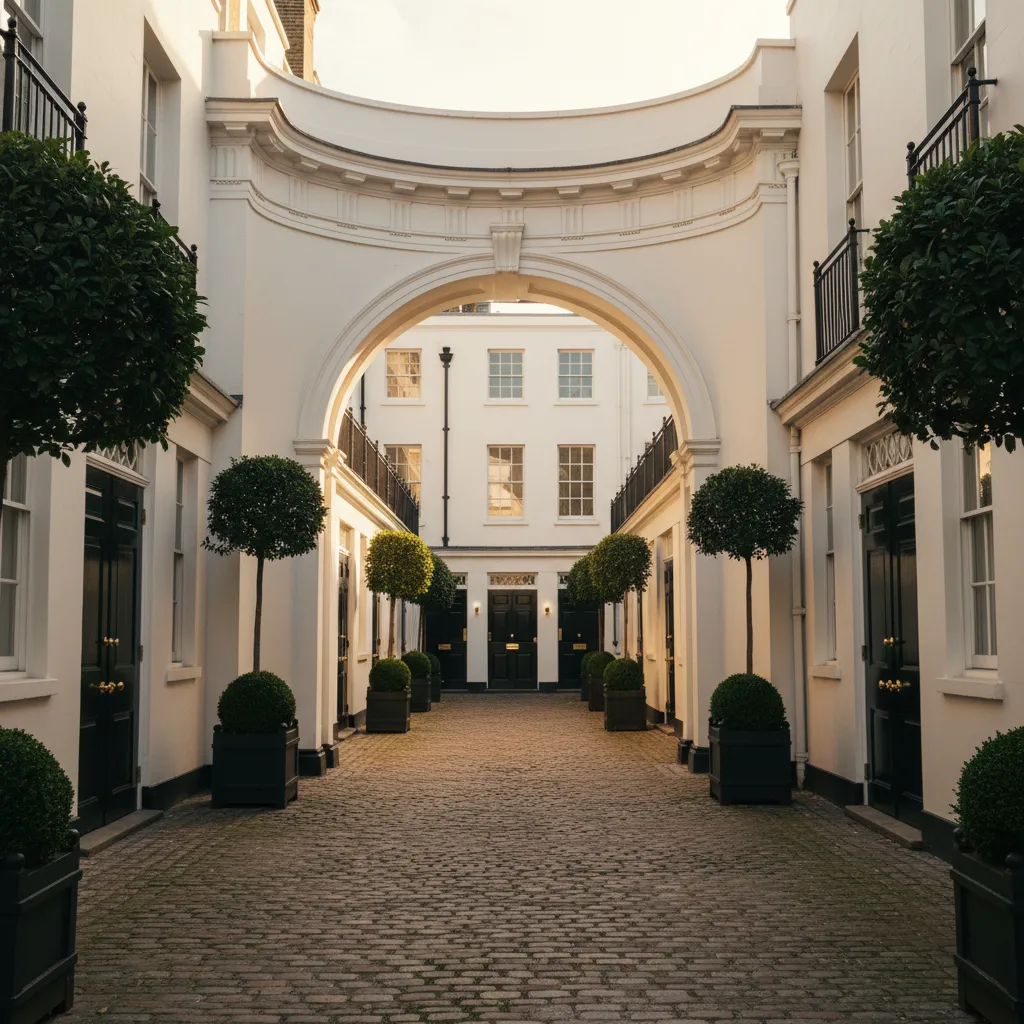
 Belgravia Mews Walk Planner: Stucco Arches and Alleys
Neighborhood Guides
Bloomsbury Mews Walk Planner: Literary Brick Passages
Wander through historic brick passages and quiet literary carriage courts of Bloomsbury, where peaceful cobblestones link leafy garden squares and bookish corners.
Bloomsbury occupies a legendary place in London cultural imagination as the intellectual hearth of literary modernism, university scholarship, and leafy Georgian garden squares. Yet beyond the celebrated blue plaques honoring famous authors and philosophers lies an intimate network of weathered brick mews lanes. Constructed during the eighteenth and nineteenth centuries to serve grand townhouses along surrounding residential squares, these hidden passages sheltered carriage horses, coachmen, and domestic supplies. Adopting a mews walk planner approach in Bloomsbury enables walkers to explore secluded brick passages, discover peaceful bookish atmospheres, and experience an authentic historical sense of place tucked right beside prominent academic institutions.
Georgian Planning and the Purpose of Academic Service Lanes
The development of Bloomsbury under the aristocratic Russell Estate established harmonious residential squares framed by elegant brick terraces. To support affluent households, architects planned internal service lanes nestled discreetly between parallel residential avenues. These mews passages featured two-story brick stables where horses occupied ground-floor stalls and coach drivers slept in upper rooms. As universities, publishing houses, and medical colleges gradually expanded throughout the neighborhood in the twentieth century, many carriage buildings found new life as book repositories, academic writing offices, and faculty lodgings. This distinctive evolution imbues Bloomsbury mews with an unmistakable literary ambiance, linking working equine heritage with scholarly pursuits.
Dark Weathered Brick, Cobblestone Texture, and Architectural Quietude
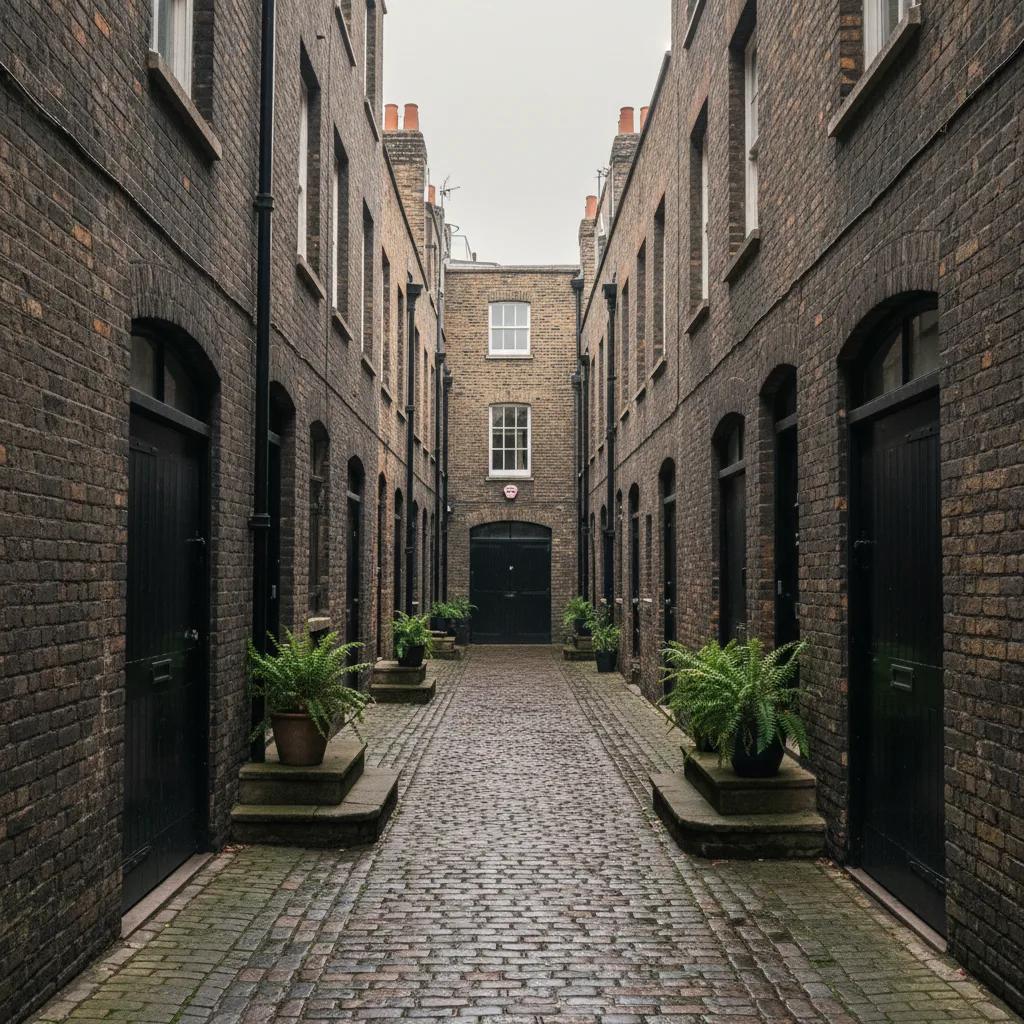
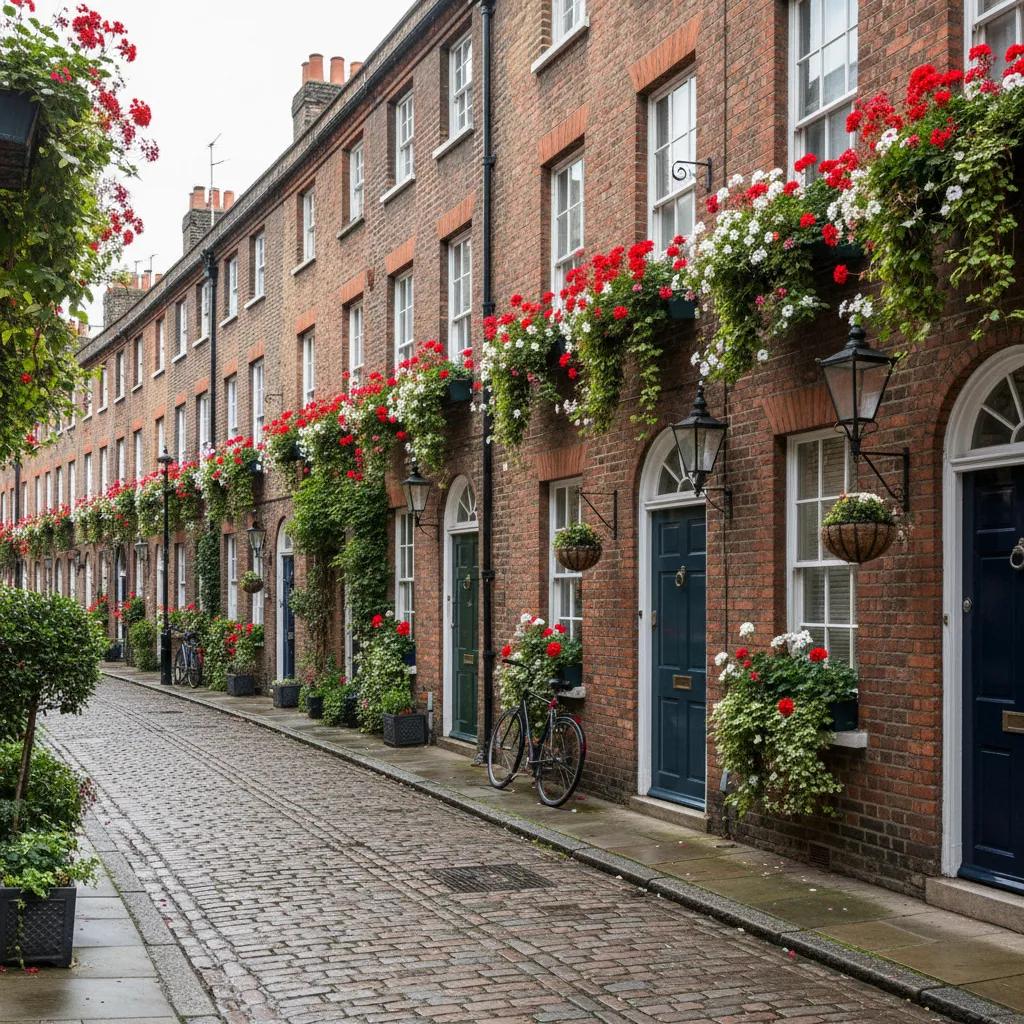
Unlike the pastel stucco of West London, Bloomsbury mews celebrate the sober character of authentic London stock brickwork. Centuries of atmospheric weathering have softened the brick into deep charcoal, warm amber, and earthy red tones that absorb ambient sound. Granite setts underfoot display historic wear, rounded smooth by iron-shod hooves and carriage wheels across past centuries. Residents and small publishing presses maintain subtle exterior touches: dark timber doors, black iron lantern sconces, and potted box hedges. The resulting visual harmony feels grounded, scholarly, and deeply comforting, providing walkers with an intimate sanctuary from bustling academic avenues.
Rainy-Day Contemplation and Literary Moods
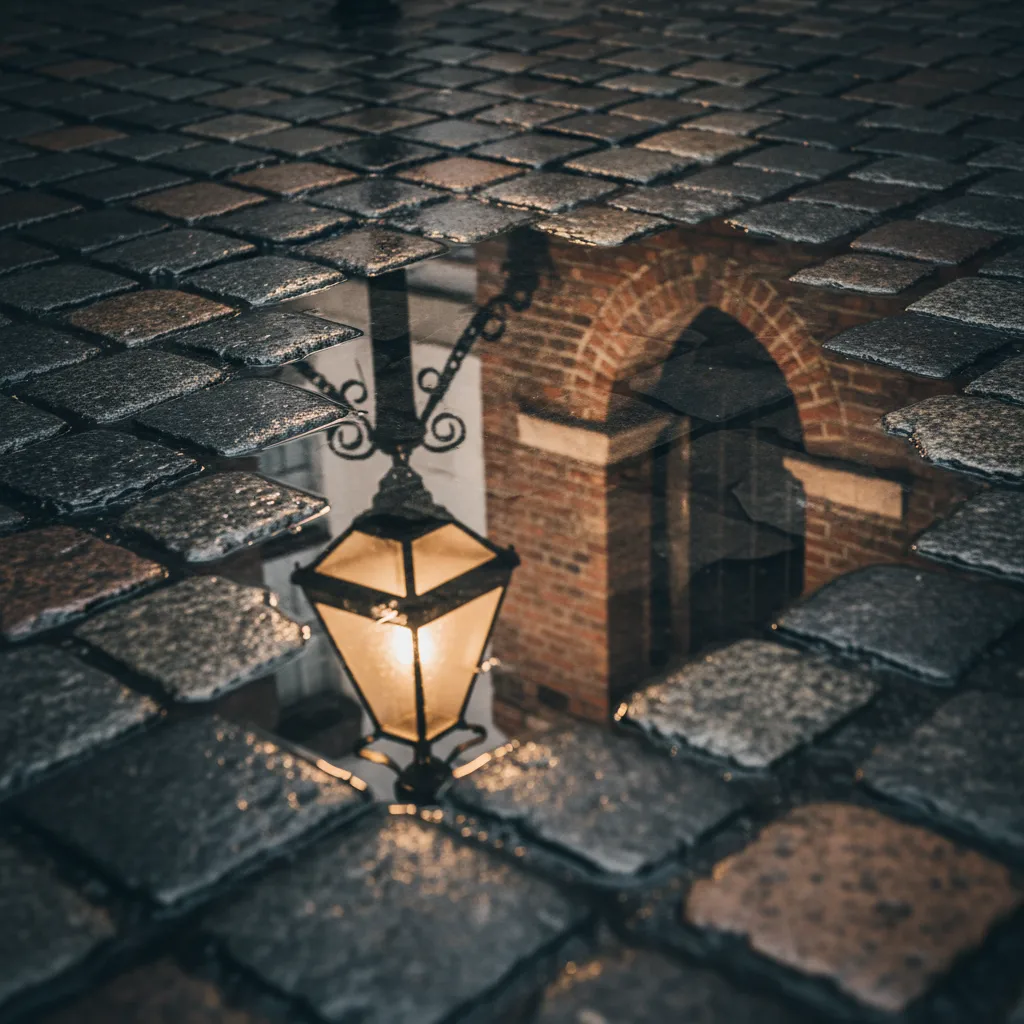
Bloomsbury mews take on their most evocative atmosphere during overcast, misty, or gently rainy London afternoons. When soft rain falls, the dark cobblestones take on an ebony sheen that reflects glowing yellow lamplight from cottage windows. The enclosed alleys echo with the gentle patter of raindrops falling from slate rooflines into cast-iron rainwater hoppers. Walking through these stone lanes with an umbrella and a notebook feels deeply reminiscent of Virginia Woolf or E.M. Forster walking journeys. Rather than dampening spirits, London rainy climate enhances the atmospheric depth of Bloomsbury, turning a simple stroll into a poetic experience.
Respecting Scholar Lofts and Residential Quiet
Because Bloomsbury mews serve as private residences, academic study lofts, and creative writing retreats, respectful visitor manners remain paramount. The enclosing brick walls act as acoustic amplifiers, meaning speaking loudly or talking on speakerphones disturbs people working inside. Pedestrians should maintain calm voices, avoid lingering directly beneath open study windows, and walk with quiet consideration. When pausing to admire historic masonry or decorative stable brackets, take care not to block narrow carriageways or private vehicle access. Practicing neighborly discretion ensures that Bloomsbury mews retain the scholarly tranquility that has fostered creative thought for generations.
Shifting Light between Shaded Courts and Garden Squares
The visual interplay of light in Bloomsbury mews creates subtle contrasts as you transition from open garden squares into enclosed passages. In autumn, low golden sunlight filters through mature London plane trees in neighboring squares before illuminating upper mews brickwork. On crisp winter mornings, cool blue shadows pool between two-story facades while wisps of steam rise from brick chimneys against gray skies. In spring, trailing wisteria and climbing honeysuckle awaken along exterior brickwork, introducing delicate green accents into historic corridors. These seasonal rhythms make repeat visits deeply rewarding for anyone who appreciates London ever-changing architectural moods.
Who Discovers the Deepest Inspiration in Bloomsbury Mews
This self-guided Bloomsbury mews walk planner route speaks powerfully to avid readers, literary enthusiasts, and solitary urban explorers. It resonates with history students who enjoy discovering tangible connections to past centuries, and artists seeking quiet corners for sketching historic details. Walkers looking for loud souvenir markets, high-energy retail corridors, or busy entertainment plazas will find little of interest in these secluded lanes; however, those who appreciate bookish contemplation, quiet architectural beauty, and storied neighborhood heritage will find Bloomsbury mews deeply satisfying.
Honest Realities Concerning Layout and Surfaces
Setting accurate practical expectations assists in creating a seamless and enjoyable Bloomsbury mews walking outing. Many mews passages in this academic quarter are shaped as L-shaped alleys or narrow cul-de-sacs that do not connect through to other avenues. Reaching a dead end is a natural aspect of exploring historic carriage courts; simply turn around and take in the reverse streetscape. Commercial businesses and cafes are absent from the mews fairways themselves, meaning all coffee and refreshment stops require walking out to perimeter streets. Cobblestones can become slick when wet, making flat shoes with reliable rubber soles far more suitable than leather-soled footwear.
Connecting Carriage Passages with Leafy Squares and Bookshops
A Bloomsbury mews walk weaves effortlessly into a broader exploration of historic squares, academic libraries, and independent bookshops. Emerging from a quiet carriage court leads you within moments to the leafy expanse of Russell Square, Gordon Square, or Bloomsbury Square. Walking westward brings you toward the British Museum, where neoclassical columns and ancient antiquities await exploration. Heading south brings you toward antiquarian book dealers, historic academic presses, and atmospheric tea houses. Connecting enclosed carriage passages with sunlit park lawns and intellectual landmarks creates a harmonious, intellectually stimulating walking journey.
Exploring with Karpo APP for Nearby Highlights
When your quiet stroll through Bloomsbury mews draws to a close and you are ready to find where to go next, consult Karpo APP. You can discover nearby cozy tea salons, find quiet bookshop cafes along neighboring streets, and browse curated local recommendations tailored to your location. The app guides you in discovering what appealing venues exist around you, leaving you free to choose your destination, set your walking pace, and experience London at your chosen rhythm.
Enduring Impressions of Bloomsbury Architectural Peace
Walking through Bloomsbury mews lanes leaves a lasting impression of how historical utility and intellectual history converge in London. Notice the cast-iron stable rings embedded in weathered mortar, the arched wooden carriage doors preserved beside modern entryways, and historic boot scrapers. Appreciate how these humble working lanes have survived centuries of urban growth while retaining their intimate domestic character. By wandering with respect, unhurried curiosity, and quiet attention, you will discover one of London most poetic and thoughtful neighborhood treasures.
Ask Karpo for more information.
Keep reading
- Belgravia Mews Walk Planner: Stucco Arches and Alleys
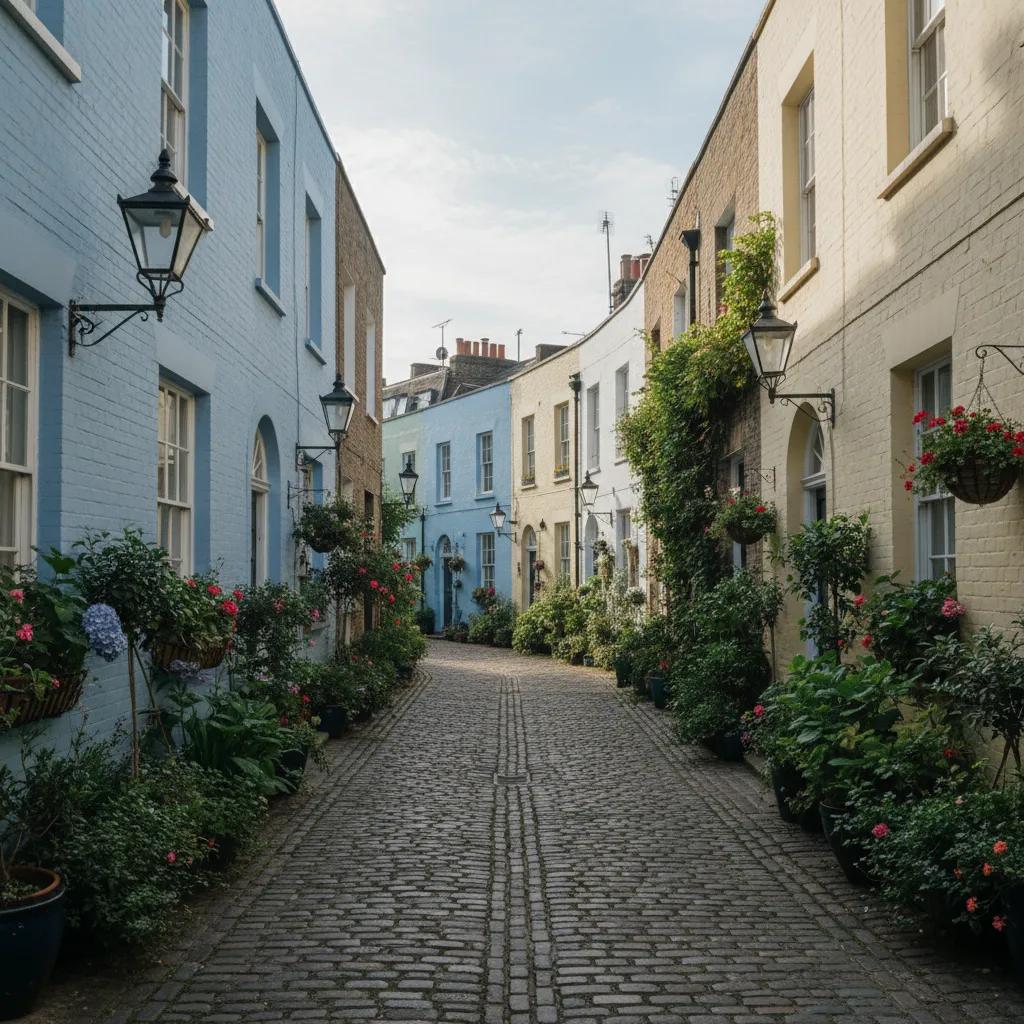 Notting Hill Mews Walk Planner: Quiet Painted Lanes
 Marylebone Mews Walk Planner: Brick Archways and Cottages