 Bloomsbury Mews Walk Planner: Literary Brick Passages
Neighborhood Guides
London Transit Station Pitstop Finder: 3 Luggage Filters
Find a London station pitstop with luggage by asking Karpo for a short walk, room for your case and a simple return, then resolve access details with the venue.
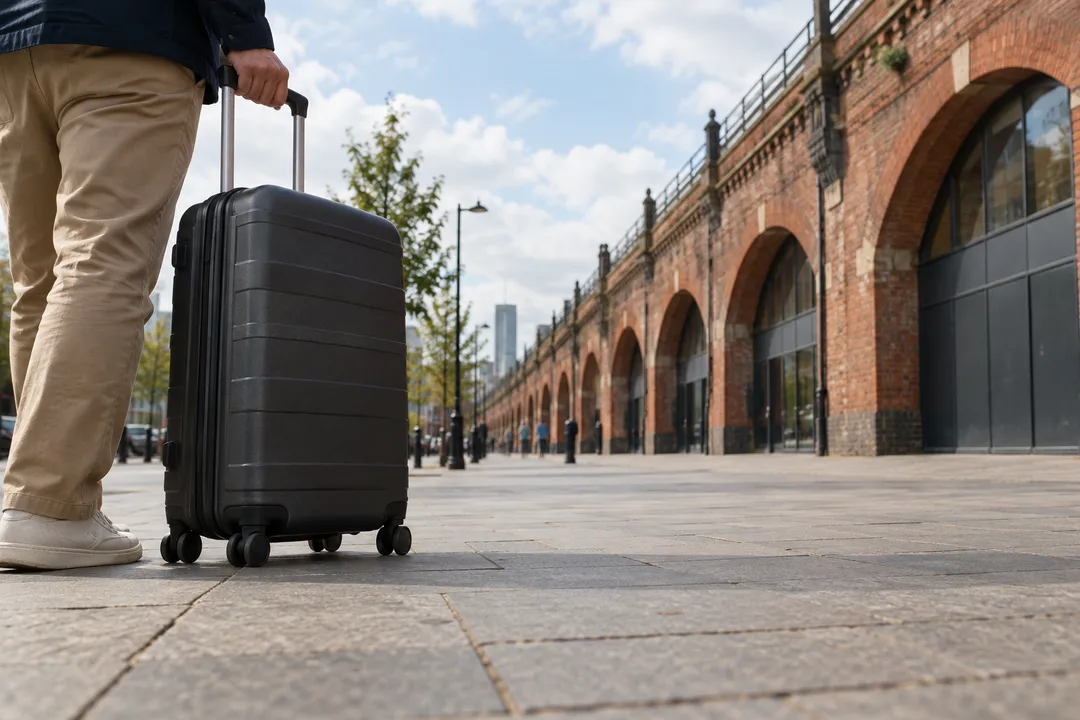
Luggage changes a station pitstop from a distance question into an effort question. A London transit station pitstop finder is more useful when you describe your case, how far you can comfortably move it and whether you need to sit down. Begin in the Karpo APP with those limits. Three filters matter here: the journey with your bag, the space at the stop and the route back. A nearby recommendation still needs to pass all three before it belongs in your plan.
Describe what you are carrying
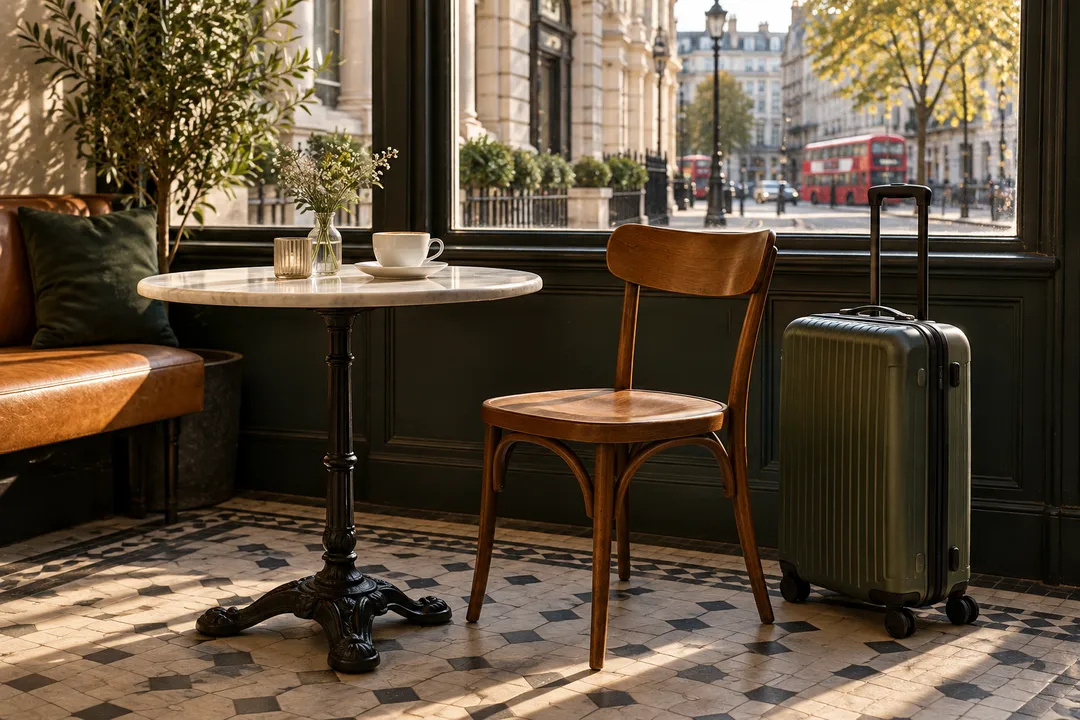
A small backpack and two large rolling cases produce different choices even when the traveler has the same free hour. Tell Karpo the number of bags, whether anyone can help carry them and what you can manage independently. You do not need to share a booking reference or private travel documents. The relevant information is physical: a suitcase that must stay beside you, a child whose hand you need to hold or a bag that is uncomfortable to lift.
Decide whether the bag travels with you throughout the pause. If you already have a separate storage arrangement, use its actual collection deadline in your schedule. If you have no such arrangement, keep the case in the request instead of assuming that a recommended cafe or station will store it. Storage is a separate service with its own provider and terms. A pleasant place for a drink is not automatically a luggage facility, and a planning conversation does not create one.
Filter one: the walk you can manage
Use a request such as: "Suggest a London station-area drink stop for someone with one rolling case. I can manage a short pavement walk but want to avoid carrying it up stairs. Compare a nearby pause with staying in the station area." Supply the station and your onward destination. This gives Karpo the context for local suggestions without pretending that a distance label measures your effort. Your tolerance is a constraint on the search, rather than a feature of a venue.
Examine any proposed walking route from the exit you will actually use. Consider the crossings, changes of level and the return entrance as separate parts of the journey. A map can help you understand the layout, while the transport operator provides station accessibility information. Keep lift availability with the operator rather than with a cafe recommendation. If your trip depends on a particular accessible route, resolve that route before adding an optional food stop. The detour comes after the journey you need to make.
Filter two: space while you pause
Look for a stop format that suits keeping the bag in sight and out of other people's way. A takeaway counter may demand less time indoors, while a seated visit creates a place to rest but introduces a space question. Ask Karpo for the tradeoff in plain language. Do not infer that an empty-looking photograph means you can always park a case beside a table. The photograph may show a different time, layout or service arrangement from your visit.
Where bag space is essential, take that question to the venue: "Can I sit with one medium rolling case beside my chair without blocking the aisle?" That is more actionable than asking whether a place is generally luggage-friendly. The answer concerns your visit and your bag. If a provider cannot accommodate it, remove that candidate. You do not need to persuade yourself that a highly rated drink is worth standing awkwardly in a doorway with everything you own.
Filter three: a return with fewer decisions
Choose the return point before setting off. It can be an agreed station entrance or a meeting place with your travel companion, provided everyone knows what it means. Build your deadline around reaching that point and continuing to the train, not merely arriving near the building. With a case, it is particularly useful to understand the return while you are still unhurried. The outward view of a street can make the opposite direction feel less obvious when you retrace it.
For a worked planning example, imagine you have thirty minutes genuinely available outside the station. You might reserve ten for returning and moving onward, ten for the stop and ten for the outward journey plus slack. Those are allowances you choose, not measured durations or operating facts. If carrying effort makes the outward section unpleasant, reduce the detour or abandon it. Spending more energy than you recover is a poor exchange, even when the arithmetic technically fits.
Compare comfort before collecting recommendations
When Karpo gives you several ideas, ask which one requires the least extra movement for the benefit you want. Perhaps all you need is somewhere to drink water and sit, while a companion wants food. Name the priority that should settle a disagreement. A recommendation that tries to maximize atmosphere, menu choice and sightseeing can hide the physical cost of moving between them. Limit the comparison to a small number of candidates you can realistically reach with the case.
Make an honest decision about takeaway food. Buying it can simplify the stop, but it also occupies a hand and creates another object to manage. A covered cup does not remove that practical tradeoff. If you need both hands for luggage, say that a purchase should be easy to pack or skip it. Leave exact products and prices to the venue's menu. Your request can describe a carrying preference without inventing packaging, portion sizes or special assistance that a business has never offered.
If someone else is meeting you
Agree whether your companion meets at the station or at the stop before either person starts walking. Sending one person to a cafe and leaving the other to find a different exit creates two journeys to coordinate. The traveler with the case may reasonably be the one who moves least. Tell Karpo where the meeting must happen if that changes the shortlist. Do not share a live location with someone through a feature you have not chosen to use.
Keep responsibility for the luggage clear. If your group separates briefly, make an explicit agreement about who stays with each bag and where everyone reunites. Avoid letting a casual food errand become an improvised storage arrangement. This is ordinary trip organization, not a service provided by Karpo or by a suggested venue. A stop that works for a group should still be practical for the person who remains with the cases, including their need for a seat or a drink.
Practical Notes
Your useful brief contains the bag count, the station, the walking effort you can accept, the departure deadline and the main reason to stop. Add access requirements using your own words. Ask for published access details where available, and leave unanswered details as unresolved questions rather than treating silence as permission. Nothing in this scenario guarantees a working lift, a free table, bag storage or a step-free cafe entrance. Each of those is a distinct practical requirement when your trip depends on it.
The final choice can be smaller than the original plan. Staying close to your onward route, taking a seated break later or asking a companion to bring a drink can all satisfy the real need more comfortably than a detour. Use Karpo to explore the local options, then select the arrangement you can carry out with the bag you actually have. A useful pitstop leaves you more ready for the next leg, with your luggage and your time still under control.
Ask Karpo for more information.
Keep reading
- Bloomsbury Mews Walk Planner: Literary Brick Passages
 Belgravia Mews Walk Planner: Stucco Arches and Alleys
 Notting Hill Mews Walk Planner: Quiet Painted Lanes