 Bloomsbury Mews Walk Planner: Literary Brick Passages
Neighborhood Guides
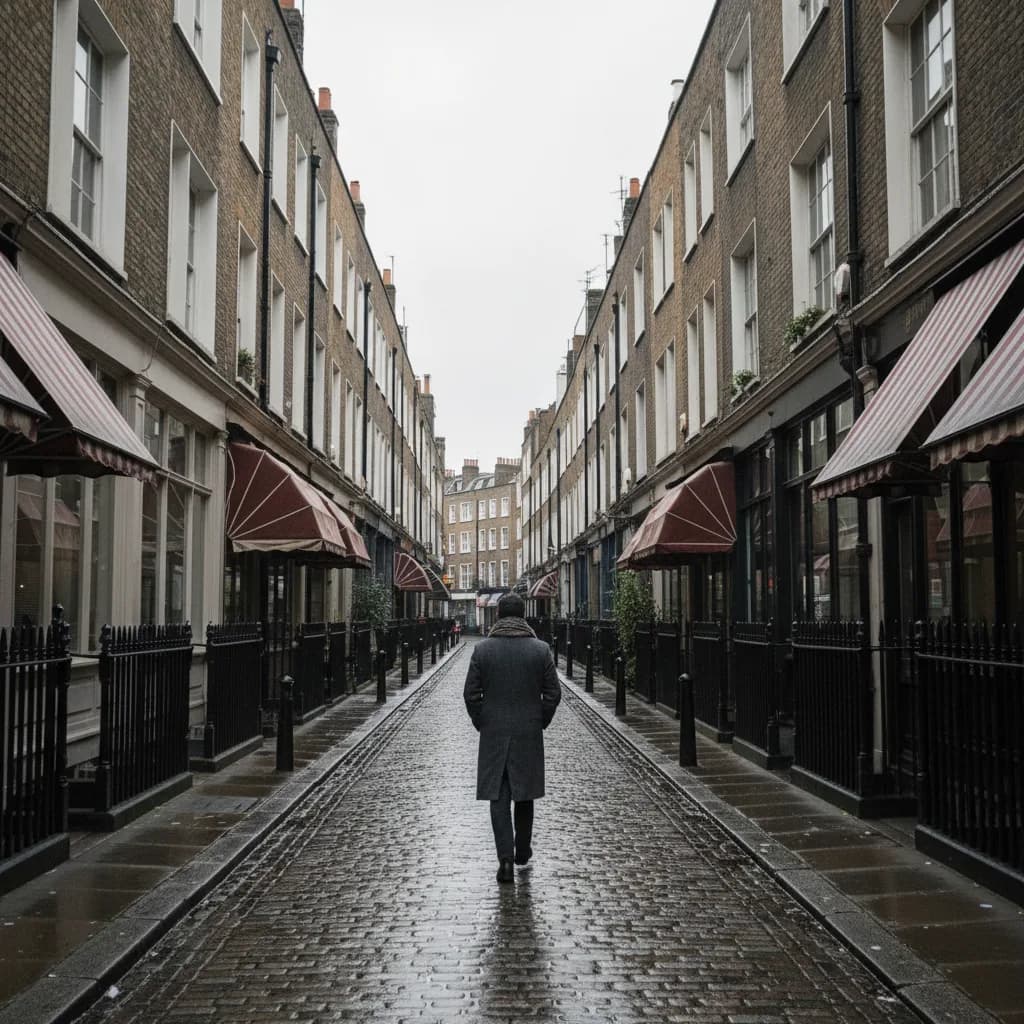
Scenic Walk Planner for Soho: Georgian Lanes Before Lunch
A scenic walk through Soho is free and needs no booking: start early on Berwick Street, then loop Meard Street, Dean Street and Soho Square before the crowds.
Most people meet Soho at night, shoulder to shoulder on Old Compton Street, and never notice how beautiful its bones are. Walk it in the morning instead and the district turns into something closer to a village: delivery bikes ticking past, market traders stacking crates on Berwick Street, and long rows of dark-brick Georgian houses whose doorways still carry fanlights and iron boot scrapers. A good scenic walk here is short, looping and slow. You are not trying to cover miles. You are trying to catch the half-dozen streets where old London shows through the neon, then finish in a garden square with a coffee before the lunchtime crowd arrives.
Why Soho Rewards a Slow, Early Loop
Soho packs a lot into a small grid bounded by Oxford Street, Regent Street, Charing Cross Road and Shaftesbury Avenue. That compactness is the point. You can walk from one edge to the other in a few minutes, so the scenic value comes from detours rather than distance: ducking into a passage, stopping at a doorway, looking up at a roofline. The district was laid out as a fashionable suburb and then filled with immigrant workshops, music publishers, film editors and tailors, and every one of those chapters has left a mark on the façades.
Timing changes everything. Mid-morning on a weekday the pavements are wide enough to stop and stare without blocking anyone. By early afternoon office workers spill out for lunch, and by evening the streets belong to bars and theatre queues. If you only have one window, choose the hour after breakfast, when the light comes in low across the brick and the shopfronts are still being swept.
Berwick Street: Market Barrows and Fabric Shops
Start on Berwick Street, the spine of the walk. The street market here has been feeding Soho for generations, and even on a quiet morning you will see traders wheeling out stalls and setting up awnings. Fabric and haberdashery shops line part of the street, their windows stacked with bolts of wool and silk, a reminder that this was once a working district for the garment trade. Walk the full length slowly, then double back on the opposite pavement. The view north, with the market canopies narrowing toward Oxford Street, is one of the most photographed in the West End for good reason.
If you like vinyl, Berwick Street has long been a destination for record collectors, and a couple of shopfronts still keep that heritage alive. Treat them as a browse rather than a stop with a goal. The real pleasure on this stretch is the mix of noise and texture: the clatter of barrows, the smell of coffee from a cart, and the faded painted signs high on the walls where older businesses once advertised.
Meard Street and the Georgian Doorways
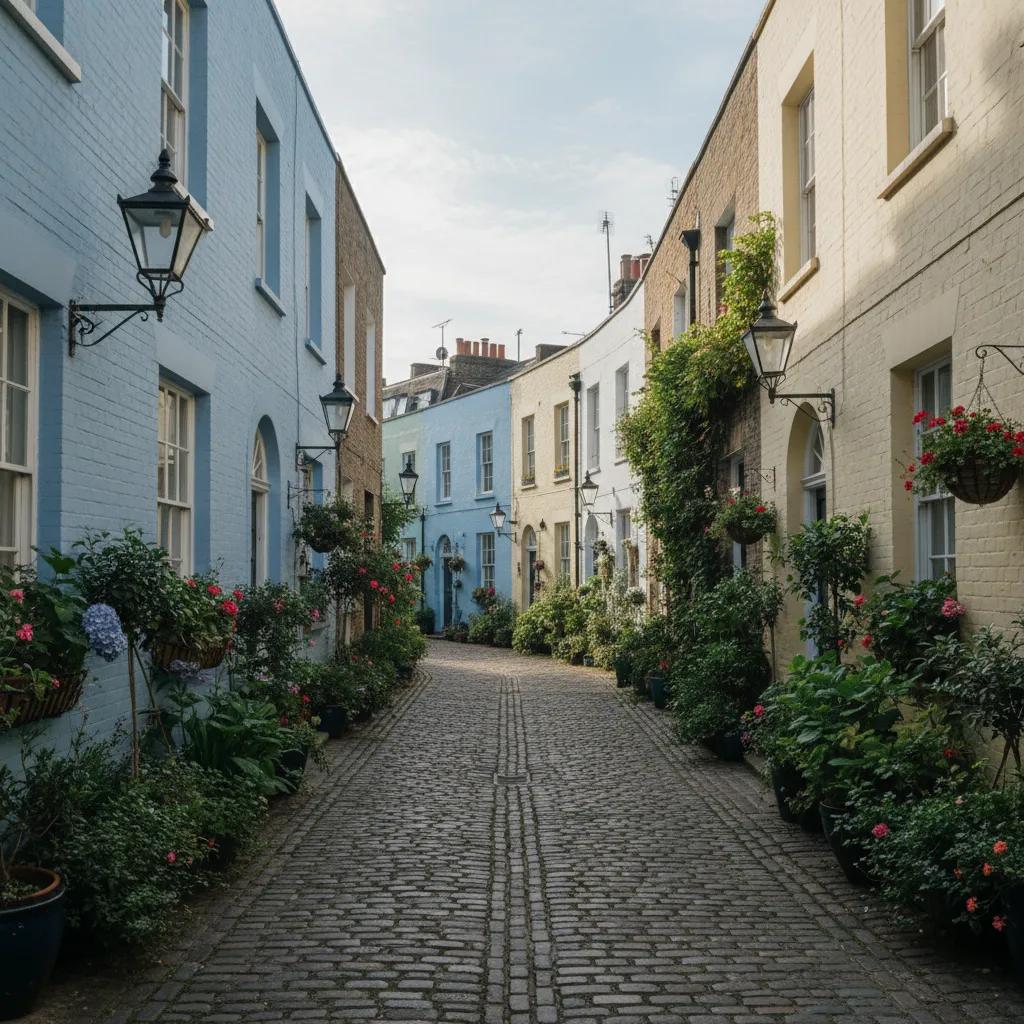
From Berwick Street, cut east into Meard Street, a short lane that feels like a set from a costume drama. The terraces here are among the best-preserved Georgian houses in the area, with narrow brick fronts, shutters, panelled doors and carved hoods. Walk it once at normal pace, then once very slowly, looking at the doorcases and the ironwork on the railings. It is a lane for noticing small details, and it rewards anyone who stops for a second look.
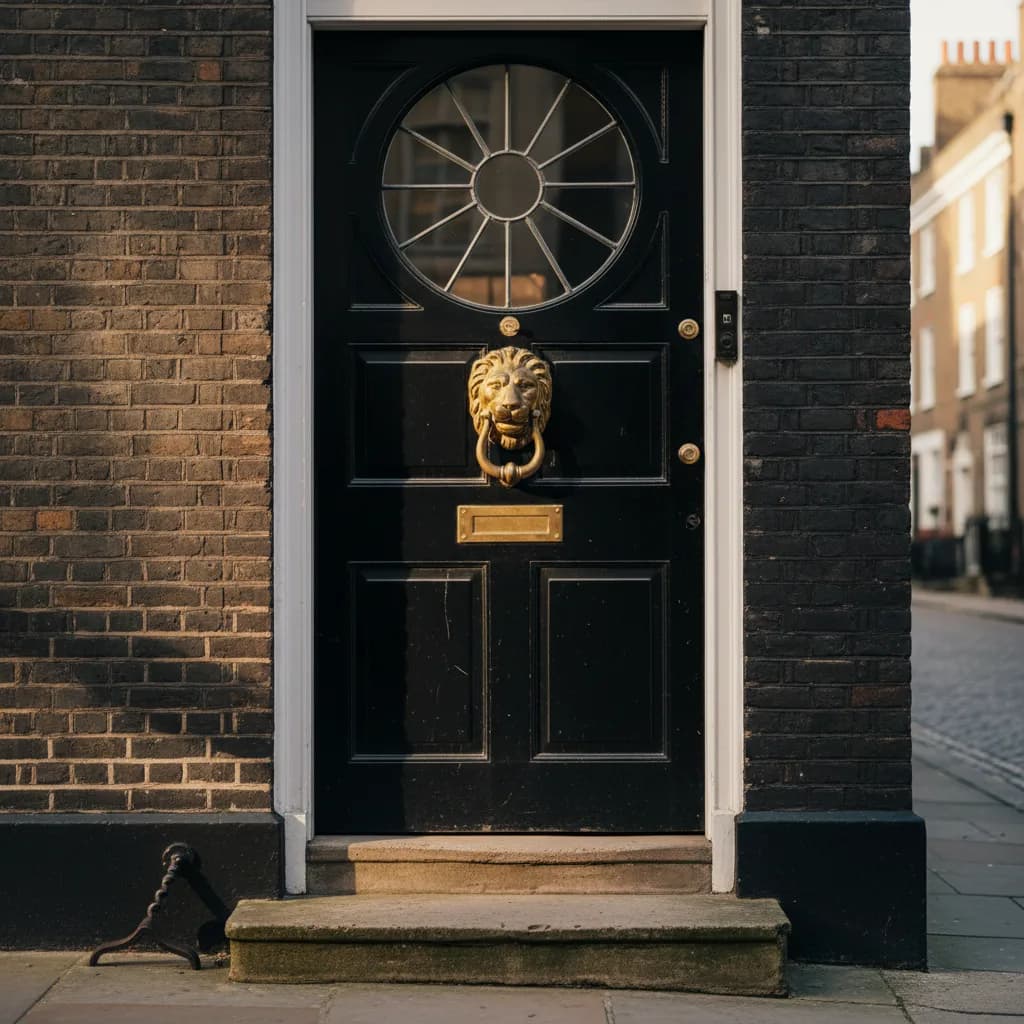
Continue onto Dean Street and Frith Street, two parallel north–south streets that hold more of these old houses mixed with restaurants and members' clubs. You will pass blue plaques marking former residents from music, literature and politics. Rather than reading every one, pick two or three and look them up later. That keeps the walk moving and turns the plaques into a small treasure hunt for the next visit.
Soho Square as Your Midway Pause
Head north up Frith Street or Greek Street and you arrive at Soho Square, the green heart of the district. The square has lawns, benches, mature plane trees and a mock-Tudor timber hut in the middle, which looks like it wandered in from a country village. Office workers use it at lunchtime, but earlier in the day you can usually claim a bench and watch the light move through the leaves. It is the natural place to sit, check your route and decide whether to add a second loop.
The streets around the square are worth a slow circuit too. Look for the church towers, the handsome townhouse façades on the east side, and the narrow lanes leading off toward Charing Cross Road. From here, a short walk east brings you to the edge of the bookshop stretch, where browsing secondhand shelves is an easy extension if the weather turns.
Two Ways to Finish: Golden Square or Chinatown
For a calm ending, walk west along Broadwick Street to Golden Square, a quieter, more formal garden surrounded by tall office buildings that once housed tailors and woollen merchants. It has a different mood from Soho Square, more stately and less social, and it makes a good spot to finish with a pastry. From there, Carnaby Street and the courtyard restaurants of Kingly Court are a few steps away if you want to add some shopping.
For a livelier ending, head south across Shaftesbury Avenue into Chinatown. Gerrard Street and Lisle Street, with their red lanterns and ornate gates, are especially photogenic in the morning before the restaurants fill. The bakeries there are already busy at breakfast and make a satisfying final stop. This finish works well with friends who want something to eat at the end rather than a quiet bench.
Who This Walk Suits
This loop is ideal for first-time visitors who want to see the West End without the shopping crowds, photographers chasing texture and doorways, and Londoners who only know Soho after dark. It is flat, short and mostly on paved streets, so it works for strollers and anyone who prefers not to tackle hills. Families with older children enjoy the market and the square, while couples often turn it into the start of a long lunch.
It suits rainy days better than you might expect. The streets are narrow enough that you are never far from a doorway, café or shop to shelter in, and wet paving makes the brick and painted signs glow. Bring a compact umbrella and treat a shower as a reason to linger in a bookshop.
Planning the Loop With Karpo APP
Open Karpo APP and describe the walk you want: how long you have, where you are starting, whether you want the quiet ending or the food ending, and whether you need step-free routes. Karpo suggests a sequence of streets and nearby cafés, bookshops and squares, so you can adjust the loop on the spot. If one street feels too busy, ask for a nearby alternative within the same few blocks rather than starting over.
You can also save the route to repeat it in a different season. Soho changes a lot between a bright spring morning and a dark December afternoon when shop windows glow, and comparing the two is half the fun for regular walkers.
Practical Notes for a Soho Walk
Tottenham Court Road, Oxford Circus, Piccadilly Circus and Leicester Square stations all sit on the edges of Soho, so you can start at one and finish at another. Comfortable shoes matter more than distance, because you will stop often. Keep valuables close in busy stretches, especially near the theatres. Most of the walk is free to enjoy from the street, and the squares are public gardens, though their gates are locked at night. Be respectful when photographing residents' doorways and avoid blocking deliveries on the narrow lanes.
Ask Karpo for more information.
Keep reading
- Bloomsbury Mews Walk Planner: Literary Brick Passages
 Belgravia Mews Walk Planner: Stucco Arches and Alleys
 Notting Hill Mews Walk Planner: Quiet Painted Lanes