 Bloomsbury Mews Walk Planner: Literary Brick Passages
Neighborhood Guides
Scenic Canal Bridge Route From Soho Lanes To Camden Lock
No canal runs through Soho, so this scenic canal bridge route walks north from Soho and Covent Garden to Regent's Canal at Camden Lock and its old iron bridges.
Soho and Covent Garden are about theatres, side streets and late dinners, not water, and no canal runs through either of them. If you are staying in the West End and want a canal walk, the nearest good stretch is Regent's Canal at Camden Lock, a little under an hour north on foot. This scenic canal bridge route makes that walk a pleasure in itself, threading north through Fitzrovia and Camden Town before ending among the locks, iron footbridges and old goods yards of Camden.

You can of course take the Underground to Camden Town and skip the first half. But walking it gives you a gradual change of scene, from tight Georgian streets to wide Victorian roads and finally to the canal, and it is easy to break with a coffee or a bookshop along the way.
Starting in Covent Garden and Soho
Begin around Seven Dials, where seven streets meet at a small column, or in the courtyard of Neal's Yard with its painted shopfronts. Both are quieter in the morning, before the shopping crowds arrive, and make a calm start to the day.
Cross Shaftesbury Avenue into Soho and wander north through its grid of narrow streets. Soho Square, with its small mock-Tudor hut at the centre, is a pleasant stop under the trees before you leave the busiest part of the West End behind.
From Soho Square, cross Oxford Street and head into Fitzrovia. The streets here are calmer, lined with restaurants and small galleries, and Charlotte Street is a good spine to follow north. The BT Tower rises above the rooftops and works as a handy landmark for the first part of the walk.
North Through Fitzrovia and Camden Town
Fitzroy Square, with its pale stone terraces, is one of the most elegant squares in this part of London and a good place to pause before the Euston Road. Once you cross the main road, the character of the walk changes again, with wider streets, Victorian housing and the railway lines from Euston running nearby.
Follow Hampstead Road or the quieter parallel streets north toward Mornington Crescent and Camden Town. The high street here is lively at almost any hour, full of shops, music venues and food stalls, and the closer you get to the canal, the louder and busier it becomes.
This middle section is the least glamorous part of the walk, and that is part of its value. You pass council estates, corner shops, railway bridges and pubs that have served the same streets for generations, a side of London that most visitors to the West End never see. By the time the canal appears, you have a much clearer sense of how the city's centre gives way to its inner neighbourhoods.
Keep going north along Camden High Street until it crosses the canal. The road bridge here gives you your first look at the water, and from it you can see the locks and the towpath below. Find the way down to the towpath beside the market and start exploring on foot.
Camden Lock and Its Bridges
Camden Lock is the popular name for the set of locks here, officially known as Hampstead Road Locks. Boats rise and fall through them as they move between levels of Regent's Canal, and on a busy day you can watch narrowboats queueing to pass through while crowds lean over the railings to watch.
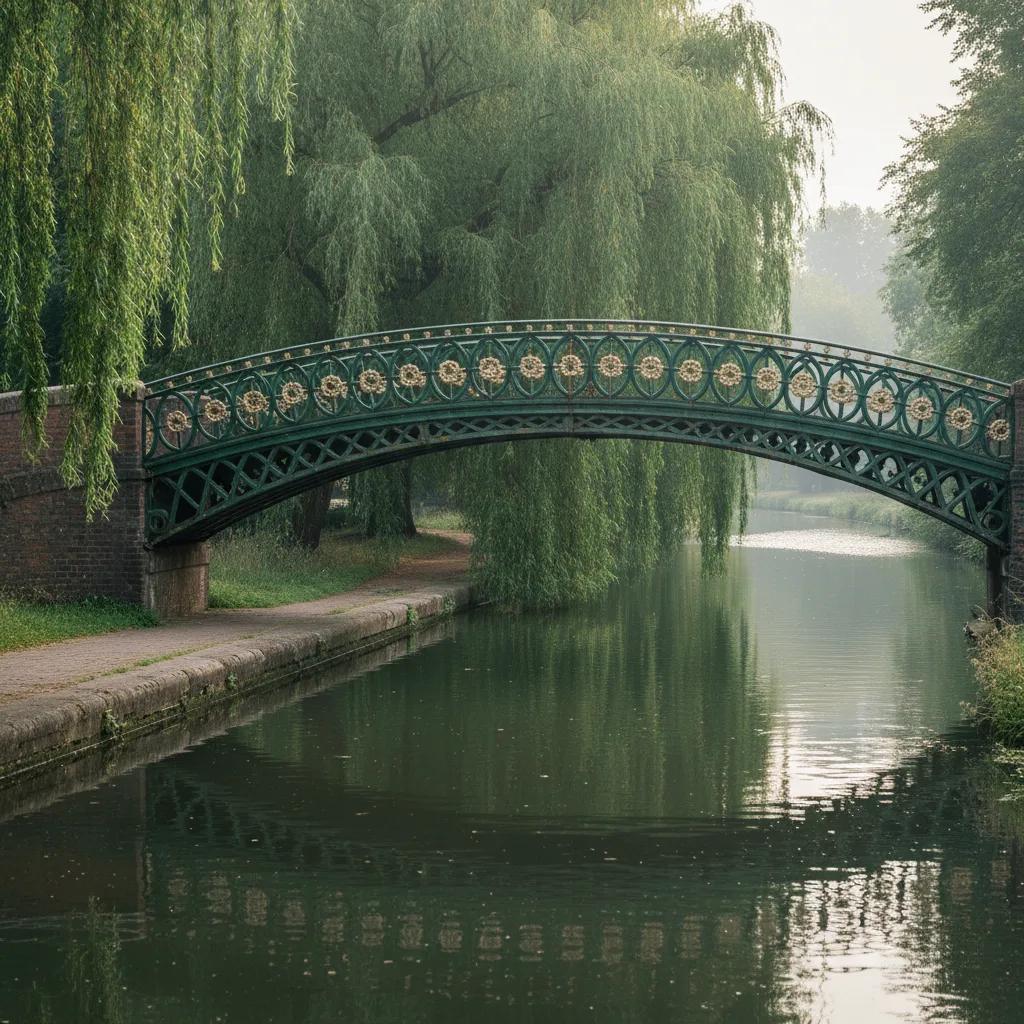
A cast-iron footbridge crosses the canal close to the lock, linking the two sides of the towpath. Standing on it gives you the classic view of Camden Lock, with the lock gates, the moored boats and the old market buildings framing the water.
Walk a little way along the towpath on either side of the lock and look back at the bridges. Several of them have iron railings and parapets worn smooth by more than a century of hands, and the arches carry the marks of tow ropes from the days when horses pulled barges along the bank. These small scars are the best evidence that Camden was a working waterway long before it became a place to shop and eat.
Regent's Canal was completed in 1820 to carry goods across north London, and Camden became an important point where boats met the railways. The large brick building known as the Interchange was built so that goods could be moved between canal boats, railway wagons and road carts, and you can still see a small dock running beneath it.
The Market Yards and the Towpath
Behind the lock, Camden Market spreads across several yards. The Stables Market occupies buildings that once housed horses used by the railway companies, and many of the original features, including ramps and stalls, have been kept. It is a good place to browse for food, clothing and odd souvenirs between stretches of towpath.
If the crowds feel too much, walk west along the towpath. Within a few minutes the noise fades, and the canal runs past houseboats and gardens toward Regent's Park and the zoo. Each bridge along this stretch has its own shape, from plain brick arches to ornate ironwork.
Heading east instead takes you toward King's Cross. This direction is slightly quieter and passes through the area around St Pancras, where the canal opens up beside new developments and old industrial buildings.
Practical Notes
Covent Garden, Leicester Square and Tottenham Court Road stations are all close to the start. At the canal end, Camden Town and Chalk Farm stations are within a few minutes of the lock, so you can easily take the Underground back into the West End.
The route through Soho and Fitzrovia is on ordinary city pavements. Around Camden Lock, expect steps, cobbles and crowds, especially at weekends, so comfortable shoes are a good idea.
Camden is busiest on weekend afternoons, when the market and the bridges can feel crowded. A weekday morning or a late afternoon gives you more room to enjoy the locks and the towpath at an easier pace.
Keep valuables secure in the market area and around the lock, where crowds are thickest. On the towpath, give space to cyclists and runners and keep children away from the lock edges.
Use the Karpo APP to keep this walk with your other London plans, and pair it with an evening back in Soho or Covent Garden for dinner or a show. It is a simple way to connect the city's busiest entertainment district with one of its most famous stretches of canal.
Ask Karpo for more information.
Keep reading
- Bloomsbury Mews Walk Planner: Literary Brick Passages
 Belgravia Mews Walk Planner: Stucco Arches and Alleys
 Notting Hill Mews Walk Planner: Quiet Painted Lanes