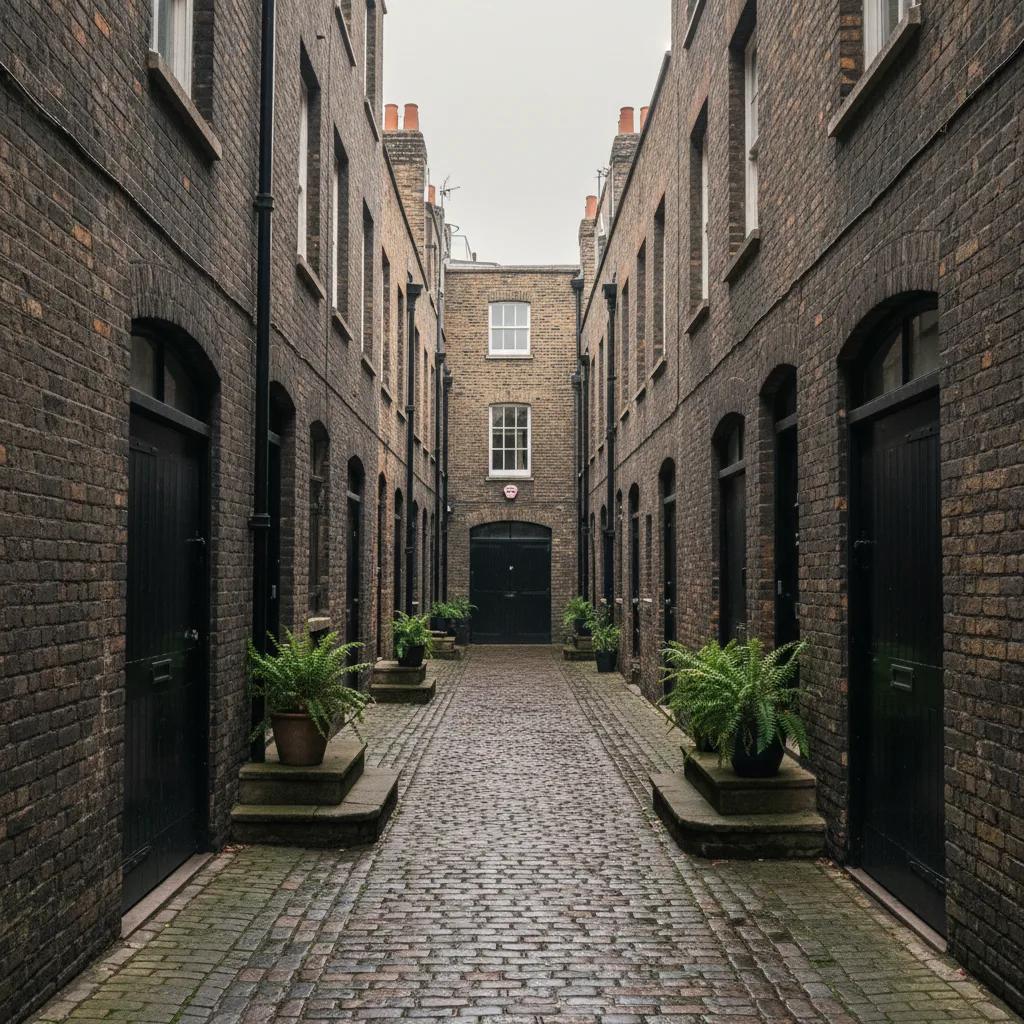
 Bloomsbury Mews Walk Planner: Literary Brick Passages
Neighborhood Guides
London Riverside Promenade Loop: Notting Hill Canal Walk
Navigate an atmospheric riverside promenade loop linking the pastel lanes of Portobello Road in Notting Hill with the peaceful Grand Union Canal towpath.
Connecting the pastel Victorian terraces of west London with peaceful waterside towpaths, this riverside promenade loop links Notting Hill directly to the Grand Union Canal. Beginning amidst the vibrant antique arcades and painted shopfronts of Portobello Road, the circuit heads northward through peaceful residential avenues. The route joins the broad canal promenade at Kensal Green, tracing weeping willow banks and historic narrowboat moorings down toward Little Venice in an idyllic waterside loop.

Leaving Portobello Market Lanes toward Kensal Green
Setting out from the northern end of Portobello Road, walkers are greeted by the distinctive charm of Notting Hill's pastel-painted Victorian stucco houses, wrought-iron railings, and leafy front gardens. Antique shops, neighborhood bakeries, and independent record stores line the lively street, creating a colorful and creative neighborhood departure. The vibrant market atmosphere gradually eases as you move north along Golborne Road.
Golborne Road introduces a distinctive cultural character, home to beloved Portuguese cafes, Moroccan patisseries, and vintage furniture dealers. Towering in the background, Ernö Goldfinger's brutalist landmark Trellick Tower stands as an iconic architectural monument, guiding footsteps directly toward the railway overpass and the canal basin beyond.
Crossing beneath the Westway flyover, the urban landscape transitions from bustling shopping streets into a quieter, semi-industrial zone that quickly gives way to water. A gentle ramp leads walkers down from street level straight onto the tranquil gravel and tarmac towpath of the Grand Union Canal Paddington Arm.
The street-level departure provides a vivid cross-section of west London's cultural evolution. From mid-century immigrant communities to bohemian artist colonies, the streets leading down to the canal maintain a rich independent spirit that frames the beginning of this scenic waterside circuit.
The Tranquil Waterside Promenade of Grand Union Canal
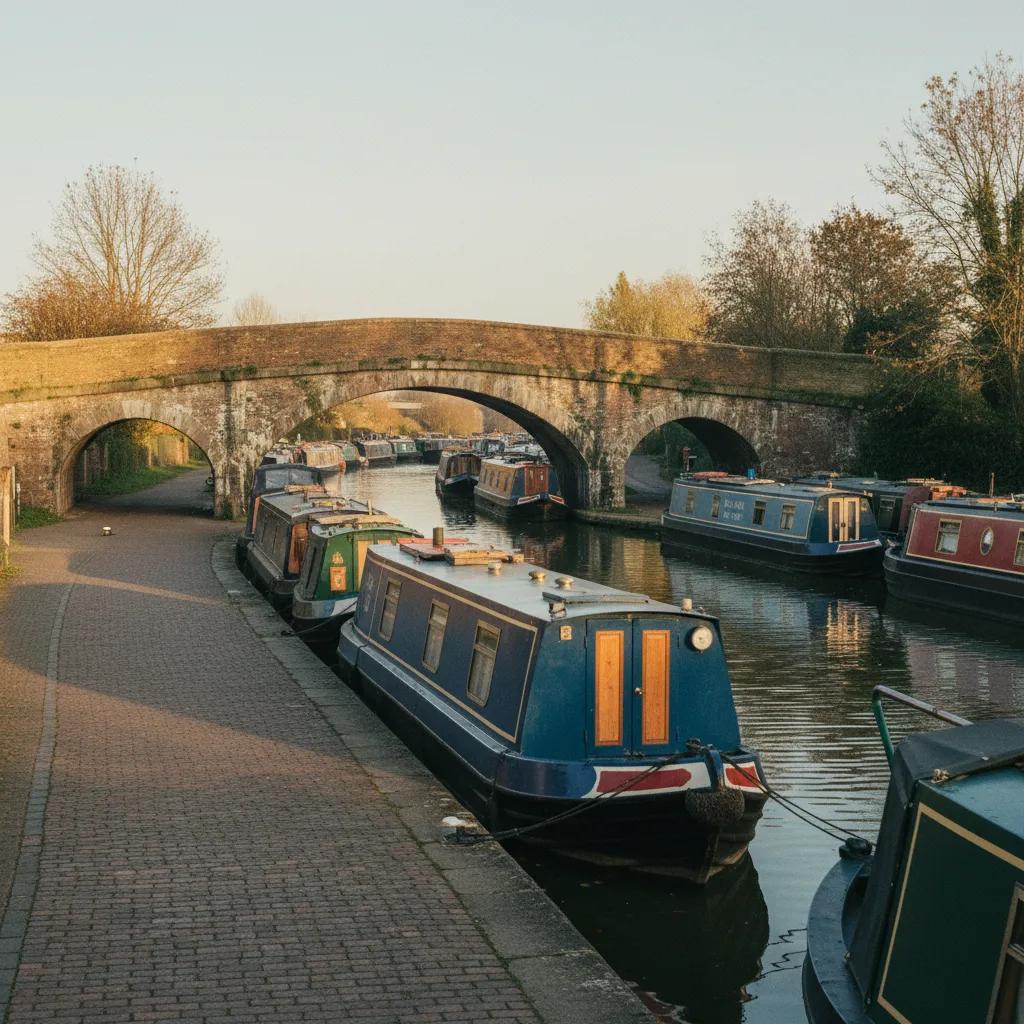
Stepping onto the canal towpath brings an immediate sense of peaceful detachment from the surrounding city. Traditional painted steel narrowboats line the water's edge, their chimneys puffing faint woodsmoke and colorful potted plants adorning their roofs. The water surface is mirror-like and still, disturbed only by families of swans, moorhens, and mallards paddling gently along the reed beds.
The walking path is flat, well-maintained, and broad, providing an effortless pedestrian stride bordered by wild ivy, weeping willows, and modern waterfront residential architecture. Benches are positioned at scenic bends, offering peaceful perches to watch narrowboats cruise quietly along the historic waterway.
Walking eastward along the towpath toward Westbourne Park, the route passes beneath ornate Victorian cast-iron bridges whose painted arches frame picturesque vistas down the canal channel. The waterside promenade offers an exceptional sense of space and green tranquility, demonstrating how London's canal corridors serve as vital ecological and recreational ribbons.
Constructed in the early 1800s to transport coal, timber, and building supplies into central London, the canal's industrial infrastructure now serves as a lush biological corridor. Wild blackberries and elderflowers cling to brick abutments, creating an authentic waterside wildlife sanctuary in the middle of west London.
Following the Towpath toward Little Venice and Westbourne
Continuing east along the waterway brings walkers toward the entrance of the Maida Hill Tunnel and the picturesque basin of Little Venice. Here, the Grand Union Canal converges with the Regent's Canal around Browning's Island, encircled by magnificent white stucco Italianate mansions and floating waterside cafes. The expansive water basin creates an extraordinarily scenic focal point.
Looping back south from Little Venice, walkers leave the towpath to navigate through the leafy residential avenues of Westbourne Green and Notting Hill's northern mews. Quiet cobblestone streets like St Luke's Mews feature blooming flower boxes, colorful painted garage doors, and historic stable conversions that showcase west London's quintessential architectural elegance.
Continuing southward along Ladbroke Grove and Elgin Crescent leads through magnificent communal garden squares surrounded by towering plane trees and neoclassical porticos. This pleasant residential return leg brings walkers seamlessly back to their starting point around Portobello Road, completing a deeply satisfying circular loop.
The quiet elegance of these residential mews offers an idyllic pedestrian experience. Free from through-traffic, these historic cobbles allow walkers to enjoy architectural details like wrought-iron horse-mounting steps and heritage gas lamps that have stood watch over these lanes for more than a century.
Morning Strolls and Changing Water Reflections
Early mornings along the Grand Union Canal towpath between 7:30 AM and 9:00 AM offer the most atmospheric conditions. Dew coats the grassy banks and boat ropes, and sunlight filters through the willow canopies, casting long dappled golden reflections across the calm green water.
Autumn transforms the canal promenade into a corridor of rich golden amber, russet, and bronze foliage. The surface of the water acts as a natural mirror, reflecting colorful trees and brightly painted boat cabins against crisp blue autumn skies, creating exceptional opportunities for unhurried photography.
During summer afternoons, gentle canal breezes provide welcome relief from warmer city streets. Watching boaters operate traditional canal locks and enjoying a quiet break on a waterside bench highlights the unhurried pace that defines London's historic waterways.
Practical Notes and Wayfinding
The loop begins conveniently at Ladbroke Grove or Notting Hill Gate underground stations and concludes easily near Westbourne Park or Warwick Avenue stations. Spanning roughly five kilometers, the complete circular walk can be enjoyed in ninety to one hundred minutes at a gentle pace. The canal towpath is well-paved, though walkers should remain mindful of passing commuter cyclists along narrower sections.
Flat, cushioned walking shoes are ideal for the combination of tarmac towpaths, gravel trails, and residential pavements. Public restrooms and cafes with waterside outdoor seating are situated near Golborne Road and Little Venice. This loop offers an unforgettable balance of vibrant street culture and peaceful riverside nature in west London.
Navigating ramps between street level and the canal towpath is straightforward and well-signed throughout. For walkers desiring a shorter option, stepping off the towpath at Westbourne Park station cuts the distance down to approximately three kilometers without missing the core waterside stretch.
Continuing along the Paddington Arm, the open waters reflect the rich architectural transition between historic industrial brickwork and contemporary residential architecture. Wooden moorings provide tranquil habitats where coots, herons, and kingfishers can frequently be spotted skimming the water's surface. This gentle natural cadence makes the towpath feel like a continuous country lane winding quietly through the heart of western London.
Ask Karpo for more information.
Keep reading
- Bloomsbury Mews Walk Planner: Literary Brick Passages
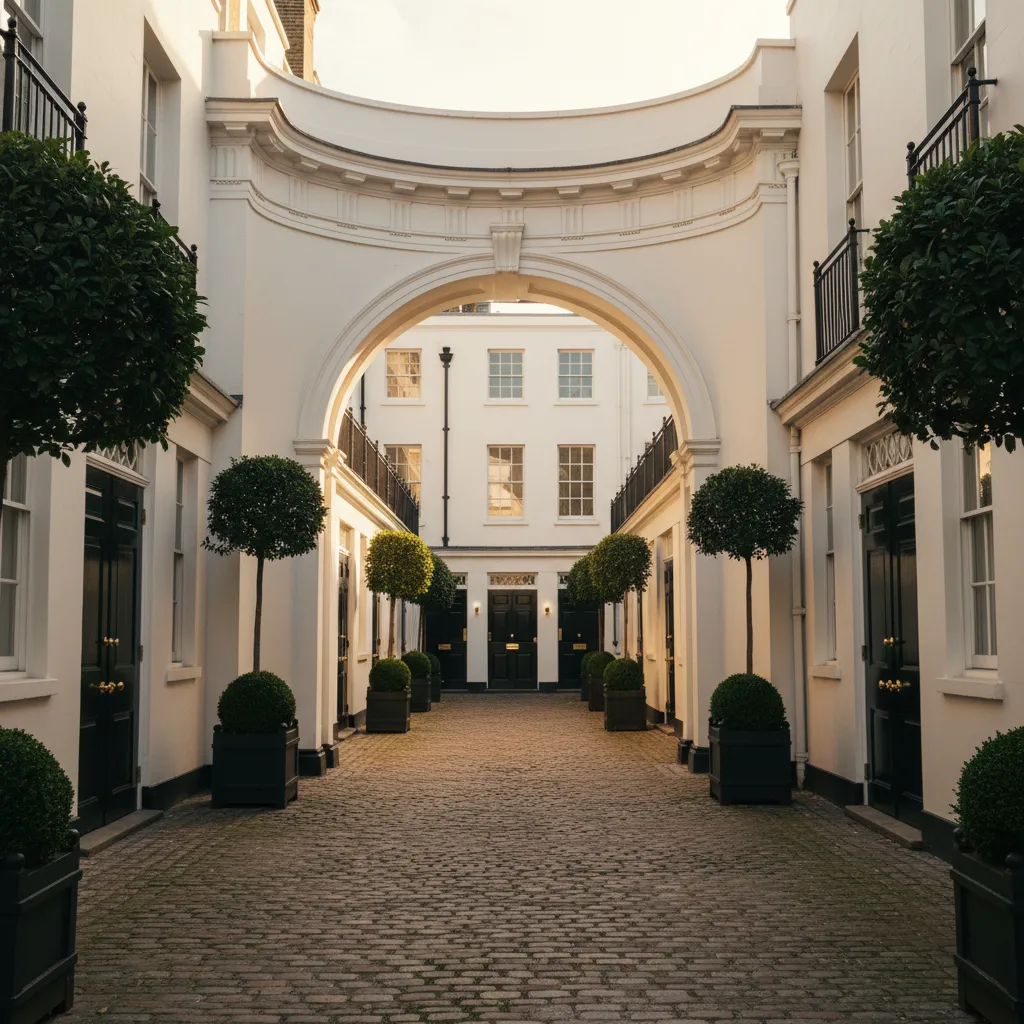 Belgravia Mews Walk Planner: Stucco Arches and Alleys
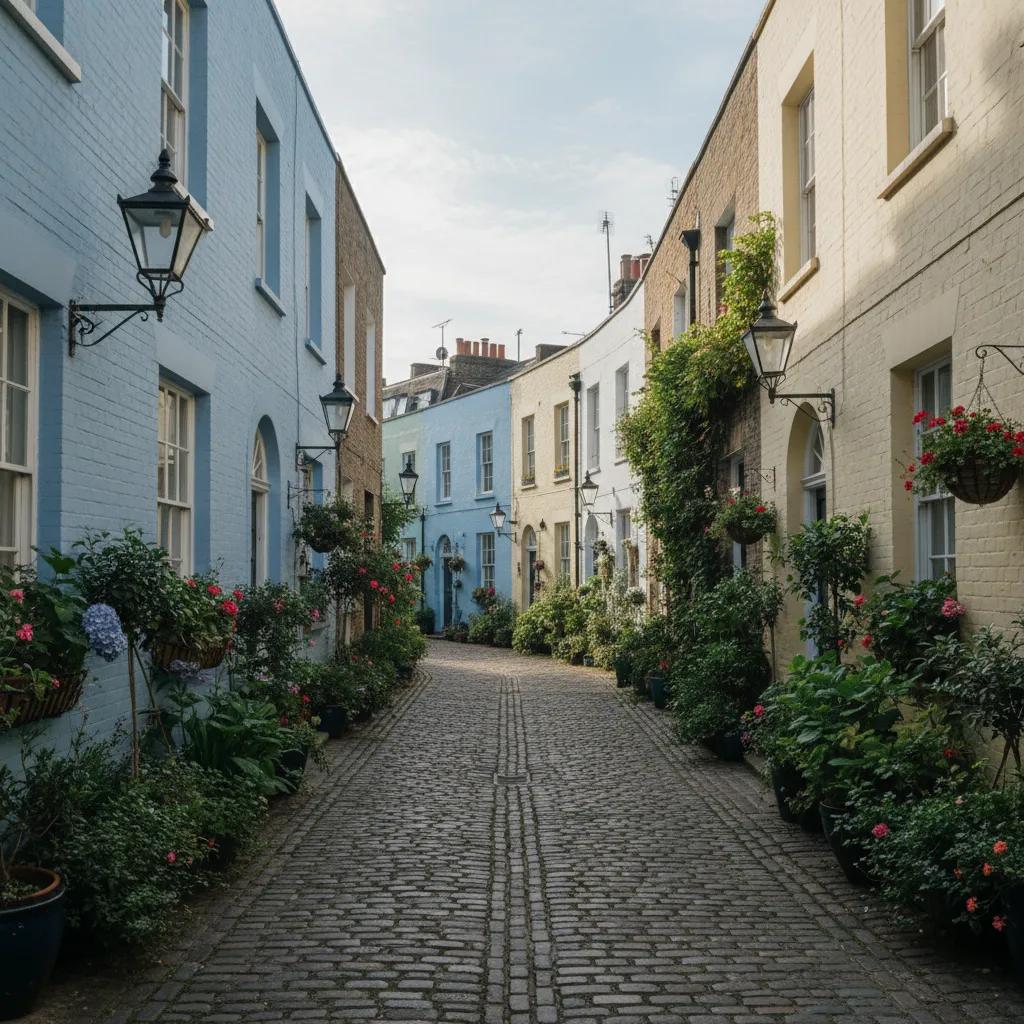 Notting Hill Mews Walk Planner: Quiet Painted Lanes