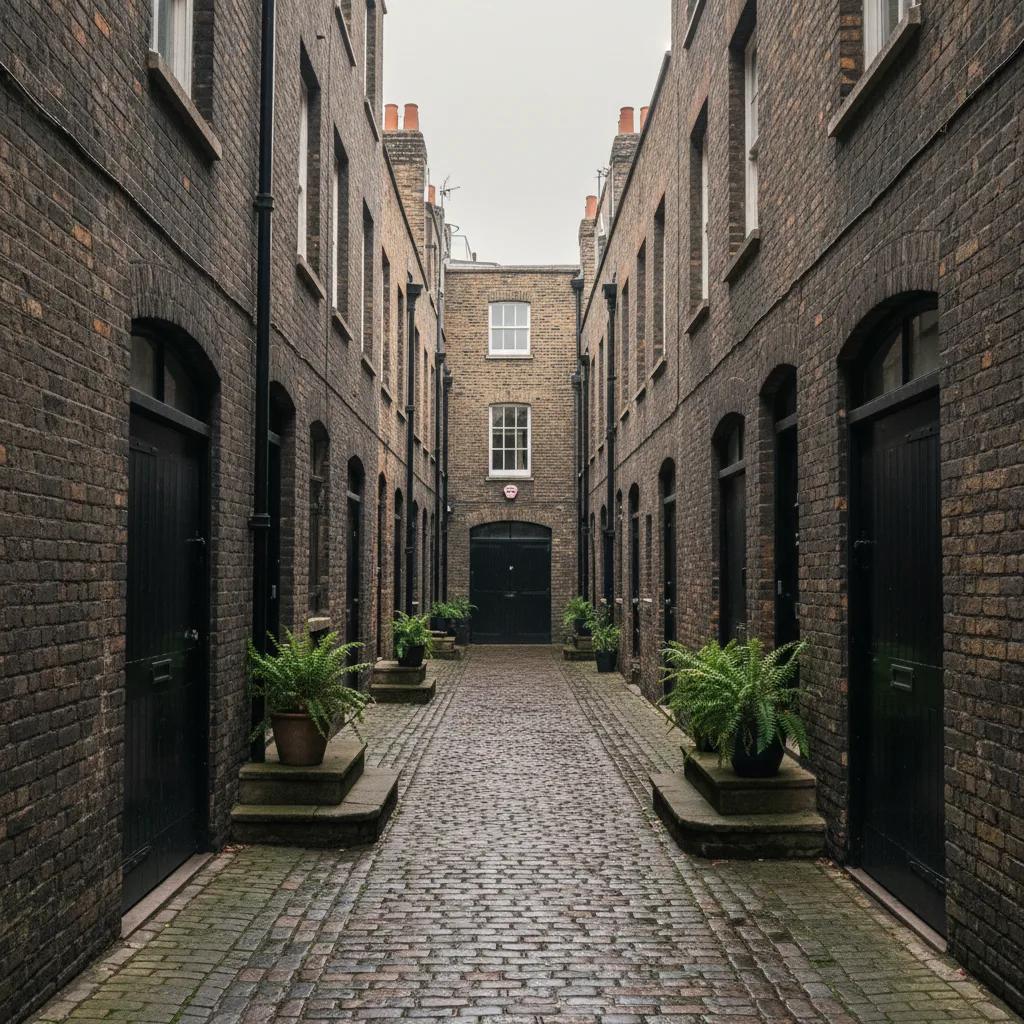
 Bloomsbury Mews Walk Planner: Literary Brick Passages
Neighborhood Guides
Shoreditch Post Work Route Planner: Arnold Circus First
Shoreditch has three useful exits, Old Street, Shoreditch High Street and Liverpool Street, so plan the walk to end at one. Arnold Circus is the quiet start.
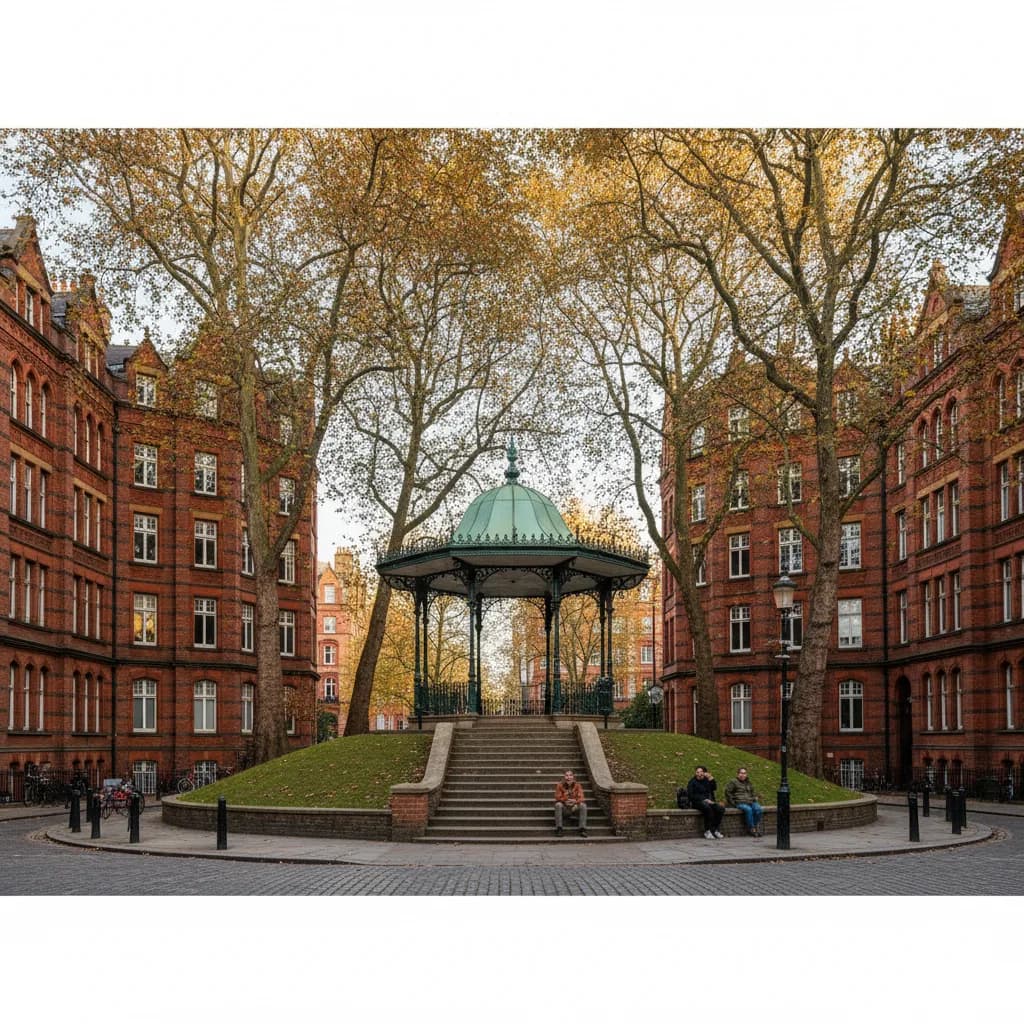
Arnold Circus, at the heart of the Boundary Estate, is a raised garden mound crowned by a bandstand, built from the spoil of the slum clearance that made way for one of London's earliest council estates around 1900. It is three minutes from the Shoreditch High Street junction and almost nobody walking past on a weekday evening knows it is there. That is why it makes the perfect first stop in a Shoreditch post work route planner: a quiet, elevated place to sit before the busier streets around it.
Choose Your Train Before Your Bar
Shoreditch has three main exits and each suits a different journey home. Old Street, at the top of the area, is on the Bank branch of the Northern line and also has Great Northern trains towards Moorgate and Hertfordshire. Shoreditch High Street, on the elevated viaduct, is on the London Overground's Windrush line running north towards Highbury and south towards Croydon and Clapham Junction.
Liverpool Street, a ten-minute walk south, is the heavyweight: Elizabeth, Central, Circle, Hammersmith and City and Metropolitan lines plus mainline services to Essex and East Anglia. If you are heading towards Stratford, Canary Wharf via the Elizabeth line or out to the suburbs, ending your evening near Liverpool Street saves you a change and a lot of time.
A Timeline for a Typical Weekday Evening
At around half five, offices on Great Eastern Street and Curtain Road start emptying and Shoreditch High Street pavements fill quickly. This is the moment to cut east along Calvert Avenue rather than join the crowd heading for the station. Five minutes later you are on the steps of Arnold Circus with the red brick blocks of the Boundary Estate wrapping around you.
Give it fifteen minutes. Then drop down to Redchurch Street, which runs east from the High Street and has kept a lot of independent shopfronts behind its old warehouse facades. By six thirty, Redchurch Street brings you naturally to the top of Brick Lane, which is where the evening forks: north towards Columbia Road and Hackney Road, or south towards Spitalfields and Liverpool Street.
Brick Lane Without the Noise
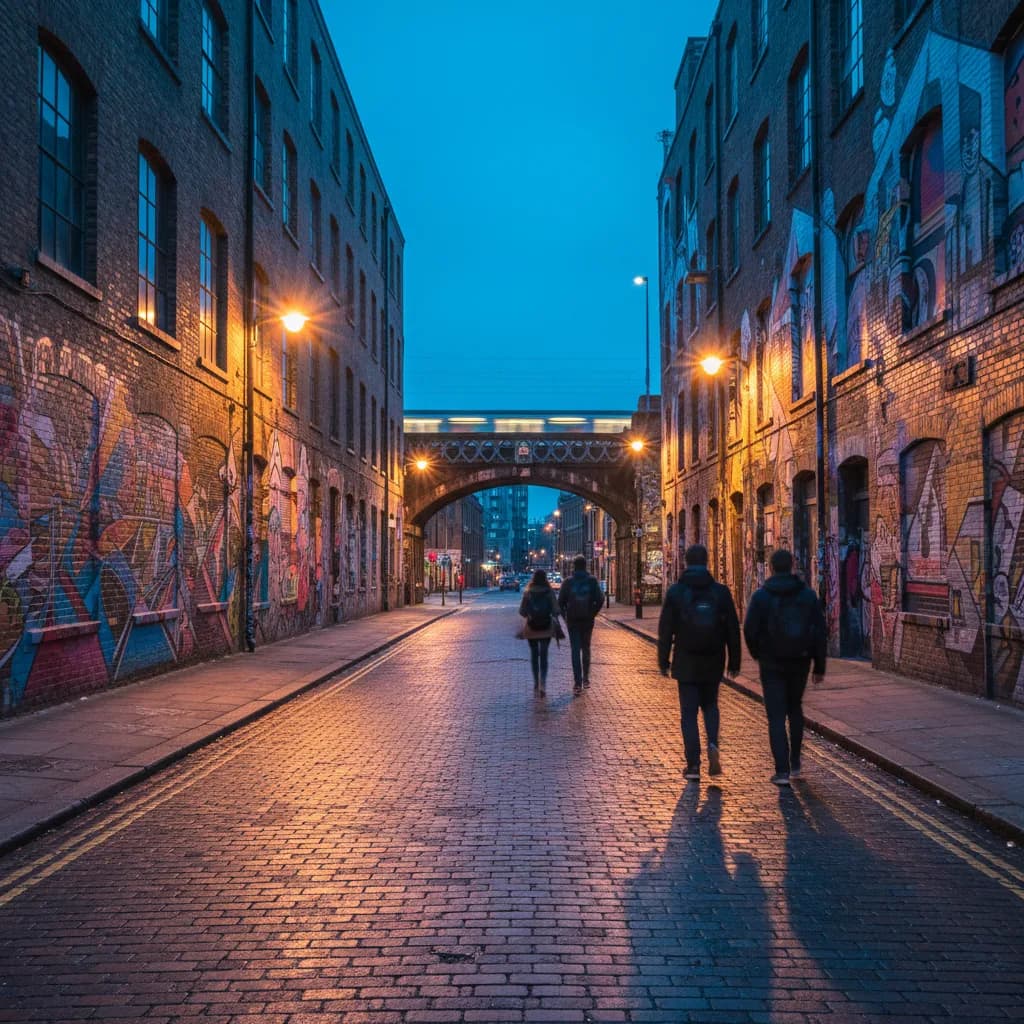
Brick Lane is famous and busy, so the trick is using only the stretch you need. The northern end near Cheshire Street and Sclater Street has some of the area's biggest murals, painted on the sides of warehouses and railway arches, and it is quieter on a weekday evening than the curry-house strip further south. Walk it slowly and look up; the best painted walls are often above the shop signs.
Our honest view is that the southern section, with restaurant touts on the pavement, is best walked through rather than lingered in if you are looking for a calm evening. Head down it purposefully towards Fournier Street, whose early Georgian houses with their weavers' attic windows are one of the most atmospheric short streets in east London, then on to Spitalfields and Liverpool Street.
Hoxton Square for the North-West Corner
If you work closer to Old Street, Hoxton Square is the alternative anchor. It is a small, tree-shaded green surrounded by former workshops, and on warm evenings office workers sit on the grass. A loop from Old Street station down Rivington Street, through Hoxton Square and back up Pitfield Street takes about twenty-five minutes and gives you a taste of the area's street art without touching the main road.
The Columbia Road Detour
Columbia Road is known for its Sunday flower market, when the whole street disappears under buckets of stems and crowds. On a weekday evening it is the opposite: a short, quiet terrace of small Victorian shopfronts running north-east from the Boundary Estate towards Hackney Road. Walking it after work feels like seeing a stage set with the lights off, and it is a good way to reach buses on Hackney Road if you live towards Bethnal Green or Hackney and want to skip the trains altogether.
It also works well for anyone who wants a longer stroll without the Brick Lane bustle. From Arnold Circus, take Calvert Avenue east, pick up Columbia Road and follow it to its end, then decide whether you are heading home by bus or doubling back.
Using Karpo to Fill the Gaps
The geography is the easy part; choosing where to stop is harder. In the Karpo APP, tell it something like: finishing near Old Street at six, heading home on the Elizabeth line, about seventy-five minutes, would like a short walk with street art and then somewhere relaxed to eat for two. Karpo suggests places and a sensible order between your start point and Liverpool Street.
What Karpo does not do is monitor how full a venue is right now or reserve a table. Treat its suggestions as a short list, check the place's own page before you set off, and if you arrive somewhere and it is not right, ask Karpo for another option nearby rather than walking back up the hill to where you started.
Three Routes by Mood
Recharge, thirty minutes: Calvert Avenue to Arnold Circus, sit, then Club Row and back to Shoreditch High Street station. Explore, sixty minutes: Arnold Circus, Redchurch Street, the northern murals of Brick Lane and a Karpo-suggested stop near Spitalfields before the Elizabeth line. Unwind with a friend, ninety minutes: Hoxton Square, Rivington Street murals, a sit-down dinner and a gentle walk to Old Street.
Practical Notes
Shoreditch High Street junction is a busy, sometimes chaotic crossing; give yourself an extra couple of minutes to get across it at rush hour. The Overground runs frequently, but check TfL for weekend closures before relying on it late. Thursday and Friday evenings are far busier than Monday to Wednesday, so if you want Brick Lane quiet, plan for earlier in the week.
If it rains, Arnold Circus has no shelter at all, so swap it for the covered Old Spitalfields Market building on the way to Liverpool Street, and let Karpo suggest indoor spots close by. Wear shoes that cope with old cobbles on Fournier Street and the side lanes, and remember that some of the darker cut-throughs under the railway are better avoided late at night when you are on your own.
Ask Karpo for more information.
Keep reading
- Bloomsbury Mews Walk Planner: Literary Brick Passages
 Belgravia Mews Walk Planner: Stucco Arches and Alleys
 Notting Hill Mews Walk Planner: Quiet Painted Lanes