 Bloomsbury Mews Walk Planner: Literary Brick Passages
Neighborhood Guides
Soho Neighborhood Walking Guide: Quiet Sunday Morning Lanes
Soho on a quiet Sunday morning reveals Georgian lanes, the Broad Street pump story, Soho Square and hidden courtyards, walked in two hours at an easy pace.
This Soho neighborhood walking guide works best on a Sunday morning, when the theatre crowds have gone home and the delivery vans have not yet arrived. Soho shrinks back to a village of narrow lanes, Georgian doorways and quiet squares, and its stories become audible. In two hours you can follow a water pump that helped invent epidemiology, a street where Georgian houses still keep their original doors, and the tiny courtyards that most visitors walk straight past.
Start at the Pump on Broadwick Street
Begin on Broadwick Street, near the replica water pump that marks one of the most important moments in public health history. During a terrible cholera outbreak in the 1850s, the doctor John Snow mapped the deaths in this neighbourhood and traced them to a single contaminated pump. Removing its handle helped end the outbreak and proved that the disease spread through water. The pub on the corner is named after him.
Stand by the pump and look at the streets around it. Imagine Soho at the time: crowded, poor and full of craftsmen and immigrant families sharing small rooms. It helps to have a simple copy of Snow's famous map on your phone so you can see how the cases clustered. This stop is a great conversation starter for walkers with a science or medical background, and it sets the theme for a walk about how ordinary streets shaped big ideas.
Admire the Doors of Meard Street
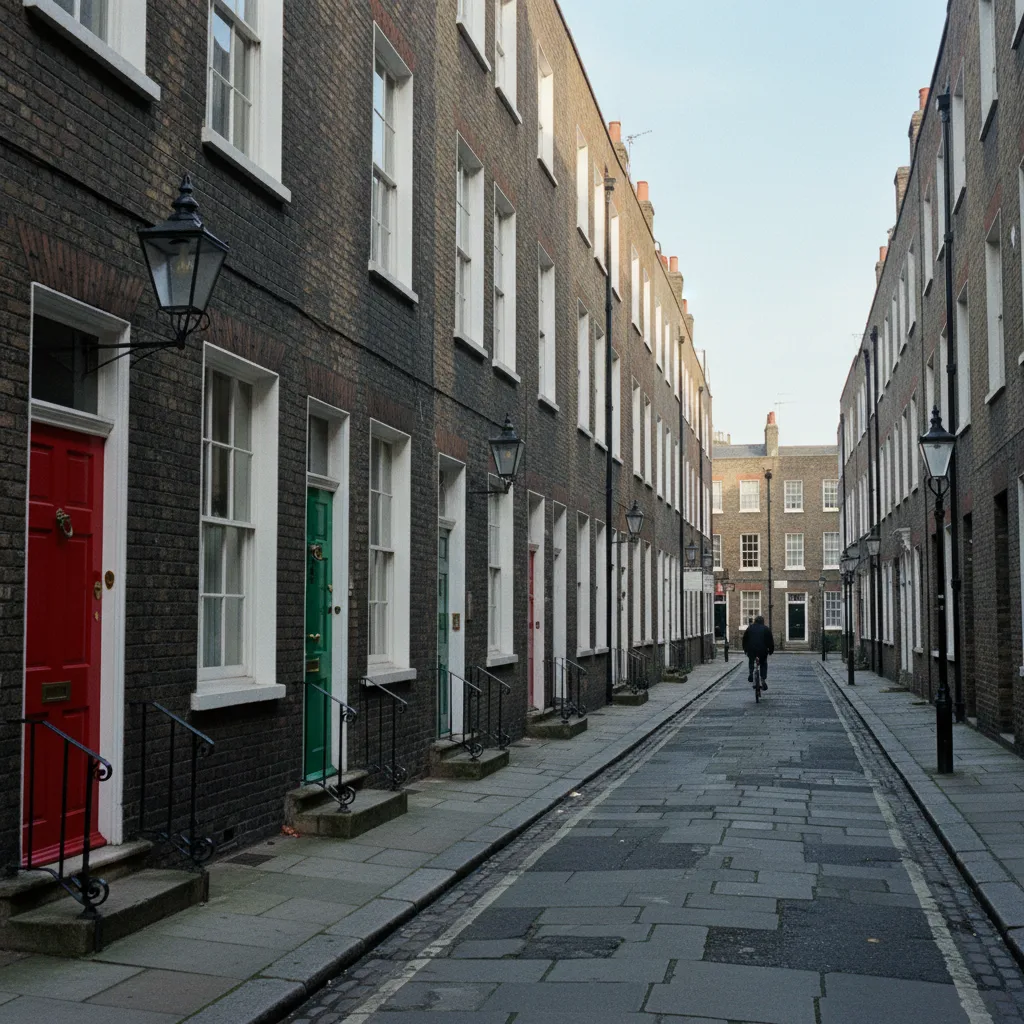
From Broadwick Street, cut down to Dean Street and slip into Meard Street, one of the best-preserved Georgian lanes in central London. The flat brick terraces still have their tall sash windows, fanlights and panelled doors painted in deep colours. One door famously carries a small plaque joking that it is not a brothel, a nod to the area's colourful past and its modern residents' humour.
Walk slowly and look at the details: the boot scrapers, the old iron lamp holders and the uneven ironwork of the railings. Meard Street is short, but it is the perfect place to show companions how Soho looked when it was a fashionable new suburb for the gentry, before it became a byword for nightlife. Photographers love it in soft morning light. Please do not lean on doors or block steps. These are lived-in homes.
Pause in St Anne's Churchyard
Continue to Wardour Street and the tower of St Anne's, a church destroyed in the Blitz except for its curious tower with a barrel-shaped clock. The churchyard garden beside it is raised above the street, because so many burials accumulated over centuries that the ground level rose. Sit on a bench among the plants and watch the neighbourhood wake up around you. It is one of Soho's calmest corners on a Sunday.
The detective novelist Dorothy L. Sayers was a churchwarden here, and her ashes rest beneath the tower. Fans of crime fiction will enjoy that link, but even if you have never read her books, the idea of a writer quietly buried in the middle of London's entertainment quarter is a lovely Soho paradox. Look up at the tower once more before you leave and notice how odd and charming its shape is.
Cross Old Compton Street and Frith Street
Old Compton Street is the heart of LGBTQ+ Soho, lined with cafes, bars and shops that come alive at night. In the morning it is peaceful, and you can appreciate the shopfronts and the long history of the street as a welcoming space. Walk its length slowly, then turn onto Frith Street, which has its own cluster of stories involving music, invention and late-night coffee.
Frith Street was home for a time to the young Mozart, who stayed here on his visit to London as a child performer. A little further along, a plaque recalls John Logie Baird's early demonstration of television. The famous Italian coffee bar with its neon sign has served espresso to generations of night owls and early risers. Stand at its counter for a quick coffee and a pastry. It is the classic Soho way to start the day.
Find the Mock-Tudor Hut in Soho Square
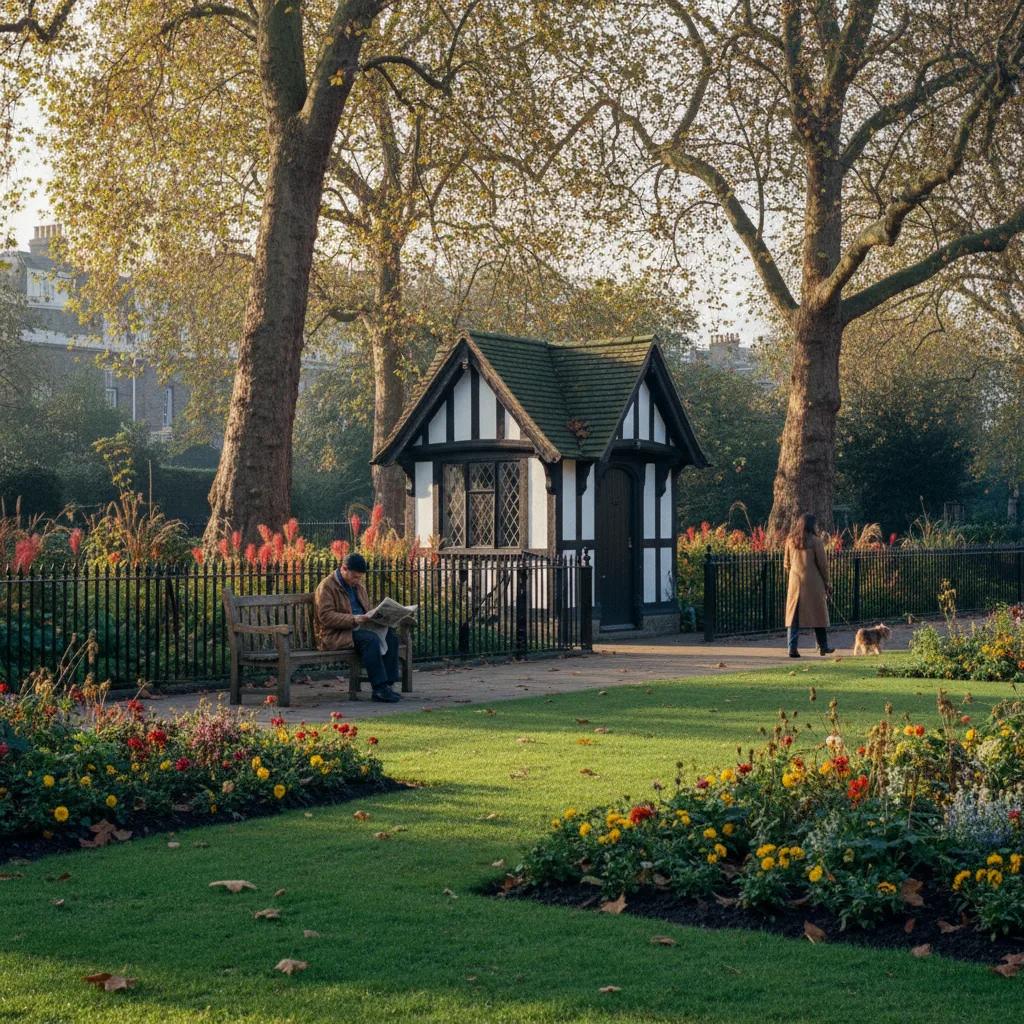
Frith Street leads you straight into Soho Square, the neighbourhood's main green space. In the centre sits a small black-and-white mock-Tudor hut that looks like a garden folly but actually hides a tool store and old ventilation equipment. Around the square, grand buildings house film companies and publishers, and two churches face each other across the lawns. On sunny days locals sprawl on the grass. On Sunday mornings you may have it almost to yourself.
Take a seat on a bench and look at the statue of King Charles II, weathered and slightly forlorn after centuries outdoors. The square is a natural midpoint for the walk, so use it for a snack break or to regroup with friends who started from Tottenham Court Road. Dog walkers and joggers come and go, and the plane trees make it pleasantly shady in summer.
Hunt for Hidden Courtyards
Soho is full of small courtyards and alleys that are easy to miss. Look for Kingly Court off Carnaby Street, a three-level courtyard of restaurants that feels like a village square tucked behind the shops. Near Berwick Street, small passages connect to tiny yards where old workshops have become offices and studios. Taking a few turns at random is part of the fun, because Soho is compact enough that you never get properly lost.
Berwick Street is worth a slow stroll too. Its long-running street market and its record and fabric shops have made it a favourite among musicians and designers. On a Sunday morning many stalls are quiet, which actually helps you notice the architecture: the mix of old terraces and post-war blocks, the shop signs and the upper-floor workshops. Return later in the week if you want the market in full swing.
Who This Walk Suits and When to Skip It
This route suits curious walkers who like plaques, history and architecture more than shopping. It works for solo visitors, couples on a slow weekend morning, and families with older children who enjoy stories like the cholera pump or the mock-Tudor hut. It is less suited to anyone who wants Soho's famous nightlife. For that, come back after dark and ignore half of this guide.
Skip Saturday nights and weekday lunchtimes if you dislike crowds, because the narrow pavements fill quickly. Light rain is no problem, since cafes are never far away, but heavy rain makes the churchyard and square less inviting. Wear comfortable shoes and give yourself about two hours. If you want to stretch the morning, walk north into Fitzrovia or west into Mayfair for a very different kind of London street.
Keep a Short List in Your Pocket
Before you set out, open the Karpo APP and search Soho for coffee bars, bakeries and quiet brunch spots around the squares. Read the descriptions, compare the atmosphere and save two or three that suit a slow Sunday. If the Italian coffee bar is packed, or you want somewhere to sit down after Soho Square, you will already know where to go. The rest of the walk is best enjoyed with the phone in your pocket and your eyes on the buildings.
Ask Karpo for more information.
Keep reading
- Bloomsbury Mews Walk Planner: Literary Brick Passages
 Belgravia Mews Walk Planner: Stucco Arches and Alleys
 Notting Hill Mews Walk Planner: Quiet Painted Lanes