 Bloomsbury Mews Walk Planner: Literary Brick Passages
Neighborhood Guides

Hackney Neighborhood Walking Guide from Tudor to Art Deco
Walk Hackney Central from St Augustine's Tower and Tudor Sutton House to the Hackney Empire and Art Deco town hall, five centuries of London in one short loop.
This Hackney neighborhood walking guide compresses five centuries into a loop you can walk in under two hours. Around Hackney Central, a medieval church tower stands alone in a garden, a Tudor house survives on a terraced street, a gilded music hall still stages pantomimes, and an Art Deco town hall presides over a modern square. Most visitors pass straight through on the way to London Fields or the canal, which means these stories are often surprisingly quiet.
Begin at the Lonely Tower of St Augustine
Start in the churchyard gardens just off Mare Street, where St Augustine's Tower rises above the trees. It is the oldest building in Hackney, all that remains of the medieval parish church after the rest was demolished when a larger church was built nearby. Standing alone, the tower looks almost like a chess piece. Its little clock and battlements give it a slightly fairytale air, especially in the early morning mist.
Volunteers occasionally open the tower for visitors to climb the narrow spiral stairs, and the view from the top over Hackney is a rare treat. If it is closed, simply walk around the base and read the old gravestones scattered across the gardens. Then look across to the larger church of St John-at-Hackney, which replaced the medieval building. Seeing the old and new side by side is a neat introduction to how this area has grown.
Step into Tudor London at Sutton House
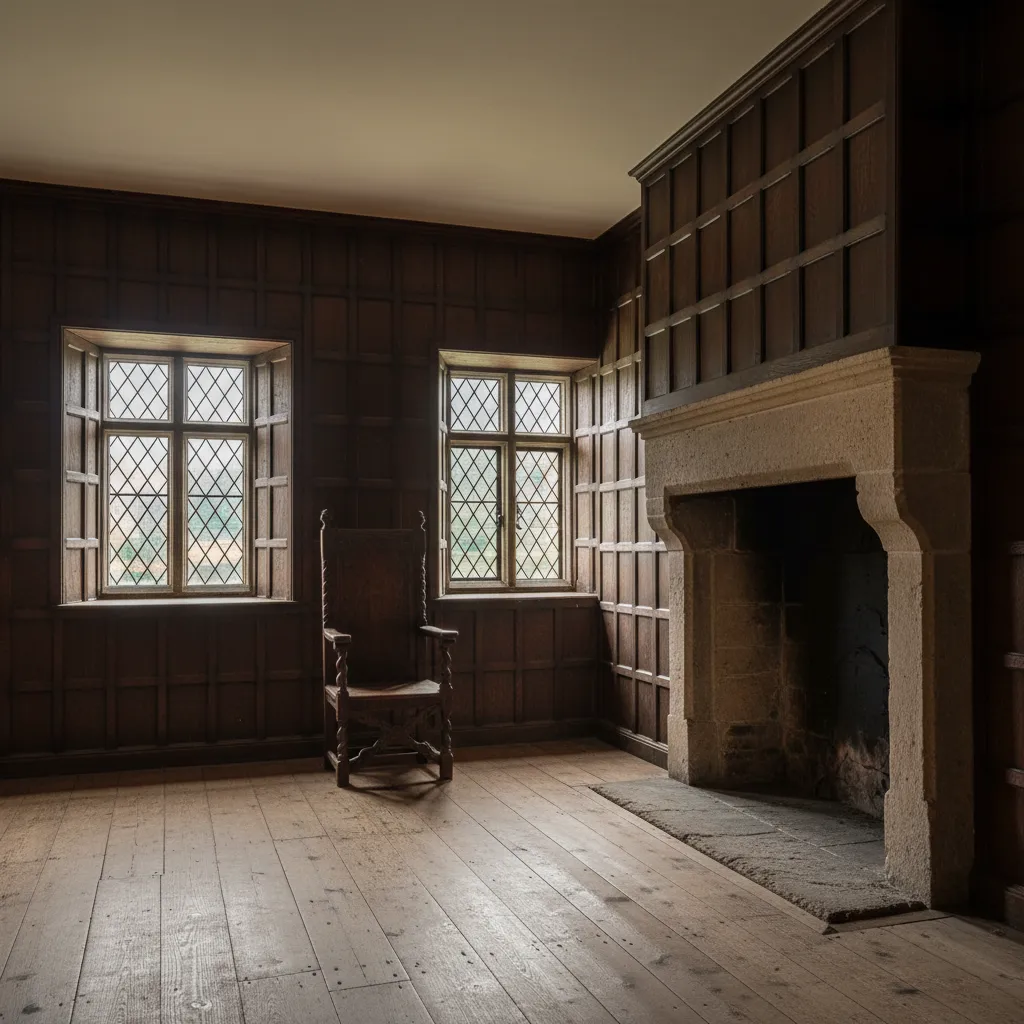
Walk a few minutes east along Homerton High Street to Sutton House, a brick Tudor mansion built for a courtier of Henry VIII. It is one of the oldest houses in east London and is now cared for by the National Trust. From the street, its brickwork and windows already look out of place among the later terraces, and once inside the house you discover oak-panelled rooms, a Tudor kitchen and centuries of changes layered over each other.
What makes Sutton House special is that it was never preserved as a museum frozen in time. Over the centuries it became a school, a trade union office and, in the 1980s, a squat whose residents painted murals that are still visible in one room. This messy, honest history makes it more interesting than a polished stately home. Check what the house is showing during your visit and give yourself time to explore.
Follow Mare Street to the Hackney Empire
Return to Mare Street and walk south past the shops, cafes and bus stops. This is Hackney's busy high street, with a mix of chain stores, independent shops and the occasional grand Victorian building. Look up above the shopfronts to see carved stone, decorative windows and dates set into the facades. Then you reach the Hackney Empire, a magnificent music hall with domes and terracotta decoration that dominates this stretch of the street.
The Empire opened at the beginning of the twentieth century as a variety theatre, and legends of music hall and comedy have played on its stage. Today it is famous for its lively Christmas pantomime and its support for local performers. Even without a ticket, stand across the road and admire the ornate facade. If you can, return in the evening for a show. The gilded auditorium is one of the finest in London.
Admire the Art Deco Town Hall
Next door, Hackney Town Hall stands behind a broad paved square. Built in the 1930s, it is a fine example of civic Art Deco architecture, with clean lines, tall windows and a stately entrance. The square in front often hosts markets, events and people sitting on benches with coffee. It is a good place to pause and compare the exuberant Empire with the sober elegance of the town hall right beside it.
Look closely at the details on the town hall's facade, including the lettering, lamps and stone carvings. Inside, the council chamber and halls preserve original Art Deco fittings, and the building sometimes opens during London's architecture festival weekend. Even from outside, it shows how proud local authorities were of their new public buildings in the interwar years. The contrast with the Tudor house you visited minutes ago is striking.
Detour Through the Narrow Way
From the town hall, walk north to the Narrow Way, the pedestrianised section of the old high street near Hackney Central station. It is a lively stretch of small shops, food stalls and bargain stores, and it shows the everyday commercial life of the neighbourhood. Look out for the old buildings above the shops and the occasional mural tucked into a side passage. It is a good spot to grab a quick snack, perhaps a Turkish pastry or a Caribbean patty.
Skip the Narrow Way on very busy Saturday afternoons if you dislike crowds, because it can become cramped. On weekdays it has a pleasant buzz without being overwhelming. If you want to continue, walk west towards London Fields and Broadway Market, or north towards Hackney Downs. Either option adds green space to the end of your heritage walk and gives your legs a gentler finish.
Finish on the Grass at Hackney Downs
A short walk north brings you to Hackney Downs, a large open park with plane trees, tennis courts and a broad lawn. On sunny days it fills with picnics, frisbee games and dogs racing across the grass. It is less famous than London Fields, which makes it more relaxed, and its long paths are ideal for an easy final stroll. Sit on a bench and watch the trains pass along the elevated railway at the edge.
If the weather is fine, this is the best place to finish with a takeaway coffee or a pastry from one of the local bakeries. In autumn, the leaves turn gold and the low sun throws long shadows across the lawns. From the park, Hackney Downs station is right at the corner for an easy journey home, or you can walk down to Dalston to continue exploring.
Practical Notes for Walkers
Allow about two hours with stops, more if you visit Sutton House or climb the tower. The route is flat and accessible, though some pavements on Mare Street are busy and uneven. Weekday mornings are quiet and good for photographs. Wear comfortable shoes and bring a light raincoat, since there is little shelter between stops apart from shopfronts and the station.
This walk suits history lovers, architecture fans and families with older children who enjoy stories about Henry VIII or music hall comedians. It is also a good choice for anyone who has already explored central London and wants to see a neighbourhood with a strong local identity. If you have young kids, finish at Hackney Downs so they can run off any leftover energy on the grass.
Make Your Own Hackney Shortlist
Use the Karpo APP to look up cafes, bakeries and casual lunch spots around Mare Street and Hackney Downs before you leave. Compare what each place is like, from quiet tables for reading to lively counters for a quick snack, and keep a handful saved. That way, after the tower or the Empire, you can head straight to somewhere that suits the moment rather than wandering in search of a seat.
Ask Karpo for more information.
Keep reading
- Bloomsbury Mews Walk Planner: Literary Brick Passages
 Belgravia Mews Walk Planner: Stucco Arches and Alleys
 Notting Hill Mews Walk Planner: Quiet Painted Lanes