 Bloomsbury Mews Walk Planner: Literary Brick Passages
Neighborhood Guides
Brixton Neighborhood Walking Guide from Windrush to Windmill
Walk Brixton from Windrush Square and the Black Cultural Archives through Electric Avenue and the market arcades to a hidden windmill on a quiet hilltop green.
This Brixton neighborhood walking guide follows a story most visitors only glimpse from the Tube exit. Brixton is where many families from the Caribbean made their first London homes, and the streets around the station still carry that history in their names, their market stalls and their music. The loop below runs from Windrush Square to a windmill that seems to have wandered in from the countryside, and it takes a relaxed couple of hours with stops for food and a sit on the grass.
Start in Windrush Square
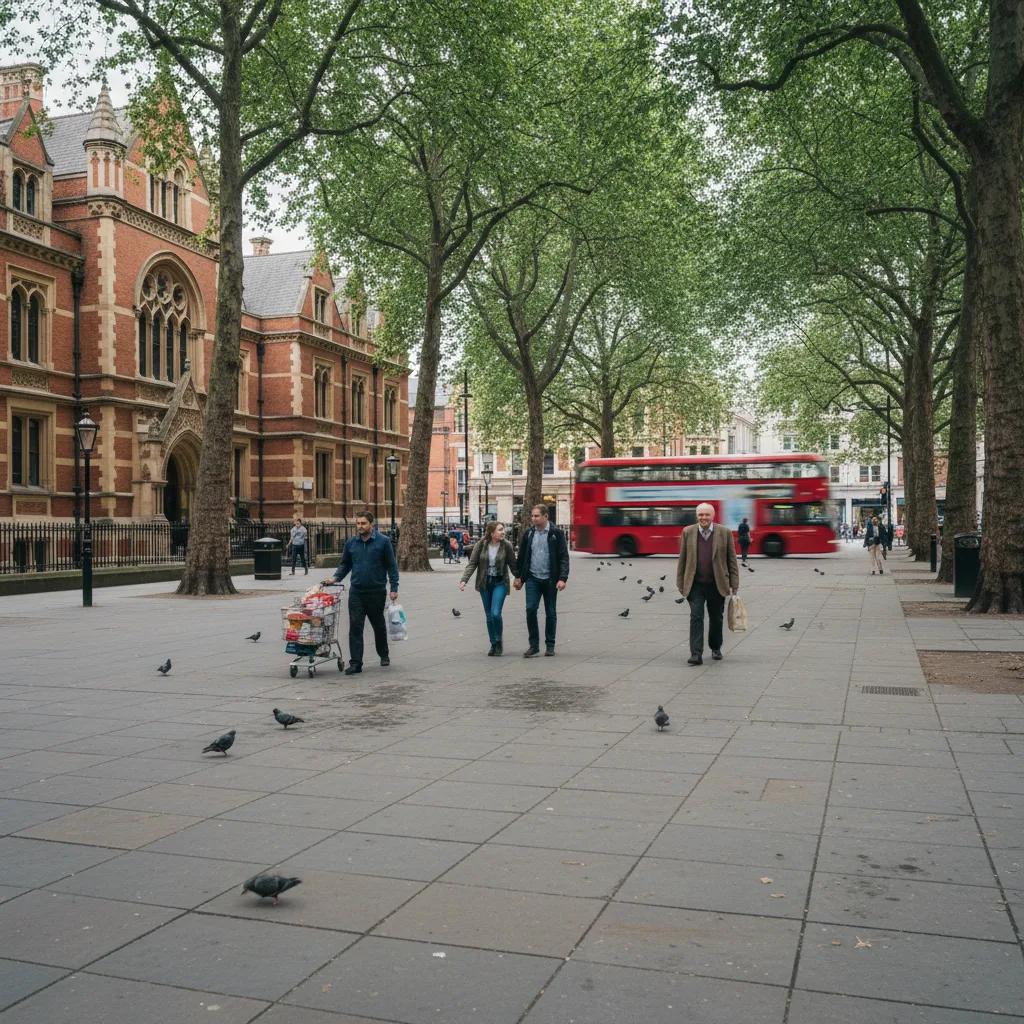
Come up from Brixton station and walk a few steps south to the broad open square in front of the Tate library. It carries the name of the ship that brought one of the first large groups of Caribbean migrants to Britain after the Second World War, and many of those passengers and their children settled in the streets you are about to walk. Stand in the middle for a minute and look around. Buses swing past, families meet under the plane trees, and older men sit on the benches comparing notes on the day. The square is not a museum piece. It is a living front room for the neighbourhood.
Look for the memorial to the African and Caribbean servicemen and women who fought for Britain in two world wars. It is easy to walk past, so slow down and read the inscriptions. Then turn to the library itself, a handsome building paid for by the sugar merchant Henry Tate, whose wealth came from a trade tied to the Caribbean islands. That small irony sets the tone for the walk: in Brixton, the stories of empire, migration and home are layered on top of each other, often on the same corner.
Spend Time at the Black Cultural Archives
On the edge of the square, a restored Georgian house holds the Black Cultural Archives, the national home for collections that record the history of people of African and Caribbean descent in Britain. The ground floor usually hosts a changing exhibition, and the subjects range from Tudor-era Black Londoners to the activists who fought for fair housing in south London. Even a short visit changes how you read the rest of the walk, because names you will see later on plaques and murals suddenly have faces and voices.
If you are walking with children or teenagers, ask them to pick one person from the exhibition and remember a single fact about them. Later, when you pass a mural or a street sign, they can tell the group whether it connects. It turns a heritage walk into a small treasure hunt, and the conversation tends to carry on long after you have left the square.
Walk Down Electric Avenue
Cross back over Brixton Road and turn into Electric Avenue, a curving street that earned its name as one of the first shopping streets in London to be lit by electric light. Today the iron canopies that once sheltered shoppers are gone, but the curve is still there, and so is the noise. Fishmongers call out the catch of the day, stalls pile yams, plantain and scotch bonnet peppers into colourful heaps, and music from a shopfront speaker drifts over everything.
Many people know the street from the Eddy Grant song that shares its name, and it is worth playing it on your phone as you walk, quietly, so you hear how the lyrics answer the street around you. Take your time here. Watch how the traders handle regulars, who are often greeted by name, and notice the mix of Caribbean, West African, Portuguese and South American produce. It is a map of migration laid out on market tables.
Wander the Arcades of Brixton Village and Market Row
From Electric Avenue, duck into the covered arcades of Brixton Village and Market Row. These glass-roofed passages were built as shopping galleries, then went through quiet years with empty units, and later filled up again with small kitchens, record stalls, barbers, fabric sellers and tiny cafes. Walk every aisle at least once before you decide where to stop, because the arcades bend and branch in ways that hide some of the best corners.
The fun here is in the mix. A Jamaican patty counter may sit beside a Colombian bakery, with a vinyl dealer playing lovers rock across the way and a stall selling African wax print fabric by the yard. Pick something small to share at the counter of whichever kitchen has the most locals waiting, and eat standing up, watching the passage. Long-time traders are often happy to tell you how the arcades used to look if you ask with genuine curiosity and do not block their customers.
Follow the Murals Toward Brixton Hill
Leave the arcades and head up toward Brixton Hill, keeping an eye on the walls. The neighbourhood has a long tradition of public murals, from older community works painted on the sides of houses to recent portraits of local heroes. The large portrait of David Bowie, who was born in Brixton, still draws flowers and handwritten notes from fans, and it is a fine place to pause and see who else stops to look.
Climb gently up the hill road and you start to notice how the scale of Brixton changes. The market bustle gives way to grand Victorian terraces, some with ornate porches and others split into flats, and the traffic noise softens. This is a good stretch to talk about what you saw in the archives and the market, because the quiet streets give the stories room to settle.
Find the Hidden Windmill
Turn off Brixton Hill into the side streets and you will reach a small grassy park with an unlikely sight: a black brick windmill with white sails, standing behind a ring of terraced houses. It was built when this hill was still farmland on the edge of London, and the city grew up around it until it ended up surrounded by homes. Local volunteers care for the mill and hold occasional milling and open days, so you may see flour being made if your timing is lucky.
Even when the mill is quiet, the green around it is a lovely place to sit. Children run around the base, dog walkers trade gossip, and the view back toward central London peeks between the rooftops. Bring a snack from the market and make this the picnic stop. It feels like the right ending for a walk that began with stories of arrival, because the windmill is itself a survivor that stayed put while everything changed around it.

Practical Notes for the Loop
The full route is gentle, with one steady climb up Brixton Hill that most walkers manage easily. Wear comfortable shoes for the market streets, which can be wet and crowded, and keep a bag that closes properly. The arcades and market are at their liveliest on Saturdays, while weekday mornings are calmer if you prefer to take photos and talk with traders.
Ask before taking close-up photos of stallholders or shoppers, and buy something small if you linger at a stall for a long time. If you walk with someone who uses a wheelchair or a pushchair, the square, Electric Avenue and the arcades are mostly level, and the climb to the windmill can be swapped for a bus ride up the hill and a short roll along the quiet side streets.
Save Your Brixton Food Stops
Before you set out, open the Karpo APP and look up Caribbean bakeries, jerk counters and small market kitchens around Brixton Village and Electric Avenue. Read a little about each one, decide which kind of meal suits your group, from a quick patty on the move to a sit-down plate, and save a few favourites. When you come down from the windmill hungry, you will already know exactly where you want to eat.
Ask Karpo for more information.
Keep reading
- Bloomsbury Mews Walk Planner: Literary Brick Passages
 Belgravia Mews Walk Planner: Stucco Arches and Alleys
 Notting Hill Mews Walk Planner: Quiet Painted Lanes