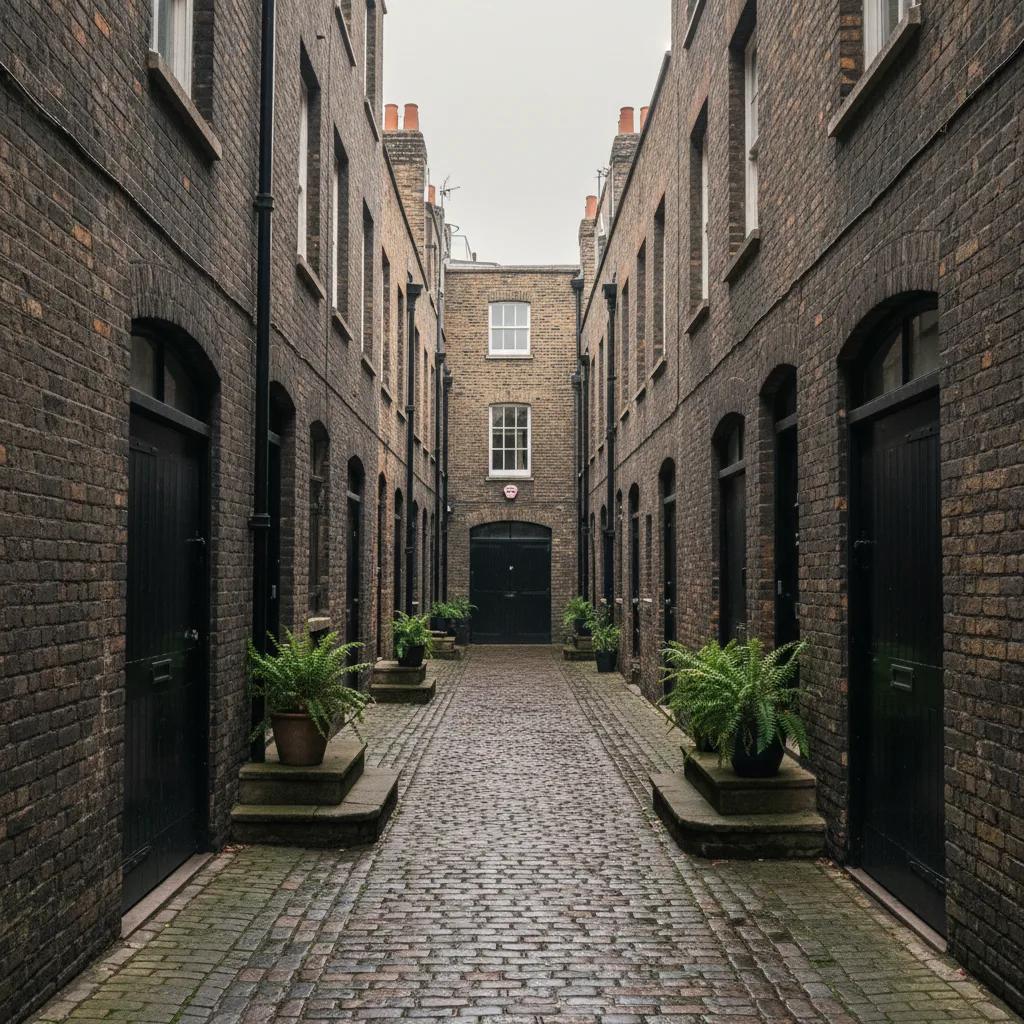
 Bloomsbury Mews Walk Planner: Literary Brick Passages
Neighborhood Guides

London Neighborhood Walk Planner: 2 Versions for Wet Days
Prepare two versions of a London neighborhood walk, with an outdoor core and a shorter wet-day option, so a change in weather needs fewer new decisions.
Prepare a short outdoor walk and a wet-day version that keeps the same starting area. A London neighborhood walk planner is more useful when a change of weather means removing a section, rather than inventing a completely new afternoon. Use the Karpo APP to ask for local ideas around your interests and available time, including a possible indoor pause. Choose the outdoor core and the shortened alternative yourself, then use walking directions to understand their connections. Neither version needs to depend on a forecast becoming a promise.
Keep the reason for going out visible
Decide what you want from the outing even if conditions become less appealing: seeing a different part of the neighbourhood, spending time with a friend or getting a break from the room you have been working in. That reason helps you decide what survives the revision. If the point is conversation, a short walk and a longer pause may serve it. If the point is photography in a particular light, moving the walk to another day can be the more sensible choice.
Avoid building two unrelated itineraries merely to feel prepared. A backup across the city has its own travel and decision costs. The useful alternative is usually small enough to explain at the beginning: walk the first section, decide at the pause and either continue or finish nearby. This keeps the afternoon understandable for everyone involved. You can spend attention on what you are doing instead of comparing a second set of destinations while trying to stay dry.
Make weather a condition in the request
Ask for possibilities with a message like: “I want a relaxed London neighbourhood walk from my starting area, with street scenery and one possible indoor pause. Suggest a compact set of ideas that I could shorten if the weather turns. I would like to keep the same finish.” Add the actual location, day and time window. You are requesting local recommendations and a useful constraint, rather than asking Karpo to establish that a path will be dry or a venue will have room.
The Karpo homepage shows conversation about how you feel and what fits your schedule. That is the basis for this request. Keep any weather information you use separate from those recommendation claims. A suggested indoor place is a candidate to consider, not a reserved refuge. If the plan relies on admission, a table or a specific facility, use the selected place's published offer to decide whether it belongs. Do not turn an unconfirmed possibility into the only way the outing can work.
Draw the outdoor core first
Choose one short section you would enjoy even without an extension. Put its beginning, end and possible pause into a walking map. Look for a shape with an easy return or a straightforward finish, then ask whether the optional section actually adds something you want. A circuit is useful only if coming back is part of your afternoon. If your next destination is elsewhere, let that onward journey influence the finish instead of forcing a loop for its own sake.
Give the extension a distinct benefit, such as more street details to photograph or a longer stroll together. It should not contain the only meaningful stop. If removing it makes the afternoon feel pointless, the core is too thin. Move the essential interest into the first section or choose a different starting area. Your shorter version should be a real outing you would willingly take, rather than an emergency version whose only attraction is that it ends sooner.
Choose the decision point in advance
The pause is a useful moment to decide what happens next. Before leaving, agree on the options in plain language: continue the outdoor section, take the short finish or end the outing there. Pick the decision using actual comfort when you reach that point. You need not create a numerical weather threshold to justify changing your mind. Clothing, footwear, temperature and people's preferences all affect whether another section sounds enjoyable, and the plan should leave space for that judgement.
A cafe queue should not become a compulsory outdoor wait just because the cafe was labelled a backup. Decide what you will do if the pause is unavailable: shorten the walk, choose a different candidate you have assessed or finish. Keep the alternative close enough to preserve the original purpose. Searching for an elusive empty table can take more effort than the route you were trying to simplify, especially when the group's priority was simply a comfortable afternoon together.
Remove the awkward dependence
Inspect the two versions for a section that must be completed before you can change direction. That may be a long outward leg, a ticketed visit or a stop that pulls you away from the agreed finish. If changing the plan requires doing that section anyway, you have not gained much flexibility. Prefer a smaller route whose optional part can disappear cleanly. This is a planning principle, not a statement about the condition or safety of any particular London path.
Also separate walking past a place from going inside it. You can enjoy a street scene without depending on the businesses along it being open. Entering a venue creates different questions about admission, capacity and spending. A flexible plan makes those choices visible instead of quietly assuming every door is available. If the outing is supposed to have no compulsory purchases, keep the indoor stop optional or select a supported alternative that fits that requirement.
Revise with your location and preference
If the weather changes while you are out, a helpful follow-up request states where you are and what you still want to do. For example: “We are ready to shorten the walk. Suggest an alternative near our present area that preserves a pause and an easy finish.” Supply the real location in your own conversation. Ask for fewer possibilities if you want a quick decision. A long fresh list may be interesting, but it can reopen choices you already settled before departure.
You can also decide that the walk is complete. Ending after the core does not require replacing the missing extension with another activity. Skip the extra stop when reaching it would make the outing less pleasant. The benefit of the second version is permission to make that choice easily. A modest plan that adapts to the day can be more satisfying than an elaborate afternoon spent defending the original route against conditions nobody particularly wants to walk through.
Practical Notes for Two Weather Versions
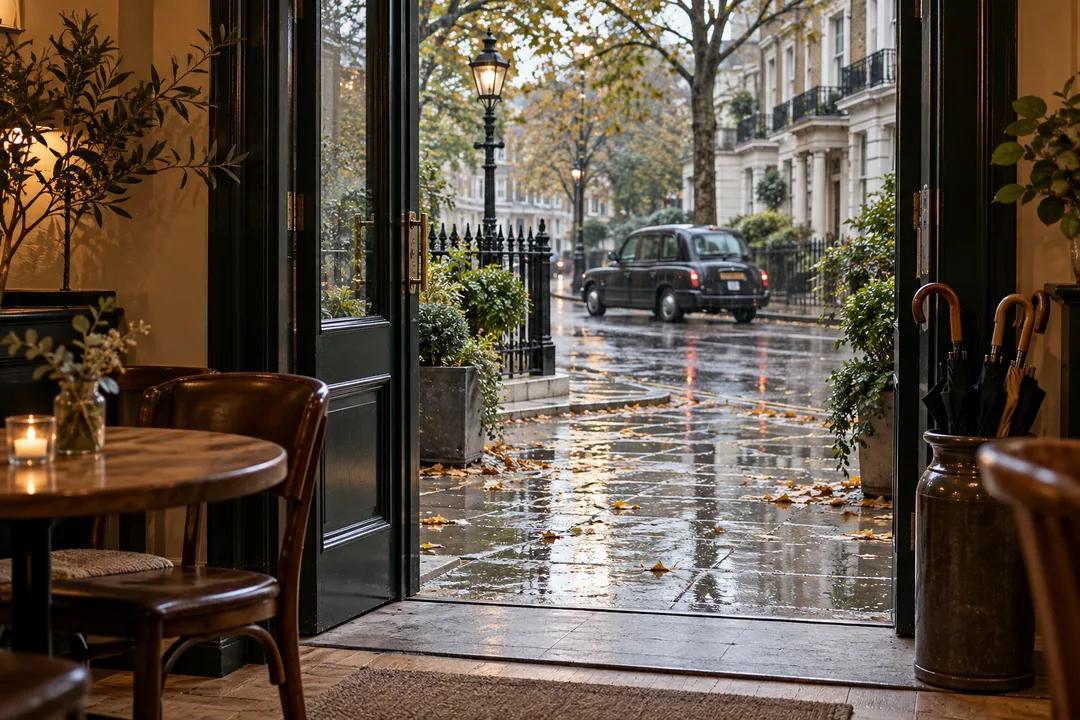
Keep the outdoor core and shorter finish on the same simple note, alongside the possible pause and your next commitment. Use pedestrian directions for the chosen connections. This article provides no live forecast, guaranteed shelter, opening times, prices or venue availability. All timing allowances belong to your personal plan. The rain and doorway illustrations are newly generated scenes intended to communicate the two moods of the outing, rather than document a covered route or a particular London establishment.
Start by telling Karpo what the afternoon should feel like and which starting area you want to keep. Select a compact set of useful ideas, map the connections and make the outdoor extension optional. The finished plan should answer one practical question without a new round of research: what will we do if we no longer want to keep walking? With that answer agreed, you can enjoy the first section for its own sake instead of spending it worrying about the rest.
Ask Karpo for more information.
Keep reading
- Bloomsbury Mews Walk Planner: Literary Brick Passages
 Belgravia Mews Walk Planner: Stucco Arches and Alleys
 Notting Hill Mews Walk Planner: Quiet Painted Lanes