 Greenwich Watercolour Mops Quill Brush Picker: Wet Skies
Hidden Gems & Odd Finds
Marylebone Map Print Shop Browsing Guide: Georgian Plans
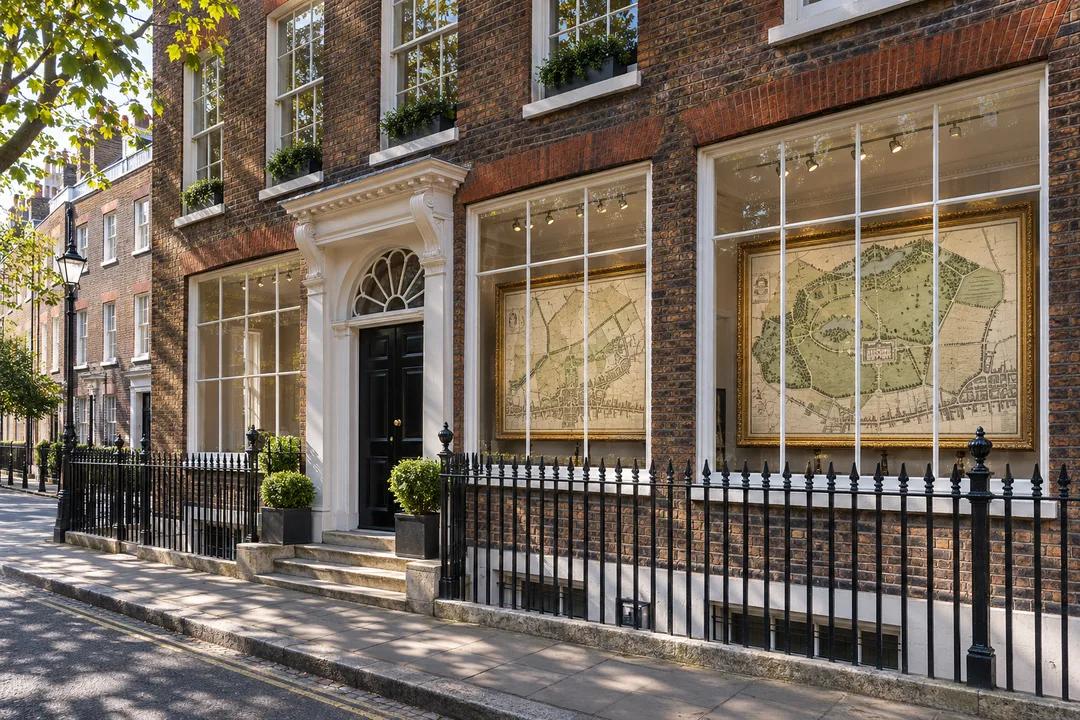
Browse Marylebone map print galleries near Marylebone Lane and Manchester Square with no entry fee. Match large estate plans and canal charts to study walls.
An architect and her partner redecorating a high-ceilinged flat off Gloucester Place bring a steel tape measure and a folder of paint swatches toward the quiet streets around Marylebone Lane. Using a map print shop browsing guide tailored to Marylebone helps buyers who want large-scale Georgian estate surveys, Regency park layouts, or architectural elevations rather than small pocket folding plans. Because the print rooms tucked between Manchester Square and Paddington Street specialize in wall-ready topographical sheets, arriving with exact alcove measurements turns a casual morning stroll into a focused design consultation.
Bringing Alcove Dimensions and Lighting Notes to the Viewing Table
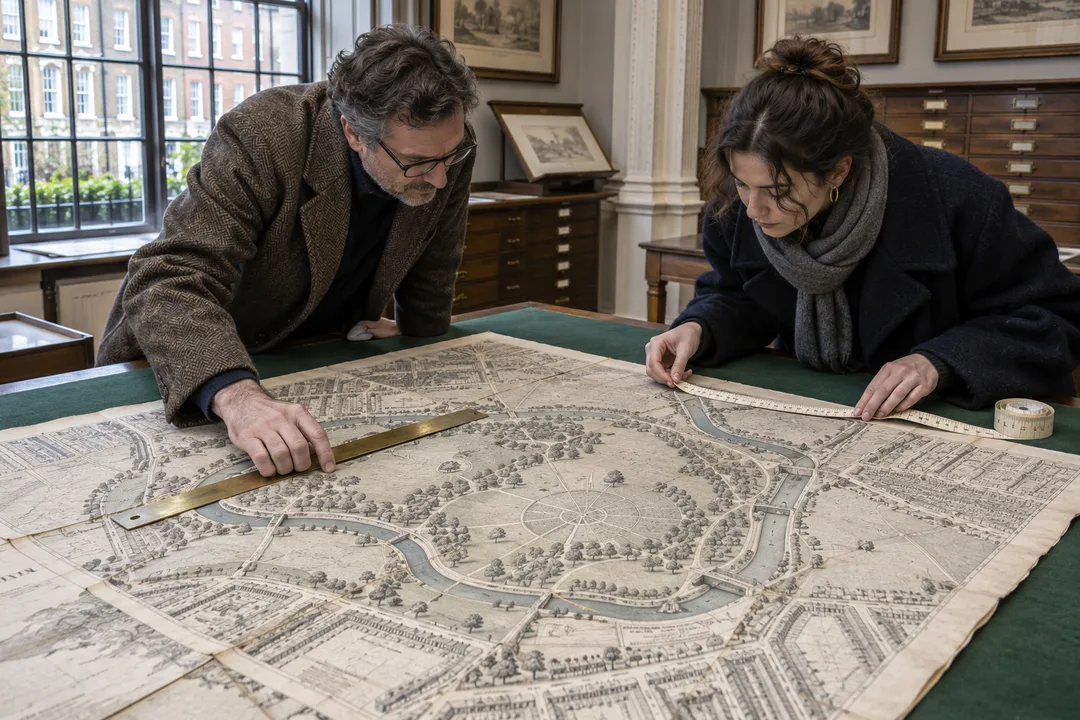
Large London parish and estate surveys—such as the grand multi-sheet plans that trace the grid from Oxford Street up to Regent's Park—have wide plate marks that demand generous breathing room on a wall. Before leaving home, measure both the width of your chimney breast or hallway panel and the height of the dado rail, then jot down which direction the room's windows face. Sharing those two details with a Marylebone gallery specialist immediately filters out sheets that would look cramped or fade in direct afternoon sun.
Ask to see prints laid flat on the central baize table rather than judging them solely from wall hooks. Many Marylebone dealers store sister sheets from the same survey in wide mahogany drawers; laying two adjacent sections side by side lets you decide whether a pair of matching frames works better over a sofa than a single oversized folding plan. You can also stand back six paces across the polished floorboards to test how the engraved street titles read from normal seating distance.
Bring a small envelope of fabric scraps, wallpaper cuttings, or wall paint cards from your room. Old rag paper varies from warm ivory and oatmeal to cool blue-tinted laid stock, and holding your paint sample next to the wide margin under natural north window light prevents clashing undertones once the piece hangs at home. If your hallway has warm brass sconces rather than daylight, ask the dealer to switch on an angled picture lamp above the viewing easel so you can judge how the cream paper tone reacts under evening tungsten bulbs.
Comparing Georgian Estate Surveys with Regency Park and Canal Charts
Marylebone's transition from rural hunting ground and pleasure gardens to formal Georgian grid makes local topographical sheets unusually varied in visual weight. Earlier eighteenth-century maps show open fields north of Wigmore Street alongside the winding course of the Tyburn stream, offering plenty of negative space that suits minimalist rooms. Later Regency surveys pack in the sweeping crescents around Park Crescent, the Regent's Canal basin, and the botanical circles of the royal park.
When inspecting a large architectural or estate engraving, tilt your head low to view the sheet under raking light across the surface. You want to see the indented rectangular plate mark pressed into the damp paper by the rolling press, which shows the margin has not been shaved down by an earlier framer. Sheets that retain at least an inch of original blank paper outside the plate mark command more presence in a floated mount and preserve the engraver's imprint line along the bottom edge.
Look closely at how water features, garden squares, and turnpike roads are differentiated. Some London engravers used stipple shading for the grass in Portman Square and Cavendish Square while leaving the surrounding terrace blocks crisp white; others filled every building plot with diagonal hatching and tiny coach-house courtyards. Picking the level of line density that matches your viewing distance ensures the map reads clearly from across a dining table rather than blurring into grey texture.
Evaluating Conservation Framing, UV Glazing, and Float Mounts
Unlike pocket stalls where loose sheets predominate, Marylebone print galleries often arrange bespoke conservation framing on site or through neighbouring workshops. Ask the specialist to show you corner samples of museum-grade low-reflective glass alongside standard picture glazing. When a finely engraved map hangs opposite a tall sash window, anti-reflective UV glazing keeps the street names legible from every chair in the room while blocking light damage over decades.
Discuss mounting methods if your chosen map has decorative border scales, compass roses, or an attractive deckled edge. A reversible Japanese paper hinge mount—where the entire sheet floats above an acid-free cotton rag backing board—displays the original plate mark and deckle edge instead of hiding them behind a bevelled window mat. Make sure the framer includes a hidden spacer strip inside the rebate so the engraved ink never presses directly against the glass.
Skip heavy ornate gilt mouldings when framing black-and-white copperplate street plans; a wide gold profile overwhelms delicate topographical linework and makes a domestic study look stuffy. A slim ebonized ash, wax-rubbed oak, or dark walnut frame echoes the black printer's ink and lets the geometry of the London squares do the talking. When pairing two sister plates from the same parish survey, ask for grain-matched timber cut from a single length of moulding so the two frames sit in quiet visual harmony on your chimney breast.
Walking Your Wrapped Portfolio Through Manchester Square and the Mews
If you select an unframed large sheet wrapped flat between two sheets of twin-wall conservation board, plan a calm pedestrian route home rather than squeezing onto a packed bus on Oxford Street. Cut south from Paddington Street through Manchester Square, where the plane trees around the central garden and the broad forecourt in front of the Wallace Collection give you sheltered pavements and wide crossings. Carry the flat package by its taped string handle with the board held against your hip so sudden gusts around the corner of Spanish Place do not catch the wide surface like a sail.
Follow the curve of Marylebone Lane where it still traces the medieval footpath beside the old stream bed, pausing at the quiet cobbled entrances of Bulstrode Place or Bentinck Mews. Walking the actual bend of the lane right after studying it on an eighteenth-century parish map turns the paper lines in your portfolio into a living three-dimensional plan, complete with original mews arches and brick stable walls.
Use the Karpo APP to locate nearby picture framers, independent art supply counters, or quiet Marylebone courtyard cafés with banquette seating where a flat portfolio board can rest upright beside you. Checking the app before you set off lets you link gallery browsing, framing drop-offs, and a relaxed lunch around Regent's Park into a single effortless loop without backtracking across busy thoroughfares or risking rain splashes on your new print.
Ask Karpo for more information.
Keep reading
- Greenwich Watercolour Mops Quill Brush Picker: Wet Skies
 Camden Watercolour Mops Quill Brush Picker: Canal Sketch Kit
 Wood Carving Gouge Profile Picker for Brixton Stamp Blocks