 Shoreditch Comic Shop Crawl Planner: Murals to Manga
Hidden Gems & Odd Finds

Wood Carving Gouge Profile Picker for Brixton Stamp Blocks
Handle shapes, grip comfort and the V and U profiles that cut crisp geometric patterns into Brixton stamp blocks for fabric, paper and gift wrap.
## The Profiles Behind Geometric Patterns
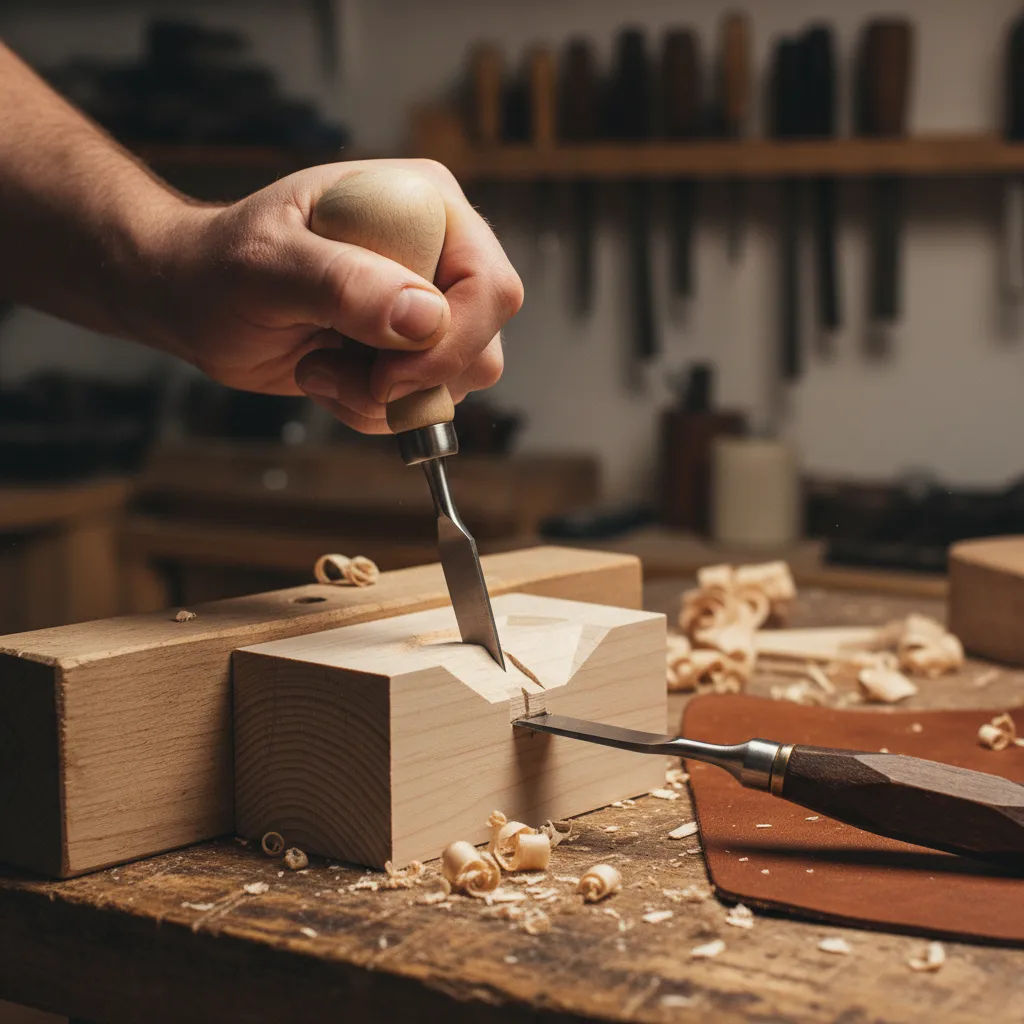
Most geometric stamp designs rely on a V tool for straight lines and angles, a small U gouge for dots and rounded grooves, and a shallow gouge for clearing the spaces between motifs. A V tool with a sharper angle, around 45 degrees, cuts narrow, deep lines that print cleanly. A wider angle, closer to 60 or 90 degrees, cuts broader lines that tolerate more ink. Compare both if your patterns include thick borders and fine hatching in the same design.
Small U gouges in different widths let you create circles, dots and scalloped edges by rotating the tool or pressing it straight down. Shallow gouges finish the job by clearing the background so it does not pick up ink. Because stamps are small, you rarely need wide tools. Four or five narrow profiles will cover most geometric designs.
Why Handle Shape Matters for Stamp Work
Stamp carving involves many short, repeated cuts, often in tight patterns, so grip fatigue is a real concern. Mushroom handles fill the palm and spread pressure, which suits long sessions on harder woods. Octagonal or faceted handles resist rolling on the bench and give the fingers clear reference points, helpful when you need to keep a V tool exactly upright. Pear-shaped handles sit between the two, offering leverage without bulk. Try holding each shape for a few minutes, not just a few seconds, before forming an opinion.
Hand size changes the answer. Someone with large hands may find small mushroom handles cramped, while someone with smaller hands may struggle to control a bulky palm tool. Comfort is personal, and there is no shame in choosing a handle that looks unusual if it feels right. A comfortable grip makes precise patterns far easier to achieve.
Wood Choices for Stamp Blocks
Traditional hand stamps are often carved in fine-grained hardwoods because they hold sharp edges through repeated printing. Lime and pear are approachable choices with even grain. Harder woods last longer but demand sturdier edges and more effort. Some makers mount a carved block of softer material onto a wooden handle, combining easy cutting with a pleasant grip for stamping. Think about how many prints you expect each stamp to make, then choose wood and tools to match.
For fabric printing, stamps need deep, clean cuts so that thick textile ink does not fill the recesses. For paper, slightly shallower cuts work well. If you plan to do both, prioritise depth and edge crispness, and choose a V tool that holds its angle well under pressure.
Using a Bench Hook and Simple Jigs
Small blocks slide around, so a bench hook with a lip on each side keeps the work steady and protects your fingers. Some makers add a non-slip mat underneath. For repeating patterns, a simple wooden jig that holds the block at a fixed angle helps you cut lines parallel to each other. These accessories are worth looking at when you browse, because a well-held block lets a modest tool perform far better.
Carving Repeats That Line Up
Stamps used for fabric often need to repeat seamlessly across a length of cloth, so the edges of the design must meet neatly when the block is turned or shifted. Draw the pattern on paper first and test the repeat by tracing it several times side by side. Then mark registration notches on the block edges with a small V tool. Clean, square edges and consistent line depth matter far more here than fancy profiles, and a reliable V tool and a steady bench hook do most of the work.
Sharpening for Crisp Lines
A dull V tool crushes the fibres at the bottom of a line instead of slicing them, which leaves fuzzy edges in the print. Honing both inside faces of a V tool takes practice, and a shaped slip stone or a folded leather strop helps a great deal. Small U gouges need a rounded slip that fits their inner curve. Before choosing a profile, ask yourself whether you are ready to maintain it. A simpler V tool with an angle you can hone comfortably may serve you better than an exotic one you avoid sharpening.
Exploring Brixton With Patterns in Mind
Brixton's covered arcades and busy streets are full of visual references for stamp designs. Fabric stalls, tiled shopfronts, painted railings and mural details all hold geometric motifs worth sketching. Karpo APP can suggest nearby art supply shops, maker spaces and craft spots wherever you are in the neighbourhood. You pick which suggestions to look at and how to move between them, so the afternoon stays your own.
Carry a small notebook with a grid page and quickly translate interesting patterns into simple line drawings. When you later compare tools, check each motif against the profiles you are considering. A pattern of triangles needs a reliable V tool, while a pattern of dots calls for small U gouges. That practical test cuts through any uncertainty, and it also shows which motifs are too complex for a small block and should be simplified before you carve.
A Compact Kit for Stamp Makers
A focused stamp kit might include a sharp-angled V tool, a broader V tool, two small U gouges in different widths, and one shallow gouge for clearing. Pair them with a bench hook, a strop and a few practice blocks. That kit can produce a wide range of geometric designs, from simple stripes to intricate tessellations, without overwhelming a beginner.
A straightforward warning: skip the large sweeps and wide clearing gouges that often appear in starter sets. On stamp blocks they are rarely needed and can crowd your bench. Put that effort into the handle shapes and narrow profiles you will use every day, and let your patterns grow from there.
Testing Before You Commit
If a maker space or supplier allows, carve a tiny test pattern on an offcut and press it onto scrap paper with a little ink. The print reveals everything: whether the lines are crisp, whether the dots are round, whether the background is clean. That quick test is worth more than any description, and it gives you confidence that the profiles you choose will carry your patterns from sketchbook to finished print.
Ask Karpo for more information.
Keep reading
- Shoreditch Comic Shop Crawl Planner: Murals to Manga
 Bermondsey Comic Shop Crawl Planner: Zines Under the Arches
 Clapham Comic Shop Crawl Planner: Charity Shelves and Common