 Greenwich Watercolour Mops Quill Brush Picker: Wet Skies
Hidden Gems & Odd Finds
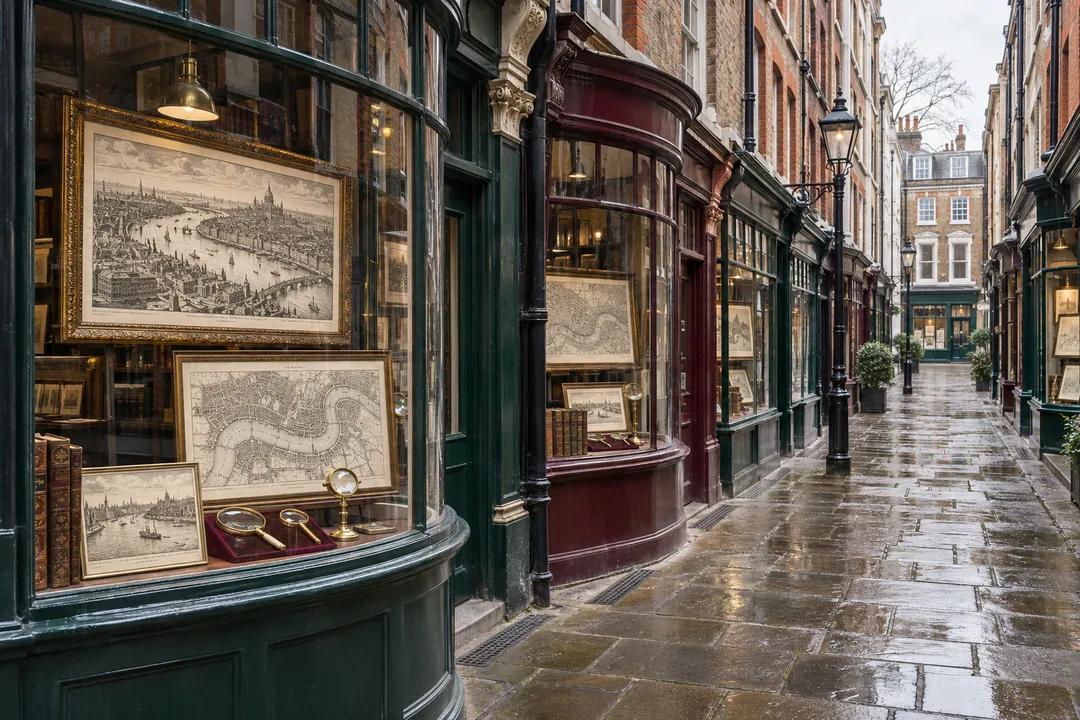
Cecil Court Map Print Shop Browsing Guide: Victorian Sheets
Explore Cecil Court map dealers between Charing Cross Road and St Martin's Lane with free entry. Compare copperplate parish sheets by paper grain and folds.
Two cousins hunting a housewarming gift for a relative who just moved into a converted warehouse near the Thames turn off the traffic of Charing Cross Road into the flagstone quiet of Cecil Court. This pedestrian cut-through toward St Martin's Lane acts as a natural starting point for a map print shop browsing guide because half a dozen bow-fronted Victorian windows display engraved ward plans, theatrical topography, and hand-coloured county sheets side by side. Before stepping over a brass threshold, the pair stand at the glass to settle on a shared target: an original sheet showing the old bends of the river and the vanished docks around Wapping rather than a glossy modern poster.
Starting at the Bow Windows Before Opening the Plan Chests
Window-shopping along the pedestrian court lets you separate general antiquarian booksellers from specialist cartographic dealers without pulling a single drawer. Look at how each display is arranged: one bay hangs large folding Victorian railway surveys backed onto linen, while the next window stacks smaller copperplate views of London squares taken from eighteenth-century histories. Taking five minutes on the flagstones to pick two specific windows keeps your visit focused and prevents drawer fatigue once you step inside.
When you enter a narrow ground-floor gallery, greet the dealer at the desk and state the exact geographic boundary and wall space you are working with. Saying that you need a horizontal river view between Blackfriars and Rotherhithe for a narrow hallway chimney breast gives the specialist enough detail to point you straight to the right folio stand. Dealers in these compact West End rooms know their stock by parish, surveyor, and engraver, so a clear geographical brief saves twenty minutes of aimless flipping.
Keep wet umbrellas in the brass stand by the door and sling canvas totes or backpacks off your shoulders before approaching the wooden plan chests. The aisle between the central folio cradle and the wall cabinets is barely wide enough for two people to pass, and a swinging bag strap can easily catch the projecting corner of an open cardboard solander box.
Reading Copperplate Impression Quality and Centrefold Paper Grain
Most loose maps displayed in Cecil Court sit inside clear archival polyester sleeves with a stiff acid-free backing board, allowing you to lift and tilt each sheet toward the window light without touching the rag paper. When comparing two impressions of the same London parish, examine the fine hachure lines along the riverbanks and the tiny lettering inside church courtyards under a pocket loupe. Crisp, dark ink lines with a faint raised ridge on the paper surface indicate an early pull from the copper plate before the metal wore down.
Every atlas map once bound into a heavy volume carries a vertical centrefold down the middle, and checking the integrity of that crease is the single most important step before choosing a sheet. Ask the dealer whether you may view the reverse side of the map outside its sleeve on the baize-covered table. Old archival tissue repairs along the lower margin or small spots of pale foxing are common in working historical sheets and rarely show once matted, whereas brittle brown paper along the central crease will need professional conservation.
Understand the difference between original outline hand-colouring and later decorative washes. Early colourists often traced only the ward boundaries or park perimeters in muted verdigris green, ochre, and rose madder so the engraved street names remained legible beneath. If a sheet looks flooded with bright opaque paint that obscures the engraved hatchings, pass it over in favour of an uncoloured crisp impression or a period boundary wash.
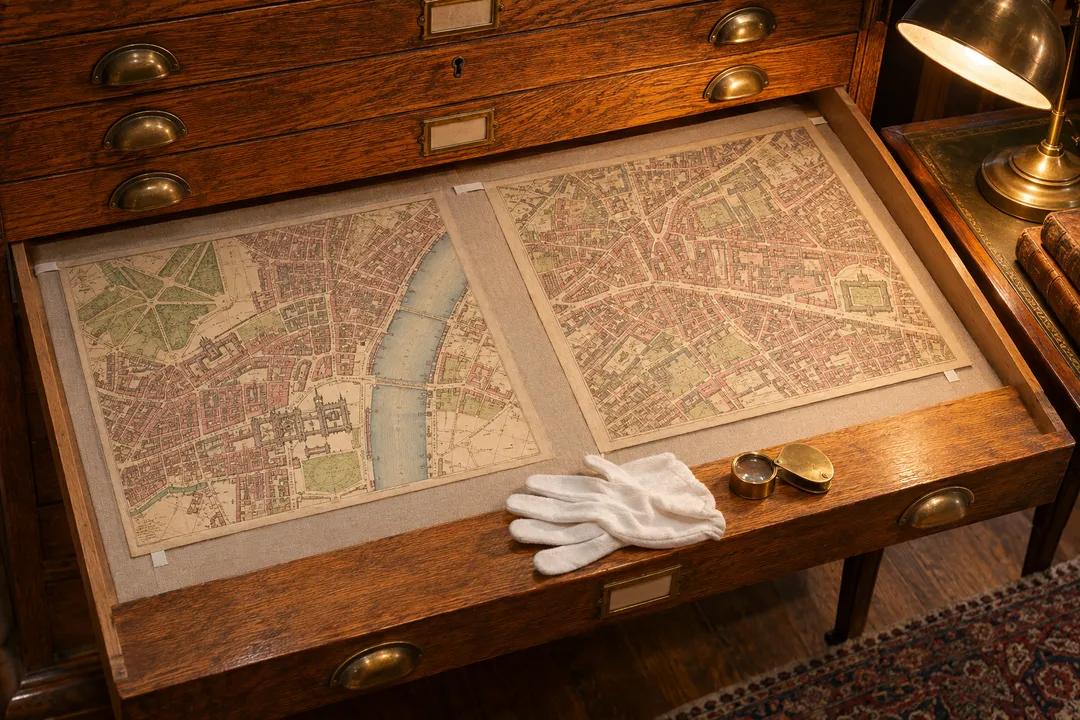
Choosing Between Loose Sheets, Matted Prints, and Linen Folding Maps
If you are buying for someone else or travelling home on the Underground, decide early whether to take a print in a bevel-cut window mount or rolled inside a heavy cardboard tube. Mounted prints protect the corners during transit and slide straight into standard frames, though a wide mount board can be awkward to shield if a sudden West End rain shower blows down St Martin's Lane. Rolled sheets fit neatly inside a waterproof tube with plastic end caps, provided the paper is supple enough to curve without stressing an old atlas fold.
Consider dissected maps mounted on linen when the recipient lacks wall space for another frame. Eighteenth- and nineteenth-century travellers carried London street plans cut into rectangular sections and glued onto cloth with a small gap between each panel so the map could fold into a marbled slipcase. Spread open on a library table or propped on a bookshelf easel, a segmented cloth map shows the tactile grid of Regency or Victorian London while folding away to the size of a slim novel.
Skip the heavily trimmed decorative title cartouches that have been cut out of damaged maps and sold as miniature curiosities; without the surrounding streets, river stairs, and parish boundaries, the piece loses the geographic story that makes old cartography rewarding to study over time. A slightly smaller complete ward plan or a single section of a multi-sheet survey gives far more lasting enjoyment on a study wall.
Pairing the Alley Browse with St Martin's Lane and Trafalgar Square
After narrowing your shortlist to two sheets at different shops, step out into St Martin's Lane for twenty minutes of fresh air before making your final choice. Walk south past the theatre porticoes and cut through the quiet paved courtyard beside St Martin-in-the-Fields, where you can sit on a stone bench and compare your notes on paper size, surveyor names, and condition. Having the real street grid of Charing Cross and Covent Garden around you makes it easy to picture how the engraved lanes on the print line up with modern pavements.
If your preferred shop is busy with another collector at the main table, detour through Goodwin's Court just across St Martin's Lane. That tiny gas-lit passage of bowed seventeenth-century windows takes only five minutes to walk and puts you right in the mood of the early Georgian street surveys you have been examining in the folio racks, before you loop back to Cecil Court to complete your purchase.
Open the Karpo APP when you want to map out nearby bookbinders, bespoke framing workshops around Covent Garden, or quiet coffee counters with tables wide enough to review your notes without jostling your cardboard map tube. The app helps you string together specialist paper dealers and calm West End courtyards into one afternoon walk so you never have to carry delicate prints through crowded tourist thoroughfares.
Ask Karpo for more information.
Keep reading
- Greenwich Watercolour Mops Quill Brush Picker: Wet Skies
 Camden Watercolour Mops Quill Brush Picker: Canal Sketch Kit
 Wood Carving Gouge Profile Picker for Brixton Stamp Blocks