 London Indoor Bouldering Centre: Weeknight Route Plan Fast
Sports Social
London Indoor Bouldering Centre: Rainy Day Climbing Plan
Plan a London indoor bouldering centre session around timing, travel, and skill level. Compare route options in Karpo APP, then keep a practical backup ready.
Rain changes an indoor climbing outing before anyone reaches the wall. Put rainfall, wet-layer needs, walking tolerance, and the group’s appetite for a longer commute into Karpo APP. Ask for a route that keeps outdoor exposure short, allows a dry change, and still leaves time to learn the space. The first answer should explain the trade-off between a closer option and a richer wall, rather than pretending weather has no effect on the evening.
Start with the weather problem
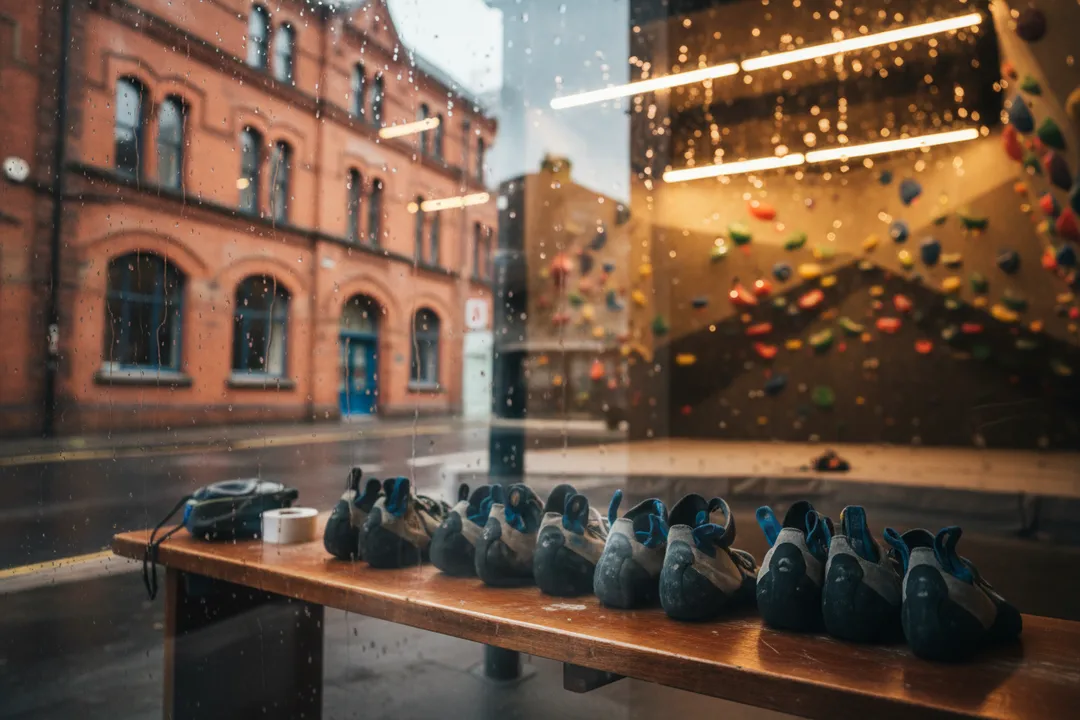
Give the plan a wet-arrival sequence: covered approach where possible, a place for coats, a bag that stays dry, and a few minutes before the first move. Add a second arrival band for a downpour. If the group reaches the neighbourhood soaked, the route can remove an optional stop and preserve the warm-up. That decision is kinder than racing onto the mat while everyone is cold.
Wet weather is a reason to slow the handoff, not to cancel every choice. Add a dry-change moment and a warm-up that starts below the group’s ambition. If the outside noise is exhausting, let the first break arrive earlier. That pacing keeps the indoor session generous even when the day outside is not.
Map the dry parts of the journey
Ask Karpo APP to separate the transit leg, exposed walking, and indoor buffer. A route with one extra transfer may be sensible if it cuts a long street crossing in heavy rain. Keep the final walk visible so the group can carry the right layer and protect shoes. The comparison should also show how much time remains for climbing after drying off, because the shortest map route may not deliver the longest useful session.
Set a weather trigger before leaving: a flooded crossing, a delayed line, or a soaked child can change the order. The fallback should remove an optional food stop or shorten the final circuit before it removes the departure margin. Ask for a second route around the same travel limit, then keep only the decision and the reason in the shared plan. Nobody needs a dozen wet-weather pins.
Use wall variety to reset attention
Indoor walls can feel different even when the outside sky is identical. Ask the tool to arrange one slab-style problem, one angle change, and one hold-shape contrast. It should describe the movement demand rather than claim a universal grade. A rainy-day session benefits from variety because the group may arrive restless from the commute. Changing angle gives tired attention a new subject without adding a new venue.
Create a dry rhythm: climb, pause, observe, then choose. Three careful attempts teach more than a string of rushed retries when fingers are still warming. Ask the planner to reserve a short break near a practical place for water and a layer adjustment. If the wall feels busy, change the sequence instead of pushing into a crowd. The plan stays useful when it responds to space without pretending to know live occupancy.
Keep wet kit out of the way
Tell Karpo APP what must stay dry: coat, backpack, spare socks, and any device used for the route card. Add a small packing note for a light layer, water, and a secure key pocket. Ask for a shoe-fit window that leaves room to remove damp socks or adjust comfort. The tool should separate venue facilities from personal preparation, because a weather plan fails when it assumes a locker or dryer that was never promised.
A mixed-weather group needs two energy tracks. One person may want a full circuit after drying; another may prefer a shorter session and a direct ride home. Keep their first problem, break, and departure point shared, then let the optional round differ. That structure avoids making the most weather-resistant person the default pace-setter. It also gives a child or a tired commuter an honest way to stop.
Choose the right pause
After the first round, make the break do one job: restore warmth, review footwork, or decide whether to continue. Ask everyone to report one physical signal and one useful observation. If the group is still cold, the next route should be simpler; if attention has settled, introduce a different wall angle. The pause should never become a second meeting about every possible destination.
Keep the neighbourhood add-on cancellable. A covered café, market, or short walk may suit a dry spell, while a direct homeward route is right if rain intensifies. Ask Karpo APP to show the distance and a time box, then delete it automatically when the departure margin narrows. A rainy-day plan succeeds when the extra chapter can vanish without damaging the main outing.
Make the return weather-proof
Enter the last train, bus, pickup, or walking deadline before choosing the final circuit. Reserve time to change out of damp layers, collect bags, and reach the exit. Ask for a finish trigger tied to weather or transport, not a vague instruction to leave early. The route can still include one satisfying final problem when the group knows exactly when the session ends.
Write the homeward fallback in one line: if the rain worsens, remove the optional stop; if a crossing closes, take the simpler transfer; if energy drops, leave after the current circuit. Read that line aloud before the last attempt. The value of the planner is a calm choice made indoors, while the storm stays outside.
Pack for the return
Before the final circuit, put damp layers and keys in the place you will use on the way out. A small packing reset prevents a frantic search at the door. Ask the tool to show the path from wall to belongings to transport, with the optional neighbourhood stop removed if the margin narrows.
The note gives the next weather decision a concrete starting point and keeps the group from repeating the same exposed walk.
Keep a clear weather note
Record which part of the journey felt exposed and which wall helped the group settle. The next rainy-day plan can use those observations to choose a shorter approach or a different arrival time. A practical note beats a generic promise that an indoor venue will solve every weather problem.
One recorded adjustment is enough to make the next stormy outing calmer and more deliberate.
Ask Karpo for more information.
Keep reading
- London Indoor Bouldering Centre: Weeknight Route Plan Fast
 London Indoor Bouldering Centre: Beginner Walls Shoe Hire
 London Indoor Bouldering Centre: Free First Visit Route Plan