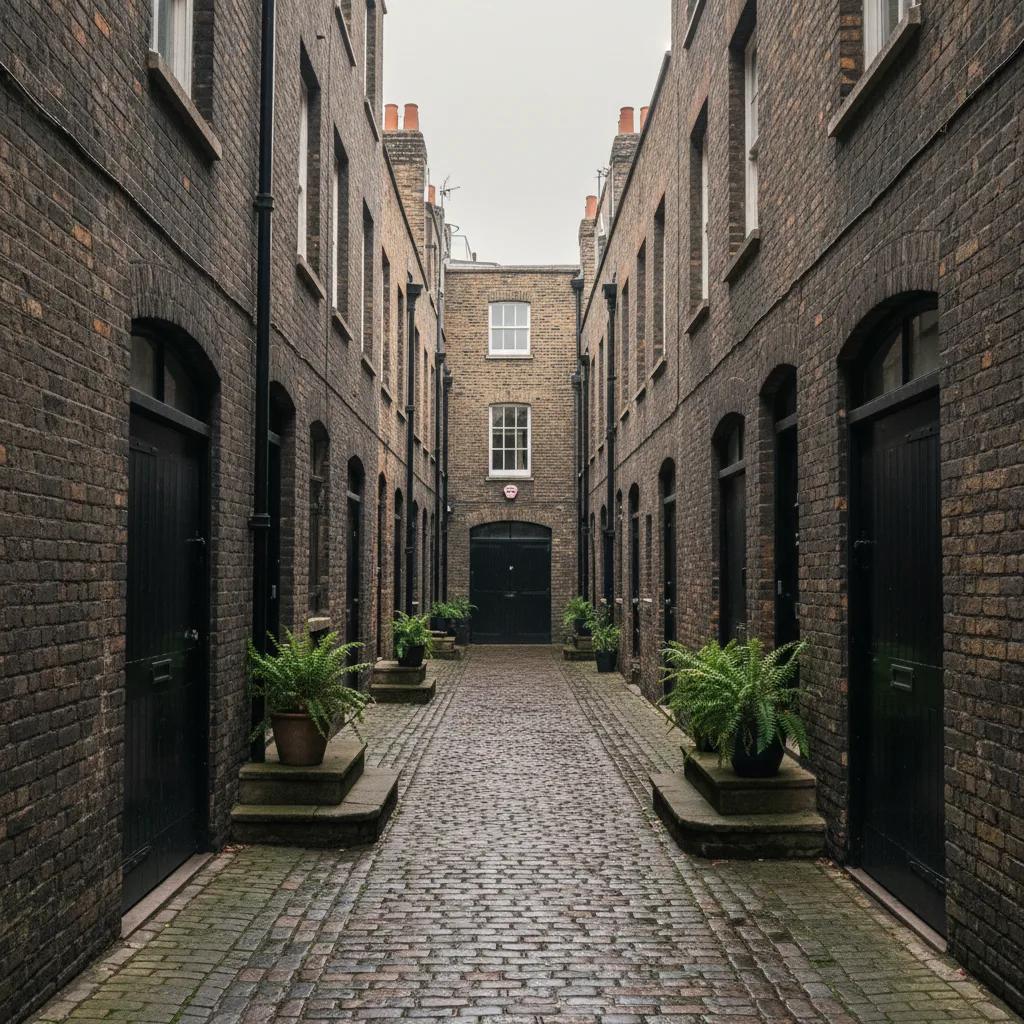
 Bloomsbury Mews Walk Planner: Literary Brick Passages
Neighborhood Guides
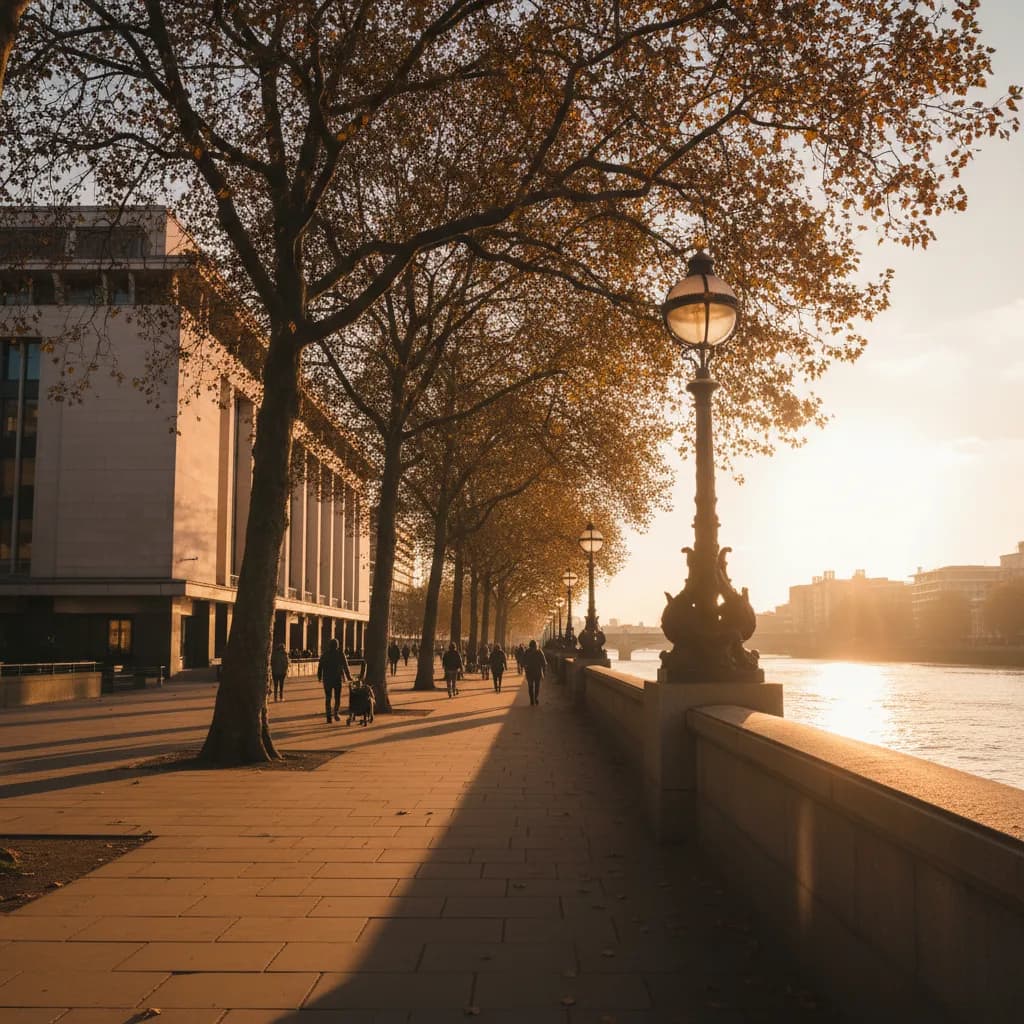
South Bank Historic Neighborhood Photo Walk at Sunset, Free
The South Bank historic neighborhood photo walk is free along the Queen's Walk; start at 1820s Roupell Street mid-afternoon and reach the OXO Tower by sunset.
The South Bank historic neighborhood photo walk costs nothing and follows the Queen's Walk, the riverside promenade that hugs the south bank of the Thames. Start around three hours before sunset among the 1820s artisans' cottages of Roupell Street behind Waterloo station, cross into the 1951 Festival of Britain landscape, and finish facing the OXO Tower's lettered windows as the light turns gold. The loop is roughly three kilometres and almost entirely flat.
Roupell Street: Lambeth Marsh's Workers' Cottages
Begin a few minutes' walk east of Waterloo station on Roupell Street, part of an estate developed by John Palmer Roupell, a gold refiner, between the 1820s and 1840s on former marshland. The modest two-storey terraces were homes for joiners, metal workers and other skilled tradespeople, which is why they have no front gardens. The estate became a conservation area in 1976, and its original details survive remarkably intact.

The power of Roupell Street is repetition. Stand in the centre of the road at one end and use a 50mm lens to compress the long, uniform terrace into a rhythm of identical doors, sash windows and chimney pots. Then walk the parallel streets nearby, where corner buildings break the pattern. Film and television crews regularly use these streets for period scenes, so if you find cameras set up, simply move on to the next block.
The Cut and the Old Vic
Walk north to The Cut, where the Old Vic theatre has stood since it opened in 1818 as the Royal Coburg Theatre. Its classical facade, at the junction with Waterloo Road, photographs well from the opposite pavement in late afternoon, when the western sun warms the stone. Include a red bus or a stream of commuters for a sense of place, since this crossing has been one of the busiest in Lambeth for two centuries.
Festival of Britain Concrete Along the Queen's Walk
From the Old Vic, head towards the river and the Royal Festival Hall, built for the 1951 Festival of Britain and the only major permanent building from that festival. Its long, light facade facing the Thames suits wide frames from the promenade, with the river wall's cast-iron lamp posts leading into the picture. Inside the public foyers, the generous glazing lets you frame the river through the building itself, a classic South Bank composition.
Continue east past Hayward Gallery and Queen Elizabeth Hall, whose rugged board-marked concrete records the grain of the timber moulds used in the 1960s. Beneath Queen Elizabeth Hall, the undercroft has been used by skateboarders since the 1970s and was saved from redevelopment after a community campaign in 2014. Shoot from the railings without crowding the skaters; a slow shutter speed of around 1/30 turns them into graceful blurs against the graffiti.
Waterloo Bridge and the National Theatre
Waterloo Bridge, completed during the Second World War and opened in 1945, was built largely by women workers and is sometimes called the Ladies' Bridge. From its western steps you get the classic upriver view towards Westminster, while the eastern side looks toward St Paul's Cathedral. Beneath the bridge, the long tables of the second-hand book market create a cosy, sheltered subject when the wind picks up on the riverside.
Just east of the bridge sits the National Theatre, designed by Denys Lasdun and opened in 1976. Its stacked horizontal terraces and towers are easiest to read from slightly downstream, where the layers stack like geological strata. The building can look grey and heavy in flat midday light, so this is a stop that benefits from waiting: the low sun at the end of the day picks out every concrete edge in amber relief.
Gabriel's Wharf and the OXO Tower at Golden Hour
Finish at Gabriel's Wharf and the OXO Tower. The wharf takes its name from the Gabriel family, whose timber business shaped this stretch of the riverbank for generations. Next door, the OXO Tower began as a power station that the Liebig Extract of Meat Company converted in the late 1920s; when the authorities refused an illuminated advertisement, architect Albert Moore spelled out OXO in the shape of the tower's windows instead.
Frame the tower from the river wall to the west so the window lettering is readable and the Thames fills the lower third, then step back into the adjacent Bernie Spain Gardens for a softer, tree-framed version. Honest advice: skip the obligatory selfie in front of the London Eye at the start of the route. The queue and crowds will eat your golden hour, and the river views further east are calmer and more distinctive.
Weather, Crowds and an Alternative Ending
On weekend afternoons the Queen's Walk becomes extremely busy, especially around the Festival Hall and the book market, so weekdays are noticeably easier for clean frames. If the sunset is clouded out, turn the walk into a blue-hour session instead: the Festival Hall glows from within, the lamp posts light up along the river wall, and reflections on the wet promenade can be more striking than any golden-hour shot.
A good alternative ending, if you still have energy, is to keep walking east past Blackfriars Bridge to Bankside, where the former power station that now houses Tate Modern and the Millennium Bridge line up with St Paul's dome across the water. It adds about twenty minutes, keeps the river on your left, and gives you one more landmark frame as the city lights come on along the north bank.
Practical Notes for the Riverside Route
Waterloo station is the easiest starting point, and Blackfriars or Southwark are convenient at the end. The route is free, step-free for most of its length and lined with public seating. Wind off the river can be sharp in autumn and winter, so bring gloves that still let you work the camera controls. Keep tripods compact on the promenade, which is a shared path for cyclists and walkers.
If you want help timing this walk around sunset on a particular day, ask Karpo in the Karpo APP to arrange these stops around the hour you can start and the station you will arrive at. Karpo can propose the order and calmer riverside detours, while you decide how long to linger on Roupell Street and how patiently to wait for the light to reach the OXO Tower.
Ask Karpo for more information.
Keep reading
- Bloomsbury Mews Walk Planner: Literary Brick Passages
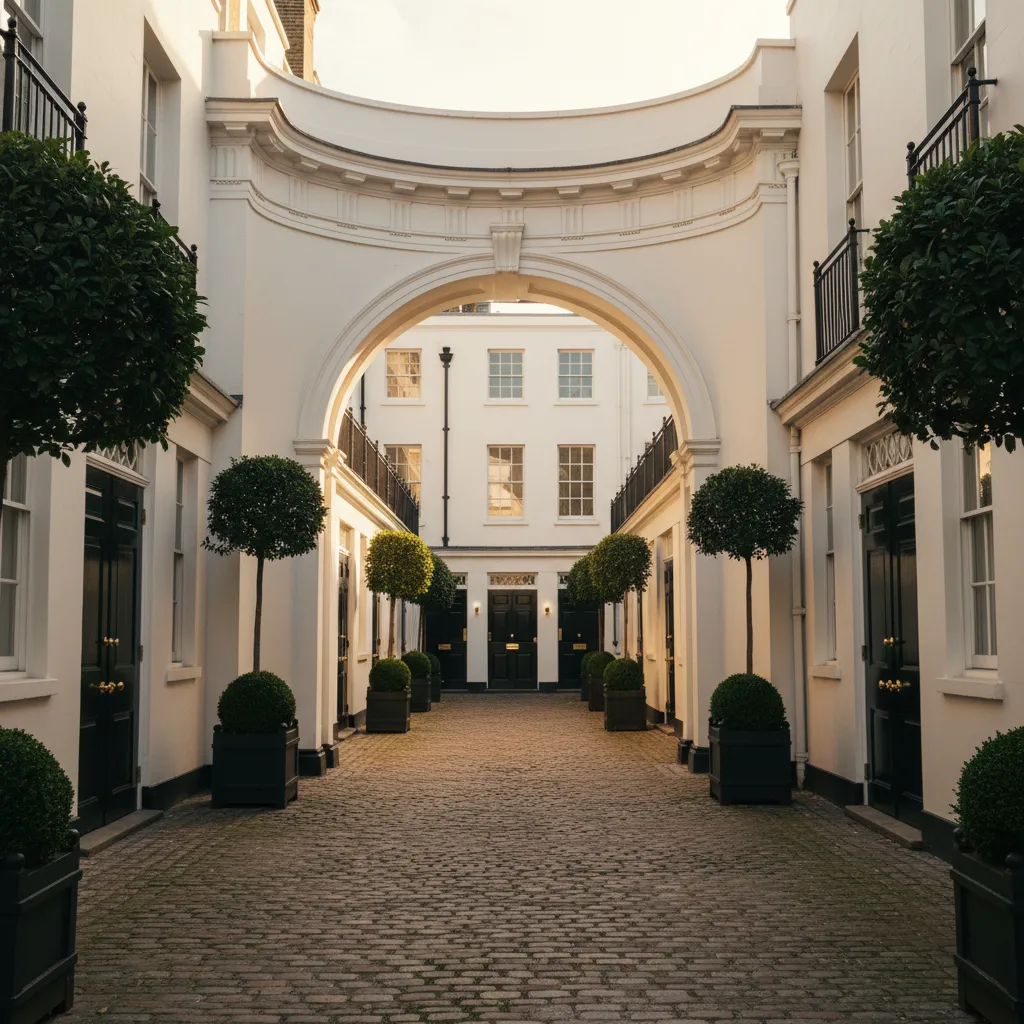 Belgravia Mews Walk Planner: Stucco Arches and Alleys
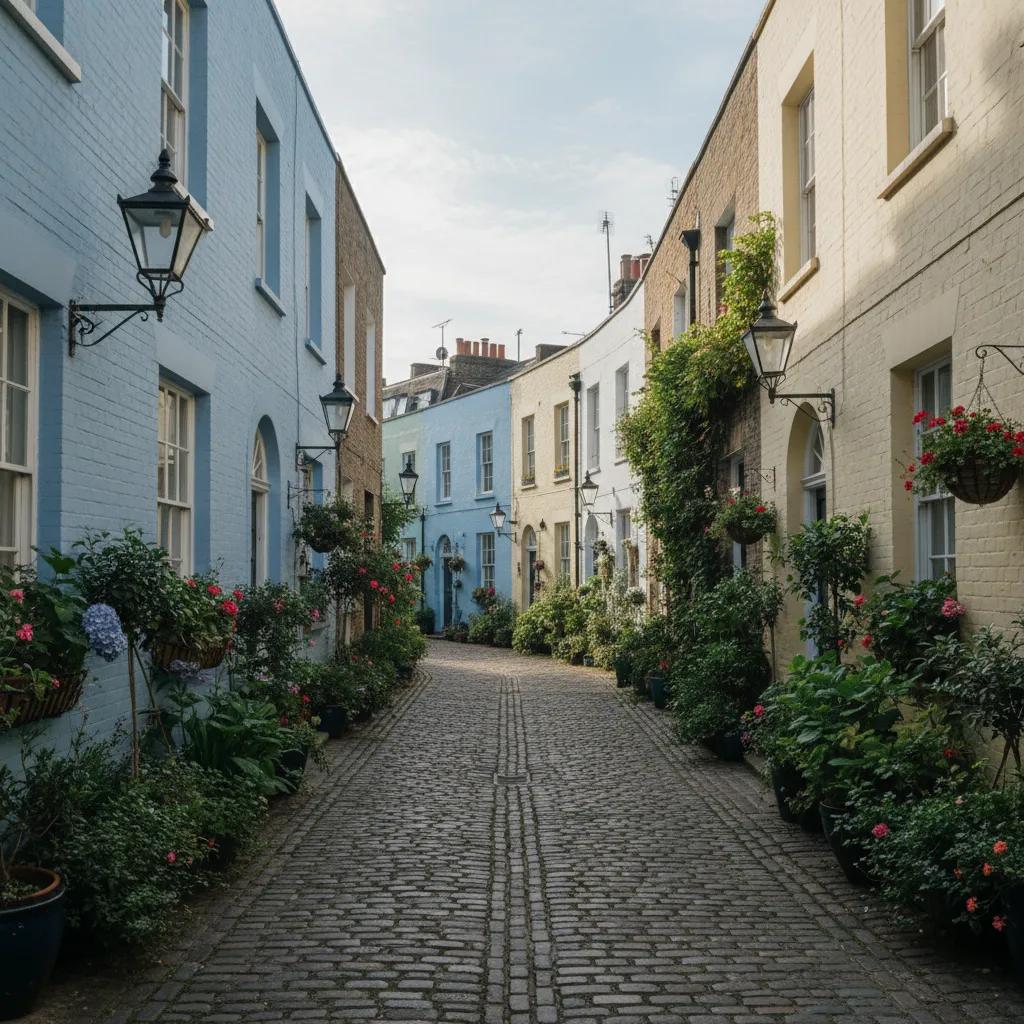 Notting Hill Mews Walk Planner: Quiet Painted Lanes