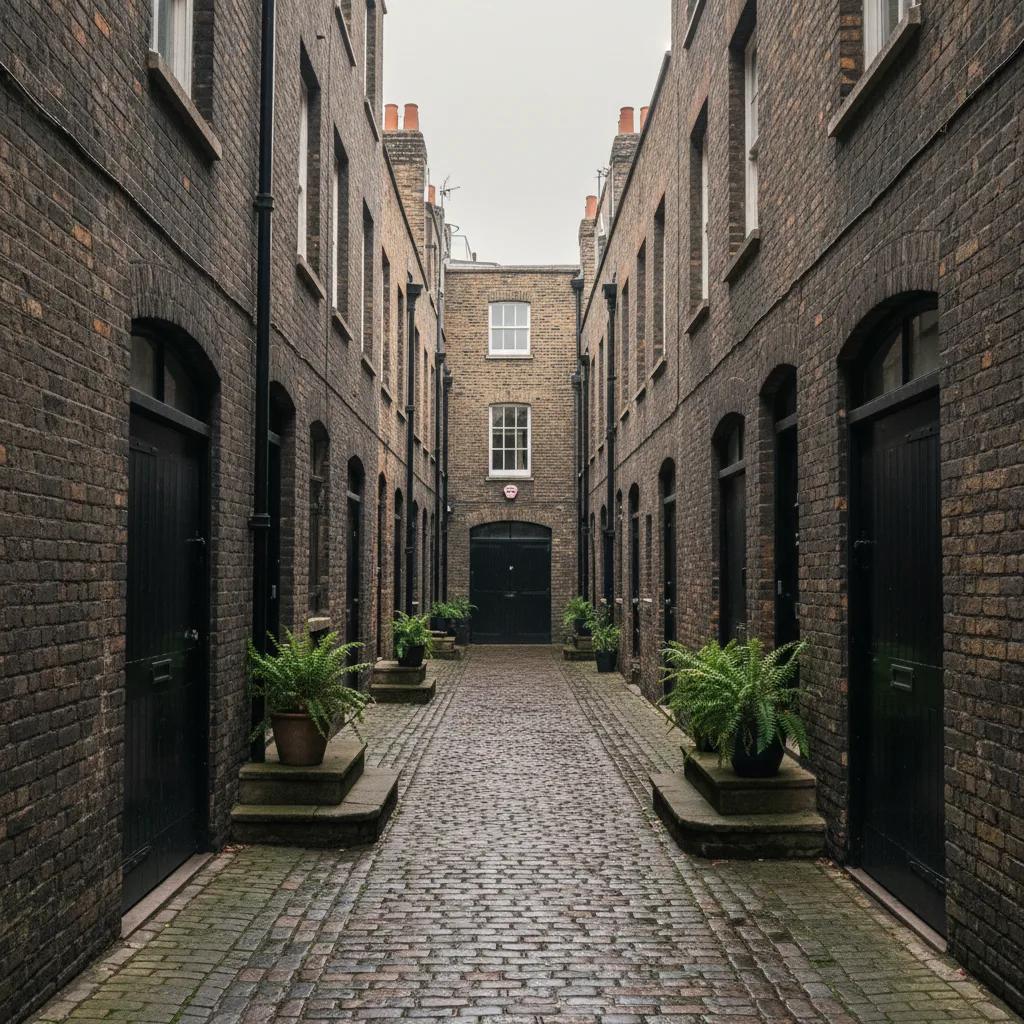
 Bloomsbury Mews Walk Planner: Literary Brick Passages
Neighborhood Guides
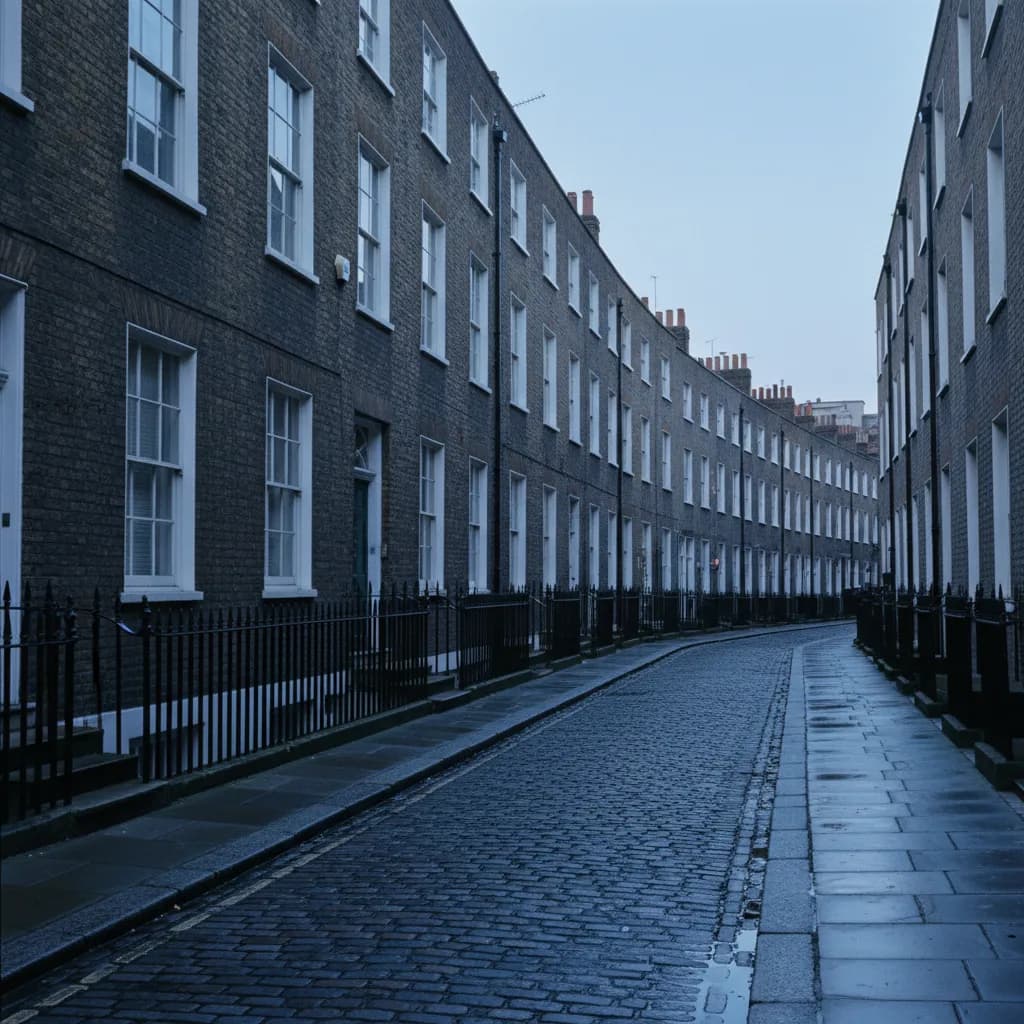
Soho Historic Neighborhood Photo Walk: 1720s Doors at Dawn
A Soho historic neighborhood photo walk is free and calmest before 9am, when Meard Street's 1720s doors and Broadwick Street's pump stand empty of crowds.
A Soho historic neighborhood photo walk costs nothing, fits inside 90 minutes, and rewards anyone who starts before 9am, when Meard Street still belongs to delivery vans and the odd dog walker. Within a few hundred metres you can frame early Georgian brick terraces from the 1720s, the replica water pump that marks the 1854 cholera outbreak, and the blue plaques of Dean Street and Frith Street, all on public pavements that never close.
Why Soho Rewards a Camera Before Breakfast
Soho is one of the densest pieces of street history in London, yet by late morning it fills with shoppers, couriers and lunch queues that make clean architectural frames almost impossible. Early light is the photographer's advantage here. The streets run narrow and mostly east to west, so low sun skims the brick fronts of Meard Street and Broadwick Street rather than flooding them, and shopfront shutters are still down, which strips modern signage out of your compositions.
The route below is a loop rather than a straight line, so you finish close to where you started near Tottenham Court Road or Oxford Circus stations. It suits a single 35mm or 50mm prime, a phone in manual mode, or a compact with a quiet shutter. You will not need a tripod, and on narrow residential lanes you should not set one up anyway; neighbours open their doors straight onto the pavement.
Meard Street: The Rare 1720s Terrace
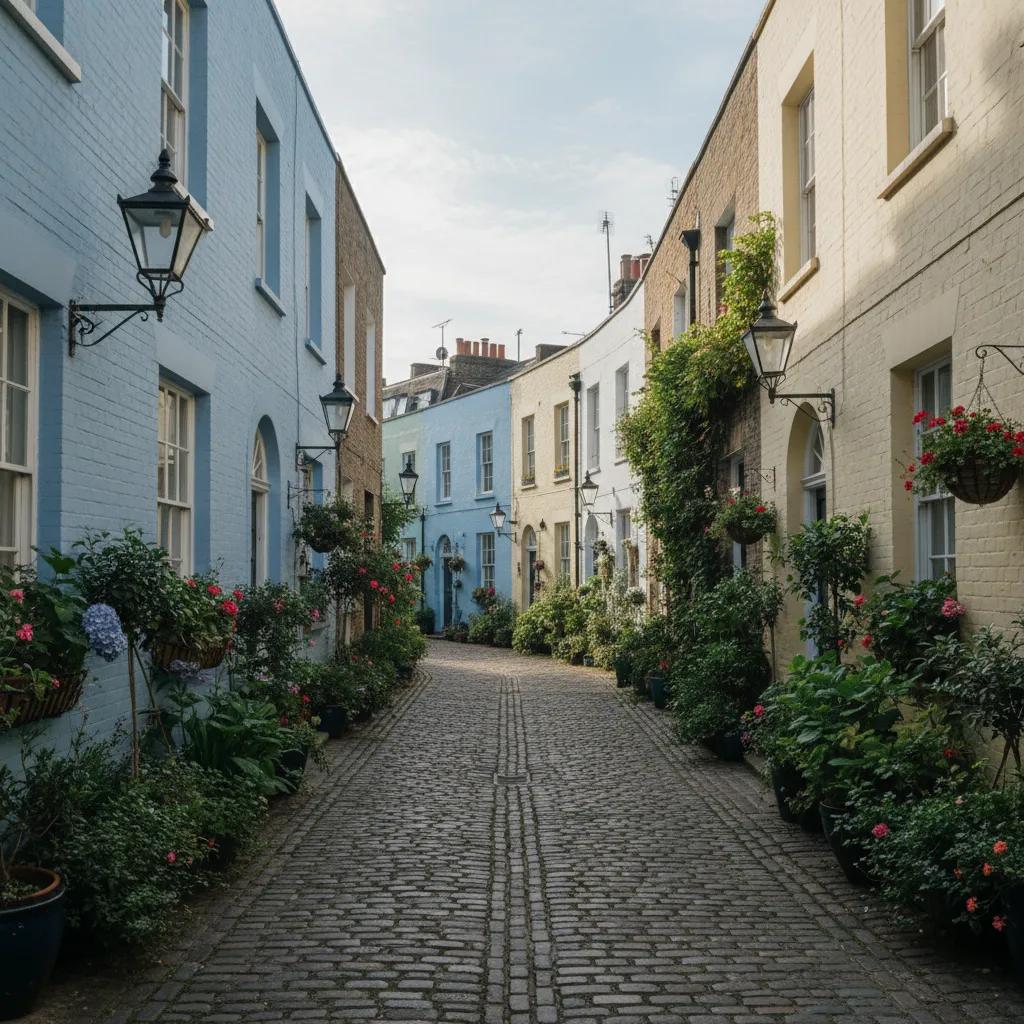
Start at Meard Street, the short lane that links Wardour Street and Dean Street. It was developed by John Meard the younger, a carpenter who had worked on the rebuilding of St Paul's Cathedral, in two phases: the western half in 1722 and the eastern half in 1731 to 1732. Very little was built in London during the recession of the 1720s, which makes this run of houses unusually rare, and the dark brick, carved doorcases and old shutters show it.
Shoot the street twice. First, stand at the Wardour Street end and use the long, gently bending line of doors as a leading line, letting the painted panels repeat into the distance. Then move in close for detail: fanlights, worn stone steps, iron boot scrapers and hand-painted house numbers. Overcast mornings flatten the brick nicely; on bright days, wait for a cloud rather than fighting the harsh contrast between sunny and shaded doorways.
Broadwick Street and the Story of One Water Pump
Walk north to Broadwick Street, where a black replica pump without a handle stands at the corner near the pub named after Dr John Snow. In 1854 Snow traced a deadly cholera outbreak to the public pump on what was then Broad Street and persuaded the parish to remove its handle, a moment often cited as a founding story of modern epidemiology. The pink granite kerbstone nearby marks the site of the original pump.
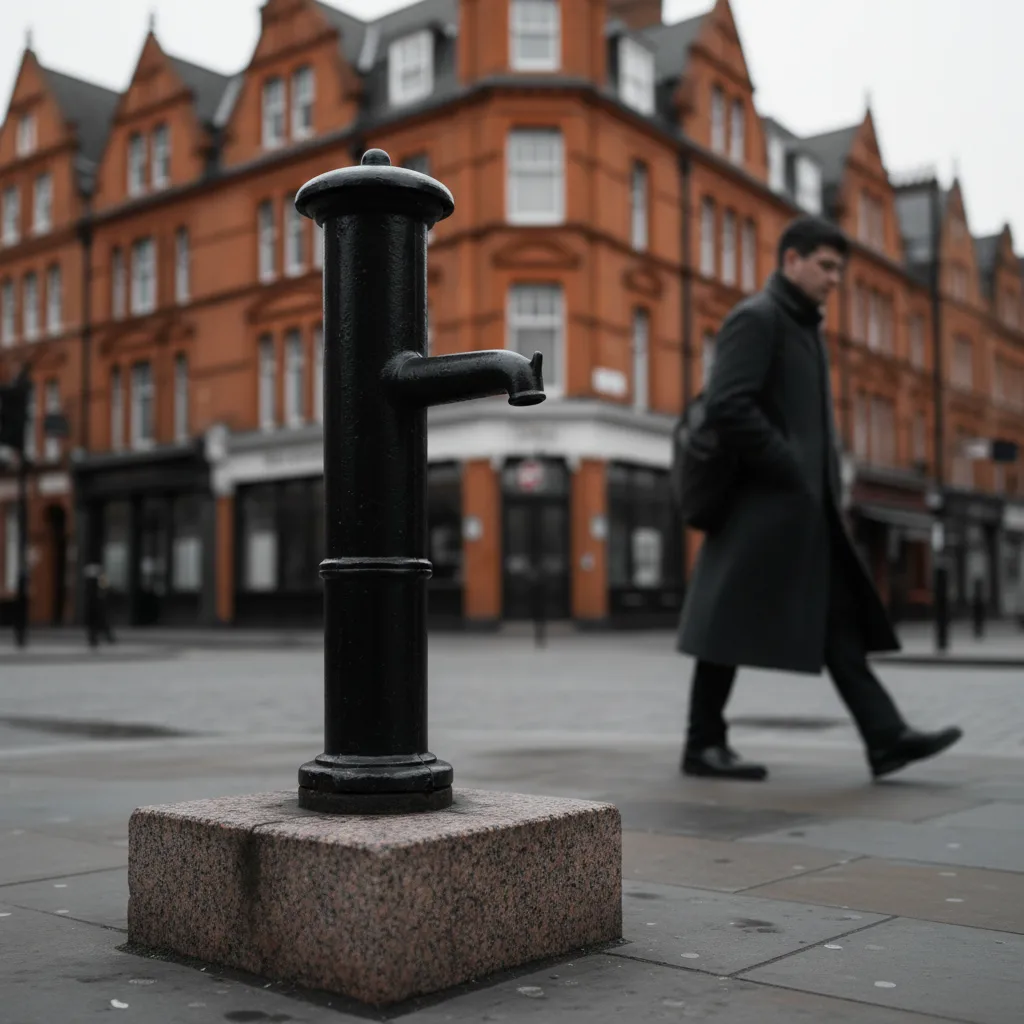
This is the frame that tells the walk's story, so give it time. A low angle from the kerb places the handleless pump against the sky and the Victorian corner building, which makes the missing handle obvious. A wider frame from across the street shows how ordinary the spot looks today, with cyclists and office workers passing by. That contrast between a quiet corner and its outsized history is the emotional centre of a Soho photo set.
Blue Plaques on Dean Street and Frith Street
Soho's blue plaques give you a second layer of subjects. At 28 Dean Street a plaque records that Karl Marx lived there from 1851 to 1856, in cramped rooms above what is now a restaurant. On Frith Street, number 20 marks the stay of the young Mozart in 1764 and 1765, while 22 Frith Street notes where John Logie Baird first demonstrated television in 1926. Three plaques within two short streets make a tidy mini-series.
Plaques photograph badly straight on and from a distance, because the enamel glare and modern shopfronts below them compete for attention. Step back to the far kerb, frame the plaque with the window or door it belongs to, and expose for the brick rather than the bright blue disc. A useful honest verdict: skip shooting every plaque you find. Choose two or three whose stories you can caption, and the series reads far stronger online.
Soho Square, St Anne's Tower and the Quiet Edges
From Frith Street, walk north into Soho Square, laid out in the 1680s. The weathered statue of Charles II by Caius Gabriel Cibber and the half-timbered hut at the centre are the classic subjects, but the more interesting frames come from the benches facing Greek Street, where the mid-18th-century House of St Barnabas sits at number 1. In autumn, fallen plane leaves on the lawn add texture to wide shots.
Finish by doubling back down Wardour Street to the tower of St Anne's Church. The church itself was largely destroyed in the Blitz, but the early 19th-century tower survived, and its unusual barrel-shaped clock stage makes a striking silhouette against a pale sky. Shoot it from the small garden on Wardour Street, where the churchyard sits noticeably higher than the street because of centuries of burials, a detail many walkers never notice.
Timing, Weather and a Plan B
Weekday mornings between 7:30 and 9am are the sweet spot; Sunday mornings work too, though Saturday nights leave more litter on the pavements until the street cleaners pass. If rain sets in, do not abandon the walk. Wet flagstones on Meard Street reflect doors and lamps beautifully, and the covered corners of Broadwick Street give you shelter while you wait for people with umbrellas to cross your frame.
If the light is dull and the streets feel busy by the time you reach Soho Square, switch subjects rather than forcing it. Head a short walk east to the Seven Dials junction for its sundial pillar, or west to the side courts off Carnaby Street, then return to Meard Street another day at first light. Soho is compact enough to split across two short sessions, and the second visit usually produces sharper, calmer frames.
Practical Notes for Photographing Soho Respectfully
Meard Street and the lanes around it are lived-in homes, so keep doorways clear, do not climb steps for a better angle, and ask before photographing anyone recognisable at close range. The whole loop is free and runs on public pavements. Comfortable shoes matter more than a heavy bag; Soho's kerbs are high and its pavements narrow. Tottenham Court Road and Oxford Circus stations are the most convenient start and finish points.
If you want help shaping the morning, ask Karpo in the Karpo APP to arrange these stops into a loop that matches the time you have, or to suggest a quieter neighbouring street to add when one corner feels crowded. It works as a planning companion for the route and the order of stops, while the light, timing and patience in front of each Georgian door remain entirely yours.
Ask Karpo for more information.
Keep reading
- Bloomsbury Mews Walk Planner: Literary Brick Passages
 Belgravia Mews Walk Planner: Stucco Arches and Alleys
 Notting Hill Mews Walk Planner: Quiet Painted Lanes