 Bloomsbury Mews Walk Planner: Literary Brick Passages
Neighborhood Guides
Marylebone Historic Neighborhood Photo Walk: Free by 10am
Marylebone's historic neighborhood photo walk is free and follows the lost River Tyburn along Marylebone Lane to the 1817 parish church and 1889 fire station.
Marylebone Lane does not follow the grid around it because it is older than the grid: it traces the course of the River Tyburn, now buried underground, which also gave Marylebone its name. That curve is the spine of this free historic neighborhood photo walk, which links Manchester Square, the 1889 former fire station on Chiltern Street and the 1817 parish church at York Gate in about two hours, ideally starting before 10am.
Reading a Buried River on Marylebone Lane
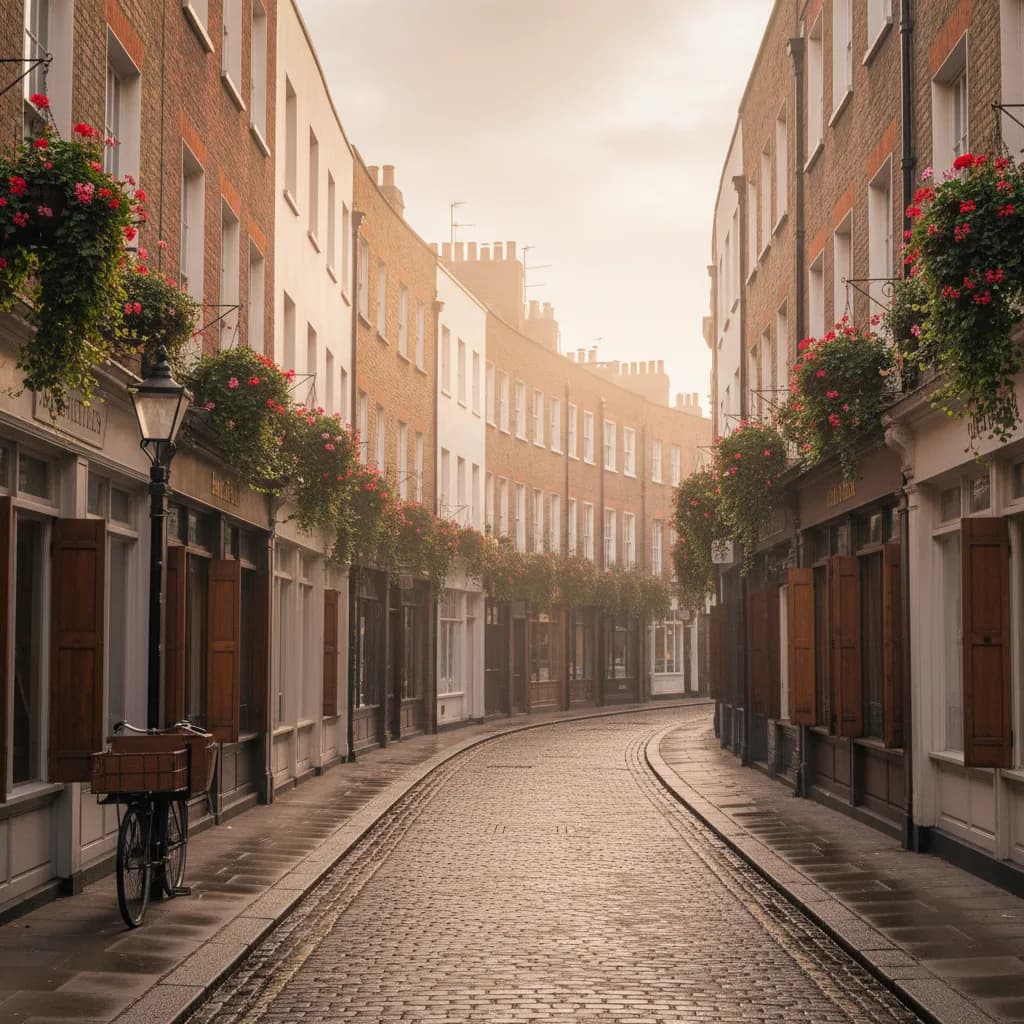
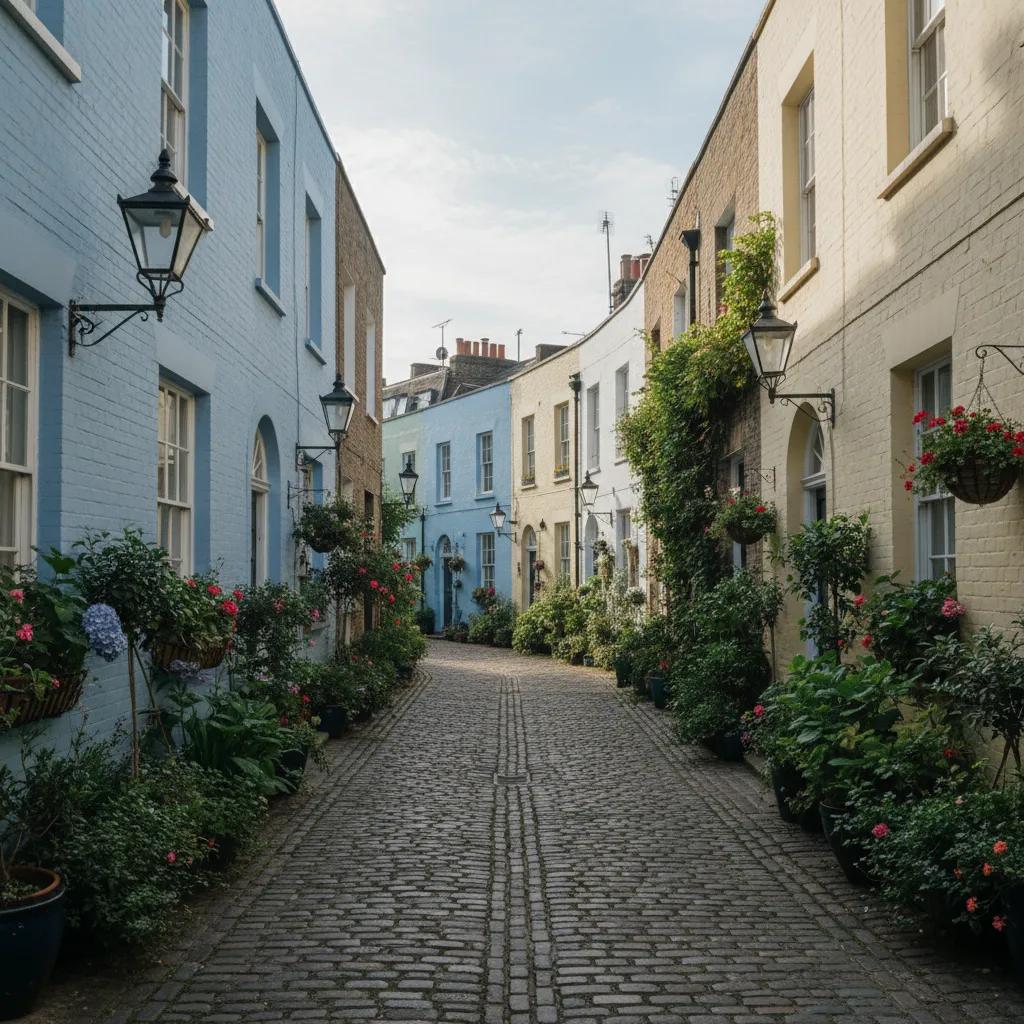
Start at the southern end of Marylebone Lane, a few minutes from Bond Street station, and walk north. Everywhere else in the area, Georgian estate planners laid out straight streets and regular squares, but this lane bends and narrows because it predates them, following the old riverbank. Photograph that contrast directly: stand where the lane meets a straight cross street and include both, so the wandering line of the lane reads clearly against the planned grid.
The buildings along the lane are a mix of modest Georgian and Victorian fronts, many with small-paned shop windows and painted fascias. Rather than shooting individual shops, look for how the curve changes the view every few metres, hiding and revealing chimney stacks, hanging baskets and church spires. A 35mm lens at waist height keeps verticals steady and gives a natural, walking-pace perspective that suits the lane's intimate scale.
Manchester Square and Hertford House
Detour west to Manchester Square, a Georgian garden square whose north side is filled by Hertford House, the former townhouse of the Marquesses of Hertford. It now houses the Wallace Collection, a national museum with free admission to its permanent collection. The private garden in the centre of the square is not open to the public, but its railings and mature trees make a strong foreground for frames of the house's long brick facade.
If the weather turns, the Wallace Collection's courtyard, covered by a glass roof, offers sheltered architectural frames under soft, even daylight; follow the gallery's own photography signs and keep flash off. A quieter honest verdict: the square looks flat at midday, so save it for the late afternoon, when sun from the west lights the facade and the railings cast long, graphic shadows.
Chiltern Street's 1889 Fire Station
From the square, walk north up to Chiltern Street, where the former Manchester Square fire station, dated 1889, still dominates the street with its red brick, steep gables and tall tower. It served as a district station supervising 18 fire stations, housing firefighters and their families on site, until it was decommissioned in 2005. The building has since been converted for hospitality, but its exterior remains one of the most photogenic in Marylebone.
Chiltern Street is narrow, so a wide lens from the opposite pavement will distort the facade unless you keep the camera level. Try a two-frame approach: one tight shot of the date stone and decorative brickwork, and one longer view down the street that shows how the station towers over its terraced neighbours. Mid-morning light reaches the eastern side of the street, softening the deep red brick.
Garden of Rest and the Marylebone High Street Village
Cut east to Marylebone High Street and find the small Garden of Rest, on the site of the earlier parish church. Charles Wesley, the hymn writer, is commemorated here with a memorial obelisk. It is a calm, shaded spot with benches, where office workers eat lunch and older residents walk their dogs. Shoot through the railings from the High Street for a framed view, or sit for a moment and photograph the play of light through the trees.
Marylebone High Street itself keeps a village feel, with its Edwardian and Victorian frontages and steady stream of local shoppers. Look up above the shop signs, where carved stone, bay windows and old painted lettering survive. Weekday mornings are calm; Saturdays get busier but still feel far gentler than Oxford Street a few minutes south, so it remains a pleasant place for slow, observational street photography.
Just before Marylebone Road, at the corner where the High Street ends, look for the stone relief on the side of the modern office building that replaced Charles Dickens's former home at 1 Devonshire Terrace, where he lived from 1839 to 1851 and wrote A Christmas Carol and David Copperfield among other works. The carved panel shows the author with characters from his books, and it photographs well in raking side light, which brings each figure forward from the stone.
St Marylebone Parish Church from York Gate
At the top of the High Street, cross Marylebone Road to St Marylebone Parish Church, designed by Thomas Hardwick and consecrated in 1817. Its grand columned portico and gilded caryatids around the tower turned a modest parish church into a landmark. The real photographic gift is the view from York Gate, the Regency entrance to Regent's Park, whose two stucco terraces frame the church portico like a theatre set.
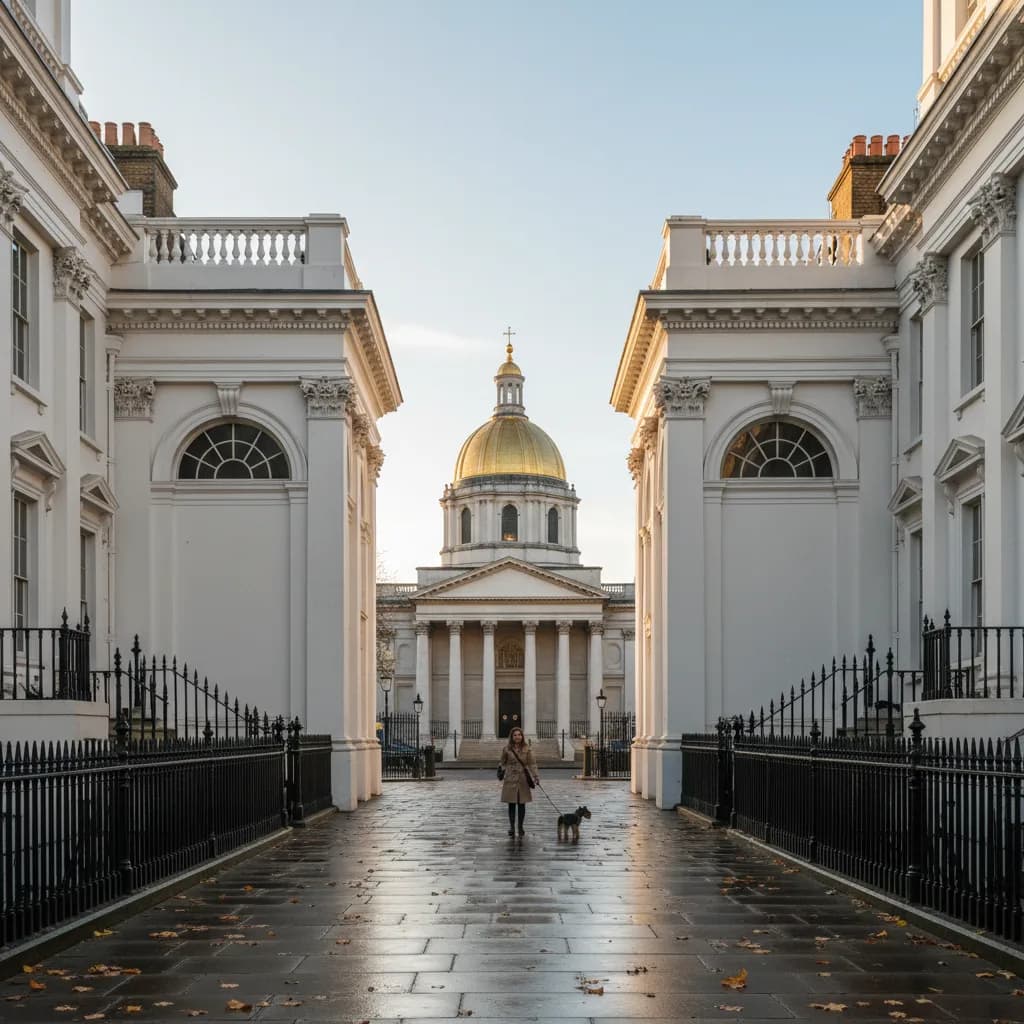
Stand at the park end of York Gate and use a 50mm or short telephoto lens to compress the terraces and church into a single symmetrical frame. Late afternoon sun lights the portico warmly, while the terraces fall gently into shade. If the road is busy, wait for a pause in the traffic on Marylebone Road; a single black cab passing through the frame can add a clear London signature.
Timing, Backup Plans and Practical Notes
The full route is around three kilometres, free, and almost entirely flat. Start at Bond Street station and finish at Baker Street or Regent's Park stations. If rain arrives, shorten the loop to Marylebone Lane, the Wallace Collection courtyard and the fire station. If you still have light at the end, walk into Regent's Park for wide views across the boating lake toward the Nash terraces.
To plan the walk around your own schedule, ask Karpo in the Karpo APP to order these stops for a morning or late afternoon start, or to suggest quieter side streets near the High Street. Karpo can help you shape the route, while you decide where the curve of the old river looks most striking and when the light finally reaches the church at York Gate.
Ask Karpo for more information.
Keep reading
- Bloomsbury Mews Walk Planner: Literary Brick Passages
 Belgravia Mews Walk Planner: Stucco Arches and Alleys
 Notting Hill Mews Walk Planner: Quiet Painted Lanes