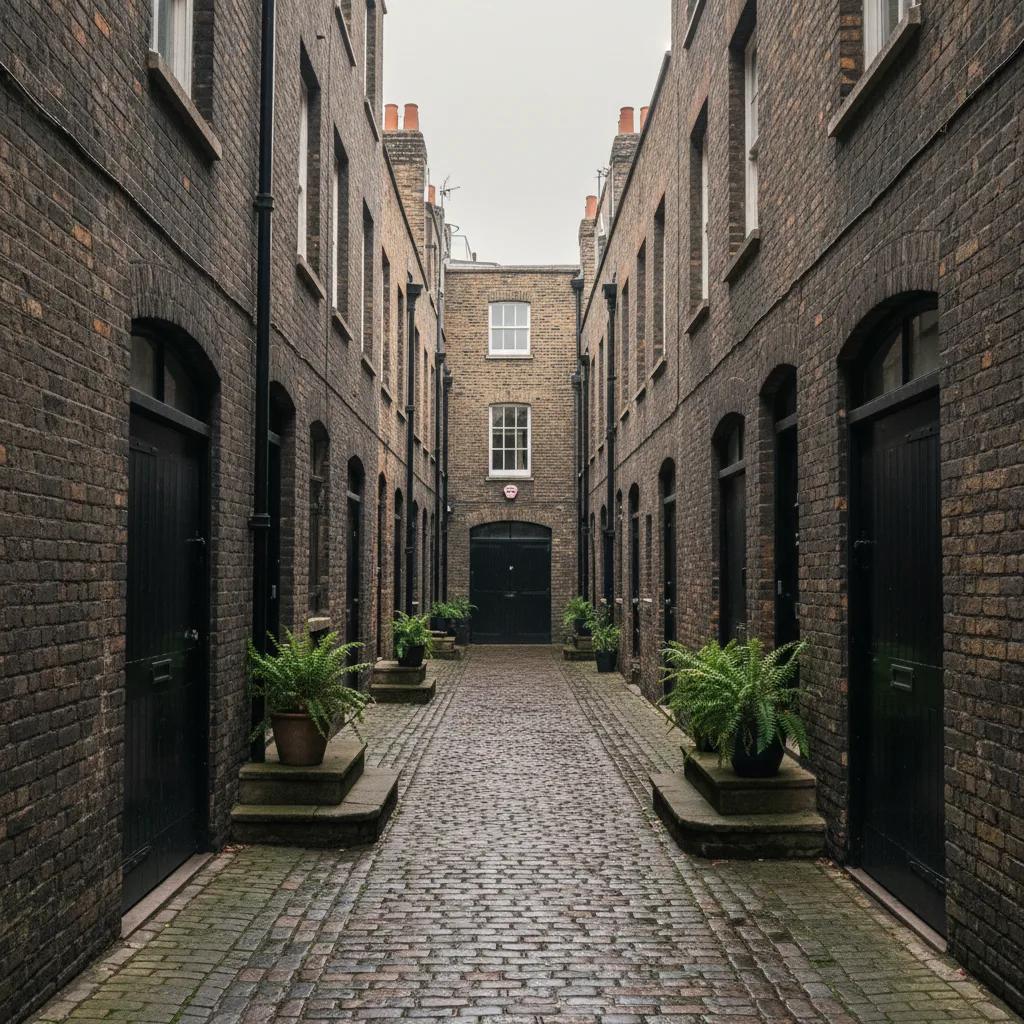
 Bloomsbury Mews Walk Planner: Literary Brick Passages
Neighborhood Guides
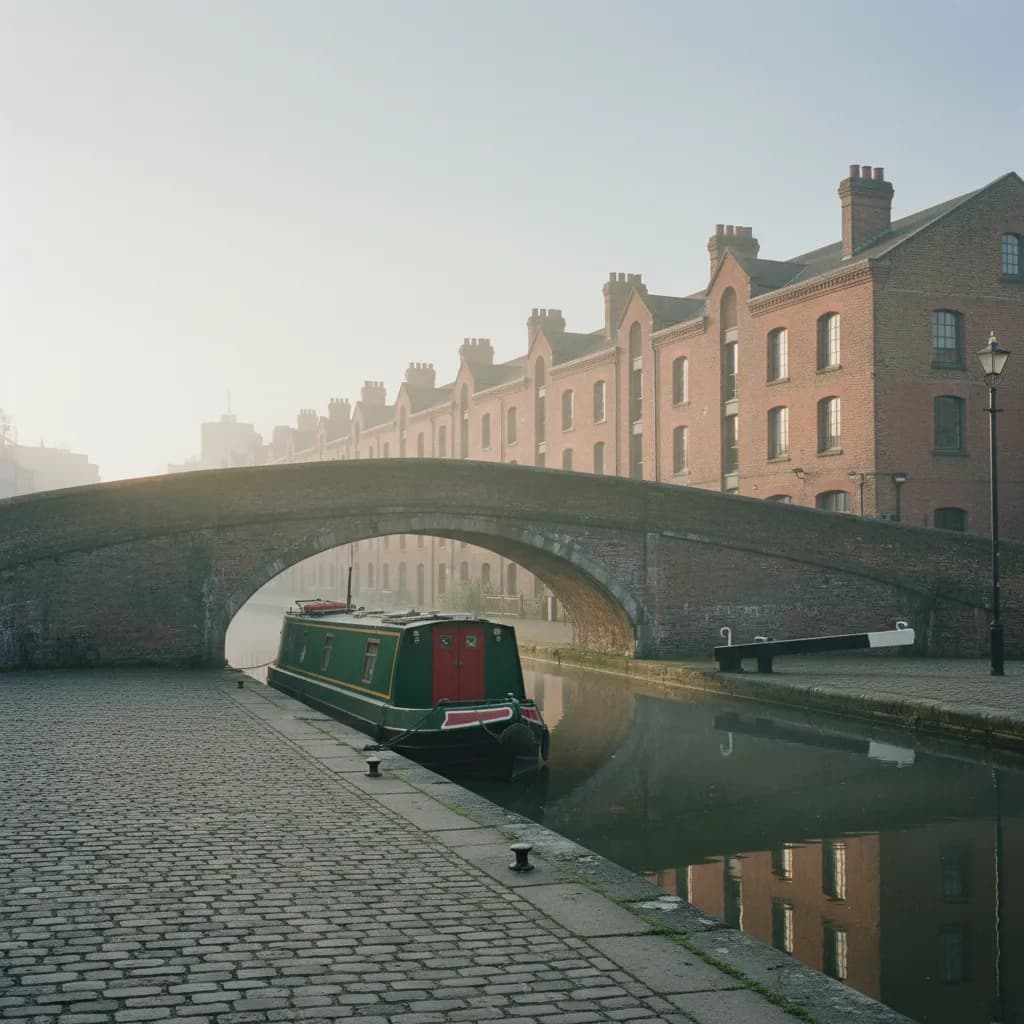
Camden Historic Neighborhood Photo Walk: Canal Locks at Dawn
A Camden historic neighborhood photo walk is free on public towpaths; start at the canal locks at first light, then climb to Primrose Hill's pastel streets.
A Camden historic neighborhood photo walk works best as a dawn ritual. Before the market stalls roll up their shutters, the Regent's Canal is a still ribbon of water between brick warehouses, iron lock gates and narrowboats wearing their morning condensation. Walk the towpath west from the locks, cross the railway to Primrose Hill, and you trade industrial grit for pastel stucco inside an hour, all on free public paths.
Why Camden Is a Canal Town Before It Is a Market
Most visitors meet Camden as noise: leather jackets on rails, food smoke, crowds shuffling over the bridge. Strip that away and the bones underneath are working Victorian infrastructure. The canal was dug to carry coal, timber and goods from the docks into the heart of London, and the railways that followed crossed it on heavy brick viaducts. Warehouses, stables and engine sheds grew up wherever water and rail met, and many of those buildings still stand, now housing markets and studios.
That layered history is exactly what gives a photographer material. Every frame along the water contains at least two eras: a cast-iron bollard grooved by towing ropes next to a modern glass balcony, or a soot-darkened arch beside a freshly painted boat. Arriving early lets you read those layers without people blocking them, and the soft, low light flatters brick far more than the harsh midday sun ever will.
Camden Lock: Twin Gates and the Horse Bridge
Begin at the locks just north of the high street bridge, where two lock chambers sit side by side. The black and white balance beams make strong graphic lines, especially when shot from a low angle so they slice diagonally across the frame. Look for the elegant brick footbridge that arches over the water nearby. Bridges like this were built so towing horses could switch banks without being unhitched, and the ramps on either side were ridged to give hooves a grip.
Spend ten minutes here before moving on. Shoot the lock gates straight on for symmetry, then step back along the towpath and use the curve of the canal as a leading line toward the bridge. If a boat is working through the lock, wait for the water to churn white as the paddles open. That moment of movement, set against the stillness of the old masonry, often becomes the strongest image of the morning.
The Towpath West Toward Regent's Park
Head west along the towpath, keeping the water on your left. Within a few minutes the market noise disappears and the canal bends past moored narrowboats with chimney pipes, potted herbs on their roofs and hand-painted names along their flanks. These floating homes are the human detail that keeps a canal walk from feeling like an architecture survey. Photograph the boats, but treat them as front doors, and avoid pointing a lens through anyone's window.
Further along, the towpath passes beneath iron bridges and alongside garden walls that drop straight into the water. Mist tends to linger here on cool autumn mornings, and it softens the background into pale layers. A 35mm lens handles the tighter stretches, while a short telephoto compresses the receding bridges into a neat stack. Turn back toward Camden once you reach the bend where the canal opens up beside the zoo's aviary, or continue if the light is still kind.
Primrose Hill: Pastel Terraces and a Rooftop View
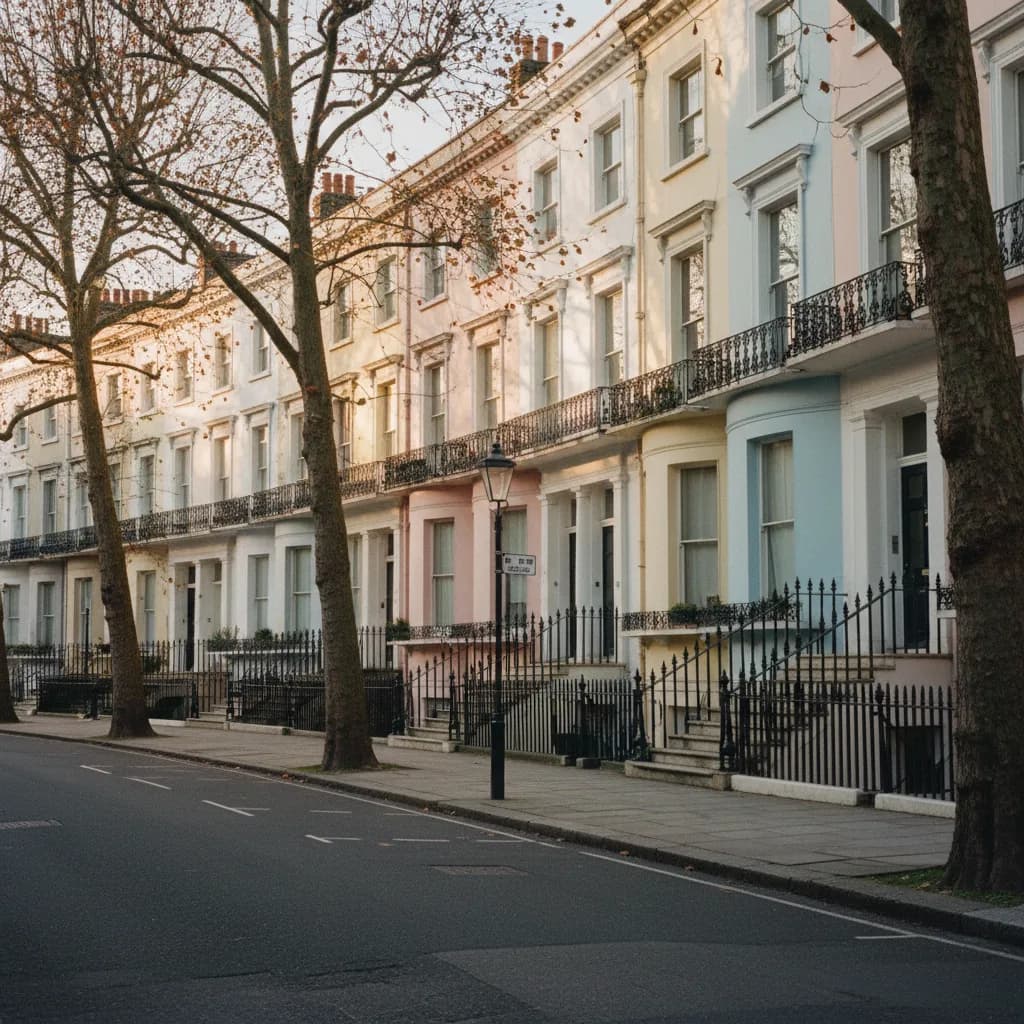
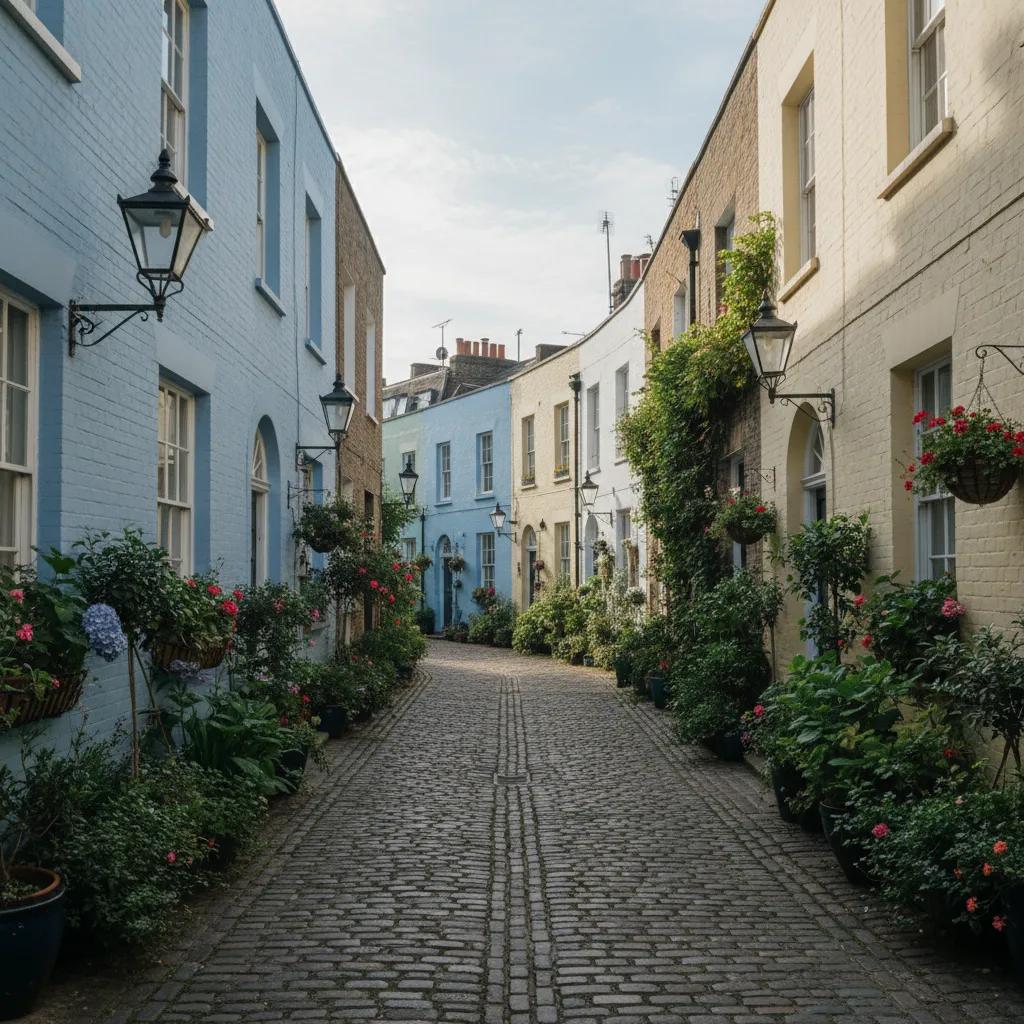
Leave the canal at a bridge that leads north and cross the railway into Primrose Hill. The mood shifts immediately. Curving Victorian terraces painted in soft pink, lemon, sage and sky blue line squares and crescents planted with plane trees. The colour runs house by house, so a slightly diagonal frame from across the street captures the rhythm of one shade giving way to the next, with black railings and stone steps stitching them together at the bottom.
Late morning or late afternoon light works best on these facades, because the low sun picks out mouldings and window surrounds without bleaching the pastels. Then climb the hill itself. The summit gives one of the classic protected views across London, with the skyline spread beyond the treetops of Regent's Park. Arrive early enough and you may share the bench with only a few dog walkers, which makes for cleaner wide frames and a calmer mood.
Stables, Engine Sheds and the Return Loop
Walk back down toward Chalk Farm and swing past the great circular brick building that began life as a railway engine shed, where locomotives were once turned on a central turntable. Its rounded walls are best photographed from a distance so the full curve reads clearly. Nearby, the old stables that housed horses for the railway and canal trade now hold market traders, but the cobbled ramps and arched stalls still carry the shape of their first use.
Come back to the locks along the high street side to finish where you began. By now the market will be waking, which changes the subject entirely. Switch from architecture to texture: rope coiled on a boat roof, steam from a coffee cart against old brick, or a trader setting out vintage crates. Ending this way gives the set a narrative arc, from silent industry to living neighbourhood, and it rounds off a loop that never requires backtracking.
Timing, Light and Weather Choices
Weekday mornings are calmer than weekends, when the towpath fills with joggers, cyclists and market crowds. Autumn and winter give the most atmospheric mist on the water, while spring brings blossom along the terraces. On grey days, lean into reflections: still canal water under an overcast sky turns into a soft mirror for the brickwork and bridges. Rain makes the cobbles and lock beams glisten, so a light waterproof cover for your camera is worth packing.
If you have only one hour, focus on the locks and the first stretch of towpath. With two hours, add the Primrose Hill terraces and summit. A half day lets you continue west along the canal toward the leafy banks of Little Venice, which offers a gentler, more residential canal scene and a completely different set of boats and bridges to photograph.
Practical Notes for a Respectful Canal Walk
The towpath is a shared space, so keep tripods compact, stay to the side when cyclists pass, and never block the narrow sections under bridges. Boaters live aboard many of the moored vessels, so ask before photographing anyone on deck. Comfortable shoes help, because the cobbles near the locks are uneven and the ramps on the horse bridges are steep. Public toilets and cafés are easy to find around the market once it opens.
If you want help shaping the morning, open the Karpo APP and ask Karpo to arrange these stops into a loop that matches your time, or to suggest a quieter side street when one corner feels crowded. It works as a planning companion for the route and the order of stops, so you can spend more of the walk looking through the viewfinder.
Ask Karpo for more information.
Keep reading
- Bloomsbury Mews Walk Planner: Literary Brick Passages
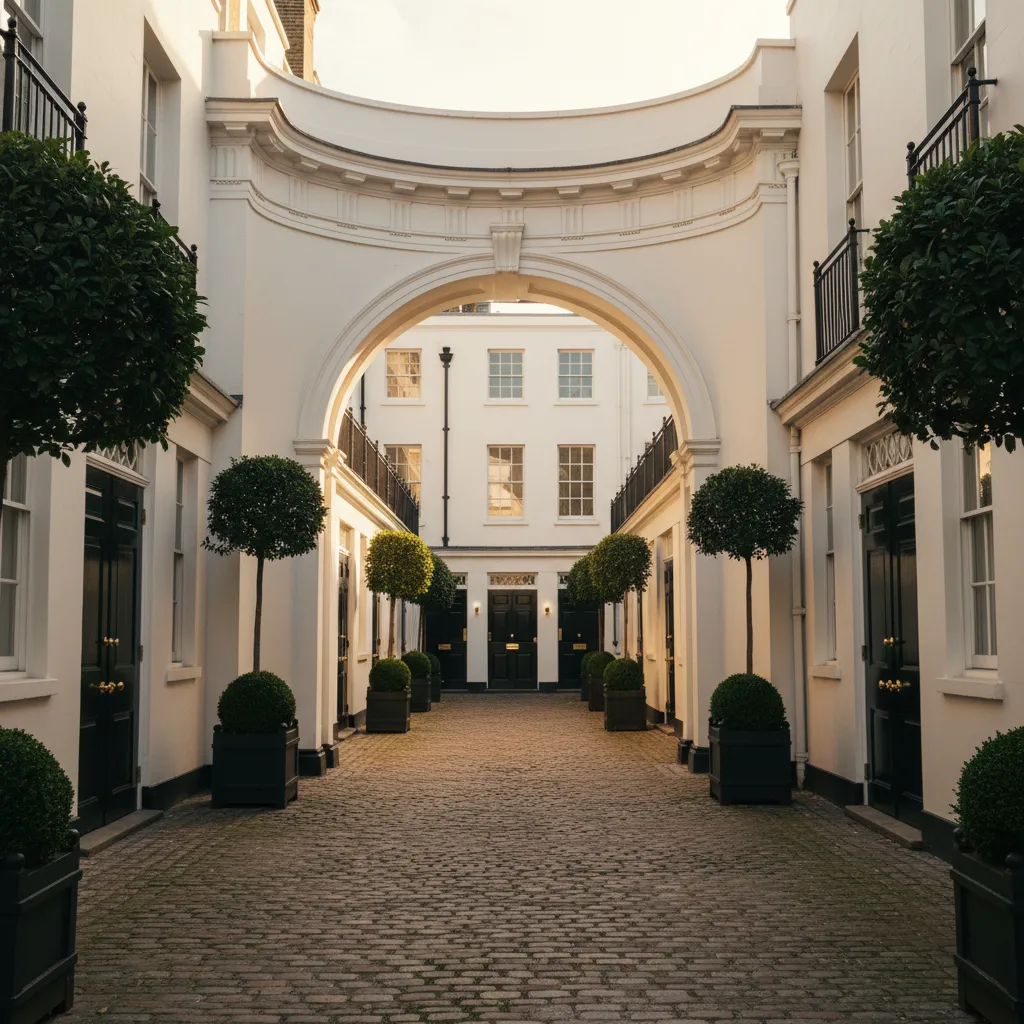 Belgravia Mews Walk Planner: Stucco Arches and Alleys
 Notting Hill Mews Walk Planner: Quiet Painted Lanes