 Bloomsbury Mews Walk Planner: Literary Brick Passages
Neighborhood Guides
Notting Hill Historic Covered Passage Walk: Market Arcades
Trace a historic covered passage walk in Notting Hill, London, wandering Victorian antique arcades, sheltered mews avenues, and pastel market lanes.
Notting Hill is celebrated globally for its pastel Victorian townhouses and bustling street markets, yet seasoned architecture enthusiasts recognize that its true spatial charm lies in sheltered mews lanes and covered antique arcades. Taking a historic covered passage walk through Notting Hill connects the lively open stalls of Portobello Road with intimate nineteenth-century carriage passages and covered antique galleries. With intuitive wayfinding from the Karpo APP, walkers can navigate these sheltered residential mews and multi-dealer arcades, escaping sudden Atlantic downpours while exploring authentic West London craft heritage.
Portobello Antique Arcades and Victorian Trade Galleries
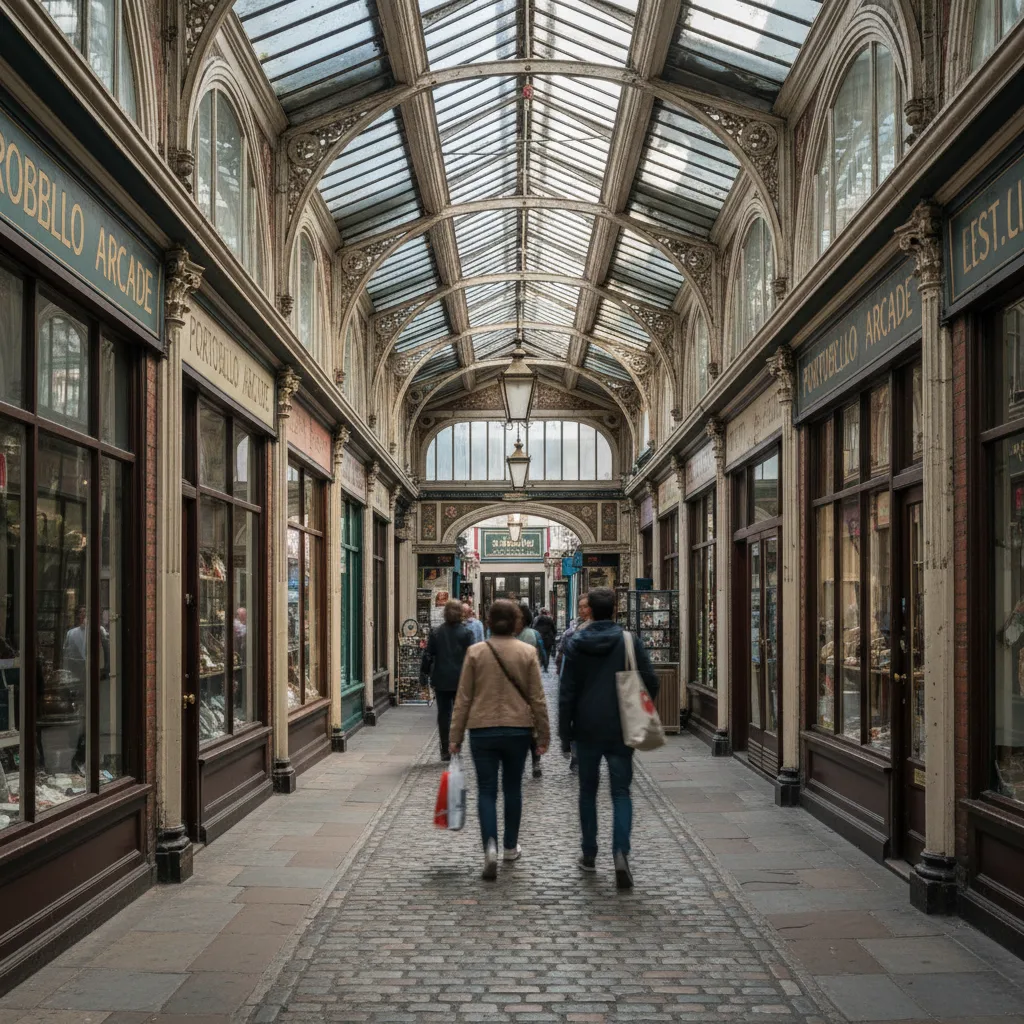
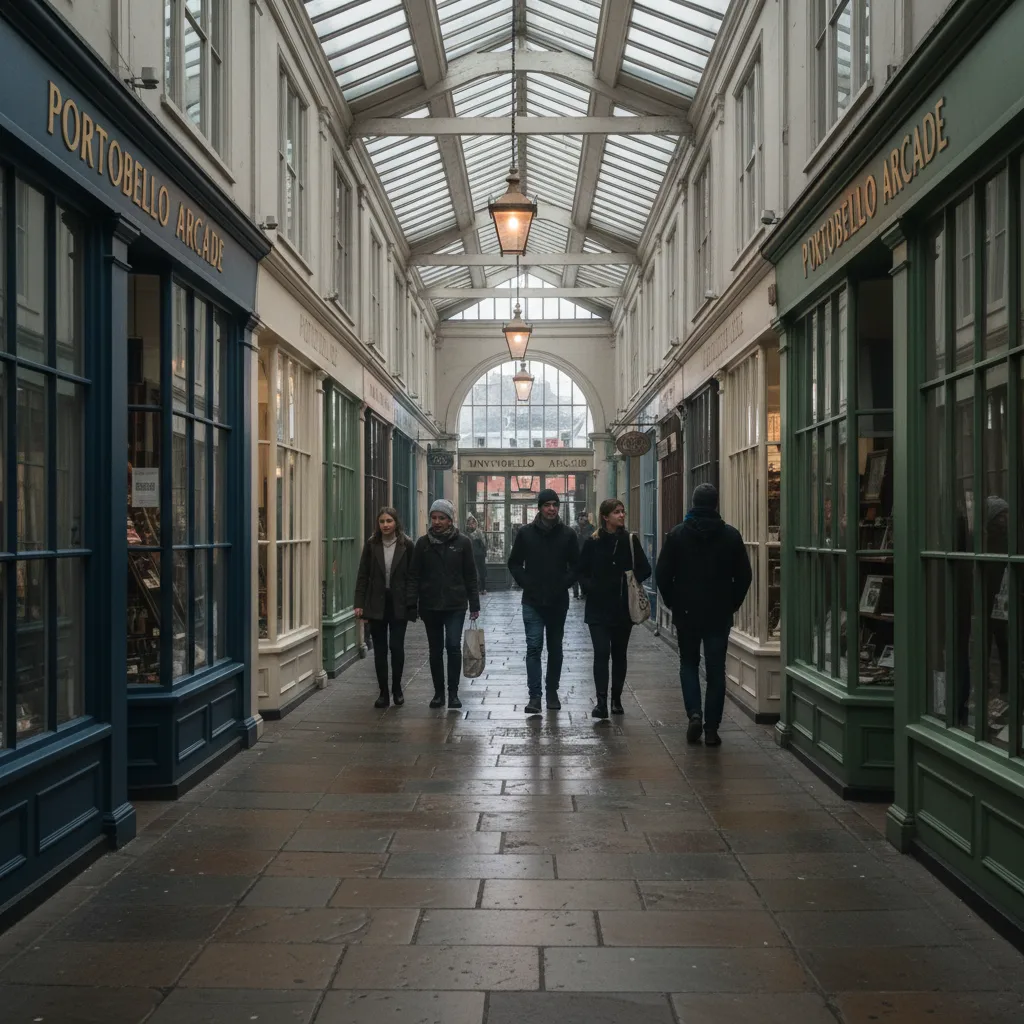
Commencing your walking route along the upper portion of Portobello Road near Westbourne Grove introduces pedestrians to a series of historic covered antique galleries dating from the late Victorian and Edwardian eras. Arcades like the Portobello Antique Arcade and Admiral Vernon Arcade feature narrow street-level doorways that open into cavernous, glass-roofed interior corridors lined with hundreds of specialized silver, maritime instrument, and vintage jewelry showcases. These covered galleries originated as covered horse repositories and fruit storage sheds before evolving into specialized trading halls.
Wandering through the interior aisles of Admiral Vernon Arcade provides complete protection from coastal squalls, allowing unhurried examination of Georgian pocket watches, rare porcelain figurines, and antique engraving plates. The overhead skylights cast gentle natural daylight across narrow wooden stalls where multi-generational family traders share encyclopedic knowledge of British craftsmanship. Unlike modern enclosed shopping centers, these heritage galleries retain timber partitioning, brass-trimmed display cabinets, and an authentic bustling marketplace atmosphere. Nineteenth-century land registry archives record that Notting Hill's mews network was systematically laid out to provide stable quarters for grand aristocratic townhouses on Ladbroke Square.
Hidden Cobblestone Mews and Sheltered Carriage Cuts
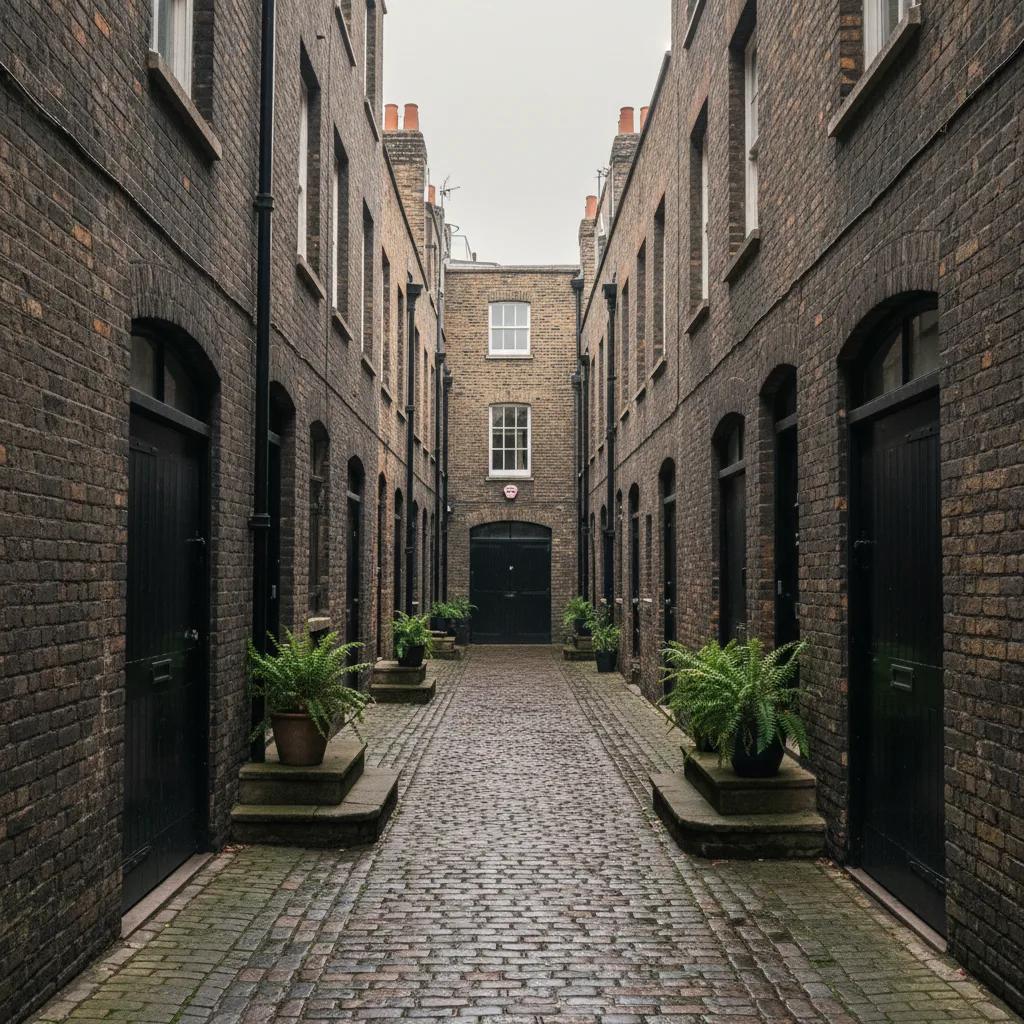
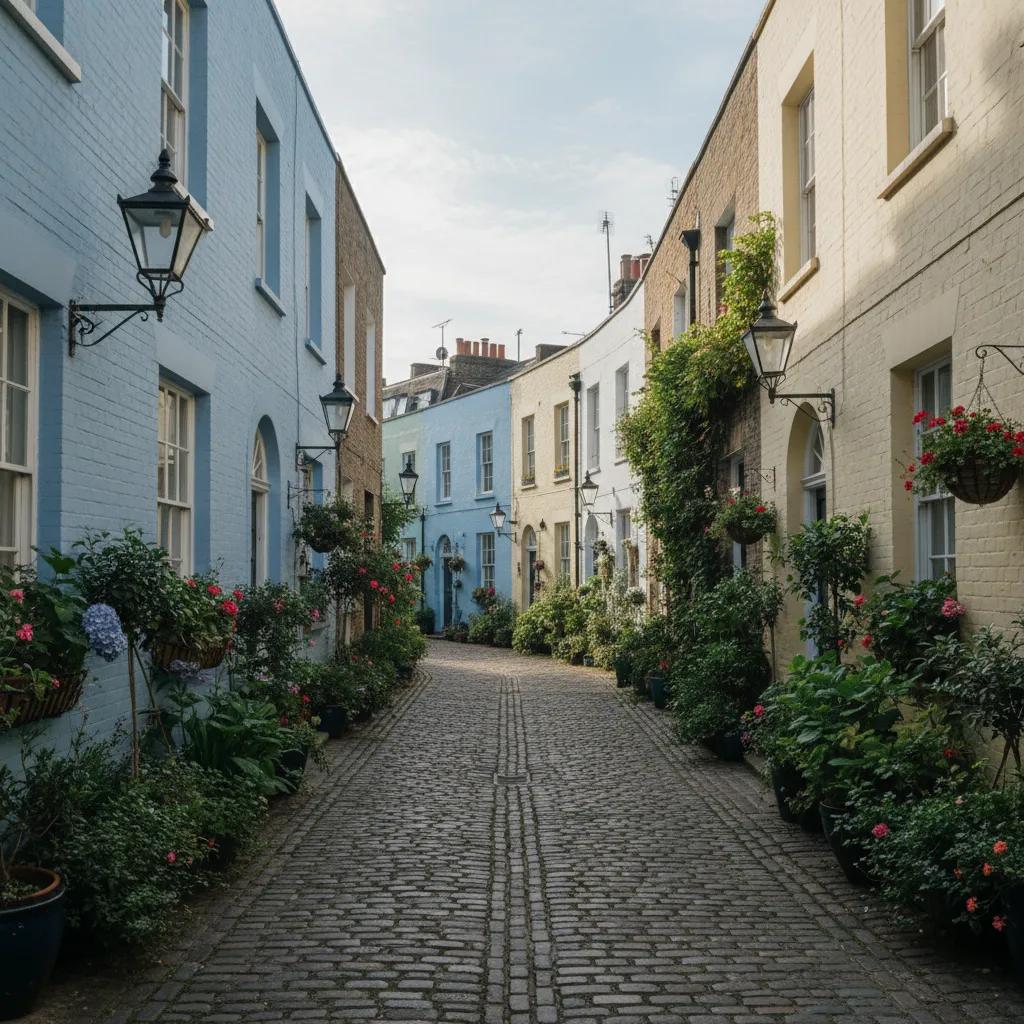
Transitioning away from Portobello's commercial thoroughfare reveals quiet residential mews that functioned as nineteenth-century carriage runs for opulent estates on Ladbroke Square. Stepping beneath the arched stone entrance of St Luke's Mews transports visitors into a serene cobblestone lane framed by two-story brick coach-houses with exterior wooden staircases, overflowing floral window boxes, and painted stable doors. Several sections of these mews feature projecting second-story balconies and overhanging eaves that provide continuous pedestrian shelter during damp weather.
Continuing eastward into Colville Mews and Denbigh Mews exposes further examples of functional equestrian architecture sensitively converted into creative design studios and quiet homes. Notice the original cast-iron stable drainage channels embedded along the center of the cobblestone roadway, engineered to funnel rainwater away from carriage stalls. These tranquil domestic passages illustrate how nineteenth-century London estate planning isolated working horse infrastructure within sheltered interior courts while maintaining elegant outer street facades. Meandering through these quiet cobblestone passages reveals beautifully preserved coach-house arches, timber stable doors, and cast-iron hitching posts that survived twentieth-century redevelopments. Additionally, historic street maps show that these private mews were originally gated at night by estate watchmen to safeguard valuable pedigree carriage horses and royal carriage equipage.
Pacing Your Visit for Antiques and Quiet Mews Exploration
Planning an architectural walking tour of Notting Hill requires balancing street market schedules with peaceful mews access. The famous antique arcades along Portobello Road operate fully on Saturdays from eight-thirty in the morning until four in the afternoon, creating an intensely vibrant, bustling scene packed with collectors from around the world. Arriving early on Saturday morning before ten allows relaxed browsing through covered arcades before crowds reach peak density.
Conversely, those seeking contemplative photography of cobblestone mews architecture and peaceful streetscapes should schedule their visit on a Tuesday or Wednesday morning. On weekdays, the residential mews remain exceptionally serene, with morning light illuminating pastel stucco walls and historic stable arches without tourist congestion. While some antique stalls remain closed mid-week, independent cafes, bakeries, and heritage pubs along the perimeter remain open for restful pauses.
Connecting Ladbroke Estate Walks and Holland Park Passages
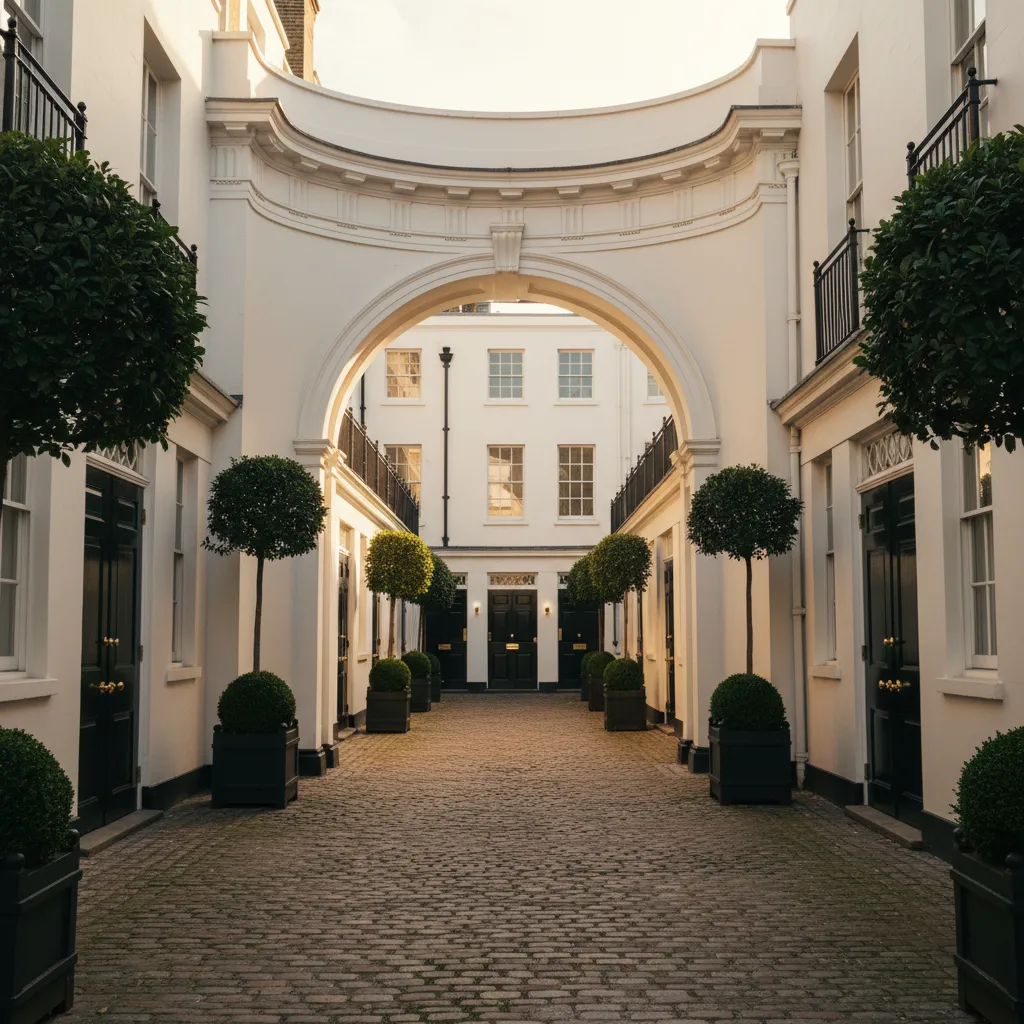
Extending your walk southward past Holland Park Avenue links Notting Hill's mews network with the grand neoclassical colonnades and garden terraces of Kensington. Crossing into Holland Park Mews introduces an exceptionally grand carriage street featuring intact Grade II listed stable blocks with continuous raised stone sidewalks and decorative cast-iron archways. Prominent entrance archways across both ends of the mews historically served to control carriage access and provide security for aristocratic residents.
Meandering through Holland Park's perimeter reveals sheltered garden pergolas and covered colonnades designed by Victorian landscape architects, offering quiet green retreats connected directly to residential lanes. The transition between Notting Hill's vibrant bohemian market arcades and Kensington's stately neoclassical carriage avenues demonstrates how private estate developers tailored covered urban design to distinct social echelons. Walkers can easily spend an afternoon traversing these interconnected mews networks without encountering heavy vehicular traffic.
Terrain Dynamics, Footwear Choices, and Transit Access
Navigating the cobblestone surfaces of St Luke's Mews and the historic flagstones of Portobello's antique arcades demands comfortable, flat-soled walking shoes with durable rubber soles. Cobblestones can become slippery when damp, and traditional stone steps leading into lower arcade vaults warrant steady footing. While the main market street features continuous paved sidewalks, certain historic mews entrances retain original granite curbs and uneven carriage gutters.
Public transportation access is highly accessible, with Notting Hill Gate underground station providing Central, District, and Circle line connections at the southern gateway to the route. Ladbroke Grove station serves as an equally convenient northern terminus on the Circle and Hammersmith & City lines, located five minutes from upper Portobello Road. Accessible public restroom facilities are situated along Portobello Road near the junction of Tavistock Boulevard and within Notting Hill Gate station concourse.
Notting Hill Heritage Exploration with the Karpo APP
Unlocking the architectural secrets of Notting Hill's secluded mews is made seamless through the detailed route mapping on the Karpo APP. The platform highlights private carriage cuts and historical archway entrances that casual travelers often pass without noticing. Detailed notes provide historical background on Victorian stable architecture and document the colorful mid-twentieth-century transformation of Portobello's market arcades.
Furthermore, the app suggests idyllic courtyard coffee pauses and historic pastry shops tucked away from busy market crowds. Real-time updates help walkers steer clear of Saturday mid-day bottlenecks by recommending parallel mews corridors with peaceful residential charm. Following these curated walking suggestions ensures you experience the authentic architectural depth of West London's most picturesque Victorian quarter.
Ask Karpo for more information.
Keep reading
- Bloomsbury Mews Walk Planner: Literary Brick Passages
 Belgravia Mews Walk Planner: Stucco Arches and Alleys
 Notting Hill Mews Walk Planner: Quiet Painted Lanes