 Bloomsbury Mews Walk Planner: Literary Brick Passages
Neighborhood Guides
Bloomsbury Historic Covered Passage Walk: Literary Mews
Follow a historic covered passage walk through Bloomsbury in London, linking Victorian glass shopping colonnades, Georgian book alleys, and quiet courts.
Bloomsbury is internationally celebrated for its leafy garden squares and literary connections, yet it also preserves an exceptional collection of covered retail colonnades, Regency pedestrian arcades, and brutalist covered promenades. Taking a historic covered passage walk through Bloomsbury connects nineteenth-century bookbinders' lanes with twentieth-century modernist architectural experiments. With route planning from the Karpo APP, cultural walkers can explore sheltered corridors that provided intellectual sanctuary for Virginia Woolf, Charles Dickens, and generations of scholars seeking quiet study sheltered from London weather.
Regency Elegance Along Woburn Walk and Marchmont Alleys
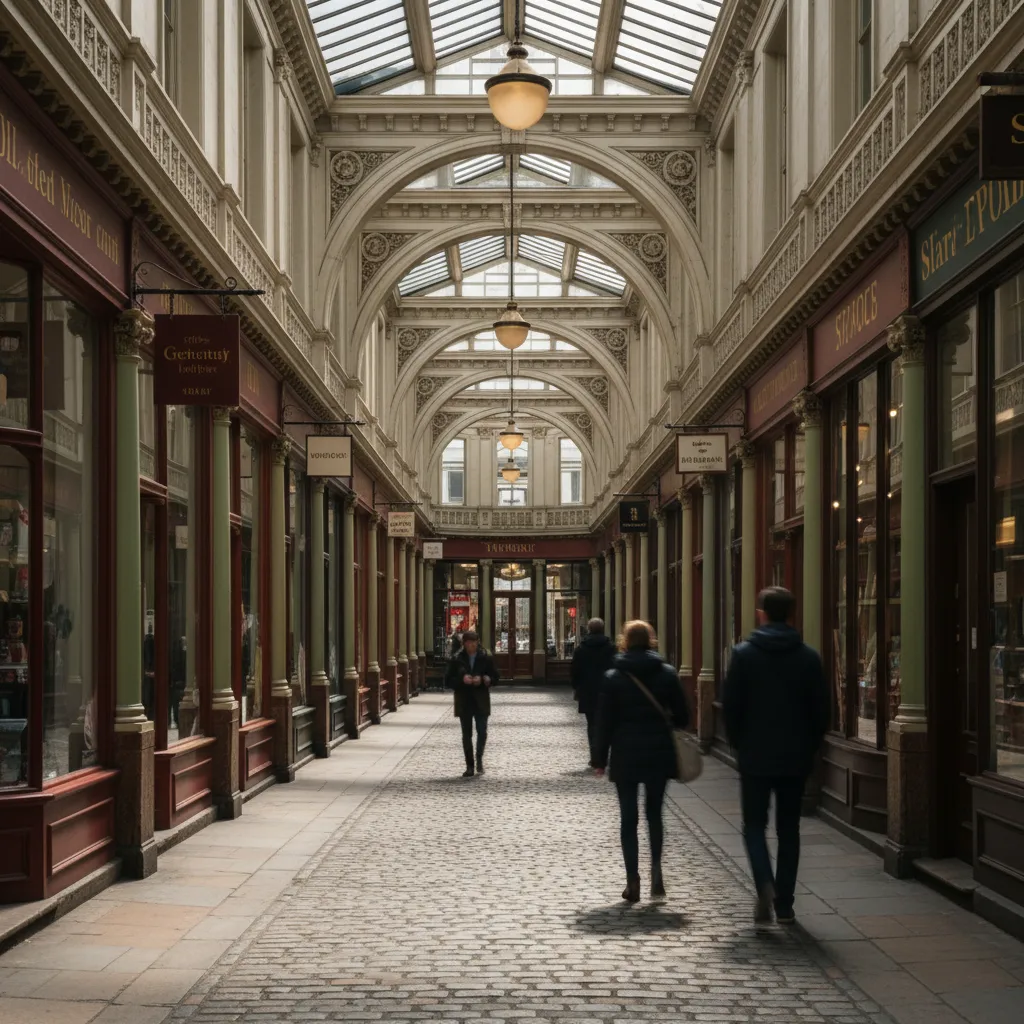
Beginning at Woburn Walk, situated just south of St Pancras Church, introduces pedestrians to London's earliest designed pedestrian shopping street, conceived by master builder Thomas Cubitt in 1822. This pristine Regency pedestrian passage features uniform bow-fronted shopfronts painted in traditional black and cream, adorned with classical pilasters, multi-paned display windows, and projecting cornices. Originally designed to cater to middle-class residents of the surrounding squares, Woburn Walk functioned as an open-air arcade sheltered by overhanging building eaves.
Poet William Butler Yeats lived at Number 5 Woburn Walk for nearly two decades, hosting weekly Monday salons where literary figures gathered in intimate parlors above the sheltered pavement. Strolling along the polished stone flagstones of Woburn Walk reveals specialized printmakers, second-hand bookshops, and boutique publishers continuing the neighborhood's print trade heritage. Narrow brick passages branching off toward Marchmont Street retain original stone boundary markers and cast-iron boot scrapers dating from George IV's reign. Historical chronicles of the Bedford Estate illustrate how Regency master builders designed pedestrian colonnades to connect grand garden squares with quiet academic residential streets.
Modernist Covered Urbanism at the Brunswick Centre
Transitioning southward past Russell Square brings visitors to an audacious twentieth-century evolution of the covered passage concept: the Brunswick Centre. Designed by architect Patrick Hodgkinson in the mid-1960s as a monumental megastructure combining municipal housing with a covered retail concourse, the complex features stepped concrete residential terraces rising dramatically above a central pedestrian promenade. The covered walkways beneath the stepped housing blocks provide continuous shelter across two expansive shopping levels.
The Brunswick represents a visionary post-war reinterpretation of the historic Bloomsbury square, replacing private gardens with public covered thoroughfares that welcome community movement. Walking beneath the bold board-marked concrete porticos and geometric skylights offers a striking visual contrast to the delicate Georgian woodwork of Woburn Walk. Contemporary art-house cinemas, independent bookshops, and open-air cafes occupy the sheltered lower bays, demonstrating how modernist concrete corridors continue to facilitate neighborhood interaction. Walking beneath the striking stepped concrete walkways of the Brunswick Centre offers a dramatic architectural journey through post-war modernist community planning in central London. Moreover, the surrounding academic quarter preserves several quiet pedestrian passages where nineteenth-century scholars and university lecturers strolled between lecture halls and library reading rooms.

Optimal Visiting Times and Academic Rhythms
Exploring Bloomsbury's covered passages is especially atmospheric on weekday mornings between eight-thirty and ten-thirty, when university students and British Museum researchers filter through local coffee stalls. Morning sunlight casts crisp geometric shadows across the Brunswick Centre's stepped concrete terraces, creating exceptional conditions for architectural photography. The bookshops along Marchmont Street and Woburn Walk open at ten in the morning, making late morning ideal for browsing rare editions.
During the midday lunch window from twelve to two, university scholars from University College London and SOAS congregate in the covered courtyards, enlivening local cafes and bench seating. For those seeking quiet contemplation, late afternoon between three and five offers a peaceful transition as academic lectures conclude and soft amber dusk settles over the garden squares. Saturday mornings also provide relaxed strolls, though Sunday visitors will find several academic bookshops closed.
Connecting Garden Mews and Museum Courtyards
Extending your walk southward through Russell Square brings you toward the monumental entrance colonnade of the British Museum on Great Russell Street. Passing into the museum reveals the Queen Elizabeth II Great Court, designed by Foster and Partners, featuring a breathtaking two-acre covered courtyard enclosed by a tessellated glass and steel roof. This monumental covered public space allows pedestrians to transition seamlessly between exterior Georgian garden squares and sheltered indoor cultural exploration without paying admission fees.
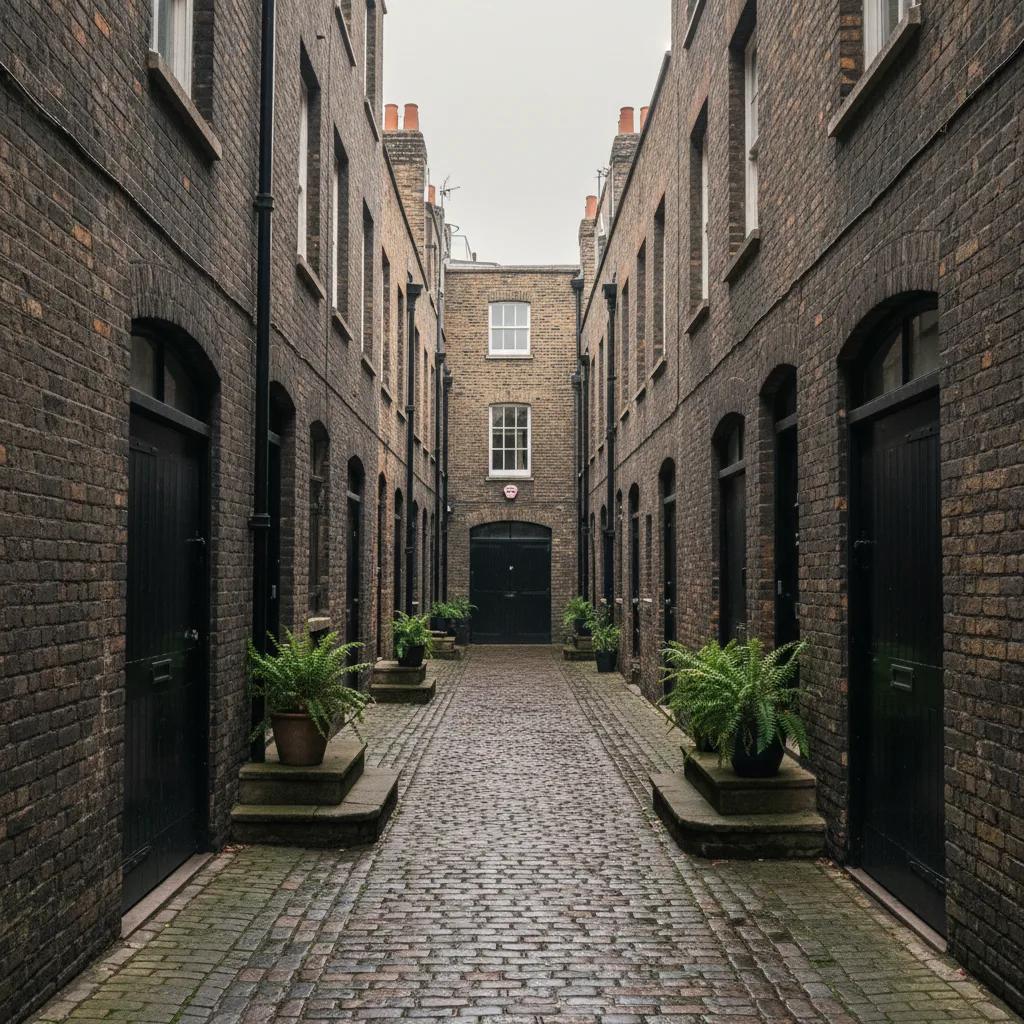
Branching eastward from the museum leads into Bury Place and Museum Street, where historic covered archways lead to secluded residential mews like Pied Bull Yard. Tucked behind traditional brick facades, Pied Bull Yard features a brick-paved courtyard sheltered by surrounding multi-story townhouses, housing specialized antiquarian print dealers, camera repairers, and quiet tea rooms. These interconnected interior courts demonstrate how Bloomsbury's urban block structure maintained private pedestrian sanctuaries insulated from carriage noise.
Practical Mobility, Footwear, and Underground Access
Walking surfaces along this Bloomsbury itinerary include smooth concrete promenades, historical York stone paving, and small stretches of traditional mews setts that favor comfortable walking shoes with supportive soles. The Brunswick Centre is fully equipped with accessible public ramps, escalators, and elevators connecting its multi-level covered walkways to street-level crossings. Historic passages like Woburn Walk maintain flat stone paving, though curb cuts at street intersections require standard pedestrian awareness.
Public transportation access is outstanding, with Russell Square station on the Piccadilly line located directly adjacent to the center of the route. King's Cross St Pancras and Euston stations lie ten minutes to the north, offering comprehensive national rail, Thameslink, and underground line connections. Free public restrooms and baby-changing amenities are available within the Brunswick Centre concourse and inside the Great Court of the British Museum.
Literary Wayfinding on the Karpo APP in Bloomsbury
Exploring Bloomsbury's rich intellectual legacy is made profoundly engaging through the specialized walking itineraries of the Karpo APP. The application highlights historic connections between quiet mews courts and celebrated literary salons, pinpointing where members of the Bloomsbury Group drafted pioneering modernist texts. Clear digital waypoints guide pedestrians through secluded brick archways that bypass noisy bus corridors along Southampton Row.
Additionally, the app curates recommendations for charming independent bookstores specializing in antiquarian maps, philosophy, and poetry tucked within sheltered pedestrian bays. Contextual architectural notes explain the engineering feats behind Foster's Great Court roof and Hodgkinson's brutalist housing terraces. Navigating Bloomsbury's covered passages with the Karpo APP ensures a culturally rich and seamless architectural walking tour across historic London.
Ask Karpo for more information.
Keep reading
- Bloomsbury Mews Walk Planner: Literary Brick Passages
 Belgravia Mews Walk Planner: Stucco Arches and Alleys
 Notting Hill Mews Walk Planner: Quiet Painted Lanes