 Bloomsbury Mews Walk Planner: Literary Brick Passages
Neighborhood Guides
Westminster Historic Alleyway Heritage Walk in Old London
Navigate ancient abbey precincts, quiet Georgian political alleys, and quiet cobbled lanes on this self-guided historic alleyway heritage walk in Westminster.
Westminster conceals an extraordinarily tranquil sanctuary of medieval monastic passages and eighteenth-century residential alleys just paces away from Parliament Square. While international visitors gather along the broad avenues of Whitehall and Victoria Street, a secluded network of historic courtways remains tucked behind the southern perimeter of Westminster Abbey. Undertaking this historic alleyway heritage walk guides you through ancient stone archways, along fourteenth-century abbey precinct walls, and into immaculately preserved Queen Anne domestic streets that have housed generations of British parliamentarians, bishops, and political figures.
Passing Beneath the Gatehouse of Dean's Yard
Passing beneath the heavy stone archway of the fourteenth-century Abbey gateway off Broad Sanctuary leads directly into Dean's Yard near postcode SW1P 3PB. This tranquil green quadrangle was once the private farmery and granary grounds of the Benedictine monks who served Westminster Abbey before the Dissolution of the Monasteries in 1540. Enclosed by stone collegiate cloisters, medieval archways, and Georgian residences, the yard possesses a peaceful academic atmosphere punctuated by the chiming bells of Big Ben and the abbey towers. Looking northward, the soaring stone buttresses and Gothic pinnacles of the Abbey rise majestically above the rooftops, offering a rare pedestrian perspective completely shielded from surrounding vehicular traffic.
Following the Fourteenth-Century Great College Street Wall
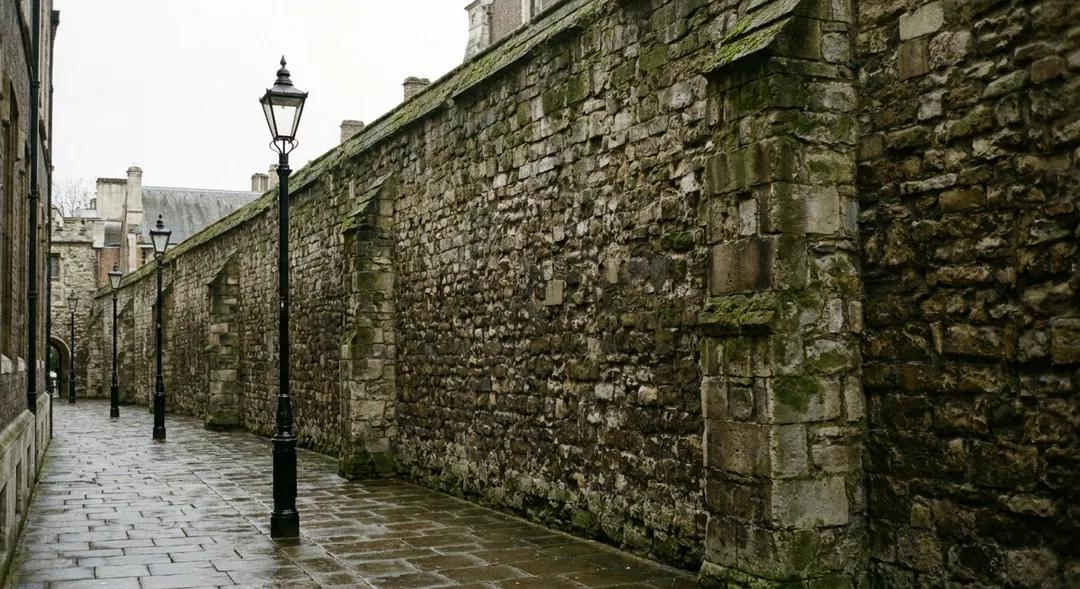
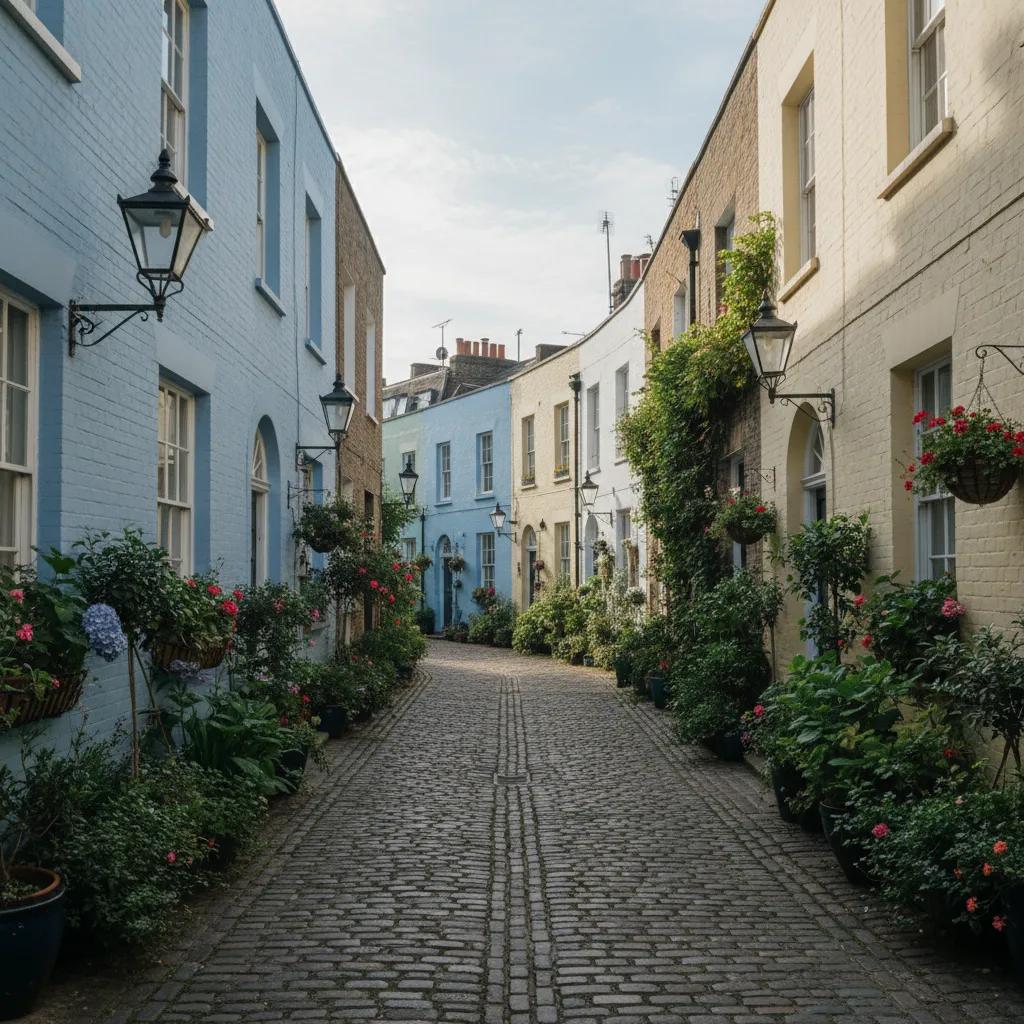
Following the southern perimeter out of Dean's Yard brings you alongside Great College Street near postcode SW1P 3SH. The dominant architectural marvel along this narrow roadway is the ancient monastic precinct wall, built between 1374 and 1376 from weathered Kentish ragstone. Measuring over seven meters high, this formidable stone barrier originally secured the Abbot of Westminster's private gardens and mill stream from riverside floods. The masonry displays centuries of skilled repair, showcasing alternating layers of medieval rubble, Tudor brick patching, and creeping ivy. Along the opposing pavement stand handsome four-story Georgian townhouses with arched doorways, black iron railings, and original gas lanterns that illuminate the narrow roadway at dusk.
Strolling Through Queen Anne Enclaves on Barton and Cowley Streets
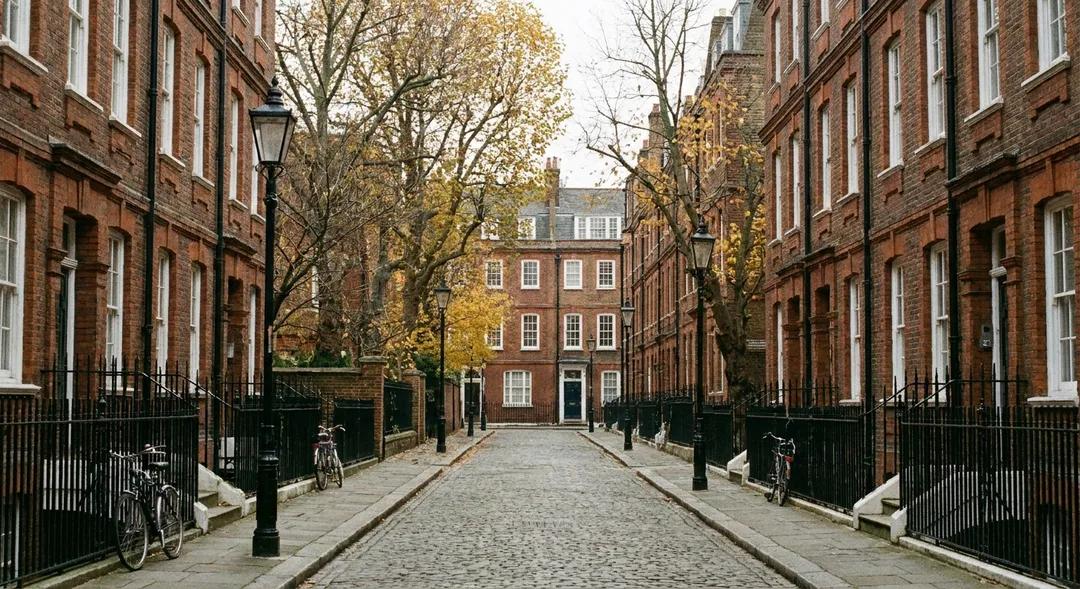
Strolling through Barton Street near postcode SW1P 3ND and Cowley Street near postcode SW1P 3NB reveals London's most exquisite and intact enclave of early eighteenth-century domestic architecture. Developed in 1722 by parliamentary official Barton Booth, these charming residential lanes retain their original plum-colored brick facades, white painted timber sash windows, and intricately carved wooden doorhoods resting on classical console brackets. Historic iron railings line every doorstep, complete with conical cast-iron link extinguishers where carriage link-boys once snuffed their burning torches before guests entered evening receptions. Prominent political figures, cabinet ministers, and authors including T. S. Eliot have lived quietly along these secluded flagstone pavements.
Reaching the Baroque Splendor of Smith Square
Reaching the open cobbled expanse of Smith Square near postcode SW1P 3LA marks the southern boundary of the route. At the square's center stands St John's Smith Square, a monumental English Baroque church designed by architect Thomas Archer and consecrated in 1728. Famous for its four symmetrical stone corner corner towers, the building was popularly nicknamed Queen Anne's Footstool after a legend claiming the monarch overturned a footstool to demonstrate her preferred architectural silhouette. Now functioning as a celebrated classical concert hall, the building is encircled by quiet cobbled passageways connecting into Lord North Street, where historic gas lamps cast long shadows against uniform rows of 1720s red brick houses.
Observing Historic Paving and Footwear Considerations
Observing historic paving surfaces throughout Westminster's abbey precincts helps walkers plan a comfortable journey. Great College Street and Dean's Yard feature broad York stone paving slabs interspersed with narrow granite cobblestones and raised heritage curbs. In rainy weather, damp autumn leaves and wet stones can reduce foot traction, making comfortable walking shoes with textured rubber outsoles highly advisable. The streets are largely level and well suited to gentle strolling, though the occasional shallow heritage curb step requires attention when pushing strollers. The quiet residential nature of Barton and Cowley Streets means walkers can enjoy an unhurried pace, frequently sharing the cobbled lanes with only occasional local residents and government clerks.
Scheduling Around Political Activity and Bell Chimes
Scheduling your visit around parliamentary rhythms significantly enhances the atmosphere of the route. On weekdays between 1:00 PM and 2:00 PM, ministers and parliamentary researchers often walk between the Houses of Parliament and private offices on Lord North Street, creating a lively sense of political purpose. For uninterrupted stillness and pristine architectural photography, early morning between 8:30 AM and 10:30 AM is ideal, when the streets are bathed in soft eastern sunlight. Sunday mornings are particularly memorable, as the deep resonant chimes of Westminster Abbey's peel of ten bells echo across Dean's Yard and through the surrounding courtyards.
Wandering Onward to Victoria Tower Gardens and the Riverfront
Wandering onward from Smith Square toward the River Thames offers an inspiring walking extension. A two-minute stroll east brings you to Victoria Tower Gardens, a riverside public park located beneath the towering Victoria Tower of the Palace of Westminster. The gardens house Auguste Rodin's celebrated bronze sculpture The Burghers of Calais (installed in 1914) and the ornate Buxton Memorial Fountain (1865), commemorating the abolition of slavery. Walking northward along the river embankment provides panoramic views across to St Thomas' Hospital and Lambeth Palace, rounding out the medieval and political narrative of your Westminster circuit.
Accessing Westminster Stations and Practical Route Guidance
Accessing Westminster's historic alleys is simple and fast via public transport. Westminster Underground station on the Jubilee, District, and Circle lines is four minutes northeast, with exit signs directing visitors toward Parliament Square. Alternatively, St James's Park station on the District and Circle lines sits six minutes west via Broadway and Matthew Parker Street. The self-guided alleyway walk is entirely free of charge and publicly open at all times without admission gates or tickets. Clean public restrooms, step-free access facilities, and baby care rooms are available at nearby Victoria station and within the visitor pavilion at Methodist Central Hall on Storey's Gate.
Mapping Your Historic Route Seamlessly with Karpo APP
Mapping your historic route through Westminster is effortless when utilizing Karpo APP. The application highlights secluded entrances to Dean's Yard and Great College Street, traces optimal quiet pedestrian walking corridors, and provides rich historical summaries for landmarks like Thomas Archer's Baroque church on Smith Square. With intelligent transit navigation and curated walking recommendations, the app ensures your exploration of London's hidden heritage alleys is thoroughly rewarding and seamlessly guided.
Ask Karpo for more information.
Keep reading
- Bloomsbury Mews Walk Planner: Literary Brick Passages
 Belgravia Mews Walk Planner: Stucco Arches and Alleys
 Notting Hill Mews Walk Planner: Quiet Painted Lanes