 Bloomsbury Mews Walk Planner: Literary Brick Passages
Neighborhood Guides
Spitalfields Historic Alleyway Heritage Walk in East London
Walk through eighteenth-century weaver lanes and quiet brick passages on this self-guided historic alleyway heritage walk through vibrant East London streets.
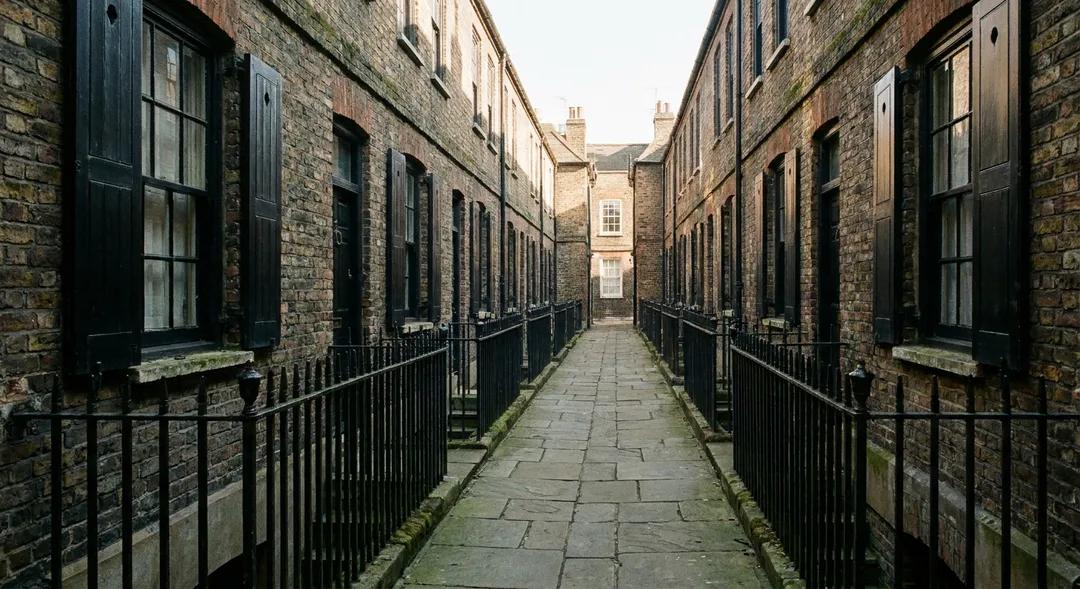
Spitalfields preserves London's finest intact landscape of early eighteenth-century industrial heritage, where narrow domestic alleys reflect the prosperity and resilience of French Huguenot refugees. Fleeing religious persecution following the 1685 Revocation of the Edict of Nantes, skilled master silk weavers settled just beyond the City of London boundaries to escape restrictive guild regulations. Taking this historic alleyway heritage walk reveals an intimate grid of gas-lit brick passages, hidden almshouse courtyards, and towering Queen Anne townhouses characterized by broad attic garret windows built to capture every ray of northern daylight.
Entering Through the Cobbled Corridor of Puma Court
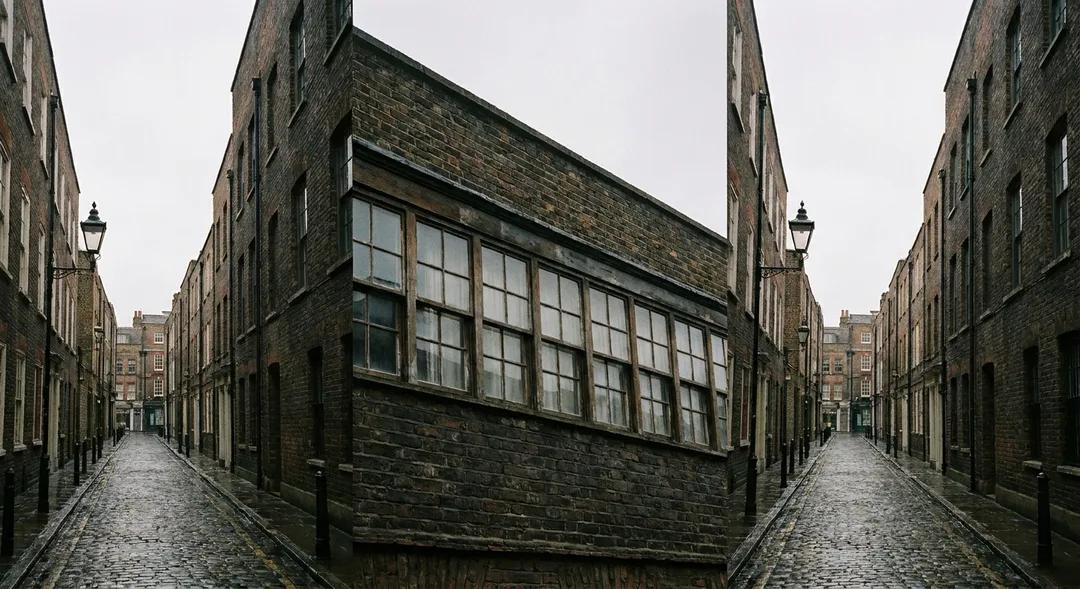
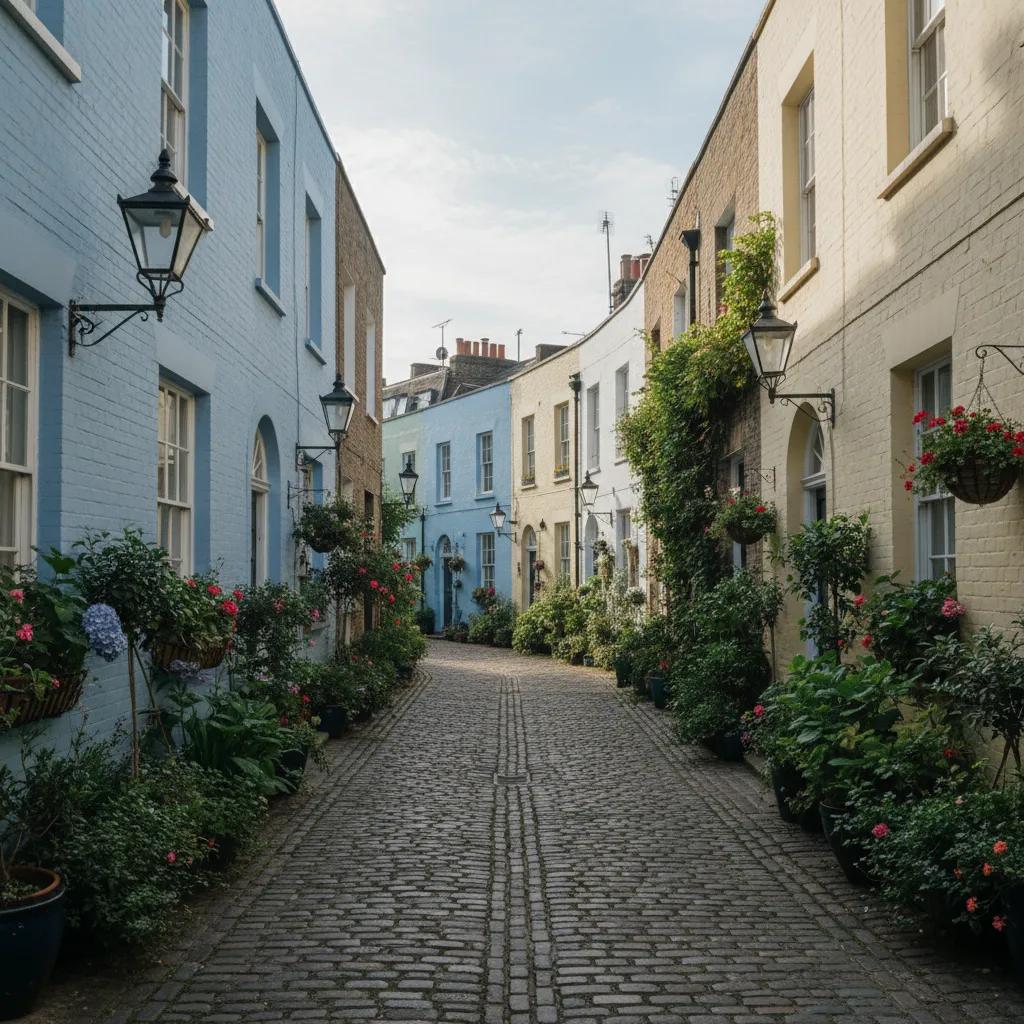
Entering through Commercial Street opposite the Victorian covered market leads directly into Puma Court (postcode E1 6QF). This secluded pedestrian passage was originally paved in the 1720s to link bustling market stalls with the quiet domestic residences of master craftsmen. The south side of the court displays a charming terrace of two-story brick cottages with flat wooden door canopies and deep cellar grates. At the eastern end stands a handsome Victorian Gothic building erected in 1860 as benevolent almshouses for elderly members of the local community. The court feels completely cut off from the heavy traffic of Commercial Street, offering a striking acoustic hush where footfalls echo softly off weathered yellow London stock brickwork.
Observing Garret Windows Along Fournier and Wilkes Streets
Observing garret windows along Wilkes Street (E1 6JJ) and Fournier Street (E1 6QE) reveals the specialized architectural adaptations that defined Spitalfields silk weaving. Constructed between 1720 and 1728 by local speculative builders, these stately four-story townhouses feature extraordinary continuous multi-paned windows occupying the entire uppermost floor. Within these sunlit roof garrets, master weavers operated massive timber draw-looms weaving opulent patterned brocades, damasks, and lustrous silk velvets for European royalty. Carved wooden brackets shaped like classical acanthus leaves flank the panelled front doors, while historic cast-iron link extinguishers remain affixed to exterior iron railings where torch-bearing footmen once quenched their torches.
Passing Historic Synagogues and Dennis Severs' Threshold
Passing historic landmarks along Princelet Street and Folgate Street illuminates how subsequent immigrant waves adapted these historic domestic spaces. On Princelet Street (E1 6QH), a landmark Georgian townhouse constructed in 1719 later housed a hidden 1869 synagogue built over its rear garden, serving Polish and Russian Jewish garment makers. Continuing northward toward Folgate Street (E1 6BX) brings walkers to the celebrated historic home created by American artist Dennis Severs. Completed in 1724, this merchant residence preserves candlelit interiors, smoldering hearths, and ticking clocks that recreate the daily atmosphere of an eighteenth-century silk weaving family. Walking down the brick-walled pavement of Folgate Street feels like navigating a living historical stage set.
Discovering Quiet Courtyards Around Christ Church Garden
Discovering quiet courtyards bordering Christ Church Spitalfields brings you to the monumental centerpiece of the district. Completed in 1729 to designs by master architect Nicholas Hawksmoor, the towering stone church features a dramatic Tuscan portico and a soaring spire that guided weavers returning from central London delivery points. Pedestrian paths skirt the southern churchyard, passing weathered limestone tombs shaded by venerable plane trees. A hidden gateway connects into Fournier Street beside the historic French Protestant Church, an institution founded in 1743 that subsequently served as a Methodist chapel, a Great Synagogue, and now the Jamme Masjid mosque, reflecting the evolving community layers of East London.
Handling Uneven Flagstones and Historical Paving Textures
Handling uneven flagstones throughout Spitalfields requires mindful attention to traditional roadway textures. Puma Court and the side alleyways maintain authentic York stone paving slabs that show natural undulations from centuries of subsidence and moisture. Narrow drainage gullies lined with rounded cobblestones run down the center of several passages, designed during the Georgian era to channel rainwater toward perimeter street gutters. Walkers should wear supportive walking footwear with cushioned soles to absorb the firm impact of stone setts. The absence of modern curb cuts at historic alley entrances makes navigation with bulky luggage or prams somewhat bumpy, though the streets remain largely level throughout.
Choosing Early Hours to Appreciate Georgian Ambiance
Choosing early morning hours between 8:30 AM and 10:30 AM delivers the most atmospheric experience of Spitalfields alleys. On Sunday afternoons, neighboring Brick Lane and Old Spitalfields Market attract substantial visitor crowds, filling the perimeter streets with bustling food market queues. Visiting on a quiet weekday morning or early Sunday morning allows you to appreciate the architectural quietude, photograph the intricate doorcases without obstruction, and observe subtle craft details such as wrought-iron boot scrapers and antique lead rainwater hopper heads dated to the 1720s. Twilight walks around 5:15 PM in winter offer warm domestic window glows that emphasize the residential intimacy of these historic streets.
Continuing Toward Brick Lane and Shoreditch Boundary Alleys
Continuing toward Brick Lane provides a natural extension that connects Huguenot craftsmanship with Victorian and modern East End heritage. Walking eastward along Hanbury Street leads past historic Truman Brewery brick tunnels and vibrant street art murals into the heart of London's legendary textile and curry quarter. Alternatively, walking five minutes north into Shoreditch leads toward Boundary Street and the Arnold Circus bandstand, built in the 1890s as the centerpiece of the historic Boundary Estate, London's earliest municipal social housing project. Both routes enrich the social history uncovered along the weaver lanes.
Navigating Transit Hubs and Local Route Amenities
Navigating transit hubs for this walking route is exceptionally convenient. Liverpool Street station on the Central, Circle, Elizabeth, and Hammersmith and City lines sits just six minutes west along Bishopsgate, offering accessible step-free rail links across Greater London. Shoreditch High Street station on the London Overground network lies four minutes north along Commercial Street. The historic alley route is entirely free of charge and publicly accessible twenty-four hours daily. Clean public restrooms, drinking water fountains, and sheltered café seating are available within Old Spitalfields Market concourse, providing dependable facilities just paces from Puma Court.
Enhancing Your Heritage Itinerary with Karpo APP
Enhancing your walking itinerary is effortless with Karpo APP. The application highlights key architectural landmarks across Spitalfields, details the historical backgrounds of master weavers' properties on Fournier Street, and marks the quietest pedestrian alleyways away from commercial market corridors. Users can save customized walking waypoints, receive intelligent transit reminders for nearby Overground and Underground stations, and explore curated local tea and coffee houses along the route.
Ask Karpo for more information.
Keep reading
- Bloomsbury Mews Walk Planner: Literary Brick Passages
 Belgravia Mews Walk Planner: Stucco Arches and Alleys
 Notting Hill Mews Walk Planner: Quiet Painted Lanes