 Bloomsbury Mews Walk Planner: Literary Brick Passages
Neighborhood Guides

London Historic Alleyway Heritage Walk: Southwark Clink Path
Discover medieval riverfront stairs, atmospheric riverside alleys, and old coaching inn yards on this self-guided historic alleyway heritage walk in Southwark.
Southwark's southern riverbank holds London's most atmospheric concentration of medieval lanes and Victorian warehouse passages. Governing itself for centuries as the independent Liberty of the Clink, this riverside district lay beyond the jurisdiction of the City of London magistrates, cultivating a legendary reputation for theatrical playhouses, bustling waterfront wharves, and boisterous taverns. Following this historic alleyway heritage walk guides you through darkened brick canyons spanned by overhead iron gantry bridges, past fourteenth-century palace ruins, and down ancient watermen's stairs that have serviced Thames boat traffic since Tudor times.
Entering Clink Street and Its Warehouse Canyons
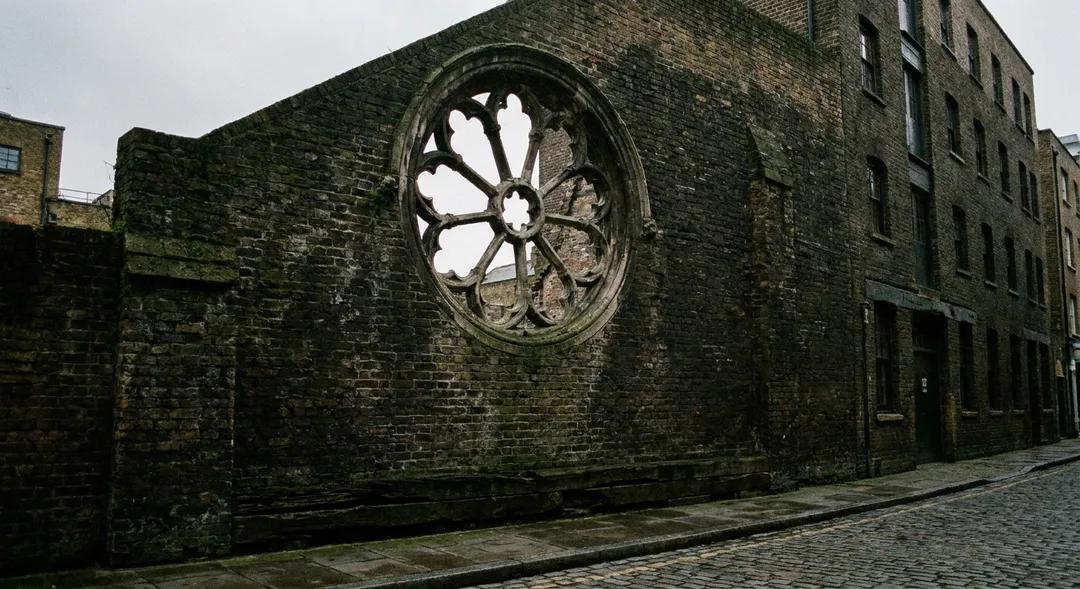
Entering Clink Street near postcode SE1 9DG from Bankside plunges walkers into a dramatic architectural gorge. Towering five-story Victorian brick storehouses rise sheer on either side, blocking direct sunlight and creating an echoing corridor paved in dark granite setts. High above the street, weathered wrought-iron footbridges span between opposite buildings, once used by dockers to transfer dry cargo between riverfront wharves and railway delivery arches. Near the eastern bend stood the infamous Clink Prison, an ecclesiastical jail operated by the Bishops of Winchester dating back to 1144 that gave its very name to slang for penal confinement across the English-speaking world. Today the surrounding brick arches echo with centuries of maritime industry, where grain, hops, and imported spices were winched up into cavernous warehouse lofts directly from river lighters moored along the Thames shoreline.
Examining Ruined Stonework of Winchester Palace
Examining ruined medieval masonry midway along Clink Street brings you face to face with the surviving south wall of Winchester Palace. Constructed around 1300 as the palatial London residence for the wealthy Bishops of Winchester, this historic hall once ranked among the largest residential complexes in medieval England. Its most breathtaking feature is a magnificent circular rose window featuring delicate stone tracery shaped like a wheel of radiating petals, embedded directly into ancient Kentish ragstone walls. Beneath the arched stone vaults, archaeologists uncovered the bishop's vaulted wine cellars and private dock access where state barges moored directly alongside riverfront watergates. Informative heritage interpretation panels set into the perimeter railings explain the medieval palace layout, detailing the great banqueting chambers that once entertained royalty and foreign dignitaries on the Southwark riverside.
Tracing Theatrical History Along Bear Gardens and Rose Alley
Tracing theatrical history southward into Bear Gardens near postcode SE1 9ED and Rose Alley reveals the cradle of Elizabethan drama. During the late sixteenth century, playhouses and animal baiting rings were banned within the City of London, prompting entrepreneurs like Philip Henslowe to construct the Rose Playhouse here in 1587. William Shakespeare and Christopher Marlowe premiered early masterpieces in this neighborhood. Bear Gardens follows the exact medieval pathway that led spectators to the royal Beargarden arena, where crowds gathered to witness bear and bull baiting spectacles. Today the narrow alley retains its winding alignment, flanked by quiet brick residential conversions and discreet bronze pavement plaques marking historical theater outlines. Walking here in late afternoon evokes the vibrant atmosphere of Elizabethan playgoers hurrying between river stairs and open-air playhouses.
Reaching Riverside Secrets at Cardinal Cap Alley
Reaching riverside secrets along Bankside leads to Cardinal Cap Alley near postcode SE1 9JZ, one of the narrowest public thoroughfares remaining in Southwark. Named after the Cardinal's Hat tavern that operated on this spot during the reign of Henry VIII, this slender passage frames an iconic direct vista across the Thames toward the great dome of St Paul's Cathedral. A charming terrace of three-story eighteenth-century brick dwellings lines the western edge of the alley, featuring white timber sash windows, brass door furniture, and narrow flagstone steps. Standing at the river mouth of the passage during low tide reveals ancient wooden pilings and gravel shores where watermen once waited to ferry theatergoers across the tidal Thames. The intimate scale of Cardinal Cap Alley offers a stark and refreshing contrast to the monumental modern galleries of the nearby Tate Modern turbine hall.
Traversing Cobblestones, Iron Gantries, and Footwear Needs
Traversing cobblestones throughout Southwark's warehouse alleys demands practical consideration of footwear. Clink Street, Bear Gardens, and the passageways leading toward Borough Market feature uneven stone sets, slick granite curb stones, and surface drainage channels that become quite slippery during wet London weather. Walkers are strongly advised to select closed-toe walking shoes or boots with sturdy rubber outsoles and ankle support. Heritage stone staircases descending toward riverfront piers do not provide step-free access, though the main thoroughfares of Bankside and Clink Street remain generally flat. Overhead industrial gantries and dimly recessed archways create atmospheric shadow play that photographs beautifully under natural daylight.
Timing Your Walk Around Tidal Thames and Market Rushes
Timing your walk around river tides and market hours provides the richest sensory exploration. Borough Market draws massive culinary crowds on Thursday, Friday, and Saturday afternoons, causing Stoney Street and the southern alleys to become congested with shoppers. To experience peaceful contemplation along the warehouse walls, begin your walk on a weekday morning between 9:00 AM and 11:00 AM. Checking the Thames tidal schedule adds another rewarding dimension: low tide exposes historic gravel foreshores and timber wharf posts along Bankside stairs. Evening walks around 6:00 PM offer dramatic river illumination, when exterior floodlights cast amber reflections off the wet brick warehouse walls.
Extending Toward Southwark Cathedral and The George Inn
Extending toward Southwark Cathedral provides a rewarding historical continuation just paces away. Winding through Montague Close leads to the northern portal of Southwark Cathedral, parts of which date to 1106, housing monuments to Geoffrey Chaucer, William Shakespeare, and John Gower. Walking five minutes further south along Borough High Street guides you into the courtyard of The George Inn near postcode SE1 1NH, London's sole surviving galleried coaching inn, rebuilt in 1677 following a devastating local fire. Dickens frequented its timber galleries, which preserve authentic multi-tiered balconies overlooking a sheltered cobbled courtyard where horses once rested.
Connecting via London Bridge Rail and Visitor Facilities
Connecting via London Bridge station ensures effortless arrival for this heritage route. The major transport hub connects the Jubilee and Northern Underground lines with Thameslink and Southeastern rail services, with the Borough High Street exit delivering walkers to the head of Clink Street within three minutes. Public right-of-way along all Southwark alleys is maintained twenty-four hours a day with zero admission charge. Accessible public restrooms, baby changing stations, and drinking water bottle refill points are located inside London Bridge station concourse and within the Market Hall on Middle Road.
Navigating Southwark Alleys with Karpo APP
Navigating Southwark's winding warehouse corridors is seamless when using Karpo APP. The platform tracks pedestrian shortcuts connecting Borough Market with Bankside, pinpoints obscured historical markers like the Winchester Palace rose window, and provides estimated walking times tailored to pedestrian paths. With custom itinerary curation, users can pinpoint peaceful riverfront benches, discover heritage pub stops, and organize their self-guided historic walk with effortless precision.
Ask Karpo for more information.
Keep reading
- Bloomsbury Mews Walk Planner: Literary Brick Passages
 Belgravia Mews Walk Planner: Stucco Arches and Alleys
 Notting Hill Mews Walk Planner: Quiet Painted Lanes