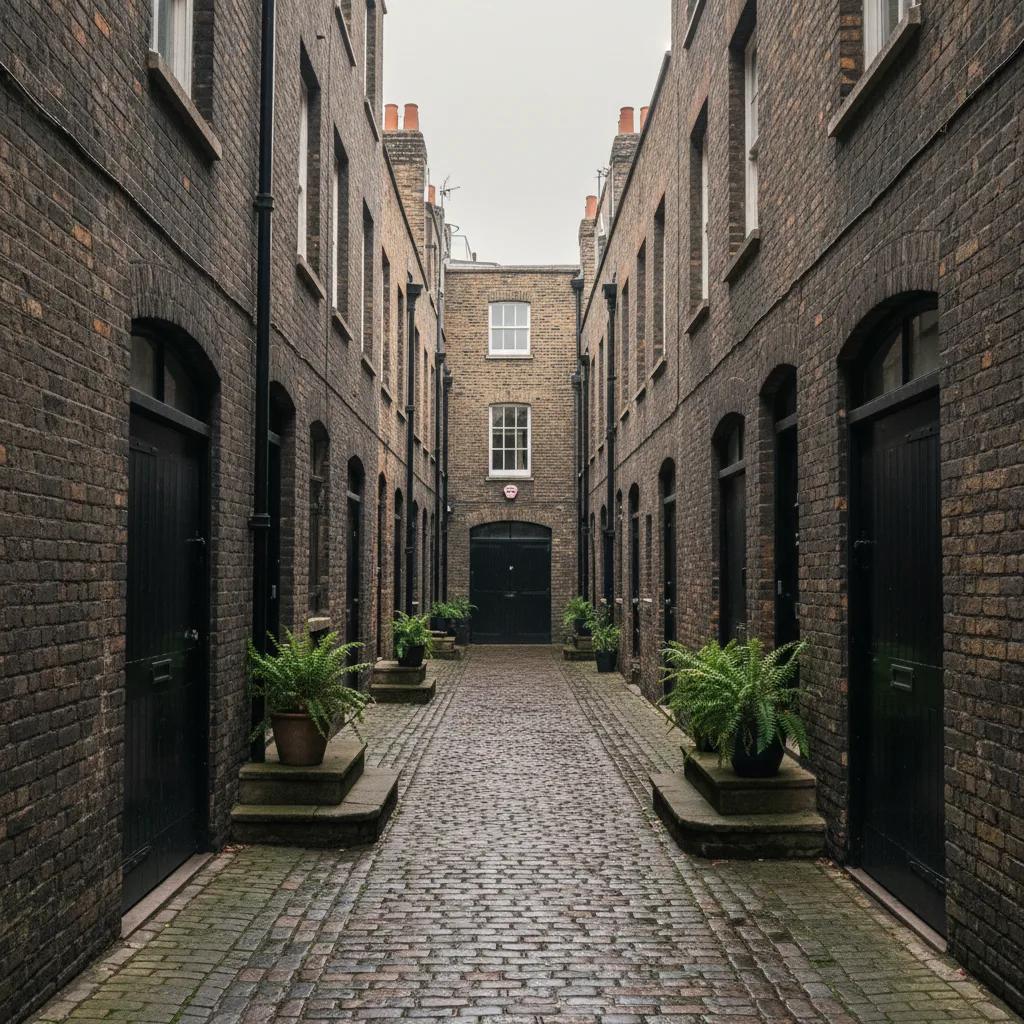
 Bloomsbury Mews Walk Planner: Literary Brick Passages
Neighborhood Guides
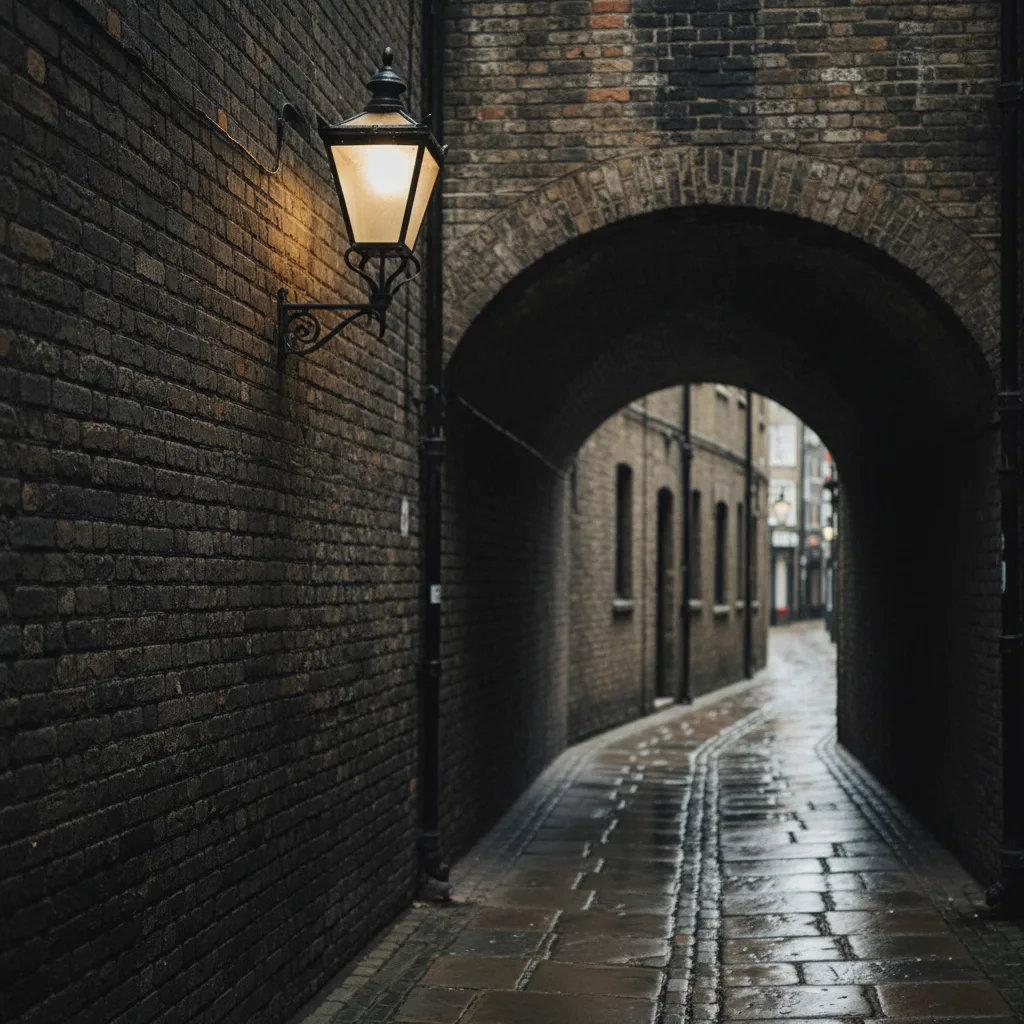
Historic Alleyway Heritage Walk in Soho and Covent Garden
Explore secluded cobbled courts, Victorian gaslit passages, and historic theatre mews on this self-guided historic alleyway heritage walk across central London.
Covent Garden and Soho harbor an intricate labyrinth of seventeenth-century pedestrian alleys, gaslit courts, and hidden passages that survived both the Great Fire of 1666 and extensive Victorian street widening. While thousands of commuters hurry along Charing Cross Road and Shaftesbury Avenue, stepping just one yard into these sheltered passages reveals undisturbed timber facades, iron gas lamps, and historic flagstones. Following this historic alleyway heritage walk connects London's oldest operating taverns, theatrical staging courts, and quiet residential passages where centuries of cultural history remain embedded in the brickwork.
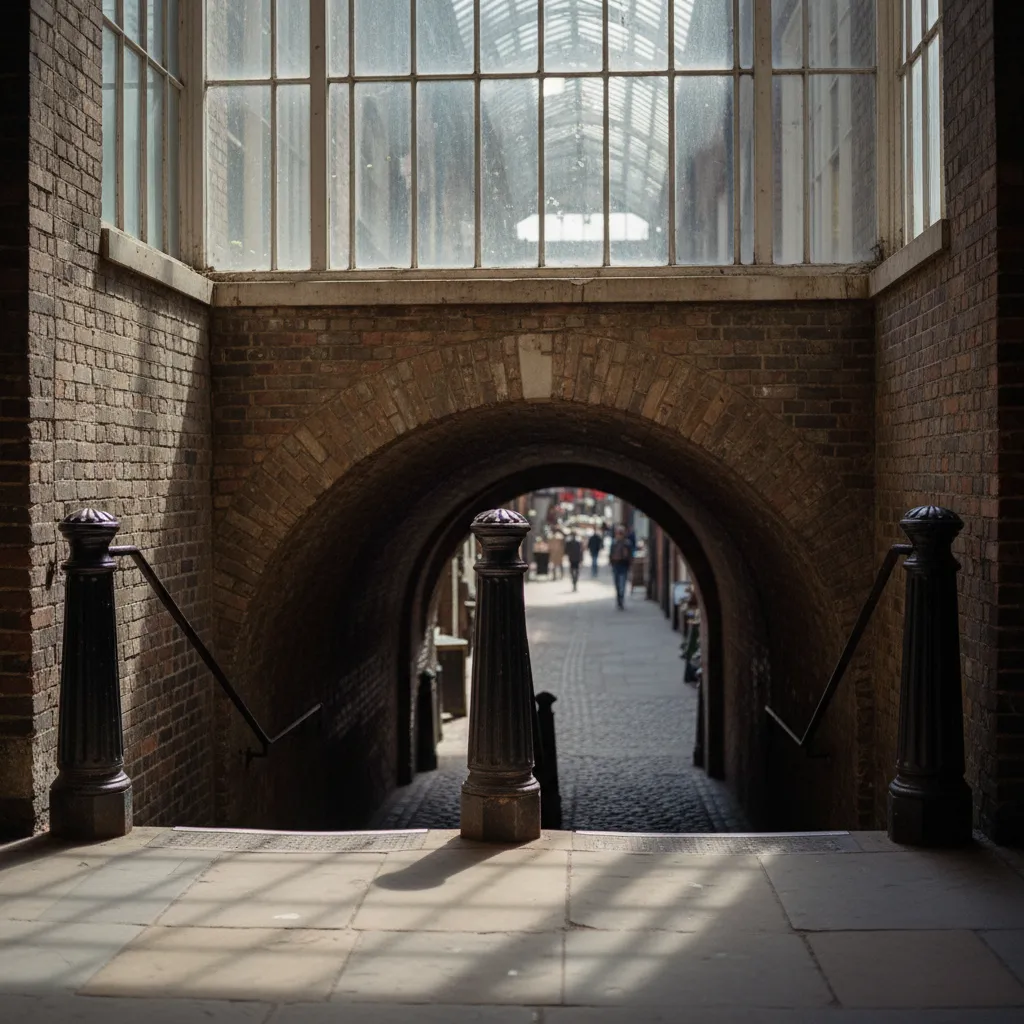
Goodwin's Court and Its Original Georgian Bow Windows
Goodwin's Court provides one of the West End's most atmospheric architectural survivals, connecting St Martin's Lane to Bedfordbury through an extraordinarily narrow pedestrian slit. First laid out in 1690 as Fisher's Alley, the passageway transformed during the late Georgian era into an elegant row of bow-fronted shops complete with original multipane glass and fluted wooden pilasters. Six working iron gas lamps, maintained by the local authority, still cast a warm amber glow against the blackened brick facades on overcast afternoons. Walking down the center of the flagstones feels remarkably insulated from the theater district traffic, with decorative brass knockers and polished door fittings preserving an authentic eighteenth-century residential stillness.
Rose Street and the Timber Framed Lamb and Flag Courtyard
Rose Street twists sharply through two blind right-angled turns between Garrick Street and Floral Street, defying the standard grid of Covent Garden. At its elbow stands the Lamb and Flag, a timber-framed tavern operating on this site since 1623, originally licensed as The Coopers Arms. In December 1679, poet John Dryden was ambushed in this very alleyway by thugs hired by the Earl of Rochester, leading to its historical notoriety as the Bucket of Blood. The narrow corridor features weathered brick walls, exterior cellar hatchways, and heritage wall plaques detailing its seventeenth-century brawling past. Standing within the compact dogleg bend, visitors observe the dramatic height of the surrounding warehouse elevations closing overhead.
Cecil Court and the Legacy of Victorian Antiquarian Booksellers
Cecil Court emerged as a dedicated pedestrian thoroughfare in 1894, linking Charing Cross Road directly to St Martin's Lane with grand Victorian terracotta facades. Known historically as Booksellers' Row and early British film row, the street housed pioneering cinema offices during the silent era, including Cecil Hepworth's production company. Today, twenty specialized independent dealers occupy the Victorian shopfronts, offering rare maps, first editions, antique sheet music, and historical theatrical playbills. Ornate cast-iron shop fascias, gold-leaf lettering, and sheltered overhangs create an unhurried browsing corridor free from vehicular traffic. Young Wolfgang Amadeus Mozart lodged here briefly in 1764 with the Couzin family during his European grand tour, a milestone commemorated by an official wall plaque.
Brydges Place and London's Narrowest Pedestrian Crevice
Brydges Place holds the singular distinction of being London's narrowest public right of way, measuring barely fifteen inches across at its tightest waistline beside the Coliseum Theatre. Established during the eighteenth century as a practical service alley connecting Bedfordbury to the Strand, the passage is hemmed in by three-story soot-stained brick walls that almost shut out the sky. Walking through requires turning your shoulders slightly sideways as the brick masonry tightens around you. The flagstones beneath are worn smooth by three centuries of pedestrians, stagehands, and theater patrons navigating through the West End, providing an unforgettable physical experience of pre-Victorian urban density.
St Anne's Court and Soho's Hidden Recording Heritage
St Anne's Court cuts cleanly from Dean Street through to Wardour Street, functioning as a vital pedestrian artery through the heart of Soho since its construction in 1735. Originally established by developer William Pym to house French Huguenot weavers and craftsmen, the passage later became synonymous with twentieth-century British musical innovation. Trident Studios operated at No. 17 from 1968, where David Bowie recorded Space Oddity and The Beatles tracked Hey Jude on pioneering eight-track consoles. The alley maintains its tall, canyon-like residential proportions, lined with modest Georgian brick terrace dwellings, iron window grilles, and tucked-away basement entrances. Walking through midday offers a peaceful shortcut away from Soho's bustling culinary avenues.
Meard Street and Eighteenth Century Carved Timber Doorcases
Meard Street splits into two distinct architectural sections between Wardour Street and Dean Street, with its western portion retaining an exceptional sequence of 1732 artisan townhouses. Master carpenter John Meard designed these brick residences with heavily projecting timber pediments, carved modillion cornices, and original wrought-iron railings incorporating antique boot-scrapers beside every stoop. Fluted keystones bearing carved grotesque faces look down upon the cobbled roadway, illustrating the high craftsmanship of early Georgian speculative builders. The narrow street functions largely as a quiet residential enclave, where heavy timber entrance doors and original leaded fanlights remain intact despite centuries of commercial activity pressing from all sides.
Ingestre Place and Historic Artisan Tenement Courts
Ingestre Place offers a glimpse into Soho's nineteenth-century artisanal and working-class housing evolution, tucked between Broadwick Street and Hopkins Street. Originally laid out with modest workshops and residential courts, the passage preserves decorative Victorian brick polychromy, glazed wall tiles, and arched basement lightwells. Tailors, shoemakers, and metal engravers historically populated these compact buildings, creating an intensely localized craft economy that defined Victorian central London. The surviving brick elevations display historic lead rainwater heads, iron chimney tie-plates, and small timber sash windows that remain quietly secluded behind the surrounding modern office developments.
Navigating Surface Details and Historic Gaslit Alleys
Walking these historic pathways requires paying close attention to historical street furniture and original paving textures that casual strollers regularly overlook. Many of the boundary corners feature repurposed Napoleonic cannon bollards embedded into the curbstones to prevent carriage wheel axles from damaging fragile brick foundations. Goodwin's Court and neighboring passages retain hand-dressed granite setts and sloping drainage gutters designed to channel rainwater away from doorstep footings. Visiting at dusk when the gas lamps flicker to life provides the most evocative visual perspective, though comfortable flat-soled footwear is strongly recommended for negotiating uneven flagstones and historical stone thresholds.
Pacing the Route and Practical Walking Strategies
Completing this self-guided route takes roughly seventy-five minutes at a relaxed pace, spanning a gentle walking distance of 1.4 miles across Soho and Covent Garden. Mid-morning at 10:00 AM offers ideal walking conditions before retail foot traffic peaks, while late evenings after 8:30 PM provide atmospheric quiet after theatre curtains rise. Visitors should skip midday Saturday afternoons when Covent Garden Piazza becomes heavily congested with street performers and tour groups. Covent Garden and Leicester Square Underground stations serve as ideal entry points, allowing you to begin at Goodwin's Court and conclude comfortably along Meard Street in Soho.
Nearby Refreshment Stops and Streetscape Extensions
Extending your historical exploration into adjacent side streets reveals additional tucked-away public courtyards and atmospheric refreshment stops. After emerging from Rose Street, turn into Floral Street to admire eighteenth-century warehouse hoists and decorative brick friezes, or take a short walk to Ingestre Place in Soho. The Karpo APP provides interactive route guidance, nearby coffee recommendations, and transit updates to help you navigate London's network of historic cut-throughs seamlessly. Exploring these quiet lanes demonstrates how London's ancient pedestrian geography continues to thrive beneath its contemporary urban bustle.
Ask Karpo for more information.
Keep reading
- Bloomsbury Mews Walk Planner: Literary Brick Passages
 Belgravia Mews Walk Planner: Stucco Arches and Alleys
 Notting Hill Mews Walk Planner: Quiet Painted Lanes