 Bloomsbury Mews Walk Planner: Literary Brick Passages
Neighborhood Guides
London Historic Alleyway Heritage Walk: Covent Garden Courts
Explore gas-lit seventeenth-century lanes and hidden tavern courts on this self-guided historic alleyway heritage walk through London's iconic Covent Garden.
Hidden narrow passages and gas-lit courtways weave quietly behind the bustling theatre district of modern Covent Garden. Developed largely between 1630 and 1690 as London expanded westward from the ancient City walls, these tucked-away corridors offered sheltered pedestrian passage for playgoers, market traders, and literary figures. Embarking on this historic alleyway heritage walk uncovers a remarkably preserved world of bow-windowed Georgian facades, antiquarian bookshops, and historic tavern courtyards that remain wonderfully insulated from the street performers and commercial crowds of the main piazza.
Stepping Through the Historic Threshold of Goodwin's Court
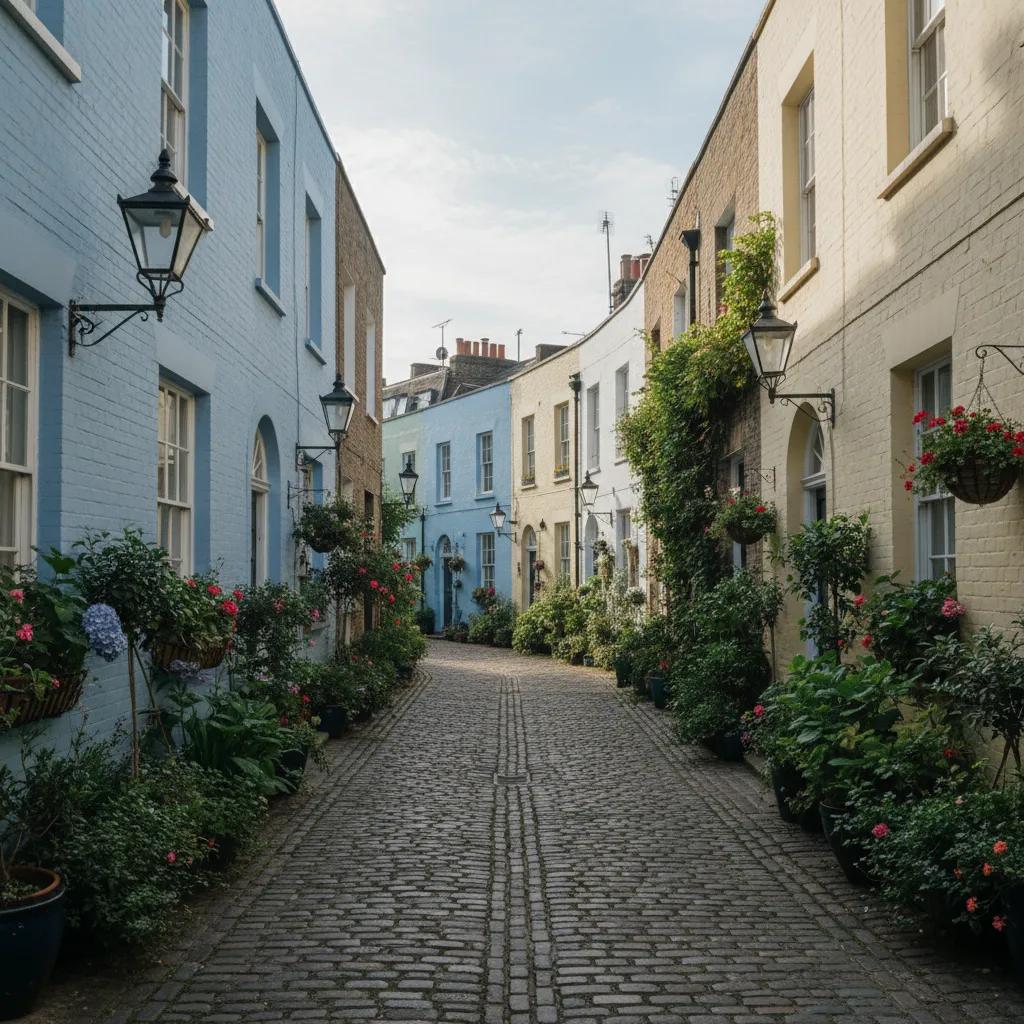
Stepping through a low archway off St Martin's Lane reveals the extraordinary visual time capsule of Goodwin's Court (postcode WC2N 4LL). Originally laid out around 1690 as Fisher's Alley, this slender pedestrian corridor features an uninterrupted row of bowed Georgian shopfronts on its northern flank. Each timber bow window retains its original multi-paned glass, brass door furniture, and black wrought iron boot scrapers. Authentic cast-iron gas lanterns mounted on brick walls cast a warm amber flicker across the pale paving stones. During the late nineteenth and early twentieth centuries, these intimate rooms served as casting offices for West End theatrical agents, where aspiring stage actors auditioned within earshot of neighboring playhouses.
Browsing Bookshops Along Victorian Cecil Court
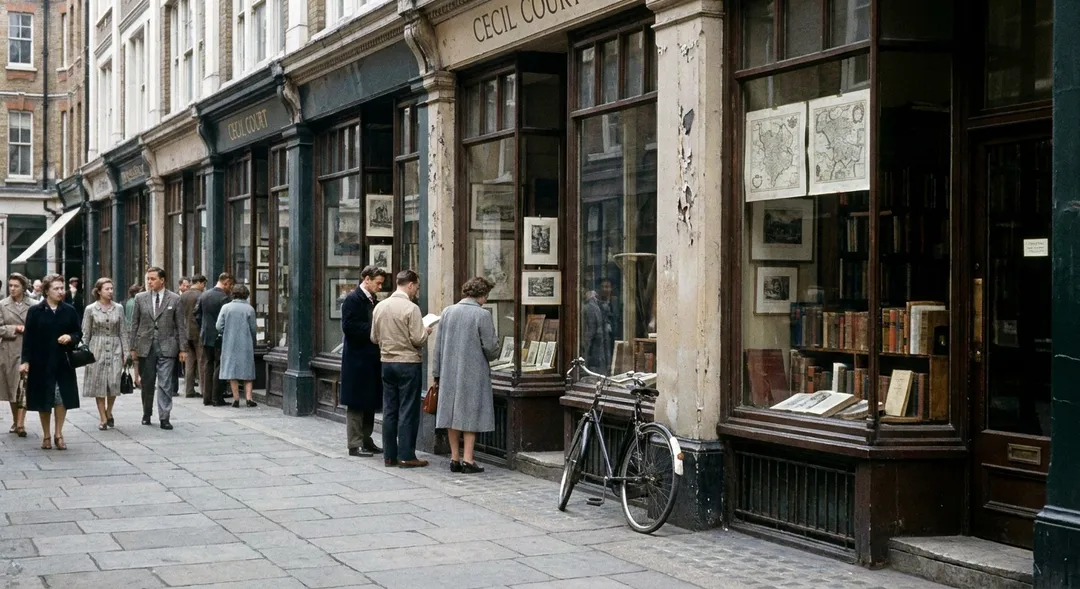
Browsing bookshops along neighboring Cecil Court (WC2N 4EZ) continues the walk's historic momentum. Paved entirely for pedestrians since its reconstruction in 1694 following a parish fire, the street became famous in the late Victorian era as London's premier Booksellers' Row. An eight-year-old Wolfgang Amadeus Mozart lodged along Cecil Court with his family in 1764 during his inaugural concert tour of England. Today the street remains lined with independent antiquarian dealers specializing in first editions, antique cartography, theatrical playbills, and esoteric publications. Traditional wooden shop fascias painted in muted heritage tones create an unhurried atmosphere that encourages slow browsing along the shop windows.
Wandering Into the Literary Shadows of Rose Street
Wandering into the dog-legged passage of Rose Street (WC2E 9EA) leads you directly into Covent Garden's literary and tavern heritage. Tucked between Garrick Street and Floral Street, this winding lane was constructed during the 1630s development of the Bedford Estate. At its central elbow stands The Lamb and Flag, a timber-framed inn licensed since 1623. In December 1679, poet laureate John Dryden was brutally ambushed by hired thugs in this very alley following a political satire controversy. During the Regency period, the tavern earned the grim moniker The Bucket of Blood due to bare-knuckle boxing bouts staged in its upper rooms. The ground floor preserves bare timber floorboards, low beamed ceilings, and brass gas fittings that recall its historic maritime and literary patrons.
Descending Toward the Strand via Lumley and Bull Inn Courts
Descending toward the Strand from Maiden Lane brings walkers to a series of extraordinarily narrow pedestrian slits including Lumley Court (WC2E 7NB) and Bull Inn Court (WC2R 0NP). Dating back to the late seventeenth century, these cut-through passages provided vital shortcuts between the residential quarters of Covent Garden and the bustling coaching inns along the Strand highway. Bull Inn Court retains its steep stone threshold steps and historic red brick walls scarred by centuries of handcart traffic. Looking upward through the narrow canyon reveals timber sash windows separated by less than three arm lengths across the gap. The passages feel wonderfully secluded, offering peaceful pocket respites just paces away from major roadway traffic.
Walking Across Variable Paving and Gas-Lit Surfaces
Walking across Covent Garden's heritage alleys involves negotiating varied historic paving materials. Goodwin's Court and Cecil Court feature level, broad granite flagstones that offer comfortable walking, whereas Rose Street and Bull Inn Court present uneven cobblestones, raised drainage gutters, and shallow granite steps. Footwear with cushioned soles and steady grip is recommended to comfortably handle the transitions between worn flagstones and cobbled thresholds. While the alleys are well maintained by local borough conservation trusts, the absence of modern ramp gradients in the narrowest courts means step-free access is limited in secondary passages. Authentic working gas lamps provide gentle illumination after dark, creating dramatic shadow patterns along the brickwork.
Visiting During Optimal Hours and Managing Theatrical Crowds
Visiting during early morning hours between 8:00 AM and 10:00 AM grants you solitary access to these historic lanes before West End foot traffic begins. During midday and weekend afternoons, Cecil Court draws steady browser traffic, while Rose Street fills with pub patrons spilling onto the cobbles outside The Lamb and Flag between 5:30 PM and 7:30 PM. For atmospheric photography, early dusk in autumn or winter around 4:45 PM is ideal, when the warm glow from shop display cases and gas lanterns reflects off damp flagstones. If the exterior of Rose Street feels crowded during pre-theatre drink rushes, slipping through Lazenby Court offers an immediate quiet detour back to St Martin's Lane without fighting theatre crowds.
Venturing Beyond to Lincoln's Inn and Seven Dials
Venturing beyond the immediate courtways allows walkers to connect seamlessly with adjacent historic quarters. Walking ten minutes northward through Neal's Yard and Seven Dials leads into the quiet legal quadrangles of Lincoln's Inn, where fourteenth-century timber halls and Great Turnstile passage continue London's pedestrian alley tradition. Moving southward across the Strand guides you down to the Victoria Embankment Gardens and the historic York Watergate, an ornate stone arch built in 1626 that marks the original shoreline of the River Thames before Victorian engineering pushed the riverbed back. Both extensions deepen your understanding of London's seventeenth-century architectural evolution.
Arriving by Underground and Practical Visitor Tips
Arriving by London Underground is exceptionally convenient for this walking itinerary. Covent Garden station on the Piccadilly line sits three minutes east of Rose Street, while Leicester Square station on the Northern and Piccadilly lines provides direct access to St Martin's Lane and Cecil Court within two minutes. The entire self-guided alleyway route is free to explore, with public right-of-way maintained along every passage at all hours. Public restrooms are accessible at Leicester Square concourse and within the main Covent Garden Market building on Henrietta Street. If rain interrupts your walk, the glass covered arcades of the Covent Garden Market building offer immediate shelter within two minutes of Rose Street.
Planning Your Custom Alley Walk with Karpo APP
Planning your historic London exploration is simplified using Karpo APP. The application maps every concealed entrance along St Martin's Lane and Maiden Lane, displaying walking durations, turn-by-turn guidance, and historical background cards for landmarks like Goodwin's Court and Rose Street. Users can filter for scenic pedestrian-only routes, locate quiet heritage coffee stops, or sync their walking progress with West End performance schedules to ensure a smooth and unhurried cultural day out across London.
Ask Karpo for more information.
Keep reading
- Bloomsbury Mews Walk Planner: Literary Brick Passages
 Belgravia Mews Walk Planner: Stucco Arches and Alleys
 Notting Hill Mews Walk Planner: Quiet Painted Lanes