 Bloomsbury Mews Walk Planner: Literary Brick Passages
Neighborhood Guides
London Historic Alleyway Heritage Walk: City Medieval Courts
Follow this free self-guided historic alleyway heritage walk through medieval courts, hidden tavern passages, and ancient gas-lit churchyards across London.
The medieval courtways threading between Cornhill and Lombard Street survive as London's densest labyrinth of seventeenth-century pedestrian alleys. Hidden directly behind the monumental banking headquarters of the financial district, this network of dark brick passages preserves the intimate urban grain of pre-modern commerce. Taking this historic alleyway heritage walk reveals how London operated before wide Victorian boulevards were cut through the ancient wards, connecting centuries-old coffee houses, flagstone churchyards, and tucked-away tavern courts that remain entirely shielded from surrounding vehicle traffic.
Entering the Labyrinth Through St Michael's Alley
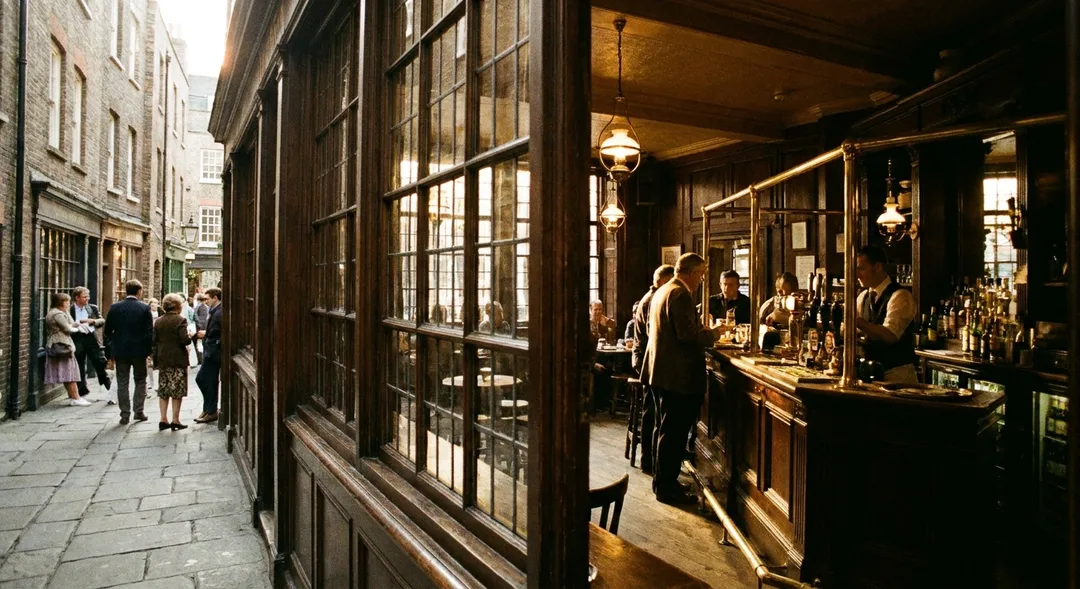
Beginning at the southern pavement of Cornhill, a narrow opening beside St Michael Cornhill leads directly into St Michael's Alley (postcode EC3V 9DS). The towering stone parish church, rebuilt by Sir Christopher Wren between 1670 and 1672 following the Great Fire of London with a Gothic revival tower added by Nicholas Hawksmoor in 1721, casts long afternoon shadows across the flagstones. Walking beneath the arched brick portal immediately dampens the roar of modern buses and taxis on Cornhill. The passage narrows to less than two meters wide, hemmed in by soot-darkened brick walls and historic iron boot scrapers embedded at doorsteps. Here the scent of roasted coffee beans still drifts from the ground level of the Jamaica Wine House, an authentic establishment occupying the precise ground where Pasqua Rosée opened London's very first coffee house in 1652.
Coffee House Origins and Merchant Assembly Yards
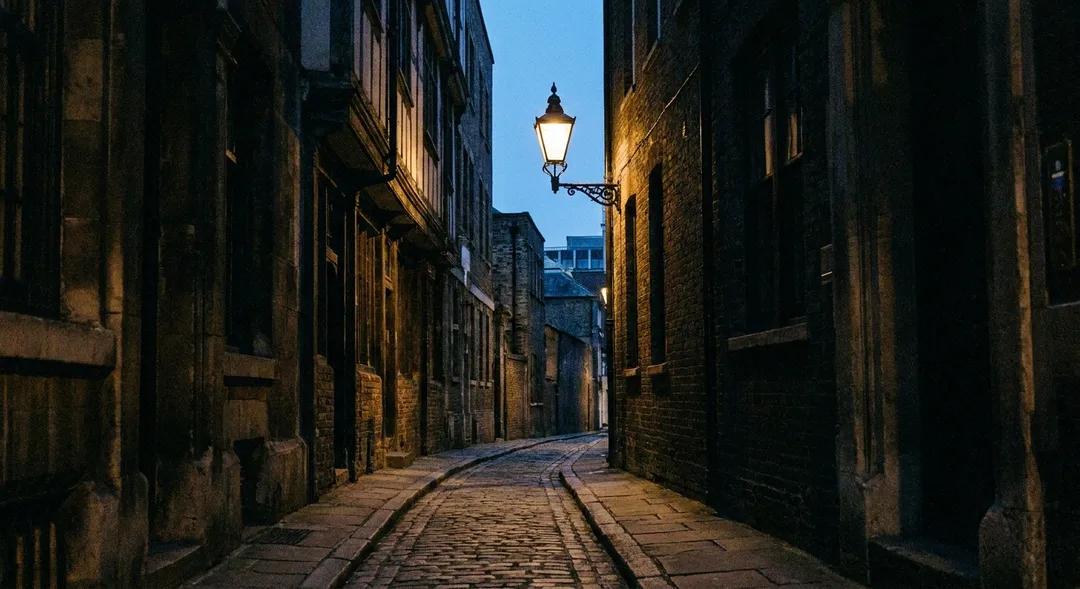
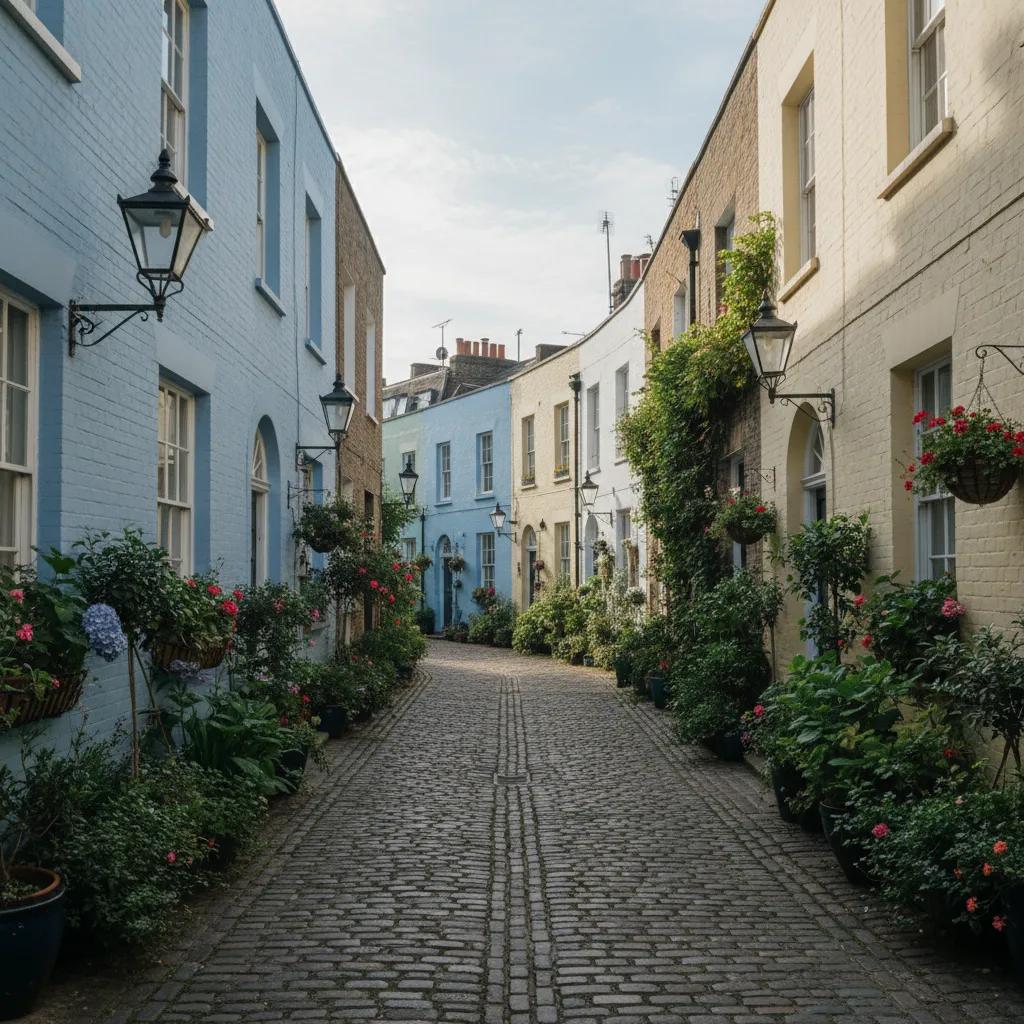
During the seventeenth century, St Michael's Alley functioned as an open-air trading floor where merchants gathered to negotiate shipping cargoes, overseas voyages, and marine insurance policies over dishes of bitter Turkish coffee. The Jamaica Wine House, reconstructed in deep red Victorian brick in 1869, retains its circular timber bar counter, dark mahogany booths, and cut-glass partition screens. Stepping past the corner into Bengal Court reveals an even narrower dog-leg passage where sunlight rarely penetrates to ground level. High above the cobbles, ornate wrought-iron brackets hold black lanterns that have illuminated evening walkers through these shadowed courts for over two hundred years. The stones underfoot are smooth granite setts, worn uneven by millions of footsteps carrying city clerks, messengers, and seafaring captains between trading desks.
Tucked Tavern Courtyards of Ball Court and George Yard
Turning westward out of Bengal Court guides you across George Yard (EC3V 9DH) and into Ball Court (EC3V 3ND). Ball Court is an authentic cul-de-sac passage accessed via a wooden-paneled walkway beneath 38 Cornhill. Within this sheltered pocket stands Simpson's Tavern, established in 1757 by fishmonger Thomas Simpson. Long celebrated as London's oldest chophouse, its timber-fronted exterior and brass gas lamps evoke the commercial world described by Charles Dickens. In his 1836 novel The Pickwick Papers, Dickens placed Mr Pickwick and his trusty companion Sam Weller in George Yard at the historic George and Vulture tavern. Today, standing in the quiet square of George Yard surrounded by historic gas lanterns offers an atmospheric glimpse into eighteenth-century city life, completely removed from modern steel office towers.
Churchyard Sanctuaries and Castle Court Shortcuts
Connecting northward toward Gracechurch Street, Castle Court provides an essential link through the medieval grid. The passage opens suddenly into the pocket churchyard of St Peter upon Cornhill, widely considered one of the oldest consecrated Christian grounds in Britain with roots tracing back to Roman Londinium in AD 179. Mature plane trees grow between eighteenth-century headstones, providing quiet timber benches where city workers retreat during lunch intervals. The stone church wall bears ancient parish boundary markers and bronze commemorative plaques. Exiting the court through Sun Court brings you past historic iron coal-hole covers and basement iron grates that ventilated wine cellars below the paving stones. The transition between narrow dark alleys and quiet green churchyards defines the classic rhythm of this historic route.
Surface Textures, Gas Lighting, and Footwear Guidance
Navigating the City's medieval passages requires sensible preparation regarding walking surfaces and changing light conditions. The entire circuit consists of traditional stone flagstones, historic granite setts, and raised curb stones. During damp London mornings or winter drizzle, polished stone corners can turn slippery, making flat soled walking shoes with dependable rubber traction essential. High-heeled footwear is strongly discouraged, as deep drainage crevices and wide gaps between ancient paving stones easily catch slender heels. Several connecting alleys feature shallow heritage steps without modern safety ramps, so strollers and wheeled cases must be maneuvered with care. Artificial gas lanterns illuminate the passages beginning at dusk, casting a warm amber glow that transforms the brick canyon walls into an evocative nighttime scene.
Crowd Patterns, Ideal Timings, and Honest Judgments
Timing makes a profound difference when exploring the Cornhill alley network. On weekdays between 12:30 PM and 2:00 PM, the courts fill rapidly with city financial workers pouring out of neighboring office buildings to grab lunch or queue at local sandwich counters. If you prefer unhurried architectural photography and contemplative exploration, visit between 9:30 AM and 11:30 AM, or during late twilight around 5:30 PM when the gas lamps flicker to life. Saturday mornings offer striking stillness when the financial district becomes an eerie ghost town, though you should note that historic pubs and wine cellars along the alleys remain firmly closed on weekends. For an authentic ambiance with open taverns, a weekday late afternoon walk delivers the most rewarding balance of atmospheric light and historic tavern vitality.
Extending the Walk Toward Leadenhall and Fleet Street
Once you finish exploring the core Cornhill courtways, several natural walking extensions present themselves within short walking distance. Heading two minutes eastward across Gracechurch Street brings you into Leadenhall Market, a magnificent Victorian covered arcade designed by Sir Horace Jones in 1881, featuring soaring wrought-iron roof trusses and cobblestone alleys that stand on the site of London's Roman forum. Alternatively, walking fifteen minutes westward past St Paul's Cathedral leads to the famous legal alleys around Fleet Street, including Johnson's Court and Wine Office Court where Dr Samuel Johnson compiled his landmark English dictionary in 1755. Both extensions complement the medieval merchant narrative experienced along St Michael's Alley.
Essential Practical Notes and Public Transit Connections
Accessing this medieval alleyway walk is straightforward via public transportation. Bank station on the Central, Northern, and Waterloo and City lines provides the most direct access, with Exit 5 and Exit 6 depositing walkers within two minutes of Cornhill. Monument station on the District and Circle lines sits four minutes south along Gracechurch Street. The route is entirely free of charge and requires no booking, admission fees, or permits, remaining open to the public twenty-four hours a day. Public restrooms are available at nearby Cannon Street station and Leadenhall Market concourses. If heavy rain begins during your walk, the covered colonnades of the Royal Exchange on Threadneedle Street provide convenient dry shelter within three minutes of St Michael's Alley.
Curating Historic London Routes with Karpo APP
Using Karpo APP allows you to save this City of London medieval alleyway walk directly into your personalized urban exploration map. The application marks the precise entrances to hidden passages off Cornhill and Lombard Street, provides walking distance estimates, and highlights nearby historic landmarks so you never miss an obscured archway. Whether you wish to discover evening tavern stops, locate quiet bench courtyards away from financial crowds, or find the quickest pedestrian shortcut toward the Thames embankment, the app keeps your custom London walking plan seamlessly organized on the go.
Ask Karpo for more information.
Keep reading
- Bloomsbury Mews Walk Planner: Literary Brick Passages
 Belgravia Mews Walk Planner: Stucco Arches and Alleys
 Notting Hill Mews Walk Planner: Quiet Painted Lanes