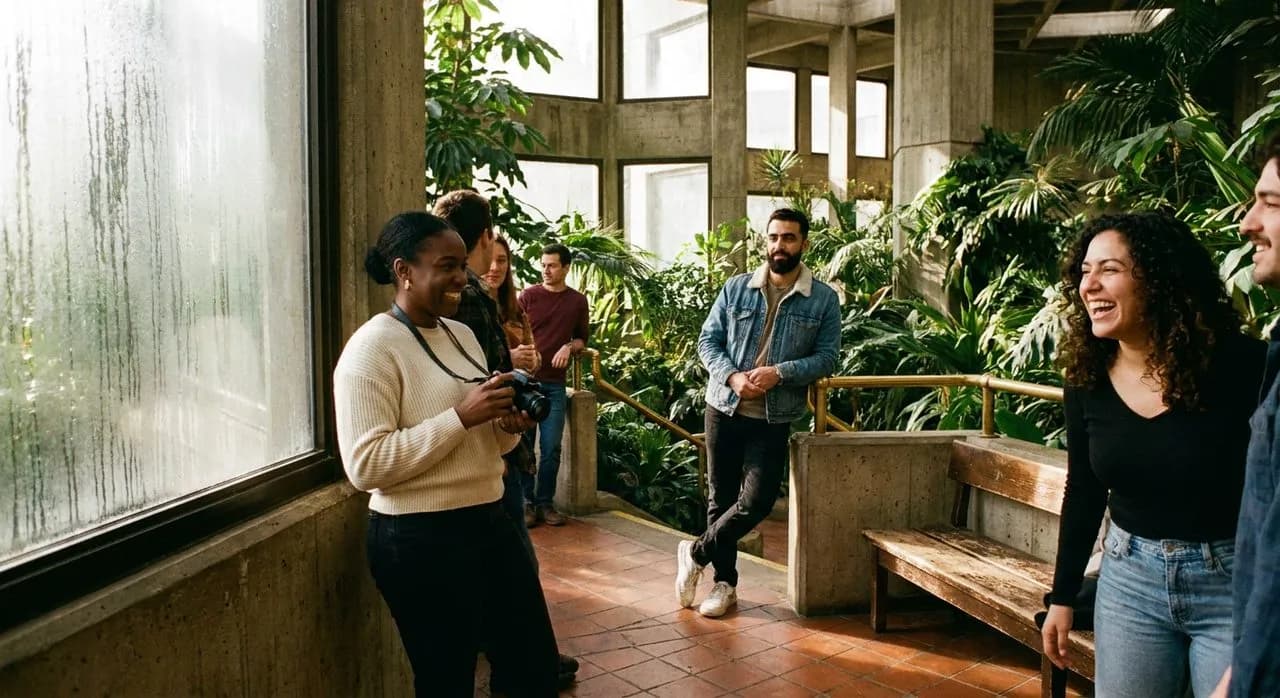
The lift doors open to another climate
You take the lift to level three of the Barbican's Lakeside Terrace, and the doors part onto something that shouldn't exist inside poured concrete. The air thickens immediately—humid, green-scented, ten degrees warmer than the foyer you left thirty seconds ago. The Barbican Conservatory sprawls across the space, making it one of London's largest covered greenhouses. It opens Friday evenings plus weekends, always free, always requiring a timed ticket you can grab online roughly a month in advance. A limited number of same-day tickets are released from 9:30am on open days. The conservatory sits directly above the theatre, its glass roof invisible from street level, camouflaged by the estate's signature concrete fins and residential towers.
Koi ponds and the arid house

Three distinct climate zones occupy the space. The main tropical section wraps around a central pond where koi carp drift between lily pads and submerged roots. The arid house, through a doorway on the east side, holds barrel cacti, agave, and mature Euphorbia specimens that reach toward the ceiling. The temperate zone bridges both, planted with ferns, camellias, and palms that have been here since the conservatory opened in 1984. Staff rotate seasonal displays near the entrance, but the permanent collection remains largely unchanged, some specimens decades old, part of the original planting scheme.
The finches and the benches
Finches nest in the canopy. You'll hear them before you spot them—quick chirps echoing off concrete and glass. Small tropical finches mostly, descendants of pairs introduced decades ago. They've made the conservatory their territory, building nests in the staghorn ferns bolted to the upper walls. Benches line the main walkway, placed strategically under the tallest palms. The spot near the banana plants offers a good combination of shade and pond view. The sound design here is accidental but perfect: water trickling from the fountain system, finch calls, the low hum of climate control machinery hidden behind louvred panels. No music, no announcements, just the conservatory's own acoustic signature.
What the architects buried in concrete
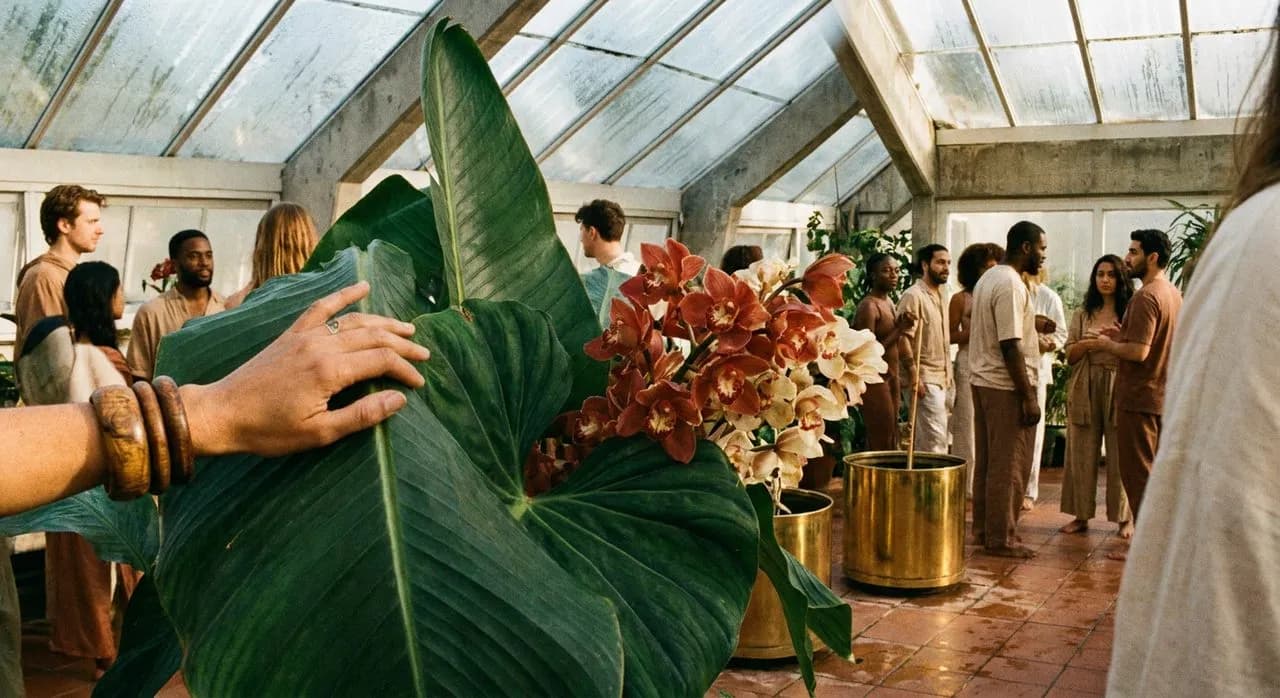
Chamberlin, Powell and Bon designed the Barbican Estate in the 1960s, and the conservatory was always part of the plan—a living counterpoint to all that raw concrete. The structure uses the theatre's roof as its floor, with heating ducts and water systems threaded through the building's bones. The glass roof sits on a steel frame that cantilevers over the theatre below, engineered to carry the weight of soil, water, and mature trees without transferring load to the performance space. You can see the structural logic if you look up: concrete columns rise through the planted beds, painted white, supporting the glass panels above. It's greenhouse-as-infrastructure, botanical garden as architectural component, not decorative afterthought. The building absorbs the conservatory; the conservatory softens the building.
The weekend regulars and their routes
A loose community of regulars has formed around the opening schedule. You'll recognise them by their routes: they walk the perimeter first, checking on specific plants, then settle near the pond with books or sketchpads. Some visitors photograph the same specimens each visit, documenting their growth. The conservatory attracts a particular type of visitor: people who want green space without Hyde Park crowds, who appreciate that you must plan ahead for something free, who understand that limited access creates value. It's never packed, even at peak times, because the timed ticket system caps entry.
Timing your visit and what to skip
Book your slot for an early time if you want the space quieter. Later in the day, families arrive and the acoustic quality changes—still pleasant, but no longer meditative. The conservatory itself has no food or drink allowed inside, which keeps it clean but means you should hydrate before entry. Photography is permitted, tripods are not. The light is best in late morning when sun angles through the east-facing glass and catches the pond surface.
Practical notes
The Barbican Conservatory, Barbican Centre, Silk Street, London EC2Y 8DS. Generally open Fridays 18:30–21:30 and Saturdays & Sundays 12:00–19:00 (subject to private events and seasonal changes; check the Barbican website before visiting). Free entry but timed tickets required—tickets released approximately one month in advance online. A limited number of same-day tickets released from 9:30am on open days. Located on Level 3. Barbican tube station (Circle, Hammersmith & City, Metropolitan lines) is nearby. Moorgate station (Northern, Circle, Hammersmith & City, Metropolitan, Elizabeth line) also serves the area. The conservatory is step-free accessible via lifts from the main foyer. Temperature inside averages warmer than the rest of the building year-round; dress accordingly. Children welcome but must be supervised near ponds. No booking fee, genuinely free.
Tags: #BarbicanConservatory #LondonFree #BrutalistArchitecture #IndoorGarden #HiddenLondon #FreeInLondon #LondonGreenSpace #BarbicanEstate #TropicalGreenhouse #LondonWeekend #SecretLondon #UrbanNature #LondonArchitecture #FreeAndFine
Sources consulted: barbican.org.uk
All trademarks are the property of their respective owners.