A Power Station, a Free Museum, and the Turbine Hall
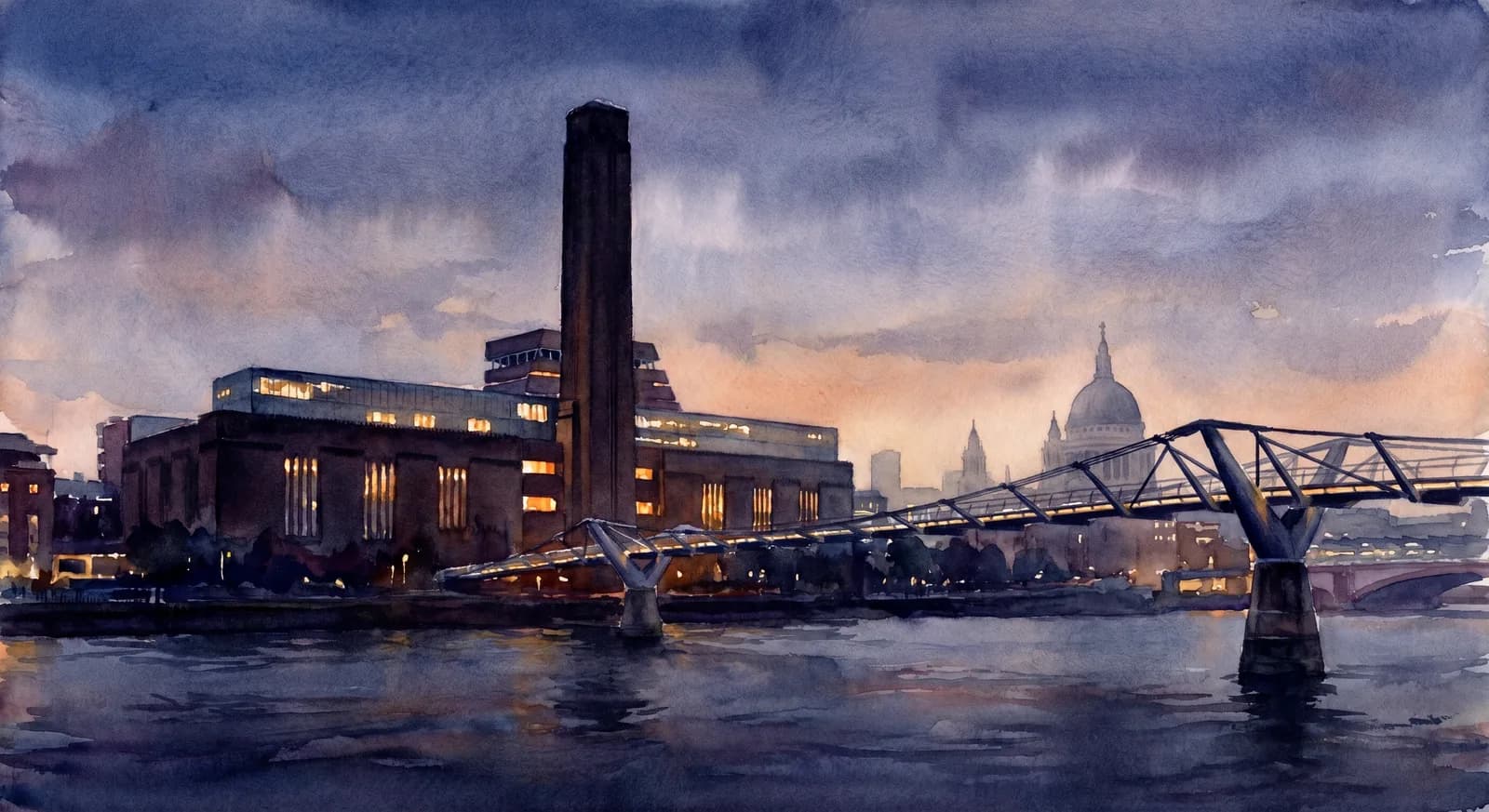
The Bankside Power Station was designed by Sir Giles Gilbert Scott in 1947 and built on the south bank of the Thames directly opposite St Paul's Cathedral. It generated electricity for London until 1981, when oil prices made it uneconomic. The building sat derelict for fifteen years. In 1995 the Tate Trustees announced that Bankside would be the home of the new national museum of modern art, and in May 2000 Tate Modern opened. The architects Herzog & de Meuron preserved the building's exterior — brick walls, central chimney, industrial scale — and converted the interior to gallery space. The Turbine Hall was kept as the building's central public room. The Hall is free to enter, every day, without ticket, until 10 p.m.
Twenty-five years later, Tate Modern is the most-attended modern and contemporary art museum in the world — roughly six million annual visitors as of the most recent published figures. The galleries holding the permanent collection are free. The temporary exhibitions (Picasso, Yayoi Kusama, Rothko, etc.) are ticketed, £20 to £24. The Turbine Hall is permanently free, and the annual Hyundai Commission — a single site-specific work in the Turbine Hall, mounted October through April — is one of the most-watched art commissions on Earth, free to walk in and look at.
What the Turbine Hall Actually Is, on a Tuesday
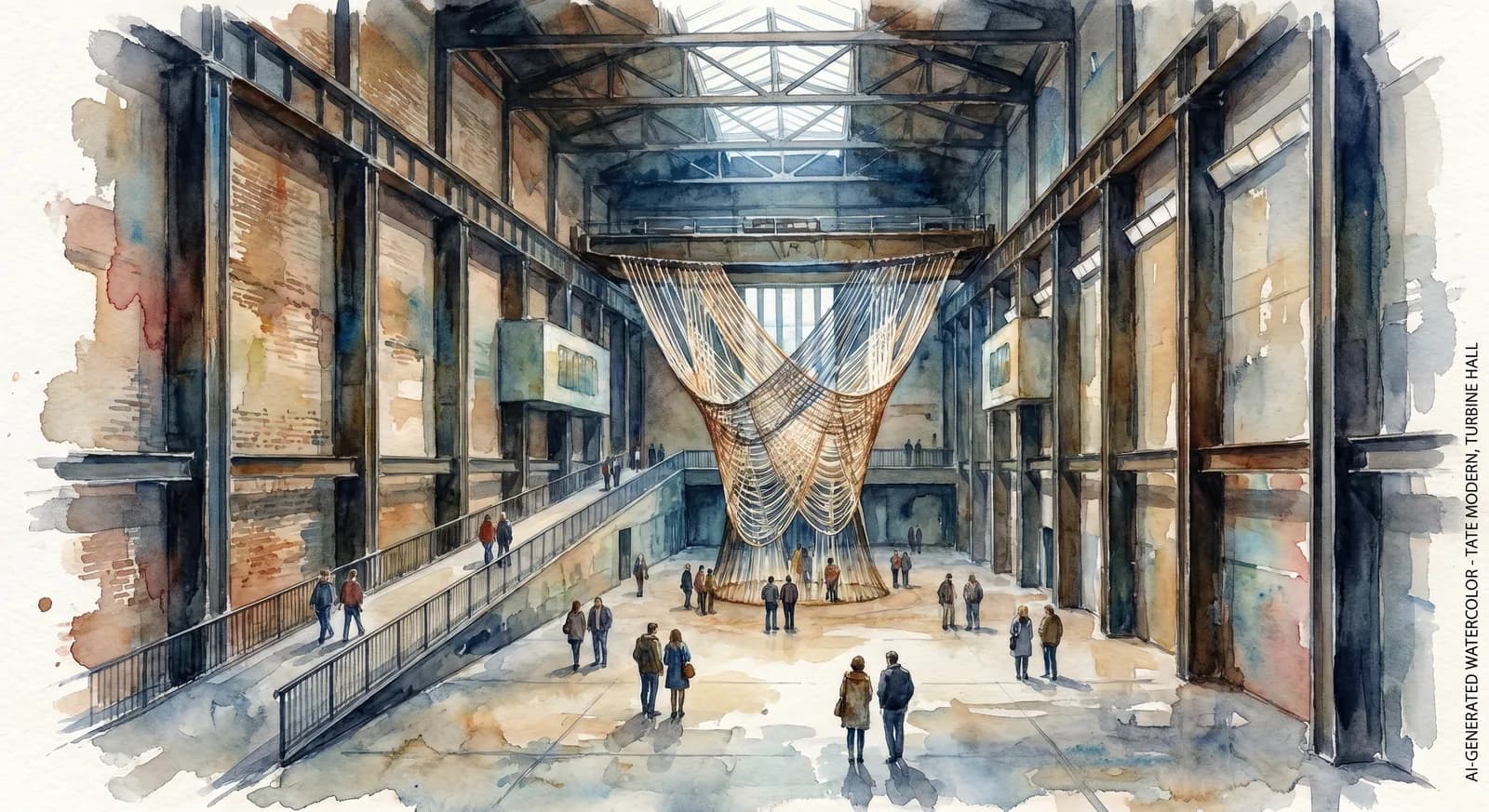
The Hall is entered down a long sloping concrete ramp from the western end. You walk in from the Holland Street entrance and the floor drops away from you — five storeys deep into the building, the original turbine pit. The scale is immediate. The ceiling is 35 metres. The space is so large that the human eye has trouble holding it; most first-time visitors stop on the ramp halfway down and just stand for a moment to absorb. Past commissions: Olafur Eliasson's The Weather Project (a giant artificial sun, 2003); Carsten Höller's Test Site slides (2006); Doris Salcedo's Shibboleth (a 167-metre crack in the floor, 2007–08); Ai Weiwei's Sunflower Seeds (100 million handmade porcelain seeds, 2010).
The 2025–26 Hyundai Commission runs October through April; the 2026–27 commission, announced in late summer, runs October 2026 through April 2027. Between commissions the Hall is empty — a vast unprogrammed space that is, if anything, more dramatic without art in it. Schools host their groups in the Hall. Visitors lie on the floor with backpacks under their heads. The acoustic is cathedral-scale. The lighting is industrial. The space is the show.
Free Galleries, Ticketed Galleries
The Boiler House (the original brick building, now galleries) holds the permanent collection — free, no ticket, walk-in. The collection is organised across four levels by theme rather than chronology: 'In the Studio' (Levels 2 and 3, Boiler House), 'Materials and Objects' (Level 4), 'Media Networks' (Levels 2 and 4, Blavatnik Building), and 'Performer and Participant.' Major works on permanent display: Mark Rothko's Seagram Murals (one full gallery, Boiler House Level 2); Anish Kapoor's Ishi's Light (Level 4); Louise Bourgeois's Maman spider (intermittent, when not on tour); Picasso, Pollock, Warhol, Bacon, Hockney, Kusama (without ticket); Marlene Dumas, Lubaina Himid, Theaster Gates, Frank Bowling (the museum's commitment to twenty-first-century acquisitions).
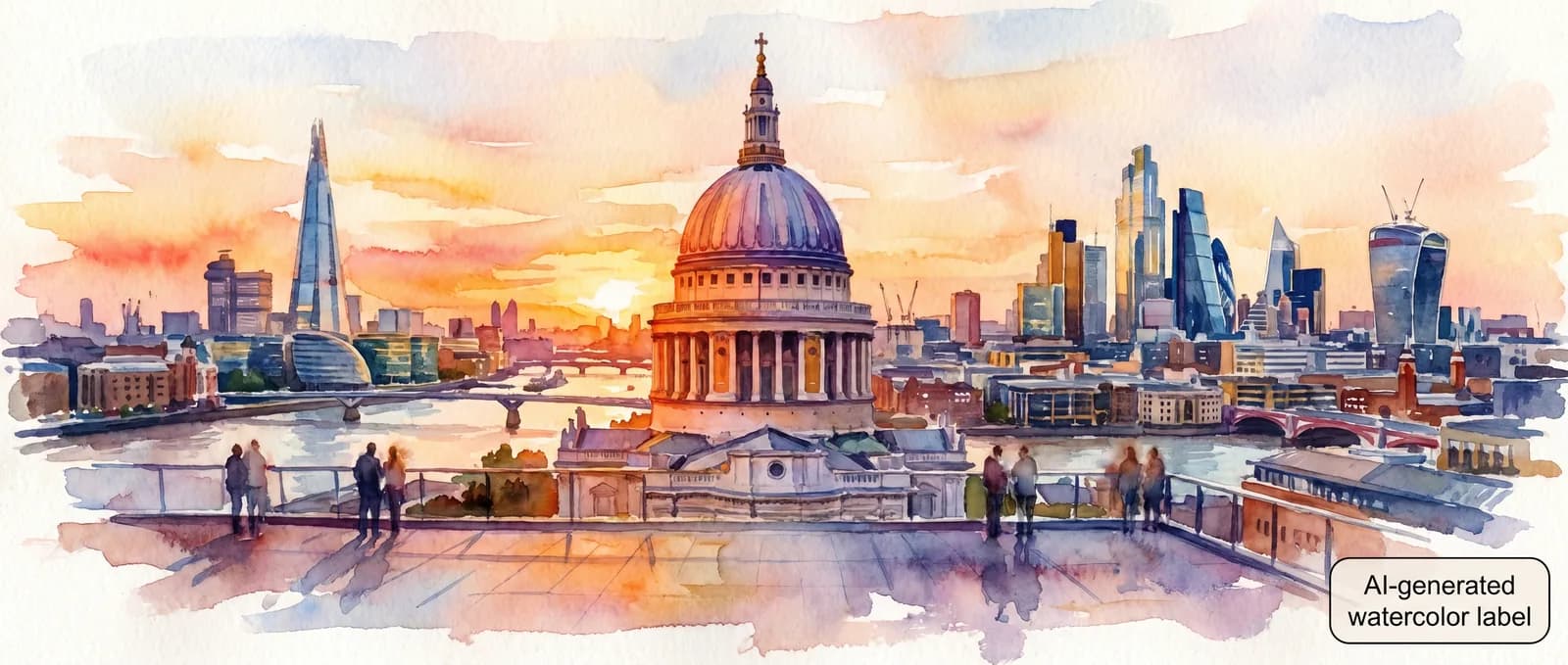
The Blavatnik Building (the 2016 ten-storey extension by Herzog & de Meuron) holds the contemporary collection and the temporary exhibitions. Same free admission for the permanent floors; ticketed for the marquee shows. The eighth floor has the Tate Members' Room (members only) and the ninth-floor Restaurant. The tenth-floor viewing terrace was free to all until 2023; a 2023 court ruling sided with neighbours over privacy concerns and reduced the terrace's public hours, but the public floor is still open during museum hours. The view: 360 degrees of London, with St Paul's Cathedral directly across the river, the Millennium Bridge in the foreground, and the City of London skyline behind.
How to Time the Visit
The clean Tate Modern visit: arrive at 10 a.m. for doors-open. Enter through the Holland Street ramp into the Turbine Hall. Stand at the top of the ramp for ninety seconds and let the scale land. Walk down the ramp, look at the commission (or the emptiness). Take the elevator to Boiler House Level 2 for the Rothko Seagram Murals. Spend twenty minutes. Walk to Level 3 for the Kusama and the Pollock rooms. Cross to Blavatnik Building Level 4 for the contemporary collection. Take the lift to Level 10 for the viewing terrace. Spend forty-five minutes. Walk down to the Kitchen on Level 1 for lunch. Total visit: 2.5 hours. Total cost: zero, unless you eat or buy a temporary-exhibition ticket.
The Tate Modern is open 10 a.m. to 6 p.m. Sunday through Thursday, and 10 a.m. to 10 p.m. Friday and Saturday. The Friday and Saturday late-opening is the move: the Turbine Hall after 7 p.m. is half-empty, lit dramatically, and feels different from the day Hall. The Level 10 view at dusk is the cleanest free view of St Paul's in London — better than the dome itself (£25) because it includes the building.
Where to Eat — Free Options, and Reasonable Ones
Inside Tate Modern: the Kitchen on Level 1 (open kitchen, modern British, mains £15–£22); the Cafe on Level 1 (sandwiches and salads, £8–£12); the Restaurant on Blavatnik Level 9 (sit-down, the most expensive of the three, mains £24–£32). All three are open to the public; the Restaurant takes reservations.
Outside the museum: Borough Market (10 minutes' walk east) is the city's premier food market — open Wednesday to Saturday, 75 stalls, £8–£15 lunches. The Anchor Inn (Bankside Lane, a 1615 riverfront pub two blocks west) is the institution-pub for the post-visit pint. The Swan at the Globe Theatre next door does a decent set-lunch. The Founders Arms across the river bridge is the Brit-pub seasonal option with the Thames-side terrace.
How to Actually Get There
Southwark Underground (Jubilee Line) is the closest Tube station, five minutes' walk south. Blackfriars (Circle, District, and National Rail) is six minutes' walk across the Blackfriars Bridge. St Paul's (Central Line) is ten minutes' walk across the Millennium Bridge — and the Millennium-Bridge crossing is the best free pedestrian-bridge crossing in central London, with St Paul's at one end and Tate Modern at the other.
The Thames Clipper riverbus stops at Bankside Pier, twenty metres west of Tate Modern's river entrance. The clipper from Westminster Pier takes fifteen minutes and is the best way to arrive at the museum if you are coming from a hotel near Big Ben. A standard single is £8.40 on Oyster contactless; the Day River Roamer is £20.50 unlimited.
Practical notes
- Where: Tate Modern, Bankside, London SE1 9TG. River entrance and Holland Street ramp entrance.
- When: Sun–Thu 10 a.m.–6 p.m.; Fri–Sat 10 a.m.–10 p.m. Last entry one hour before close.
- Cost: Free for permanent collection, Turbine Hall, and Level 10 viewing terrace. Temporary exhibitions £20–£24.
- Best time: weekday morning (10–11 a.m.) for quiet galleries; Friday or Saturday evening (8–10 p.m.) for empty Turbine Hall.
- Getting there: Southwark (Jubilee Line) or walk from St Paul's via Millennium Bridge.
- Don't miss: Rothko Seagram Murals (Boiler House Level 2), Hyundai Commission in Turbine Hall (Oct–April), Level 10 view.
- Eat: Kitchen at Tate (Level 1), or 10-min walk to Borough Market.
The point
Most great art museums in the world charge for entry — the Met asks for a donation; the Louvre is £18; the Met Madrid is €15; the Centre Pompidou is €15. Tate Modern's permanent collection has been free since 2000 and remains free, by act of Parliament — the UK's national museums hold a statutory commitment to free general admission. You can walk into the Turbine Hall every day of the year, look at the largest single interior public space in any London cultural building, look at Rothko and Pollock and Kusama on the same afternoon, look at St Paul's from the viewing terrace, and walk out without paying. The free part is the point. Take the Jubilee Line to Southwark. Walk five minutes north.
Tags: #tatemodern #turbinehall #bankside #londonart #southbank #stpauls #freelondon #millenniumbridge #rothko #freeandfine #karpofinds #hyundaicommission #blavatnikbuilding #london2026 #contemporaryart
Sources consulted: tate.org.uk · en.wikipedia.org · tate.org.uk/turbine-hall · tfl.gov.uk · thamesclippers.com
All trademarks are the property of their respective owners.