The BFI Mediatheque, Explained
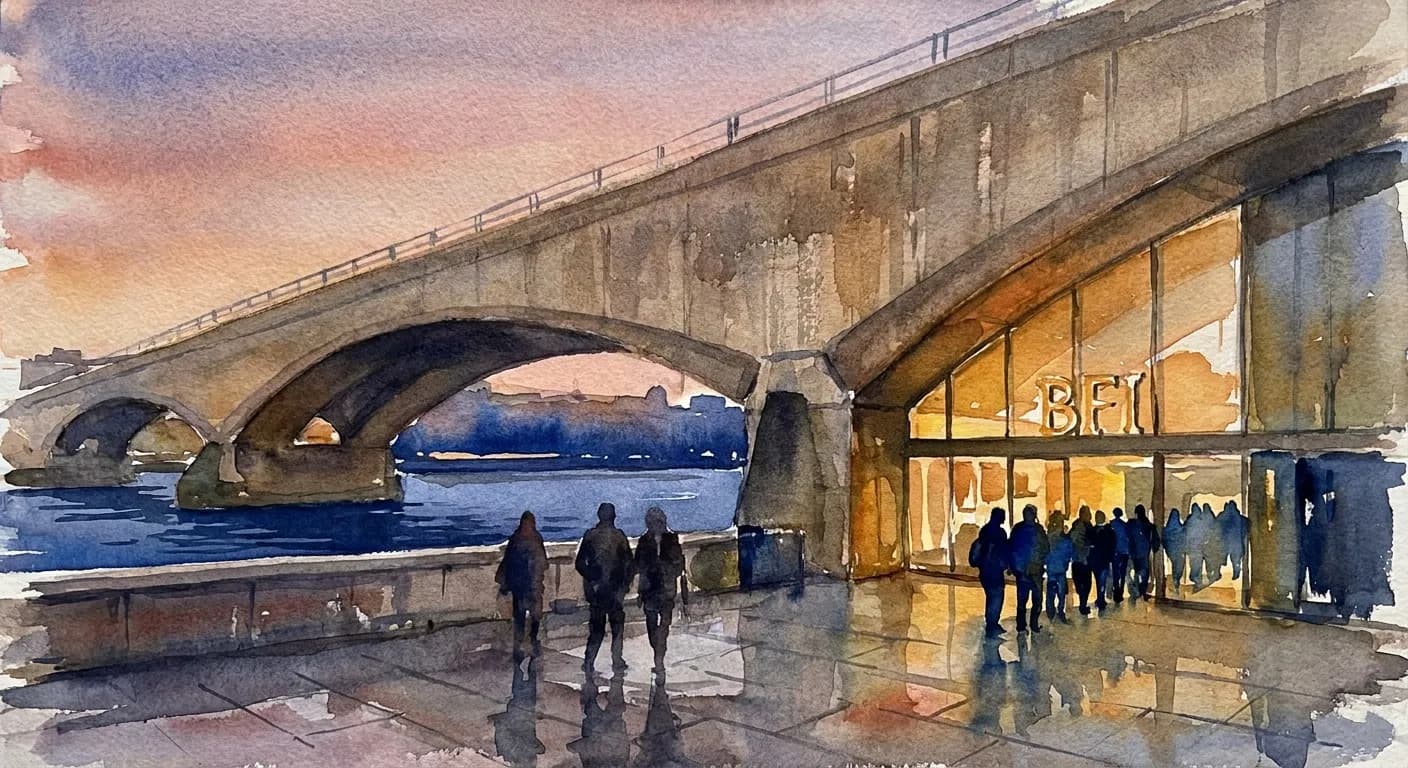
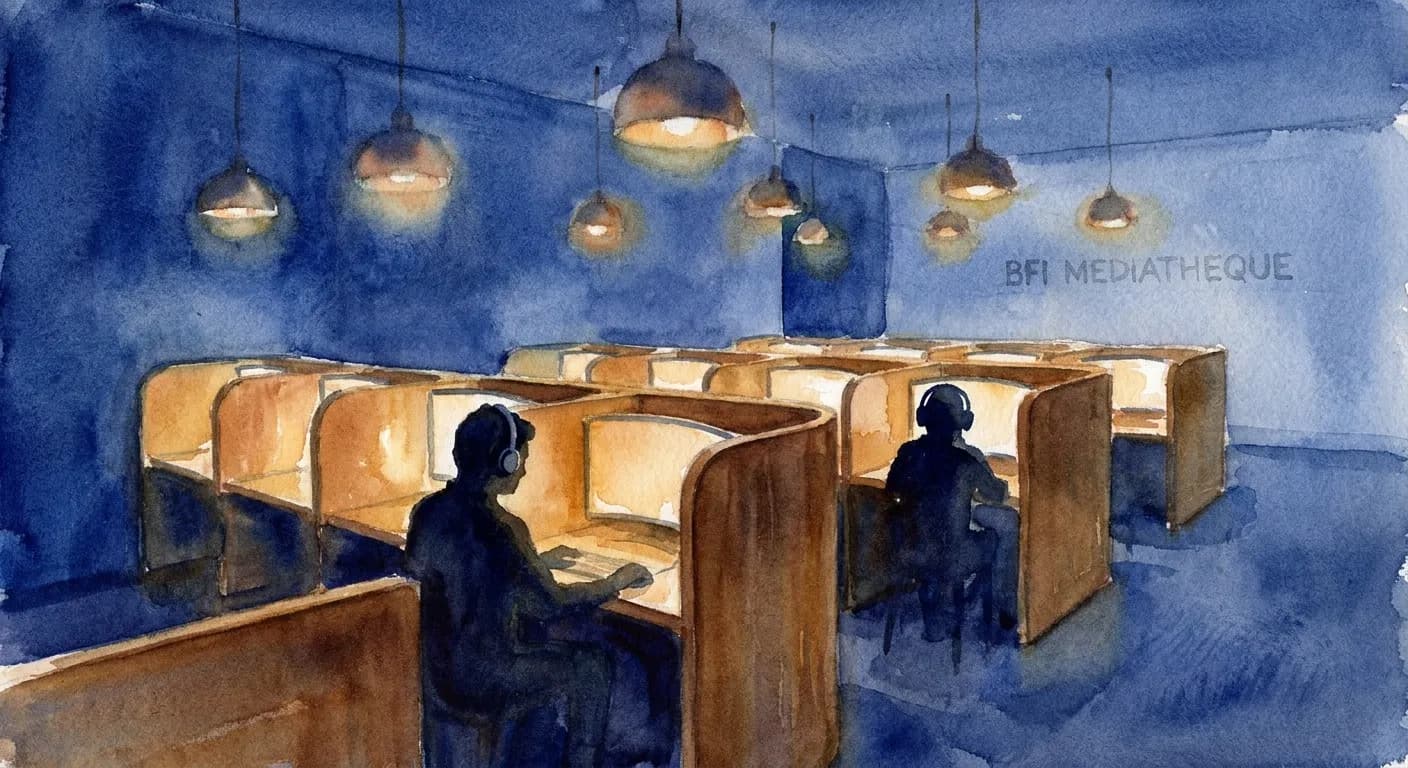
The BFI Mediatheque is on the ground floor of the BFI Southbank building, the long Brutalist concrete cinema-and-archive complex tucked under the south end of Waterloo Bridge. It is a single room with eighteen individual viewing booths arranged along three walls. Each booth has its own 22-inch screen, padded chair, and a pair of high-end headphones tethered to the desk. You sit down, you log in to the touchscreen as a guest, and you have free access to the entire BFI National Archive that has been digitised — over 2,500 titles, including a complete set of every British Eurovision entry, every Eurovision Grand Final the BBC has broadcast since 1956, and a deep selection of European public-service-broadcaster archive that came via the European Broadcasting Union pool.
The Mediatheque is open Tuesday through Sunday, 12pm to 8pm. It is closed Monday. Entry is free. No booking. No BFI membership. No ID. You walk in past the front desk on the right of the BFI Southbank lobby, take the stairs or lift down one floor, and walk straight in. A staff member at a desk near the door will hand you a 90-minute session slip on busy days; weekday afternoons there is no slip, you stay as long as you like.
Why Eurovision Week Specifically
The BFI does not formally programme Eurovision-themed weeks. They do not need to. The catalogue search bar inside the Mediatheque pulls up 380 Eurovision-tagged titles when you type "Eurovision" — every UK entry from Patricia Bredin 1957 to the present, every Grand Final the BBC has broadcast, BBC documentaries on Eurovision history, archive Top of the Pops Eurovision segments, and a number of European-broadcaster contributions from the EBU member pool. During the seven days leading up to and following the Grand Final, the Eurovision booths get reasonably used — not crowded, but used by the kind of fan who has decided that the way to experience Eurovision is to do a half-day deep dive into the entire 70-year history of the contest.
Most other Eurovision events in London during this week cost money — pub screenings sell tickets, the official Eurovision Village in past UK host years sold day passes, themed parties run £20 to £40. The Mediatheque is the only free Eurovision experience in zone 1 London that lets you watch the actual contest material rather than talk about it.
The Tuesday 2pm Slot
The optimal slot is Tuesday between 2pm and 5pm during Eurovision week. The Mediatheque opens at noon on Tuesday. By 2pm the lunchtime visitors have left and the after-school crowd is not yet there. The room will have four to six people in it, which means at least twelve free booths. You can sit anywhere. The booth screens are calibrated for archival material — the dynamic range is generous, the audio through the headphones is uncompressed.
The recommended Eurovision Mediatheque order, for three hours of viewing:
- The 1974 Grand Final — Brighton Dome, ABBA won with Waterloo, the start of the modern Eurovision era. The BBC broadcast tape is the definitive recording. Forty minutes.
- Britain at Eurovision: A Cultural History — a 2014 BBC documentary, in the archive, runs 58 minutes. Best context for everything else you watch.
- 2022 Grand Final — Turin, Sam Ryder's Space Man second-place finish, the year Ukraine won. Forty minutes for the highlights segment in the archive.
Total time in the booth: just under three hours. You leave the Mediatheque at 5pm, walk out into the early-evening Southbank, and you have done the most contextual Eurovision deep-dive of anyone in your house that week.
What Else Is Free at BFI Southbank
The BFI Southbank lobby is free to walk through. The bookshop on the ground floor near the entrance is free to browse. The benches outside on the Thames-facing terrace are free to sit on. The Mediatheque is free. The Reuben Library upstairs is free to use, with reading-room access to film books, magazines, and the BFI's collection of screenplays.
Cinema screenings inside the four BFI theatres cost money — usually £14 to £16 a ticket — so if you want to see one of the actual scheduled films you pay. But the building runs maybe 80 percent of its floor space as free walk-in public spaces. The cinema is the paid object. The cinema's library, archive, lobby, bookshop, and Thames-facing terrace are the free objects.
The Booth Itself, Practical
You log in to the booth touchscreen as Guest. The interface is BFI Player-derived but with the full archive depth, not just the streaming subscription tier. Type Eurovision into the search bar. The 380 results sort by year, by country, by Grand Final, by UK entry. You queue up a title, the title plays in the booth screen, the headphones produce stereo audio with one cable. The screen is calibrated. The chair reclines slightly. The walls between booths are padded so the room is genuinely quiet.
You can pause, rewind, scrub, and skip. You can change titles as many times as you want in a session. You cannot record. You cannot download. The session is private — the screen is not visible to other booths because each booth has a fabric partition on either side.
If you want a snack, leave the headphones on the desk and walk to the BFI Riverfront cafe or the Benugo bar on the ground floor — neither is free, but both let you bring your drink back into the Mediatheque and continue.
The Saturday Grand Final Logistics
If you want to watch the actual Grand Final live on Saturday May 16, the Mediatheque closes at 8pm — well before the 8pm UK start of the Eurovision broadcast. The BFI Riverfront cafe and BFI Bar stay open until 11pm on a Saturday and will be playing the live BBC One feed on the bar TVs. The bar is busy on Eurovision Saturday — the queue forms by 7pm — but the seating around the Thames terrace and the bar's standing area absorbs around 200 people.
You do not need to buy a drink to stand at the bar TV. The BFI Southbank has historically allowed Eurovision Saturday standing-only viewing for anyone who walks in. If you want a guaranteed seat, arrive by 7pm and order something. If you are happy to stand and walk out at the interval to grab a free seat anywhere along the Southbank, arrive at 7:45pm.
Practical Notes
- Address: BFI Southbank, Belvedere Road, South Bank, London SE1 8XT.
- Mediatheque hours: Tuesday to Sunday 12pm to 8pm, closed Monday and Bank Holidays.
- Best window: Tuesday or Wednesday 2pm to 5pm during Eurovision week.
- Tickets: free walk-in. No booking, no membership, no ID, no purchase.
- Getting there: Waterloo station, exit toward South Bank, two-minute walk along Belvedere Road. Or Embankment, walk across Hungerford Bridge.
- Nearby free: Royal Festival Hall foyers, Hayward Gallery riverside terrace, Queen's Walk, the National Theatre lobby, the Tate Modern fifteen minutes east on foot.
- Eurovision Saturday: BFI Bar shows the live BBC One feed, no ticket, standing room.
The Argument
Eurovision is the most-watched broadcast event in Europe and one of the most reliably trending search terms in the UK every May. The Saturday Grand Final is shared by 162 million viewers in real time. The pre-week build-up is the more interesting cultural object — the deep dive into Eurovision history, the rewatching of old performances, the explaining of why the UK keeps doing what it does at the contest.
The BFI Mediatheque is the only public place in London where you can do that deep dive on a calibrated screen with proper audio for free. It is not advertised as a Eurovision space. It is a film archive that happens to contain every Eurovision moment the BBC has ever broadcast. The room is open Tuesday to Sunday. The booths are usually empty mid-afternoon. The archive is enormous.
This is what London provides for people who care about Eurovision the week of the final. Right on time, on the Southbank, free.
Tags: #eurovision #eurovision2026 #bfi #bfisouthbank #southbank #mediatheque #nicebutfree #karpofinds #freelondon #londonarchive #filmarchive #waterloo #thamespath #bbceurovision
Sources consulted: BFI Southbank · BFI Mediatheque · BFI National Archive · Eurovision Song Contest
All trademarks are the property of their respective owners.