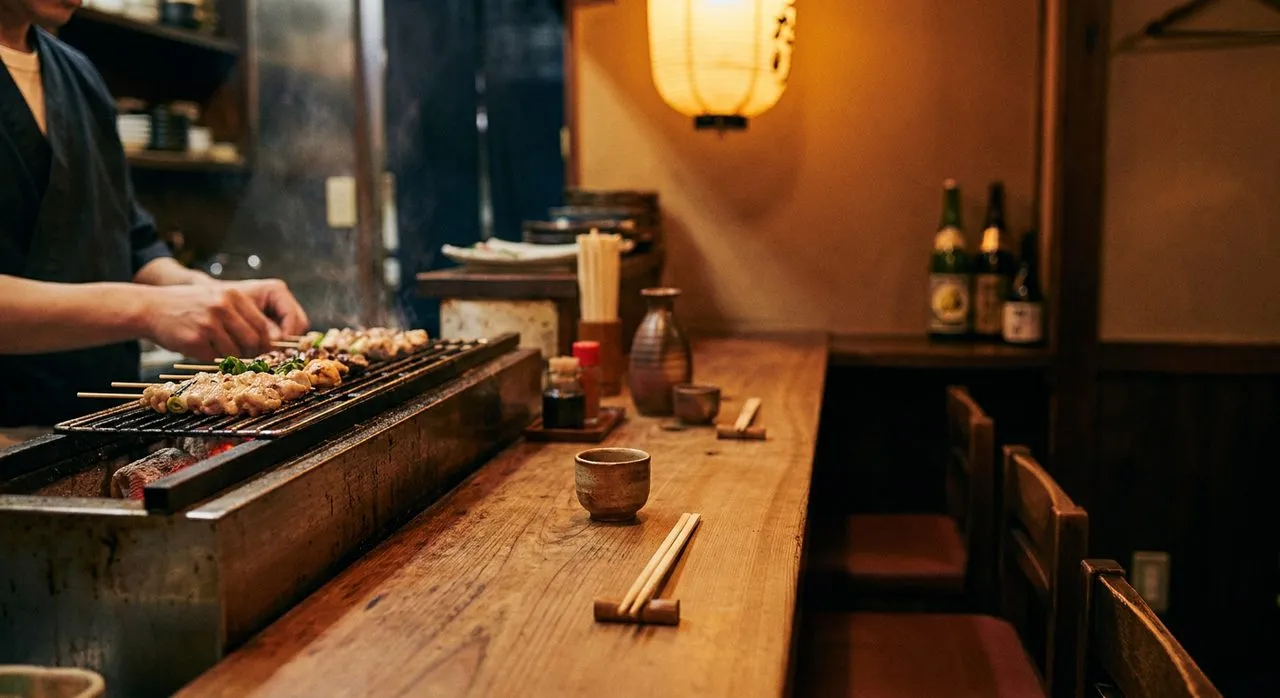
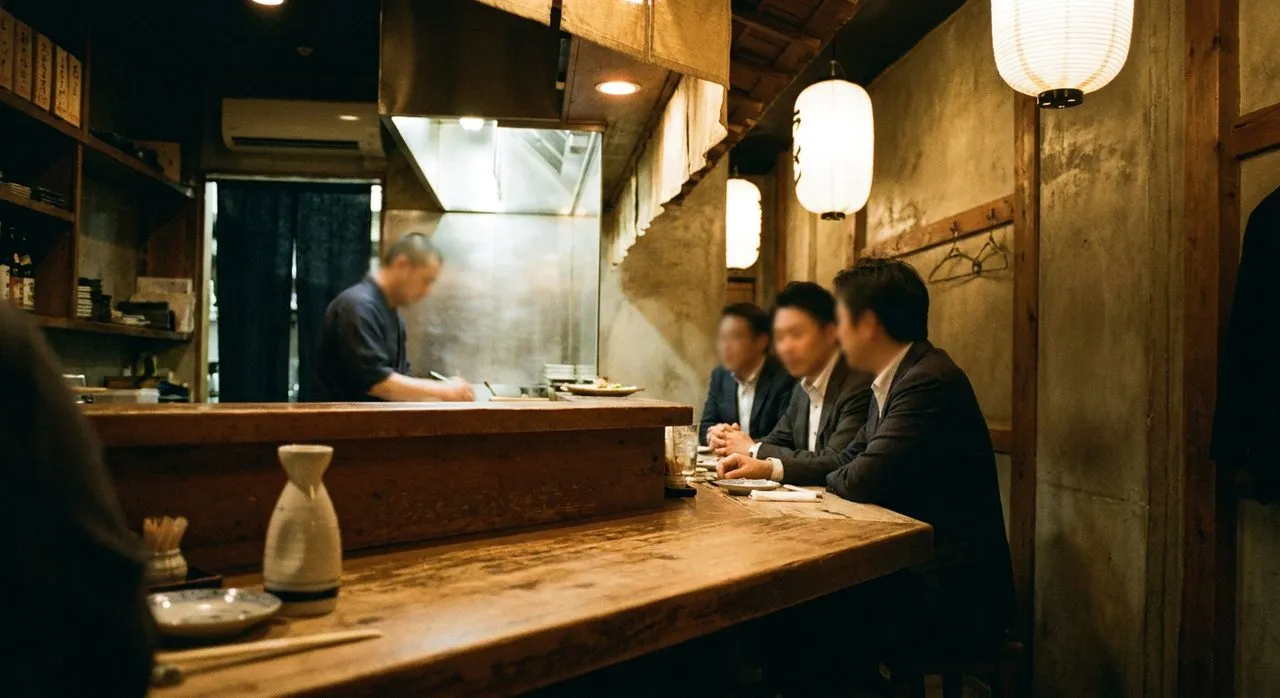
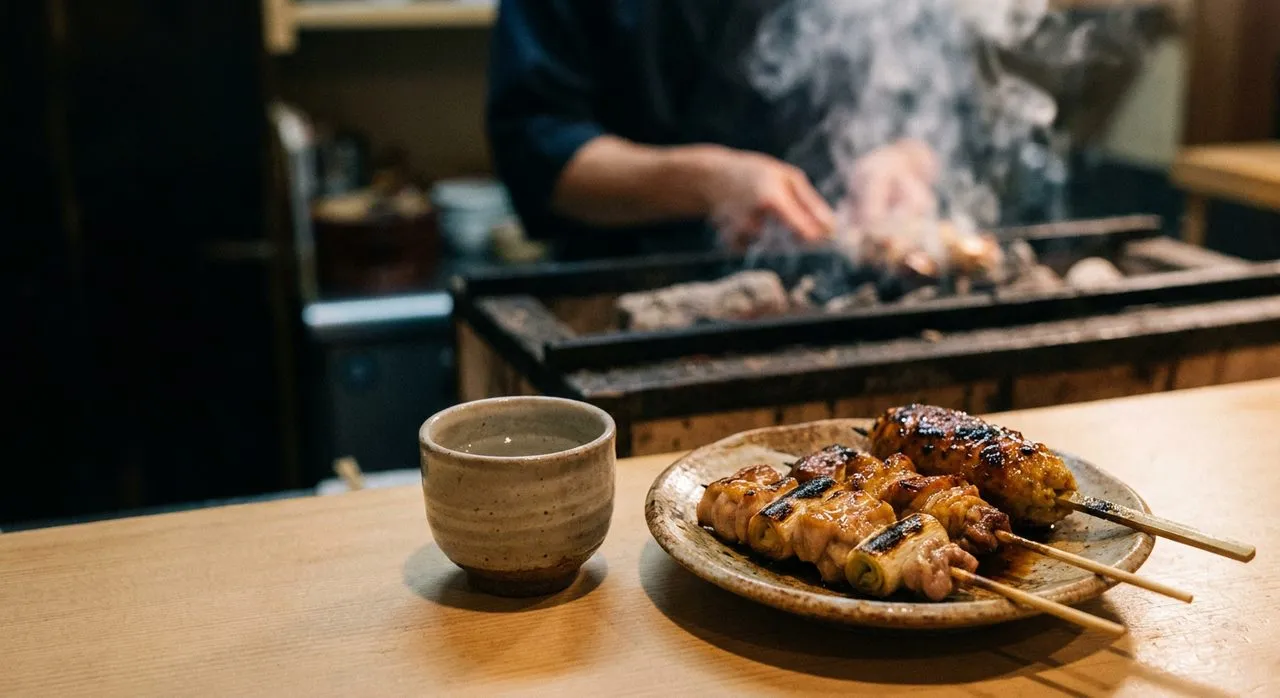
The izakaya counter is where solo diners belong. Not at a two-top pretending to read, not perched awkwardly at a bar designed for dates, but elbow-to-elbow with the grill, watching tsukune get basted and listening to the chef argue good-naturedly with a regular about the Dodgers. In late May, when the marine layer burns off by noon and the city smells like jasmine and exhaust, LA's izakaya counters from Little Tokyo to the Westside offer the kind of evening that rewards showing up alone. No reservations, no performance. Just charcoal smoke, cold beer, and the quiet satisfaction of being exactly where you should be.
Little Tokyo's counter dynasty
Little Tokyo remains the gravitational center. The storefronts along First Street and the tighter blocks south toward Third harbor a handful of counters where the choreography hasn't changed in decades: skewers over binchotan, the hiss and flare, the deliberate turn. The best seats are always at the counter, close enough to feel the heat. You slide onto a stool mid-service, order a draft Sapporo, and the chef nods without breaking rhythm. By your third visit he knows you take negima before anything else.
The neighborhood's texture changes as spring gives way to summer. Late-May evenings bring an easy warmth, the kind that makes standing in line tolerable. Tourists cluster near the main plaza, but locals know which alleys hold the counters that don't bother with English menus. These are small rooms, ten seats, maybe twelve. Formica or worn wood, the smell of grilled chicken skin and soy, konbini calendars on the wall. Walk-ins only, cash preferred, and if you're lucky the chef will slip you a grilled gizzard on the house because you didn't complain about the wait.
Sawtelle's westside answer
Sawtelle Boulevard plays the role of accessible ambassador. The stretch between Olympic and Santa Monica holds a cluster of izakaya that cater to the post-work Westside crowd—tech, entertainment, real estate—people who want yakitori without the trek downtown. The counters here skew a little sleeker, the sake lists a little more curated, but the fundamentals hold. You walk in around seven-thirty, claim a counter stool if one's open, and settle into the same ritual: cold tokkuri, skewers in waves, the low conversational hum of people eating alone together.
What Sawtelle offers is consistency without stuffiness. The chefs tend to be younger, some trained in Japan, others who came up through LA kitchens. They'll talk shop if you ask, but they won't perform. The grills are gas or electric more often than charcoal—a concession to permitting and ventilation—but the technique is sound. Chicken thigh, shishito, pork belly, tsukune with raw egg yolk. You order in rounds, pace yourself with pickles and rice, and by nine you're walking back to your car feeling like you made exactly the right call.
Arts District and the eastside shift
The Arts District doesn't do traditional. The izakaya counters that have opened here in the past two years lean into hybrid formats: natural wine alongside sake, koji-cured vegetables next to yakitori, playlists that swing from City Pop to Blonde Redhead. It's a younger scene, more fluid, and the solo-diner-friendliness is almost ideological. Everyone's alone, or at least comfortable pretending to be. You sit at the counter because that's where the action is, and because the bartender pouring your sake also pickled the daikon you're eating.
By late May the eastside has hit its stride. Patios are open, roll-up doors stay propped until close, and the counters feel less like hiding and more like participating. The food skews experimental—smoked mackerel with yuzu kosho, duck hearts with shichimi, things that wouldn't fly in Little Tokyo but work here because the audience is willing. You finish your skewers, order one more round, and realize the person two stools down is doing the exact same calculus. Solo dining as collective practice.
West LA's quiet contenders
West LA doesn't announce itself. The izakaya counters scattered through the residential blocks near Sawtelle and Sepulveda are easy to miss: small signs, limited hours, regulars who've been coming since the Clinton administration. These are neighborhood spots in the truest sense, places where the chef's kids do homework in the back booth and the sake selection is whatever the distributor brought last week. You walk in and it feels like interrupting, until the chef waves you to the counter and suddenly you're part of the furniture.
The appeal is in the lack of pretense. No Instagram moments, no craft cocktail program, no mission statement about sustainable sourcing. Just chicken on sticks, cold beer, miso soup if you want it. The counters are often L-shaped, wrapping around a small prep area, and solo diners claim the corner seats where you can see both the grill and the door. The rhythm is slow, almost meditative. You eat, you drink, you watch the chef work, and by the time you leave you've spoken maybe twenty words total. Perfect.
Mid-Wilshire's grown-up option
Mid-Wilshire occupies the middle ground: not as entrenched as Little Tokyo, not as self-consciously cool as the eastside. The izakaya counters here serve the museum crowd, the Hancock Park locals, the people who want a good meal without the scene. The rooms are a little quieter, the lighting a little warmer, the sake lists vetted by someone who actually traveled to the breweries. You sit at the counter because you prefer it, not because the tables are full, and the chef treats you like an adult capable of choosing your own skewers.
Late spring in Mid-Wilshire means jacaranda blooms turning the sidewalks purple and long evenings that make an eight o'clock counter seat feel civilized. You order omakase if it's offered, or you build your own progression: tsukune, negima, shiitake, tebasaki. The chef moves with the efficiency of someone who's done this ten thousand times. No flourishes, no explanations unless you ask. Just steady, excellent work. You finish, pay cash, and walk out into the warm night feeling like you've been let in on a secret that isn't really secret at all.
Why the counter matters
The counter is theater and transaction both. You're close enough to see the chef's hands—the way he fans the skewers, the exact moment he pulls them from the flame, the small adjustments that separate good from great. You're also anonymous, one among a row of solitary diners who've chosen proximity over privacy. It's the best seat in the house because it demands nothing and offers everything: heat, smoke, salt, the quiet pleasure of watching someone do their job well.
Solo dining at an izakaya counter isn't loneliness; it's clarity. No splitting bills, no negotiating orders, no pretending to care about someone else's yakitori preferences. Just you and the grill and the small, accumulating satisfactions of a meal built one skewer at a time. The chef might remember your sake preference by the third visit. He might not. Either way, you'll be back.
Practical notes
Little Tokyo clusters around First Street between Alameda and Los Angeles; Metro's A Line (formerly the Gold Line) stops at Little Tokyo/Arts District. Sawtelle Boulevard between Olympic and Santa Monica offers street parking and nearby structure lots. Arts District spots concentrate east of Alameda, south of First; verify hours directly as many operate limited schedules. West LA counters near Sawtelle and Sepulveda are best reached by car. Mid-Wilshire venues sit within walking distance of the Miracle Mile museums. Most counters are walk-in only; expect waits after seven PM on weekends. Cash is preferred at older establishments. Counters are often tight; accessibility varies. Bring patience, an appetite for smoke and salt, and the willingness to eat alone among others.
Tags: #PullUpAChair #LAIzakaya #SoloDining #LittleTokyo #Yakitori #IzakayaCounter #LASummer2026 #Westside #ArtsDistrictLA #Sawtelle #CounterCulture #LateSpringLA #LAEats #JapaneseeFoodLA #WalkInOnly
Please drink responsibly. Must be of legal drinking age.
Sources consulted: Izakaya · Yakitori · Discover LA Dining · Eater LA · Time Out LA Restaurants
All trademarks are the property of their respective owners.