The corner table gets claimed first—the one where the overhead vent pulls hardest and the soju bottles can line up along the ledge without crowding the banchan. By eleven on a Friday, every grill in the room glows orange, and the rhythm of tongs on metal punctuates conversations that have shifted from English to Korean to Spanglish and back. This is late-night Koreatown as a participatory sport, where the meal stretches until the city's second wind kicks in and the sidewalks outside stay busy until dawn.
The Grill That Doesn't Sleep
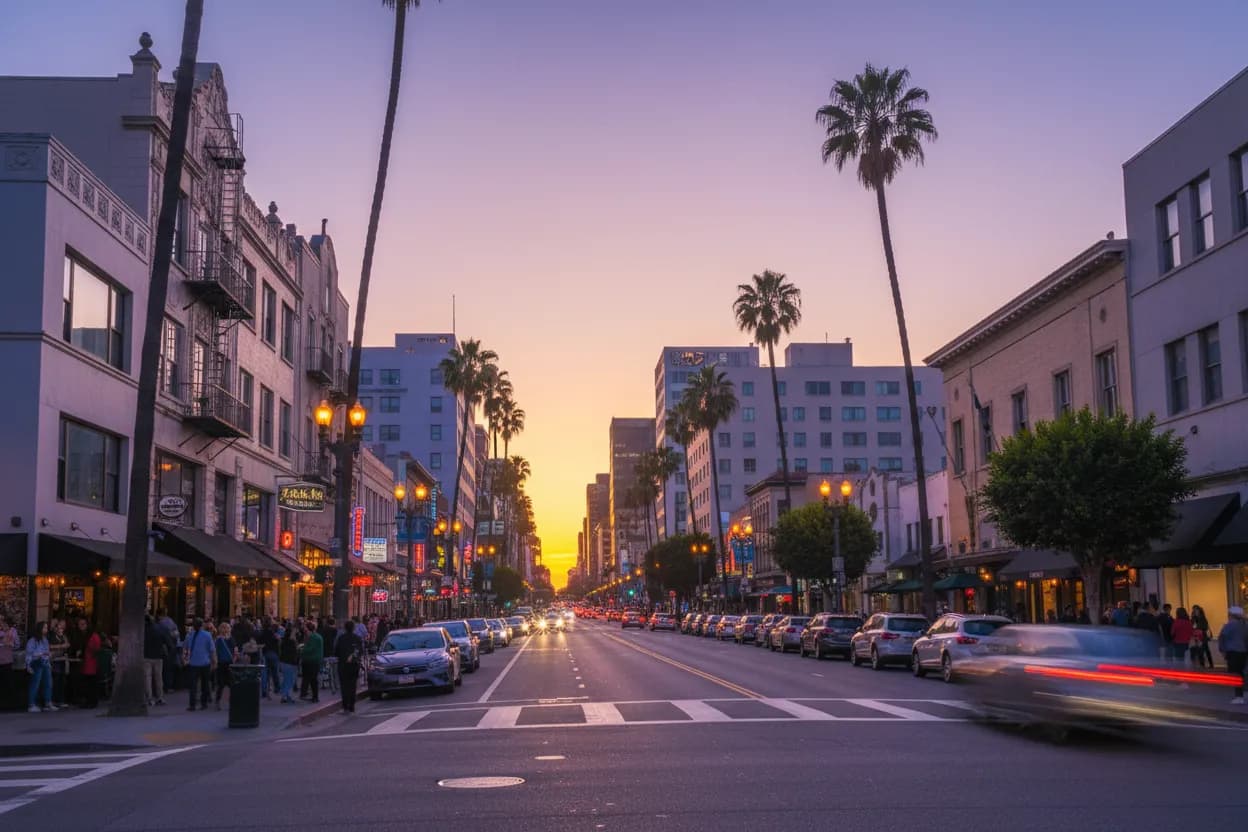
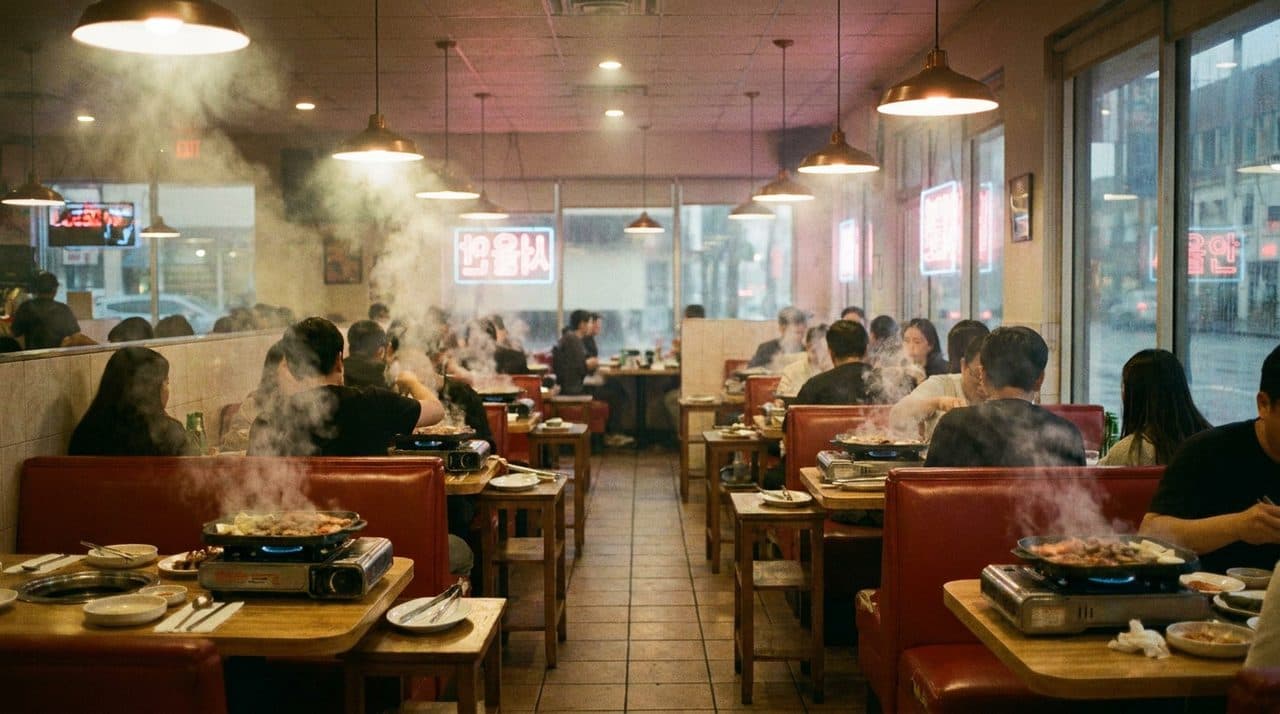
The restaurant occupies a second-floor perch above a stretch of Western Avenue where karaoke bars and 24-hour cafes keep the block humming past any reasonable bedtime. First-timers often walk past the entrance twice—the signage modest, the stairwell narrow—before realizing the noise and smoke drifting down aren't coming from a private party but from a dining room that treats midnight like an intermission. Inside, the layout favors long communal setups and corner booths where groups of six can spread out without feeling cramped. Each table comes equipped with a recessed grill, the kind that requires a certain confidence with tongs and a willingness to accept that jackets will smell like charcoal for days.
The space itself leans functional: tile floors that forgive spills, walls lined with soju brand posters, a small bar area where solo diners sometimes perch with a bowl of naengmyeon and a beer. The real scenography comes from the crowd—late-shift service workers, students marking the end of exams, families who treat 11 p.m. like a reasonable dinner hour, and the occasional group that stumbled out of a concert at The Wiltern and followed their noses east.
What Lands on the Table
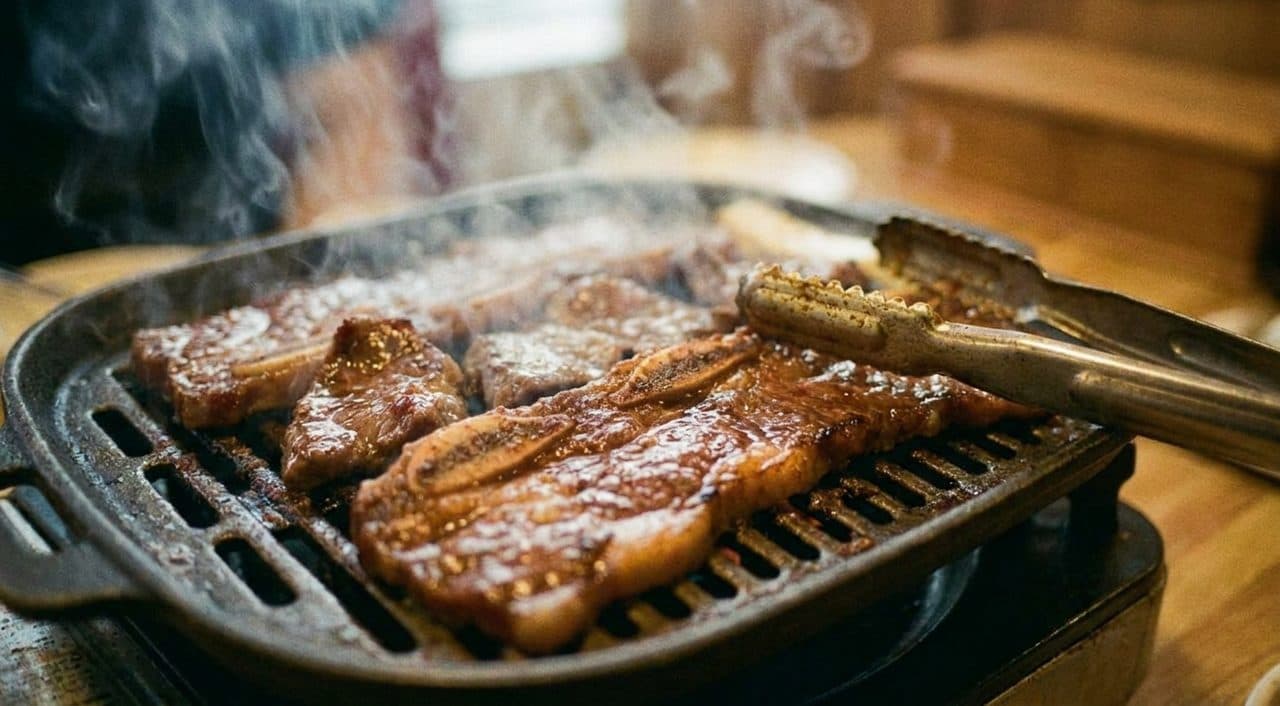
The menu runs long, but regulars know the shorthand: galbi for groups that want to linger, chadolbaegi for those who prefer speed and sear, and the marinated pork belly that arrives pre-cut and caramelizes fast over high heat. Banchan rotate with the seasons—sometimes eight small plates, sometimes twelve, always replenished without asking. The kimchi skews older and funkier than the stuff served at lunch-hour spots, and the pickled radish comes cut thick enough to crunch.
Ordering happens in waves. The first round establishes the baseline—a protein, a stew to share, maybe an order of pajeon if the table's large enough to justify it. The second round arrives an hour later, when someone realizes they're still hungry and the grill's already hot. Timing here follows appetite, not the clock. The kitchen doesn't rush, and neither does anyone seated. A Wednesday at half-past midnight can feel as unhurried as a Sunday afternoon, the room's energy sustained by the steady arrival of new groups and the slow accumulation of empty green bottles.
The Mechanics of Staying
The grill itself becomes a focal point, a reason to stay engaged rather than scroll. Someone always appoints themselves grill master—flipping, repositioning, declaring doneness with the authority of someone who's done this before. Others defer, content to watch the meat char and blister, the fat rendering into the drip tray below. The process imposes a rhythm: tend the grill, eat, talk, tend the grill again. It's a structure that discourages quick exits and rewards groups that settle in for the long haul.
The ventilation system works hard but not perfectly. By the end of the night, a haze hangs near the ceiling, and everyone's eyes have that slight sting that comes with proximity to open flame and sesame oil vapor. It's part of the deal. So is the noise level—conversations overlap, chairs scrape, the exhaust fans hum at a pitch that makes quiet exchanges impossible. Those seeking intimate ambiance go elsewhere. Those seeking proof that the city's still awake at two in the morning end up here.
The Late-Night Crowd and Its Tells
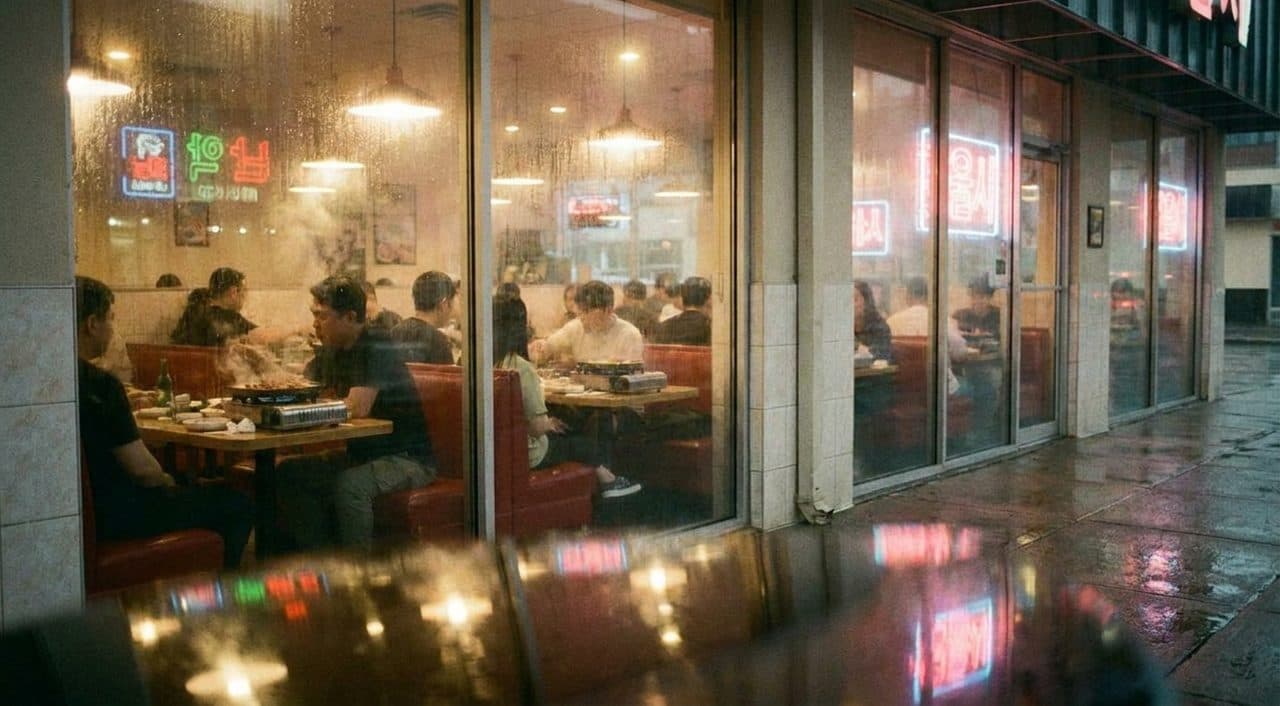
The demographic shifts as the hours pass. Early evening skews toward families and older couples who've been coming here since the block looked different. By ten, the age drops and the groups grow louder—friends reconvening after work, pre-gamers fueling up before hitting a nearby noraebang, post-gamers nursing hangovers with meat and broth. The truly late crowd, the ones who arrive after midnight, often carry the loose energy of people whose plans changed mid-stream and who needed a place that wouldn't judge the hour.
Regulars have their tells: they know which server to flag for extra sesame oil, they time their arrival to avoid the 9 p.m. crush, they order the off-menu intestine plate without needing to ask if it's available. First-timers give themselves away by studying the menu too long or by looking uncertain when the raw meat arrives and no one offers to cook it for them. The staff moves efficiently but without ceremony, dropping plates and clearing empties in a choreography that never quite slows down.
Practical Notes
The restaurant sits in the heart of Koreatown, a short walk from the Metro's Purple Line stations at Wilshire/Normandie or Wilshire/Western, though most who come late arrive by car and circle the block for street parking. Hours stretch well past midnight most nights, with the kitchen staying open as long as tables stay occupied—last call often depends more on crowd momentum than posted times. Walk-ins are the norm; reservations exist but rarely feel necessary except on weekend evenings when the room fills fast. Expect to wait briefly during peak hours, though turnover stays brisk enough that the host's "twenty minutes" estimate usually undershoots.
Cash and card both work, though some regulars prefer cash for the speed of settling up when a group's ready to leave. The check arrives only when requested, never rushed, a small mercy in a city that often hurries diners out the door.
Why It Holds
The appeal isn't novelty—Koreatown has dozens of late-night grills, each with its own partisans and quirks. What this one offers is consistency of atmosphere, the sense that walking in at 1 a.m. on a Tuesday won't feel like an imposition or an afterthought. The room stays full because it's designed for exactly this: the extended meal, the conversation that sprawls, the reluctance to call it a night when the grill's still warm and someone just ordered another round.
The city's late-night dining landscape has thinned in recent years, casualties of rising rents and shifting habits. Places that stay open past midnight now carry a certain responsibility—they become waypoints, proof that the city still accommodates those who live and work outside daylight hours. This table, this grill, this haze of smoke and soju—it's a small insistence that the night doesn't have to end at ten, that hunger and sociability don't observe curfews, and that sometimes the best meal is the one that stretches until the sky starts to pale.
Tags: #KoreatownDining #LateNightEats #LosAngelesFood #KoreanBBQ #KBBQ #KoreatownLA #LateNightLA #TableSideGrill #LAFoodScene #PullUpAChair #MidnightMeal #WesternAvenue #KoreatownNights #SojuAndSmoke #LAAfterDark
Sources consulted: eater.com · timeout.com · infatuation.com
All trademarks are the property of their respective owners.
Ask Karpo first
Want to know which Koreatown BBQ spots serve the full menu after midnight?
Ask Karpo for late-night Korean grill recommendations and what to order before you head out.